
The escalation mistake that makes customers furious is poor communication—failing to listen, provide clear updates, or show empathy. When customers feel ignored or misunderstood, frustration quickly builds, turning to anger. Vague or delayed responses, lack of transparency, and inconsistent messaging worsen the situation. If you want to avoid turning upset customers into passionate critics, understanding how effective communication can de-escalate conflicts is essential—keep going to learn more about avoiding this costly mistake.

Get business pricing on tech for your team
- Business-only prices and quantity discounts
- Tax-exempt purchasing
- Multiple users, one account, clear invoices
Key Takeaways
- Ignoring customer emotions and failing to show empathy during escalation intensifies frustration.
- Rushing to resolve issues without understanding the root cause can make customers feel misunderstood.
- Providing vague, delayed, or inconsistent updates damages trust and increases anger.
- Transferring the customer abruptly without proper explanation can escalate their fury.
- Failing to listen actively and validate feelings leads to misunderstandings and customer rage.
Common Customer Escalation Mistakes and How to Avoid Them

Many customer escalation mistakes happen because agents fail to listen carefully or show empathy. When you approach a customer escalation without understanding the customer’s perspective, you risk escalating the conflict instead of resolving it. Effective conflict resolution relies on active listening; you need to hear their concerns fully and acknowledge their feelings. You can also improve your approach by practicing empathy skills, which help in understanding and validating the customer’s emotions. Avoid rushing to fix the problem without addressing underlying frustrations. If you overlook the emotional aspect of the issue, the customer may feel unheard and become more upset. Recognizing the importance of emotional intelligence in customer interactions can help prevent misunderstandings. Additionally, understanding projector technology can facilitate better communication when discussing product issues or solutions. By demonstrating genuine empathy and engaging in proper conflict resolution techniques, you can de-escalate tense situations. Incorporating proper conflict resolution techniques and understanding the significance of client satisfaction can significantly improve the outcome of customer interactions. Remember, the goal isn’t just to solve the problem but to make the customer feel valued and understood, preventing escalation from spiraling further.
When to Escalate an Issue Immediately

Recognizing when to escalate an issue immediately can prevent minor frustrations from turning into major conflicts. Timing considerations and escalation thresholds are key here. If an issue threatens to escalate quickly or violates company policies, act fast. Additionally, understanding conflict resolution strategies can help determine the appropriate response during escalation. Being aware of situational awareness can further assist in making prompt and responsible decisions. Developing clear escalation protocols ensures that team members know exactly when and how to escalate issues appropriately. Monitoring the progress of an issue closely can also help determine the right moment for escalation, especially if the situation shows signs of worsening unexpectedly. Incorporating effective communication techniques during escalation can facilitate smoother resolutions and reduce misunderstandings.
How Poor Communication Fuels Customer Frustration During Escalation

Poor communication during escalation can quickly escalate customer frustration, even when the underlying issue is manageable. When there’s a communication breakdown, customers feel ignored or misunderstood, increasing their impatience. If updates are vague or delayed, misaligned expectations develop, making customers believe their concerns aren’t being taken seriously. This confusion fuels anger and mistrust, especially if they’re left in the dark about progress or next steps. Additionally, personal branding can influence how customers perceive the company’s transparency and responsiveness. Clear, honest communication is essential to prevent frustration from spiraling. When you fail to keep customers informed or misrepresent the situation, you risk damaging the relationship beyond repair. Effective communication during escalation involves transparency and active listening, ensuring customers feel heard and valued, even amid challenging circumstances. Consistent messaging is crucial to maintaining trust throughout the escalation process. Furthermore, understanding support breakfast practices can help teams provide more empathetic and effective responses during critical moments. Recognizing the importance of customer expectations management can also mitigate misunderstandings and reduce escalation frequency. Proper issue escalation processes can help streamline communication and reduce customer frustration during difficult situations.
Strategies to Handle Escalations Without Losing Customer Trust

When handling escalations, staying calm and composed helps keep the situation under control. Listen actively and show empathy to understand your customer’s concerns fully. Offering clear, fair solutions reassures customers and helps rebuild their trust quickly. Being aware of customer expectations can also prevent further frustrations and demonstrate your commitment to their satisfaction. Additionally, understanding the importance of proper paint sprayer maintenance, such as regular oil checks and filter replacements, can reduce misunderstandings and improve overall service quality. Recognizing signs of issues like ear wax odor or other unusual scents can help you identify underlying problems early and address them proactively. Incorporating preparation strategies like having backup plans and clear communication protocols can further enhance your ability to handle unexpected customer issues effectively.
Maintain Calm and Composed
Maintaining your composure during customer escalations is essential to resolving issues effectively and preserving trust. When you stay calm, you demonstrate emotional intelligence and set a positive tone for conflict resolution. Here’s how to do it:
- Breathe deeply to manage your emotions and prevent frustration from taking over.
- Keep your voice steady and avoid defensive language, showing confidence and control.
- Focus on understanding the customer’s perspective rather than reacting emotionally, which helps de-escalate tension.
- Using appropriate soil for string of hearts plants can help create a calming environment, reducing overall stress during interactions.
Listen Actively and Empathetically
Listening actively and empathetically is crucial when handling escalations because it shows the customer you genuinely care about their concerns. By practicing active listening, you focus entirely on what they’re saying, avoiding interruptions and distractions. Use emotional intelligence to recognize their feelings and validate their frustrations, which helps build trust. Show empathy through your tone and responses, making the customer feel heard and understood. This approach diffuses tension and demonstrates that you’re committed to resolving their issue. This simple step can greatly improve the escalation experience. Additionally, understanding personality traits can help tailor your responses to better connect with the customer’s unique perspective. Recognizing different celebrity relationship dynamics can also provide insight into managing various customer personalities effectively. Furthermore, applying effective communication techniques ensures your responses remain clear and reassuring throughout the interaction.
Offer Clear, Fair Solutions
Have you ever noticed how offering clear and fair solutions can turn an upset customer into a loyal advocate? When you communicate transparently, customers feel heard and respected. To do this effectively:
- Clearly explain the steps you’ll take to resolve the issue, avoiding vague language.
- Offer fair compensation that matches the inconvenience caused, whether it’s a refund, replacement, or discount.
- Keep your communication consistent and honest, so customers trust your intentions.
Training Your Support Team to Prevent Escalation Errors
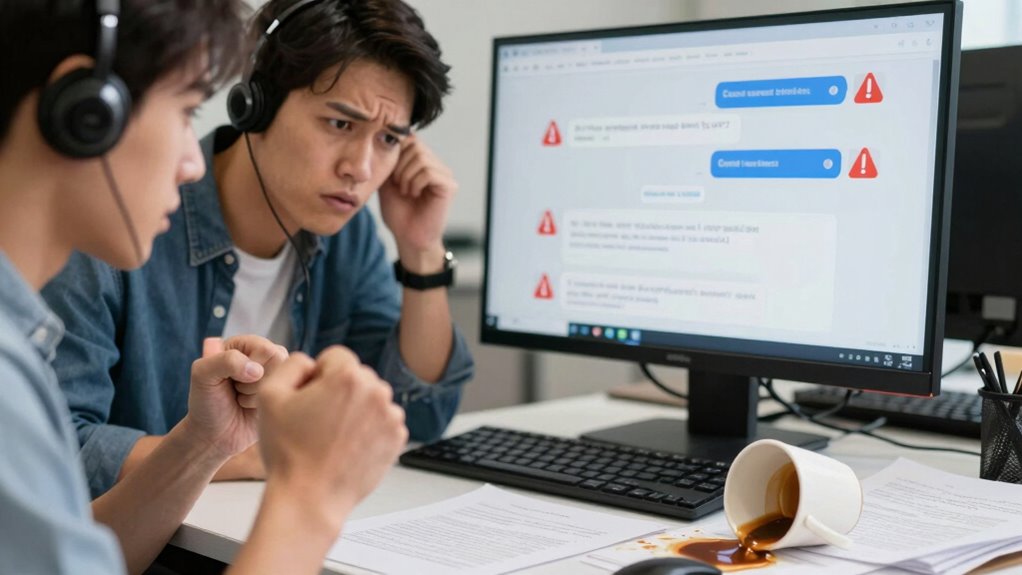
Training your support team effectively is essential to prevent escalation errors that can frustrate customers. Focus on empathy training to help agents understand customer emotions and respond thoughtfully. Incorporate problem-solving techniques to empower your team to resolve issues quickly and confidently. Regular role-playing exercises strengthen these skills and reveal potential escalation triggers. Use the table below to structure your training:
| Skill Area | Key Focus | Methods |
|---|---|---|
| Empathy Training | Active listening, emotional cues | Role-playing, feedback sessions |
| Problem Solving | Troubleshooting, resourcefulness | Scenario-based drills, guides |
| Communication | Clarity, tone, professionalism | Script development, coaching |
Using Customer Feedback to Spot Escalation Mistakes

Customer feedback offers valuable insights into how support interactions unfold and where escalation mistakes may occur. By analyzing this input, you can identify patterns suggesting when emotional intelligence is lacking or escalation protocols weren’t properly followed. To effectively spot these issues, consider these steps:
- Look for recurring complaints about feeling misunderstood or dismissed—signs that support agents may need to improve emotional intelligence.
- Detect comments indicating abrupt escalations or unnecessary transfers, highlighting gaps in following escalation protocols.
- Pay attention to feedback about unresolved issues or customer frustration, which often signal escalation mishandling.
Using customer feedback this way helps you pinpoint where support teams can refine their approach, ensuring escalation errors are minimized and customer satisfaction improves.
Turning Escalation Errors Into Opportunities for Better Service

When escalation errors occur, they can seem like setbacks, but they also present valuable opportunities to improve your service. By applying emotional intelligence, you can recognize customer frustration and respond empathetically, turning a negative experience into a chance to build trust. Review your escalation hierarchies to identify where the breakdown happened, then adjust procedures to prevent future mistakes. Use these moments to train your team on better communication and patience, ensuring they understand how to handle escalations thoughtfully. Instead of viewing errors as failures, see them as learning opportunities to refine your processes. When you respond with genuine understanding and improve your escalation strategies, you not only resolve the issue but also strengthen the customer relationship for the long term.
Final Tips: Improving Your Customer Support Escalation Process

To improve your customer support escalation process, start by establishing clear escalation criteria so your team knows when and how to escalate issues. Make sure your support teams are well-trained to handle escalations confidently and efficiently. Additionally, regularly monitor escalation metrics to identify areas for improvement and guarantee your process remains effective.
Clear Escalation Criteria
Establishing clear escalation criteria is essential for streamlining your support process and preventing frustration. When your team understands resolution protocols and escalation thresholds, they respond faster and more effectively. Here are three tips to define these criteria:
- Set specific escalation thresholds based on issue severity, time elapsed, or customer impact.
- Develop resolution protocols that guide support agents on when to escalate and how to do it properly.
- Regularly review and update these criteria to adapt to new challenges and customer expectations.
Train Support Teams
Training your support team effectively is essential for ensuring they handle escalations correctly and confidently. Use role playing scenarios to simulate real customer issues, helping your team practice responses and decision-making within your escalation protocols. These scenarios allow support agents to experience different escalation situations in a controlled environment, building their confidence and problem-solving skills. Clearly define escalation protocols so your team knows exactly when and how to escalate a problem without hesitation. Regular training sessions reinforce these procedures, ensuring consistency across your support team. By practicing with role playing scenarios and emphasizing escalation protocols, you’ll empower your team to manage escalations swiftly and appropriately, reducing customer frustration and preventing escalation mistakes that damage your reputation.
Monitor Escalation Metrics
Monitoring escalation metrics provides valuable insights into how well your support team manages complex issues. By tracking these metrics, you can identify patterns that impact customer satisfaction and pinpoint areas for improvement. To make the most of this data, consider these steps:
- Measure escalation frequency to see how often issues escalate and prevent unnecessary jumps.
- Track resolution times to ensure problems are resolved promptly, boosting customer satisfaction.
- Analyze customer feedback on escalations to understand their frustrations and refine your process.
Regularly monitoring escalation metrics helps you fine-tune your support system, reduce escalations, and improve overall customer satisfaction. Keeping a close eye on these indicators ensures your team handles complex issues efficiently, ultimately preventing customer fury.
Frequently Asked Questions
How Can I Tell if an Issue Truly Requires Escalation?
You can tell if an issue requires escalation by checking for escalation triggers, such as unresolved problems, heightened customer frustration, or complex cases beyond your authority. Follow your escalation policies to guarantee proper steps are taken. If you’re unsure, consult your supervisor or team. Escalating prematurely can frustrate customers, so always assess if the issue is beyond your scope or if escalation is necessary to resolve it effectively.
What Are Common Signs of Ineffective Escalation Processes?
You’ll notice ineffective escalation processes through communication breakdowns and delayed responses — ironic, isn’t it? Instead of quick resolutions, you face confusion and frustration, making customers feel ignored. When your team fails to communicate clearly or delays action, it signals that the process isn’t working. These signs show that your escalation system needs a serious overhaul, or else customer fury will only escalate.
How Do Cultural Differences Impact Escalation Strategies?
You need to recognize that cultural differences substantially impact escalation strategies. Cultural sensitivity helps you understand diverse perspectives, preventing misunderstandings. Effective cross-cultural communication ensures your message is clear and respectful, avoiding escalation mishaps. When escalating issues, adapt your approach to fit the cultural context, showing empathy and awareness. This way, you build trust, resolve conflicts faster, and prevent customer frustrations caused by miscommunication or insensitivity.
What Role Does Technology Play in Escalation Management?
Technology transforms escalation management by streamlining processes, but it’s not without risks. Automation challenges can cause delays or mistakes, frustrating your customers. Communication barriers may arise when digital tools misinterpret tone or intent, leading to misunderstandings. You must stay vigilant, ensuring your tech enhances clarity and speed. When used wisely, technology becomes your ally, preventing escalation mistakes and keeping customer satisfaction high—if you navigate its pitfalls carefully.
How Can I Measure the Success of Escalation Improvements?
You can measure the success of escalation improvements by tracking escalation metrics like resolution time, customer satisfaction scores, and repeat escalation rates. Additionally, gather customer feedback to gauge their experience and identify areas for further enhancement. If these metrics improve and feedback becomes more positive, it indicates your escalation process functions better. Regularly reviewing these indicators ensures you’re continually refining your approach and avoiding escalation mistakes that frustrate customers.
Conclusion
Remember, every escalation is a chance to turn a disgruntled customer into a loyal supporter—think of it as a modern-day phoenix rising from the ashes. Avoid common mistakes, communicate clearly, and learn from feedback. When you handle escalations with care, you build trust that lasts through storms and calm. Don’t let a simple error be your Waterloo; instead, use it as a stepping stone toward legendary service and customer delight.
Fall Picks
fall essentials
As an affiliate, we earn on qualifying purchases.