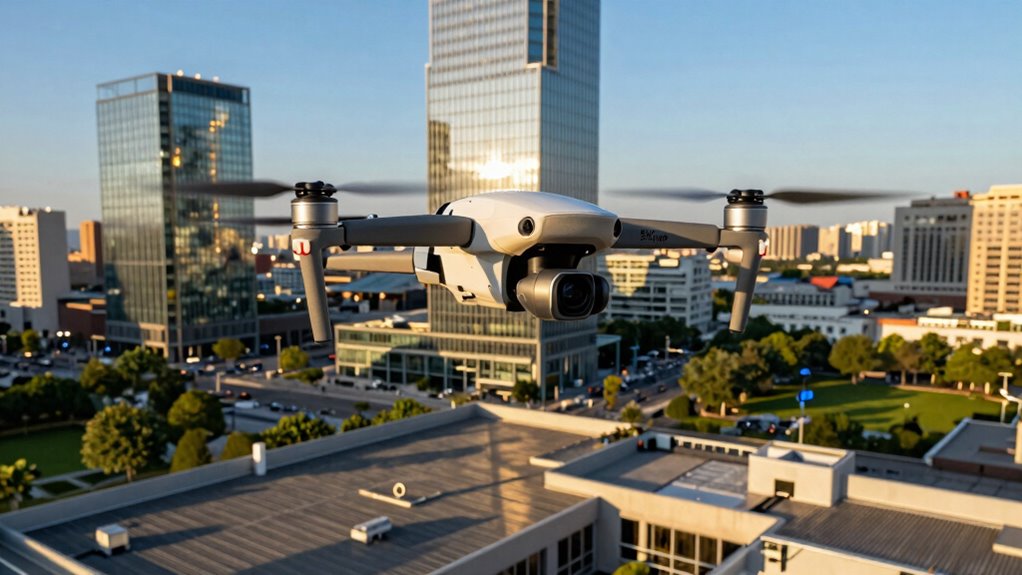
Before flying your drone for marketing, you need to know the local rules and regulations, such as altitude limits and no-fly zones, to stay compliant. Always respect privacy by avoiding private property and capturing individuals without permission. Understanding these restrictions helps you avoid fines, legal issues, and damaged reputation. Being responsible and transparent builds trust with communities and clients. Keep these key points in mind to guarantee your campaigns go smoothly—that’s just the start of what you should consider.
Key Takeaways
- Research and comply with local drone regulations, including altitude limits and no-fly zones, to avoid legal penalties.
- Obtain necessary permits or licenses for commercial drone operations in specific areas.
- Respect privacy rights by avoiding private property and capturing individuals without consent.
- Communicate clearly about filming intentions and use signage in public spaces to maintain transparency.
- Demonstrate responsible drone use to build trust, ensure professionalism, and prevent reputational or legal issues.
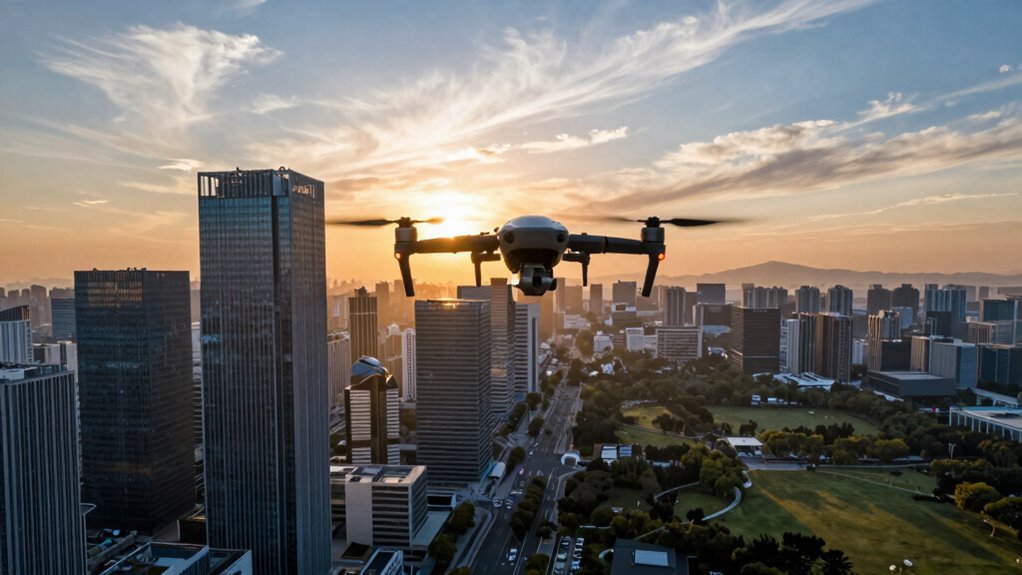
Flying drones for marketing content offers exciting opportunities, but it’s crucial to understand the rules that govern their use. As a marketer, you need to be aware of legal restrictions that can vary by location and purpose. Many countries and local jurisdictions have specific regulations about where and how you can fly drones, especially in populated areas or near private property. Ignoring these rules can lead to hefty fines, confiscation of equipment, or even legal action. Before you take off, research the rules applicable to your area, including altitude limits, no-fly zones, and whether you need permits or licenses. Staying compliant not only protects you legally but also ensures your marketing campaign runs smoothly without interruptions. Additionally, understanding the specific regulations that apply to your drone use can help you avoid unintended violations and enhance your credibility as a responsible content creator. Recognizing the importance of regulatory compliance can also help you demonstrate professionalism and build trust with clients and audiences. Privacy concerns are another critical aspect to take into account. When capturing footage with a drone, you might inadvertently invade someone’s privacy, leading to complaints or legal trouble. People are increasingly sensitive about their personal space and image, especially when drones can record high-quality images and videos from a distance. It’s your responsibility to respect privacy boundaries. Avoid flying over private property without permission and steer clear of capturing identifiable individuals without their consent. If you’re filming in public spaces, be transparent about your intentions and ensure your content doesn’t infringe on anyone’s privacy rights. Being aware of local privacy laws can help you navigate this aspect more effectively. Recognizing the importance of public awareness can also help prevent misunderstandings during your drone operations. Respecting these concerns not only helps you avoid legal issues but also builds trust with your audience and the community. Another point to keep in mind is that legal restrictions and privacy concerns are often interconnected. For example, some areas are designated no-fly zones for safety or security reasons, and flying a drone there could be seen as an invasion of privacy or a security breach. Always check for local restrictions before your shoot and weigh the potential impact on privacy. Using signage or informing the public beforehand can help mitigate misunderstandings or complaints. Additionally, keeping your drone operations within legal and ethical boundaries enhances your reputation as a responsible marketer.
professional drone with camera
As an affiliate, we earn on qualifying purchases.
As an affiliate, we earn on qualifying purchases.
Frequently Asked Questions
Are There Specific Licensing Requirements for Commercial Drone Use?
Yes, you need a license for commercial drone use. You must register your drone with the FAA, ensuring it meets regulations. Additionally, you should be aware of flight restrictions, such as no-fly zones and altitude limits, to stay compliant. These licensing requirements and restrictions are essential for legal and safe operations, helping you avoid penalties and ensuring your marketing content remains within legal boundaries.
What Are the Penalties for Violating Drone Content Regulations?
Violating drone content regulations can lead to hefty fines and even criminal charges, contrasting sharply with the safety and precision you aim for through proper drone maintenance and flight safety. Ignoring rules risks damaging your reputation and disrupting operations. To stay compliant, familiarize yourself with penalties and prioritize safety, ensuring your drone flights are both legal and effective. Staying informed helps you avoid costly mistakes and keeps your content professional.
How Do Privacy Laws Impact Drone Footage Sharing?
Privacy laws considerably impact your drone footage sharing by emphasizing data protection and addressing privacy concerns. You must respect individuals’ privacy rights and avoid capturing sensitive or private areas without consent. Failing to comply can lead to legal issues or damage your reputation. Always make sure you’re aware of local regulations, obtain necessary permissions, and handle footage responsibly to protect privacy and avoid potential penalties.
Can Drones Be Used for Advertising Without Restrictions?
You can use drones for advertising, but restrictions still apply. Imagine capturing stunning aerial creativity—sweeping shots that grab attention—yet you must navigate content licensing rules and privacy laws. Unauthorized use of footage can lead to legal issues, so make certain your drone content complies with regulations. By balancing innovative visuals with legal considerations, you can effectively elevate your marketing without risking penalties or infringing on others’ rights.
What Insurance Coverage Is Recommended for Drone Operations?
You should get all-encompassing insurance coverage before flying your drone. Liability coverage protects you against damages or injuries caused during operations, ensuring you’re financially secure. Equipment insurance covers repairs or replacements if your drone gets damaged or lost. Having both liability coverage and equipment insurance gives you peace of mind, allowing you to focus on your marketing goals without worrying about potential risks or costs associated with drone flying.
drone permits and licenses kit
As an affiliate, we earn on qualifying purchases.
As an affiliate, we earn on qualifying purchases.
Conclusion
Before you take to the skies, remember these rules are your guiding stars in a vast, open sky. Ignoring them is like sailing into a storm without a compass—dangerous and reckless. By understanding and respecting the drone content rules, you navigate the airwaves with confidence and grace. So, chart your course wisely, keep your wings steady, and let your creativity soar responsibly—your journey through the digital clouds is just beginning.
privacy screen for drone filming
As an affiliate, we earn on qualifying purchases.
As an affiliate, we earn on qualifying purchases.
no-fly zone map for drones
As an affiliate, we earn on qualifying purchases.
As an affiliate, we earn on qualifying purchases.