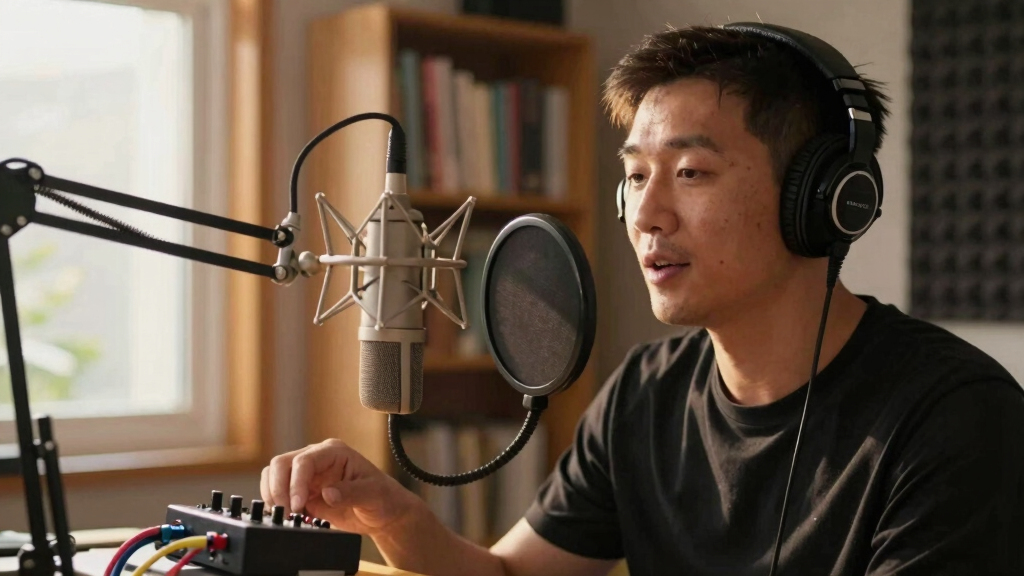

TL;DR
A Chinese voice actor was publicly asked to prove he is human amid suspicions over his digital likeness. The incident highlights concerns about AI, identity, and authenticity in digital media.
A Chinese voice actor was publicly required to prove his humanity after online suspicions questioned whether he was a real person or a digital creation. This incident underscores ongoing concerns about AI-generated content and digital impersonation, drawing widespread attention in China and beyond.
The incident took place on April 3, 2024, when the voice actor, identified as Li Wei, appeared in a live-streamed event where viewers questioned his authenticity. According to multiple social media reports, viewers challenged Li Wei’s identity after noticing inconsistencies in his speech patterns and visual appearance, prompting event organizers to ask him to perform specific actions to verify he was human.
In response, Li Wei was asked to perform a series of physical gestures and answer personal questions, which he did successfully. The organizers confirmed that Li Wei is a real person, but the incident has sparked wider debate about the use of AI and digital avatars in entertainment and online interactions. Chinese authorities have not issued an official statement on the event, but the controversy has gone viral on platforms like Weibo and Douyin.
Implications for Digital Identity Verification
This incident highlights the growing challenges of distinguishing human identities from AI-generated or digitally manipulated avatars online. It raises questions about the reliability of digital verification methods and the potential for AI to impersonate individuals convincingly. For fans and industry professionals, it underscores the need for clearer standards and safeguards against digital impersonation, especially as AI technology advances rapidly. The event also fuels ongoing discussions about privacy, authenticity, and trust in digital media, with potential regulatory implications for content verification in China and globally.
Artificial Intelligence in a Throughput Model: Some Major Algorithms
As an affiliate, we earn on qualifying purchases.
As an affiliate, we earn on qualifying purchases.
Rising Use of AI and Digital Avatars in China
Over the past few years, China has seen a surge in the use of AI-generated content and digital avatars, particularly in entertainment, advertising, and online streaming. Notably, several companies have developed hyper-realistic virtual influencers and AI-powered voice actors, blurring the lines between real and virtual personalities. This technological trend has prompted regulatory discussions, but concrete policies remain limited. The incident involving Li Wei is among the first high-profile cases where digital impersonation concerns prompted a direct human verification request in a public setting, reflecting the broader societal debate about AI’s role in daily life.“I am a real person, and I have nothing to hide. I am here to prove my authenticity.”
— Li Wei

USB Card Reader Adapter for Secure Digital Identity Verification Supports SD SIM and Cards Compact Plug and Play Design
- Wide OS Compatibility: Supports Windows 98 to 10 and more
- Supports Various Card Types: Handles bank, post, and government cards
- Ideal for Secure Transactions: Suitable for online banking and ID verification
As an affiliate, we earn on qualifying purchases.
As an affiliate, we earn on qualifying purchases.
Unverified Claims About AI Involvement
It remains unclear whether the suspicions about Li Wei were entirely due to AI-generated content or if other factors, such as misinformation or technical glitches, played a role. There is no confirmed evidence that AI was involved in creating a digital likeness of Li Wei or that he was impersonated by an AI during the incident. Authorities and organizers have not provided detailed explanations about the verification process or the specific nature of the doubts raised.
Idemia 293673644 Sigma Lite+ Biometric, HID iClass Cards Access Control/Time and Attendance Fingerprint Station; Embedded Web Server; IP65 Rated and Vandal Resistant
As an affiliate, we earn on qualifying purchases.
As an affiliate, we earn on qualifying purchases.
Possible Regulatory and Technological Responses
Experts anticipate that this incident will accelerate discussions around establishing standardized digital identity verification protocols in China. Tech companies and regulators may collaborate to develop more robust methods to distinguish humans from AI avatars, possibly leading to new laws or guidelines. Additionally, the incident could prompt further public debate on the ethical use of AI in entertainment and online platforms, with potential implications for content moderation and digital rights. The voice actor, Li Wei, is expected to continue his career, but the event has already sparked broader awareness about authenticity issues in digital spaces.
CyberLink PhotoDirector 2026 | AI Photo Editing Software for Windows | Generative AI, Photo Retouching, Layer Editing, Effects & Design Tools | Box with Download Code
- AI Object Removal: Automatically removes distractions from photos
- AI Image Enhancer: Sharpens and retouches faces for clearer images
- Wire Removal: Eliminates power lines for cleaner outdoor photos
As an affiliate, we earn on qualifying purchases.
As an affiliate, we earn on qualifying purchases.
Key Questions
Why was the Chinese voice actor asked to prove he is human?
He was asked to verify his identity after online viewers questioned whether he was a real person or a digital creation, amid rising concerns about AI-generated impersonation.
Does this mean AI was involved in creating Li Wei’s digital likeness?
There is no confirmed evidence that AI was used to create a digital likeness of Li Wei or that he was impersonated by AI during the incident. The suspicions are based on online doubts and visual inconsistencies.
What are the implications of this event for digital identity verification?
The incident highlights the need for more reliable verification methods to distinguish humans from AI avatars, especially as AI technology becomes more advanced and widespread.
Will there be new regulations following this incident?
It is likely that Chinese regulators and tech companies will consider developing standardized verification protocols to prevent similar incidents and protect digital authenticity.
What is the broader significance of this event?
This case underscores ongoing societal debates about trust, authenticity, and the ethical use of AI in digital media, with potential impacts on policy and industry practices.
Source: hn