📊 Full opportunity report: Evaluating AI Capabilities With The 512GB M5 Ultra Mac Studio on ThorstenMeyerAI.com — validation score, market gap, and execution plan.
TL;DR
Apple’s new 512GB M5 Ultra Mac Studio offers a significant leap in memory capacity and bandwidth for local AI workloads. It enables large model inference at usable speeds for individual users, marking a notable development in AI hardware.
Apple has unveiled the 512GB M5 Ultra Mac Studio, a new high-memory configuration aimed at enabling large language model inference for individual users. This is a significant step for those interested in running frontier AI at home. This development marks a significant step in making frontier-scale AI models more accessible outside of data centers, emphasizing the importance of memory capacity and bandwidth over raw GPU power alone.
The M5 Ultra does not come in a 128GB configuration but offers 96GB, 256GB, and 512GB memory options, with the latter requiring the higher-end 36-core CPU and 80-core GPU configuration. The 512GB model features a 1,200 GB/s unified memory bandwidth, a notable improvement over the 614 GB/s bandwidth of the 128GB M5 Max, and is expected to retail at a mid-teens price range, likely above $15,000.
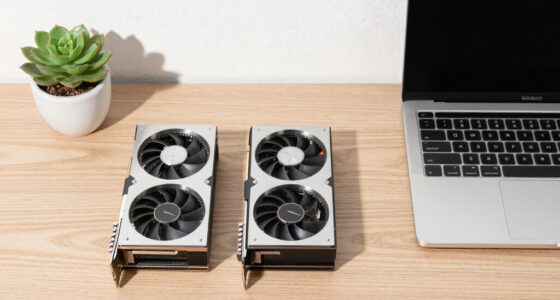
Compared to NVIDIA’s offerings, the M5 Ultra’s combination of large memory capacity and respectable bandwidth positions it uniquely for local inference tasks. For example, the NVIDIA RTX 5090 provides a higher bandwidth of 1,792 GB/s but only 32GB of memory, making it suitable for smaller models. Conversely, the RTX Pro 6000 Blackwell offers 96GB of memory at the same bandwidth but at a significantly higher cost, and the NVIDIA DGX Spark provides 128GB but with much lower bandwidth (273 GB/s), limiting its speed for large models.
Expert analysis from Thorsten Meyer emphasizes that memory capacity and bandwidth are the critical factors for local AI model inference, not just core counts or teraflops. For more on this topic, see Running Frontier AI At Home. The new Mac Studio’s high capacity and bandwidth mean it can load and run large models—such as those with 70 billion parameters—at speeds that are practical for individual users, a feat previously limited to multi-GPU setups or data center hardware.
Capacity decides what you can load. Bandwidth decides how fast it runs. Collapse them into one and every take on local-AI hardware goes wrong. Hold them apart and the field sorts itself.
Impact of the 512GB M5 Ultra on Local AI Inference
The 512GB M5 Ultra Mac Studio represents a notable advance in personal AI hardware, bridging the gap between small-scale workstations and data center infrastructure. Its high memory capacity allows loading large models entirely into GPU memory, avoiding slow disk spills, while its bandwidth supports faster inference speeds. This makes it possible for individual researchers and developers to run large language models efficiently on a single machine, potentially democratizing access to frontier AI capabilities.
By offering a complete, quiet computer with high capacity and respectable bandwidth, Apple is addressing a key bottleneck in local AI deployment. This could accelerate development, testing, and deployment of large models outside of cloud environments, broadening the scope of AI research and application for smaller teams and independent developers.
As an affiliate, we earn on qualifying purchases.
Background on AI Hardware and Memory Bottlenecks
Traditional AI hardware performance hinges on core counts, teraflops, and memory bandwidth. While high core counts and teraflops are often highlighted, experts like Thorsten Meyer emphasize that memory capacity and bandwidth are more critical for local inference of large models. The challenge has been balancing these two factors: large models require significant memory to load, and high bandwidth to generate output efficiently.
Previous hardware options, such as NVIDIA's RTX 5090 or DGX systems, either offered high bandwidth or large memory but rarely both at an affordable or practical level for individual users. The 128GB M5 Max provided a good capacity but limited bandwidth, resulting in slower inference speeds for large models. Conversely, high-bandwidth GPUs like the RTX 5090 excel at small to medium models but cannot handle larger ones due to limited memory.
The new Mac Studio's approach combines high capacity (up to 512GB) with respectable bandwidth (1,200 GB/s), filling a critical gap in personal AI hardware. This shift aligns with recent industry insights that stress the importance of matching model size with hardware memory and bandwidth capabilities for practical inference.
"Once you hold memory capacity and bandwidth apart, the whole comparison of AI hardware becomes clear. The Mac Studio's 512GB configuration offers a unique combination that makes large model inference feasible for individual users."
— Thorsten Meyer
As an affiliate, we earn on qualifying purchases.
Remaining Questions About Performance and Availability
While the hardware specifications are clear, it is not yet confirmed how the 512GB M5 Ultra will perform in real-world AI workloads compared to established GPU setups. Specific inference speeds, model compatibility, and power consumption details remain to be tested and verified. Additionally, the exact pricing and availability timeline are still estimates, with Apple signaling a mid-teens release but not providing a final retail price.
It is also uncertain whether software optimizations will fully leverage the hardware's capabilities or if additional development will be needed to maximize performance for large models.
professional AI inference hardware
As an affiliate, we earn on qualifying purchases.
As an affiliate, we earn on qualifying purchases.
Upcoming Performance Tests and Market Impact
Industry experts and early adopters will soon evaluate the 512GB M5 Ultra's real-world inference speeds and stability. Benchmark results and user feedback over the coming months will clarify how it compares to multi-GPU systems and cloud solutions in practical AI tasks.
Apple's entry into high-capacity, personal AI hardware could influence the market by pushing other manufacturers to develop more balanced solutions that emphasize capacity and bandwidth. Further, software updates and optimized frameworks will likely be necessary to fully exploit the hardware's potential, making ongoing development an essential part of its adoption.
As an affiliate, we earn on qualifying purchases.
Key Questions
What models can the 512GB M5 Ultra run effectively?
Theoretically, models with up to around 70 billion parameters at 8-bit quantization can be loaded and inferred efficiently, thanks to the 512GB capacity and 1,200 GB/s bandwidth. Larger models may be limited by memory or bandwidth constraints.
How does the 512GB M5 Ultra compare to NVIDIA's GPU options?
While NVIDIA's RTX 5090 offers higher bandwidth (1,792 GB/s), it has only 32GB of memory, limiting large model inference. The RTX Pro 6000 provides more memory but at a higher cost and similar bandwidth. The Mac Studio's combination of large capacity and respectable bandwidth offers a different balance suited for single-user large model inference.
When will the 512GB M5 Ultra be available for purchase?
Apple has announced the release for mid-2024, with pricing estimated to be in the mid-teens, likely above $15,000. Exact release dates and final pricing are still to be confirmed.
Will software optimizations be necessary to maximize performance?
Yes, software and framework optimizations will likely be needed to fully leverage the hardware's capabilities, especially for large models. Early performance data will clarify how well current AI frameworks utilize the new hardware.
Is the 512GB M5 Ultra suitable for data center AI workloads?
No, this hardware is designed primarily for individual or small team use. For large-scale data center applications, multi-GPU setups or specialized server hardware remain more appropriate due to scalability and cost considerations.
Source: ThorstenMeyerAI.com