
🔍 Read the full analysis: 2026 Ultrawide Monitors That Cater To AI Innovators on ThorstenMeyerAI.com
Listen free for 30 days with Audible
Thousands of audiobooks and originals — cancel anytime.
Start your free trialAs an affiliate, we earn on qualifying purchases.
TL;DR
In 2026, new ultrawide monitors optimized for AI professionals are set to launch. These models feature high resolutions, advanced connectivity, and ergonomic designs, supporting AI research and development. The development highlights a focus on large, high-performance displays for AI innovation.
Several leading display manufacturers have announced plans to introduce a new generation of ultrawide monitors in 2026 specifically tailored for AI innovators, researchers, and developers. These monitors aim to support the demanding requirements of AI work, including high-resolution imaging, extensive multitasking, and advanced connectivity. These monitors aim to support the demanding requirements of AI work, including high-resolution imaging, extensive multitasking, and advanced connectivity. The developments underscore a growing market focus on tools that enhance productivity and innovation in artificial intelligence.
Industry sources confirm that major brands such as Samsung, LG, and ASUS are preparing to launch ultrawide monitors with 4K and 8K resolutions tailored for AI tasks requiring detailed data visualization and model training. For more on the latest models, see the original analysis. These models will feature multiple USB-C ports, Thunderbolt 4 support, and VESA compatibility to facilitate seamless integration with AI hardware setups. To explore top options, check out the best ultrawide monitors for productivity. Ergonomic features like height adjustment, tilt, and swivel are prioritized to accommodate long working hours.
Some models are expected to incorporate AI-specific display enhancements, such as real-time data processing overlays, adaptive color calibration, and high refresh rates (>120Hz) for smooth visualization during intensive computations. Pricing is projected to range from mid-tier to premium, reflecting the advanced features aimed at professional users.
The 10 picks
- 1
 Samsung 49" Business Curved Ultrawide Dual QHD Computer Monitor, USB-C, Displ…View on Amazon →
 - 2
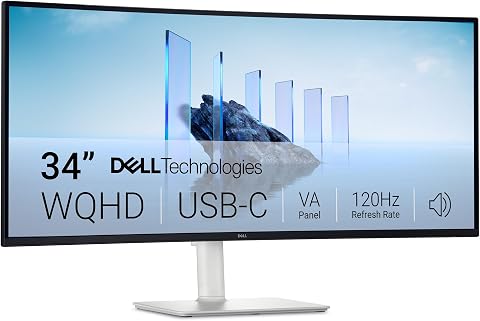 Dell 34 Monitor S3425DW, WQHD VA, 120Hz, FreeSync Premium, Eye ComfortView on Amazon →
 - 3
 LG 34WR55QK-B 34-inch UltraWide WQHD Curved Computer MonitorView on Amazon →
 - 4
 Samsung 34′ Odyssey G5 Ultra-Wide Gaming Monitor with 1000R Curved ScreenView on Amazon →
 - 5
 SAMSUNG 34" ViewFinity S50GC Series Ultra-WQHD Monitor, 100Hz, HDR10, AMD Fre…View on Amazon →
 - 6
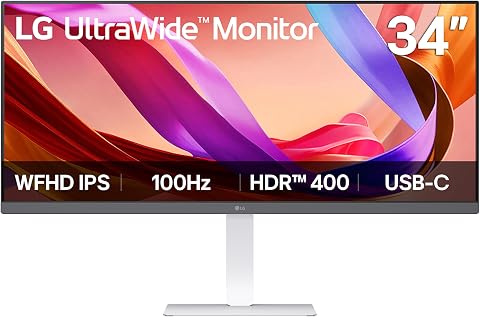 LG 34U530A-W 34-inch UltraWide WFHD IPS Computer MonitorView on Amazon →
 - 7
 SANSUI 34-Inch Curved Ultrawide Gaming Monitor UWQHD 3440 x 1440P 200HzView on Amazon →
 - 8
 LG 34U60ZB-B 34-inch UltraWide WQHD Curved MonitorView on Amazon →
 - 9
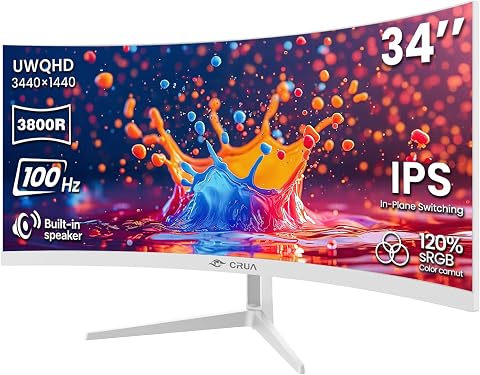 CRUA 34 Inch 21:9 UWQHD Ultrawide Curved Monitor with Speakers, WhiteView on Amazon →
 - 10
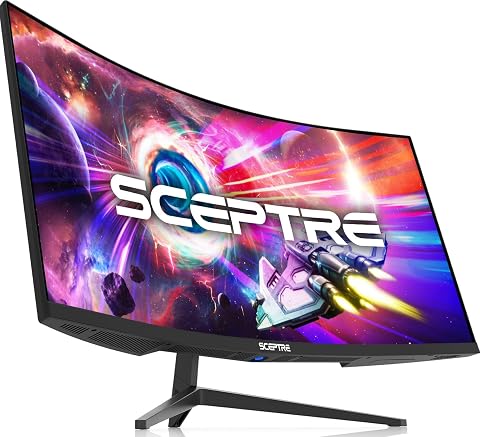 Sceptre 34-Inch Curved Ultrawide WQHD Monitor (3440 × 1440), R1500, up to 180…View on Amazon →
Impact of 2026 Ultrawide Monitors on AI Development
The introduction of these specialized ultrawide monitors could significantly influence AI research workflows by providing larger, clearer visualizations and more efficient multitasking capabilities. This can lead to faster data analysis, improved model training, and more collaborative work environments. For hardware manufacturers, this signals a strategic focus on AI-centric tools, potentially setting new industry standards for professional displays.
Growth of Ultrawide Monitors and AI Work Needs
Ultrawide monitors have gained popularity for their ability to boost productivity and gaming immersion, with models like Samsung’s 49-inch Business Curved Ultrawide and gaming-focused options from SANSUI and Samsung Odyssey leading the market. As AI development becomes more data-intensive, the demand for larger, high-resolution displays that can handle complex visualizations and multitasking is increasing. Currently, most professional AI work relies on multiple monitors, but integrated ultrawide solutions are emerging as a more efficient alternative.
This shift is driven by the need for expansive visual real estate, high color accuracy, and fast refresh rates, all of which are becoming standard features in upcoming models. The 2026 release plans reflect this trend, targeting an audience that requires both performance and convenience in a single display.
Unclear Aspects of 2026 AI-Focused Ultrawide Monitors
Details about the exact specifications, pricing, and availability timelines of these monitors remain unconfirmed. It is also unclear how widely adopted these models will be among AI researchers initially, or how they will compare to existing multi-monitor setups in terms of cost-effectiveness and performance. The extent of AI-specific display features and their real-world utility are still under development and testing.
Upcoming Launches and Industry Adoption Timeline
Manufacturers are expected to announce specific models throughout 2026, with initial releases targeted for early Q2. Industry analysts predict that adoption will increase as AI labs and research institutions evaluate these displays for their workflow enhancements. Further technical specifications and user feedback from early adopters will shape the final market offerings and feature sets.
Key Questions
What makes the 2026 ultrawide monitors different from current models?
The 2026 models are expected to feature higher resolutions (up to 8K), advanced connectivity options like Thunderbolt 4, and AI-specific display enhancements designed to support complex data visualization and multitasking for AI professionals.
Will these monitors be suitable for gaming as well as AI work?
While primarily designed for professional AI tasks, many of these monitors will include features like high refresh rates (>120Hz) and adaptive sync, making them capable of supporting gaming needs, though their core focus remains on data-intensive workflows.
Are these monitors compatible with existing AI development hardware?
Yes, they are expected to include multiple connectivity options such as USB-C, HDMI, and DisplayPort, ensuring compatibility with most AI hardware setups and workstations.
When will these monitors be available for purchase?
Manufacturers plan to release initial models throughout 2026, with availability varying by region and model. Exact release dates are yet to be confirmed.
How will these monitors impact AI research efficiency?
By providing larger, clearer visualizations and multitasking capabilities, these monitors could reduce workflow bottlenecks and accelerate data analysis and model development processes.
Source: ThorstenMeyerAI.com
Flea & tick season Picks
flea and tick prevention
As an affiliate, we earn on qualifying purchases.