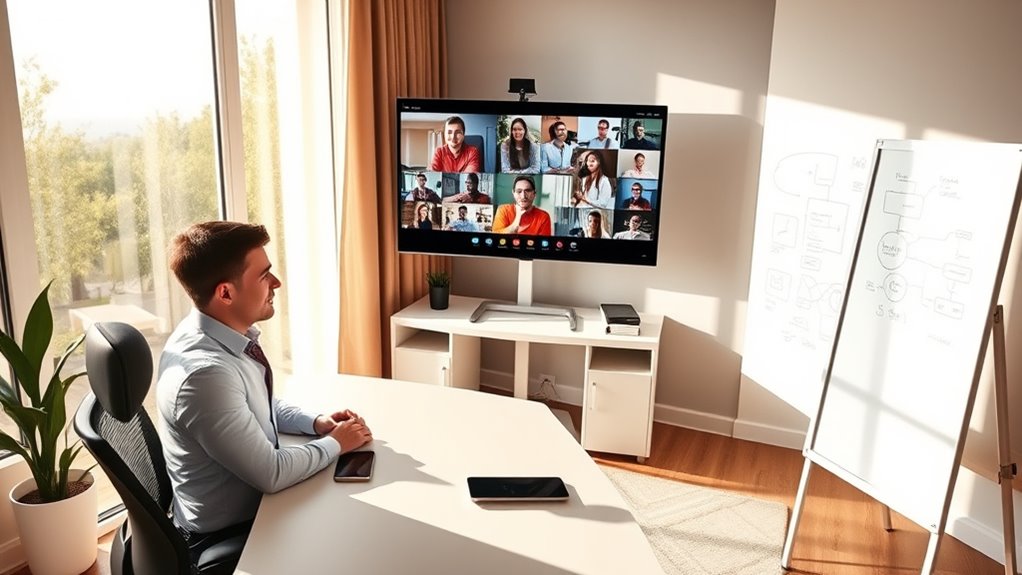

To lead remotely in the future, you need strong digital collaboration skills, clear communication, and the ability to build trust virtually. Focus on selecting the right tools, setting clear expectations, and fostering an inclusive culture of engagement. Your success depends on adapting your leadership style to facilitate connection, motivate teams, and overcome challenges like miscommunication or technology gaps. Keep developing these skills, and you’ll discover the potential of your remote teams every step of the way.
Key Takeaways
- Develop digital communication skills to foster clarity, transparency, and trust within remote teams.
- Master virtual collaboration tools and strategies to ensure seamless teamwork and idea sharing.
- Build virtual engagement by creating opportunities for informal interactions and team bonding.
- Adapt leadership styles to focus on facilitation, support, and removing barriers for remote team members.
- Stay updated on emerging technologies and best practices to continuously enhance remote leadership effectiveness.

As remote work becomes the new normal, developing strong leadership skills tailored for virtual teams is more essential than ever. In this evolving landscape, your ability to foster digital collaboration and boost virtual engagement will determine your team’s success. Leading remotely isn’t just about managing tasks; it’s about creating an environment where team members feel connected, motivated, and empowered despite the physical distance. You need to leverage digital tools effectively, ensuring communication flows seamlessly and everyone stays aligned on goals. When you prioritize digital collaboration, you give your team the means to work together efficiently, share ideas openly, and solve problems collectively, regardless of their location. This involves selecting the right platforms, setting clear expectations, and encouraging team members to use these tools actively. Virtual engagement, on the other hand, requires you to be intentional about building relationships and maintaining a sense of community. It’s not enough to send messages or hold meetings; you must foster genuine interactions that promote trust and camaraderie. Regular check-ins, informal virtual chats, and recognizing achievements help keep morale high and reinforce a sense of belonging. As a remote leader, your role shifts from direct oversight to facilitation, where your focus is on removing barriers to collaboration and ensuring everyone feels heard and valued. You should also be proactive in identifying potential challenges related to digital collaboration, such as miscommunication or technology gaps, and address them swiftly. Encouraging transparency and openness allows team members to voice concerns early, preventing misunderstandings and misalignments. Additionally, adapting your communication style to suit virtual environments is essential. Clear, concise messaging paired with active listening helps you connect more effectively with your team. You also need to be flexible, understanding that remote work can bring unique distractions and challenges. Offering support, setting realistic expectations, and providing resources for professional growth help foster a resilient and adaptable team. As you develop your remote leadership skills, don’t forget the importance of continuous learning. Stay updated on new collaboration tools, emerging best practices, and strategies to enhance virtual engagement. Developing digital collaboration skills and building a culture that values transparency, inclusivity, and ongoing feedback will position you for long-term success. In the end, mastering digital collaboration and virtual engagement is about cultivating trust and empowerment across your team. When you do this well, you create a virtual environment where everyone can thrive, innovate, and contribute their best work, no matter where they are in the world.
Frequently Asked Questions
How Do Remote Leaders Build Trust Virtually?
You build trust virtually by practicing virtual transparency and maintaining consistent communication. Share updates openly, admit mistakes, and celebrate successes to foster honesty. Keep your team informed regularly, avoiding surprises, and encourage open dialogue. When you’re transparent and consistent, your team feels valued and confident in your leadership. These actions create a strong foundation of trust, even when you’re not physically present, ensuring everyone stays aligned and motivated.
What Tools Are Essential for Remote Team Management?
You need essential tools like virtual communication platforms—think Zoom or Slack—to stay connected with your team. According to recent studies, 86% of remote workers say virtual communication tools boost productivity. Also, use productivity tracking software to monitor progress and keep everyone accountable. These tools help you foster collaboration, guarantee clear communication, and manage tasks efficiently, making remote team management smoother and more effective.
How Can Remote Leaders Handle Conflict Effectively?
To handle conflict effectively, you should practice virtual empathy by actively listening and acknowledging team members’ feelings. Address issues promptly through open, honest communication, focusing on conflict resolution rather than blame. Use video calls to create a more personal connection and guarantee everyone feels heard. By fostering trust and understanding, you can navigate disagreements smoothly and maintain a healthy, productive remote work environment.
What Are Best Practices for Remote Onboarding?
Think of onboarding as planting a seed in your remote culture. Start with a clear onboarding checklist that covers company values, tools, and expectations. Use engaging virtual introductions and regular check-ins to foster connection. Share resources early and encourage questions. This approach guarantees new hires feel welcomed and aligned, helping them thrive in your remote environment from day one. Consistency and communication are your keys to successful remote onboarding.
How Do Remote Leaders Maintain Team Engagement?
To maintain team engagement remotely, you should use virtual recognition regularly to motivate team members and strengthen connections. Embrace asynchronous communication to keep everyone involved regardless of time zones, ensuring transparency and inclusivity. Encourage open dialogue, provide regular updates, and celebrate achievements. By actively listening and recognizing efforts, you foster a sense of belonging and commitment, keeping your team motivated and engaged despite physical distance.
Conclusion
As remote work becomes the norm, honing your leadership skills is essential. Remember, 70% of employees say they’re more engaged when their leaders communicate effectively remotely. By developing skills like clear communication, empathy, and adaptability, you’ll not only inspire your team but also drive success in this evolving landscape. Embrace these skills now, and you’ll be better prepared to lead confidently into the future, creating a more connected and resilient team.