
Predictive maintenance automation uses sensor calibration, data visualization, and real-time analytics to keep equipment operating smoothly and prevent unexpected failures. By calibrating sensors regularly and visualizing data clearly, you can quickly spot issues and respond proactively. Automated routines can trigger maintenance tasks early, reducing downtime and extending equipment life. As you explore further, you’ll discover how integrating these tools leads to smarter, more efficient maintenance strategies that save time and costs.
Key Takeaways
- Integrates sensor calibration and data visualization for real-time monitoring and early fault detection.
- Automates maintenance scheduling based on sensor data trends and predictive analytics.
- Uses dashboards to track equipment health, reducing unexpected failures and downtime.
- Enhances decision-making with visual insights, enabling proactive maintenance actions.
- Supports continuous system learning and alerts for improved accuracy and operational efficiency.
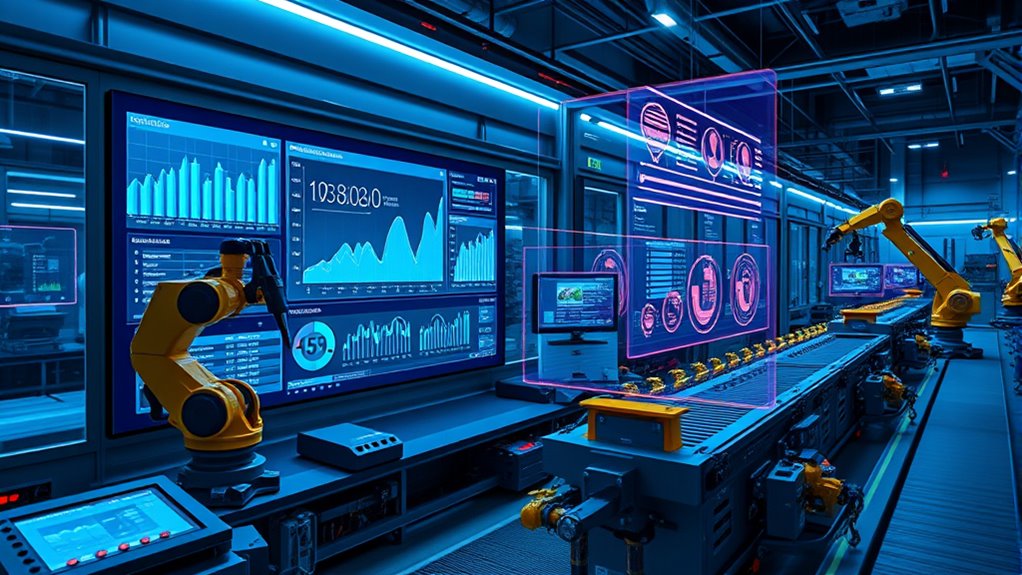
Predictive maintenance automation is transforming how industries manage equipment health and reduce downtime. By leveraging advanced sensors and intelligent systems, you can now anticipate equipment failures before they happen, saving time and money. Central to this process is sensor calibration. Properly calibrated sensors ensure accurate data collection, which is essential for reliable predictions. When sensors are misaligned or drift out of calibration, the data they generate becomes unreliable, potentially leading to false alarms or missed warnings. Regular sensor calibration keeps your monitoring systems precise, allowing you to detect subtle changes in equipment performance early on. This proactive approach minimizes unexpected failures and extends the lifespan of your assets.
Once your sensors are calibrated, the real magic begins with data visualization. As your sensors gather a continuous stream of information, data visualization tools transform raw numbers into clear, actionable insights. Instead of sifting through endless spreadsheets or raw logs, you can see trends, anomalies, and patterns displayed visually through dashboards and graphs. These visualizations make complex data accessible, enabling you to make quick, informed decisions. For example, a sudden spike in temperature or vibration levels, highlighted on a graph, can immediately alert you to potential issues. This real-time display helps you prioritize maintenance tasks, allocate resources efficiently, and avoid unnecessary downtime.
Integrating sensor calibration and data visualization into your maintenance workflow creates a seamless predictive system. Automated calibration routines can be scheduled regularly or triggered by sensor drift detection, guaranteeing ongoing data integrity. Simultaneously, data visualization platforms provide intuitive interfaces that allow your team to monitor multiple assets simultaneously. You don’t have to be a data scientist to interpret these visuals; they’re designed for quick comprehension, which accelerates response times. This combination also supports remote monitoring, giving you the flexibility to oversee equipment health from anywhere.
Furthermore, the insights gained through visualization enable continuous improvement. Over time, you’ll identify recurring issues or patterns that help refine your maintenance schedules and strategies. Automated alerts based on visualized data help you act swiftly, preventing small problems from escalating into costly failures. As technology advances, these systems become even smarter, learning from historical data to improve prediction accuracy. Overall, sensor calibration and data visualization form the backbone of effective predictive maintenance automation, empowering you to keep operations running smoothly with minimal disruption. By embracing these tools, you enhance your ability to maintain equipment proactively, ensuring increased efficiency, safety, and profitability.
Frequently Asked Questions
How Does Predictive Maintenance Compare Cost-Wise to Traditional Maintenance?
Predictive maintenance generally costs less than traditional methods because it offers significant cost savings through optimized maintenance scheduling. You can reduce unnecessary repairs and prevent unexpected breakdowns, which often lead to expensive downtime. By investing in predictive maintenance, you streamline your maintenance processes, cut labor and parts costs, and extend equipment lifespan. Overall, this approach helps you save money and improve operational efficiency over time.
What Industries Benefit Most From Predictive Maintenance Automation?
Imagine a well-tuned orchestra where each instrument plays in harmony; industries like manufacturing, transportation, and energy reap similar benefits. You integrate sensors and harness data analytics to anticipate issues before they strike, preventing costly breakdowns. These sectors thrive on predictive maintenance automation because it transforms raw data into actionable insights, keeping operations smooth and downtime minimized. By doing so, you turn potential chaos into a symphony of efficiency.
How Secure Is Data Collected for Predictive Maintenance?
You might worry about cybersecurity risks, but data collected for predictive maintenance is generally protected. Companies use data encryption to safeguard sensitive information during transmission and storage, reducing the chance of breaches. Regular security audits and robust firewalls also help safeguard data. While no system is entirely risk-free, implementing these measures ensures your maintenance data remains confidential and protected against cyber threats.
Can Small Businesses Implement Predictive Maintenance Solutions?
Yes, small businesses can implement predictive maintenance solutions. You can start with simple asset tracking tools to monitor equipment health and identify potential issues early. Additionally, providing technician training guarantees your team can use these systems effectively. While it might seem complex initially, affordable options and scalable solutions make it achievable, helping you reduce downtime and maintenance costs as you grow.
What Are the Future Trends in Predictive Maintenance Technology?
Think of the future of predictive maintenance as a symphony where machine learning and sensor integration play harmonious melodies. You’ll see smarter systems that anticipate issues before they arise, like a fortune teller reading the subtle signals from your equipment. Advanced algorithms will analyze vast data streams, enabling real-time decisions. This evolution guarantees your machinery stays healthy, reducing downtime and costs, making your maintenance efforts more precise and proactive than ever before.
Conclusion
By embracing predictive maintenance automation, you can catch issues before they cause costly downtime. Imagine a manufacturing plant using sensors to monitor equipment health continuously; when a potential failure is detected, maintenance is scheduled proactively. This approach not only saves money but also boosts productivity. With automation, you stay ahead of problems, ensuring smooth operations and increasing your competitive edge. Don’t wait—start integrating predictive maintenance today and experience the benefits firsthand.