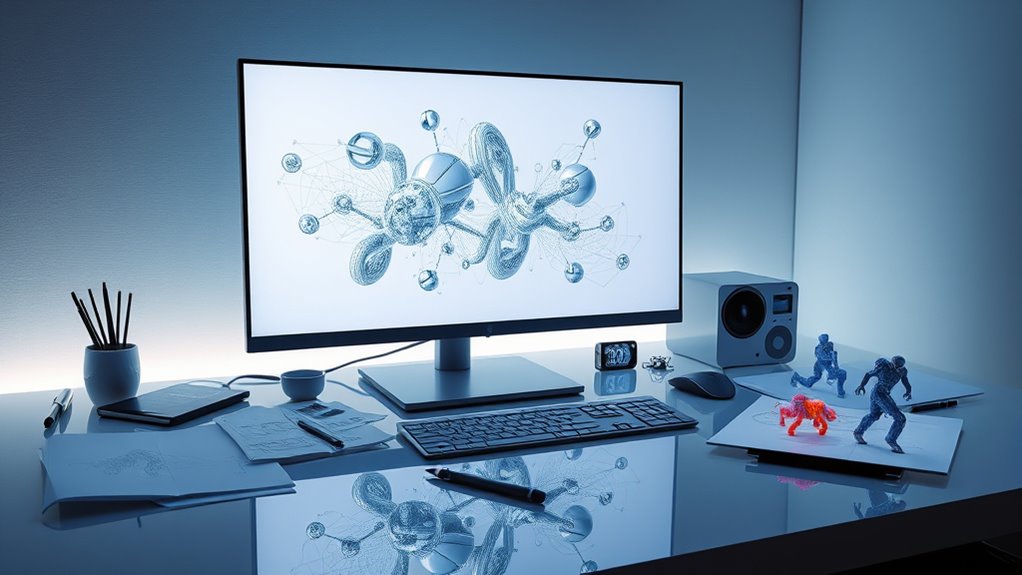

Generative AI revolutionizes product design by helping you rapidly create innovative prototypes and explore multiple concepts quickly. It accelerates workflow, allowing you to test different configurations and refine top ideas faster. You can simulate user interactions, identify pain points, and incorporate personalized insights from the start. This technology automates repetitive tasks, freeing your time for creative problem-solving. Keep exploring to discover how this cutting-edge tool can elevate your design process even further.
Key Takeaways
- AI-driven prototyping enables rapid generation and exploration of diverse design concepts, accelerating the product development cycle.
- Workflow automation and iteration tools allow for quick testing and refinement of multiple configurations.
- AI simulations help optimize user experience by identifying pain points and suggesting usability improvements early.
- Personalization features tailor designs to specific user preferences and market trends, increasing product relevance and success.
- Human-machine collaboration enhances creativity by automating repetitive tasks and focusing human efforts on innovative problem-solving.
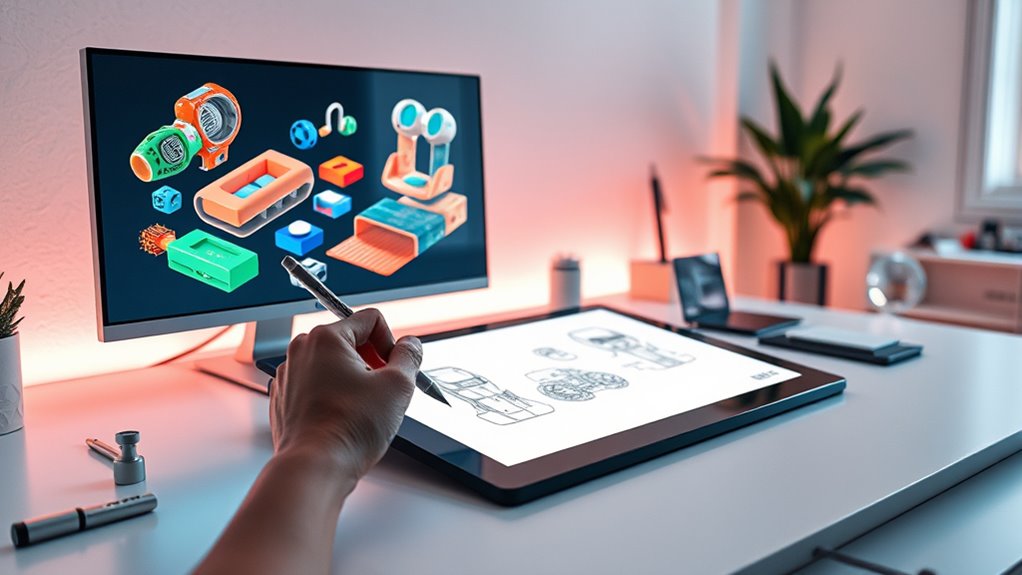
Generative AI is transforming product design by enabling creators to rapidly generate innovative concepts and prototypes. With AI-driven prototyping, you can explore a multitude of design options in a fraction of the time it used to take. Instead of manually sketching or building initial models, you feed your ideas into an AI system, which then produces diverse variations that meet your specified criteria. This process accelerates your workflow, allowing you to focus more on refining the best designs rather than starting from scratch each time. As a result, you gain the ability to iterate quickly, test different configurations, and discover novel solutions that might have been overlooked with traditional methods.
One of the key advantages of AI-driven prototyping is its impact on user experience optimization. When you leverage generative AI, you can analyze how users might interact with your product at an early stage. The AI can simulate user interactions, identify potential pain points, and suggest improvements that enhance usability. This proactive approach ensures that user needs are integrated into the design from the outset, leading to more intuitive and engaging products. By continuously refining prototypes based on AI insights, you improve the overall user experience, making your products more appealing and easier to adopt. Additionally, incorporating attention into your design process helps ensure that your creative efforts remain focused and effective throughout development.
Furthermore, generative AI helps you personalize designs to better suit target audiences. As you input user data, preferences, or market trends, the AI generates tailored concepts that resonate more deeply with specific user groups. This capability not only boosts your chances of product success but also streamlines your decision-making process, as you’re presented with data-driven insights and viable options. In addition, AI-driven tools can automate repetitive tasks, freeing up your time to focus on creative problem-solving and strategic planning. This synergy between human ingenuity and machine intelligence leads to more innovative and user-centric products.
Frequently Asked Questions
How Does Generative AI Impact the Traditional Roles of Product Designers?
You find that generative AI transforms your traditional role by enabling more collaborative workflows and design automation. It allows you to generate multiple design options quickly, freeing you from repetitive tasks and fostering innovation. Instead of doing all the manual work, you can focus on strategic thinking and creativity. This shift helps you work more efficiently, collaborate seamlessly with teams, and push the boundaries of your design capabilities.
What Are the Ethical Considerations in Using Ai-Generated Designs?
Think of AI-generated designs like Pandora’s box—you must handle them responsibly. You’re responsible for addressing data bias that can skew outcomes and ensuring accountability standards are met. Ethical considerations demand transparency about AI’s role, avoiding over-reliance that risks dehumanizing design. By actively scrutinizing AI outputs and maintaining human oversight, you safeguard against unintended consequences and uphold integrity in your creative process.
Can Generative AI Fully Replace Human Creativity in Product Design?
No, generative AI can’t fully replace human creativity in product design. AI creativity excels in design automation, helping generate ideas quickly and efficiently. However, your unique insights, emotional intelligence, and cultural understanding are essential for crafting meaningful, innovative products. While AI tools can enhance your workflow, they complement rather than replace your creative vision, ensuring the final design resonates deeply with users.
How Do Companies Protect Intellectual Property With Ai-Generated Products?
Imagine your ideas as a treasure chest; to protect it, you lock it with robust keys like strong patents and clear intellectual property rights. Companies use strategic patent strategies to safeguard AI-generated products, ensuring their innovations stay theirs. They also document creation processes and establish legal boundaries, like fences around a garden. This way, they defend their ownership, preventing others from copying or claiming their AI-driven designs, keeping their creative treasures secure.
What Skills Are Essential for Designers Working With Generative AI Tools?
You need strong technical proficiency to operate generative AI tools effectively and understand their capabilities. Equally important is your ability to engage in creative collaboration, working seamlessly with AI to refine ideas and push boundaries. Being adaptable and curious helps you stay ahead, while understanding design principles ensures your outputs remain innovative and functional. These skills empower you to harness AI’s potential fully and create compelling, original products.
Conclusion
As you explore generative AI in product design, you’re opening a treasure chest of creativity and efficiency. It’s like having a skilled co-creator by your side, turning your ideas into reality faster than ever. Embrace this powerful tool, and watch your designs flourish like a garden in full bloom. With AI as your partner, you’re not just designing—you’re shaping the future, one innovative idea at a time.