TL;DR

Get business pricing on tech for your team
- Business-only prices and quantity discounts
- Tax-exempt purchasing
- Multiple users, one account, clear invoices
Hugging Face has added two private Liva AI conversational-speech splits for Egyptian and Nigerian English to the Open ASR Leaderboard. The additions broaden the accents represented in its private evaluation data, but each split contains under two hours of audio, and the leaderboard post does not give model results or detailed collection and scoring methods.
Hugging Face has added two private speech-recognition evaluation splits covering Egyptian and Nigerian English to its Open ASR Leaderboard, through a collaboration with Liva AI. The additions expand the accents represented in the leaderboard’s private data and add conversational speech samples that are not publicly released as benchmark material.
The new splits are listed as Liva AI Conversational EG and Liva AI Conversational NG. The Egyptian English split contains 1.34 hours of audio, while the Nigerian English split contains 1.55 hours. Hugging Face describes both as spontaneous, conversational speech.
The leaderboard post says the recordings have punctuated, cased transcripts that retain disfluencies. That transcription style can make the evaluation reflect features of ordinary speech, including hesitations or repetitions, rather than only clean, scripted utterances. The post does not provide sample transcripts, individual speaker counts, or results for particular speech-recognition systems.
The splits are part of the leaderboard’s private evaluation data. Hugging Face says it has been adding held-out data and providers to improve representation and trust in evaluation, including earlier additions from Appen, DataOceanAI, and Voice Arena. The source does not say when the new splits became available to users or whether leaderboard rankings changed after their addition.
Broader Accent Coverage in ASR Tests
Speech-recognition systems can perform differently across accents and speaking styles, so benchmark coverage affects what their scores can show. Including Egyptian and Nigerian English gives the leaderboard additional ways to test whether systems handle speech beyond the accents most commonly represented in evaluation datasets. It does not, by itself, establish how well any model performs for speakers from either country.
Private data can also make it harder for developers to tune systems directly to benchmark examples. Hugging Face says held-out sets are intended to support more trustworthy comparisons and reduce “benchmaxxing,” its term for optimizing systems to perform well on a known benchmark rather than improving general capability. That is the stated purpose of the data strategy, not evidence that the new splits have already changed model behavior or leaderboard outcomes.
The modest size of each addition is relevant: together, the two splits comprise 2.89 hours of audio. They broaden the leaderboard’s stated coverage, but the announcement does not establish that this volume represents the range of speech within either country. Results should be read as performance on these particular test sets, not as a complete measure of recognition quality for all Egyptian or Nigerian English speakers.
Products Worth Considering

Bose QuietComfort Wireless Noise-Cancelling Headphones, Cypress Green
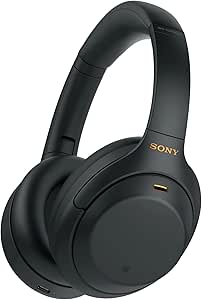
Sony WH-1000XM4 Wireless Noise Cancelling Headphones, Black

Bose QuietComfort 45 SE Wireless Noise-Cancelling Over-Ear Headphones
As an affiliate, we earn on qualifying purchases.
Earlier Private Data Additions
The new splits extend a series of additions to the Open ASR Leaderboard. Hugging Face says that a few months before this announcement it added 11 private splits from Appen and DataOceanAI, covering scripted and conversational speech across five accents. It later added a private split for Indian-accented English with Voice Arena. The supplied post does not give the dates or detailed specifications for those earlier additions.
With the Egyptian and Nigerian data, Hugging Face says its private tab can report comparisons for US versus non-US accents, with the non-US group listing the UK, Australia, Canada, India, Nigeria, and Egypt. It also presents an “Inner Circle” grouping—US, UK, Australia, and Canada—against “Outer & Expanding Circles,” which in this breakdown includes India, Nigeria, and Egypt. The post says further separation of the latter groups may come as more accents are added.
Hugging Face credits Hume AI with the idea of using Kachru’s Three Circles to organize the accent breakdown. Liva AI describes itself as collecting multimodal interaction data through consumer products and says its data comes from real product use. Those are the provider’s descriptions; the leaderboard announcement does not publish additional information about recruitment, recording conditions, or demographic representation for these two splits.
“The community response was great, with many highlighting the importance of held-out sets for trustworthy evaluations.”
— Hugging Face
Coverage and Scoring Details Still Limited
The announcement does not disclose the number of speakers, their regional or demographic distribution, recording settings, or how the speech was selected for each split. It also does not explain whether the audio includes a range of Egyptian and Nigerian regional varieties, or how the transcripts were checked. Those details would help readers judge how broadly the results can be applied.
Hugging Face lists the data durations and transcription style but does not state the scoring metric, the systems tested, or any before-and-after leaderboard scores in the supplied post. It is therefore unclear whether adding the splits has shifted model rankings or exposed specific performance gaps. The data is described as private, and the post does not specify access rules or how users can reproduce evaluations against it.
The Kachru-based groupings are a way the leaderboard says it will present its accent comparisons, not a claim that the accents within each category are uniform. Hugging Face also says it may split the Outer and Expanding Circles as coverage grows. The timeline and criteria for that change are not given.
More Accents May Join the Leaderboard
Hugging Face says it intends to add more accents and languages and to expand its private evaluation data with additional providers. The company also says the Outer and Expanding Circle groups may be separated as the leaderboard gains further accent coverage, but it has not announced a schedule or named the next additions.
For readers tracking the immediate impact, the next useful information would be updated leaderboard results, documentation on the splits’ composition and scoring, and details on evaluation access. None of those updates is specified in the supplied announcement. Until such information is available, the confirmed development is the addition of the two listed conversational datasets, not a documented change in system performance.
Key Questions
What was added to the Open ASR Leaderboard?
Hugging Face added two private Liva AI conversational-speech splits: one for Egyptian English and one for Nigerian English.
How much audio is in the new splits?
The Egyptian English split has 1.34 hours of audio and the Nigerian English split has 1.55 hours, for a combined 2.89 hours.
Are the new recordings scripted?
No. Hugging Face describes both sets as spontaneous, conversational speech. Their transcripts are punctuated and cased, and retain disfluencies.
Do the additions show which speech-recognition model performs best?
The supplied announcement reports no model scores or ranking changes. It describes the new evaluation data but does not publish results from testing systems on it.
Why is the data private?
Hugging Face says private, held-out data is intended to make it harder to tune systems to known benchmark examples and to support more trustworthy evaluation. The post does not provide details on access rules for the new splits.
Source: huggingface.co