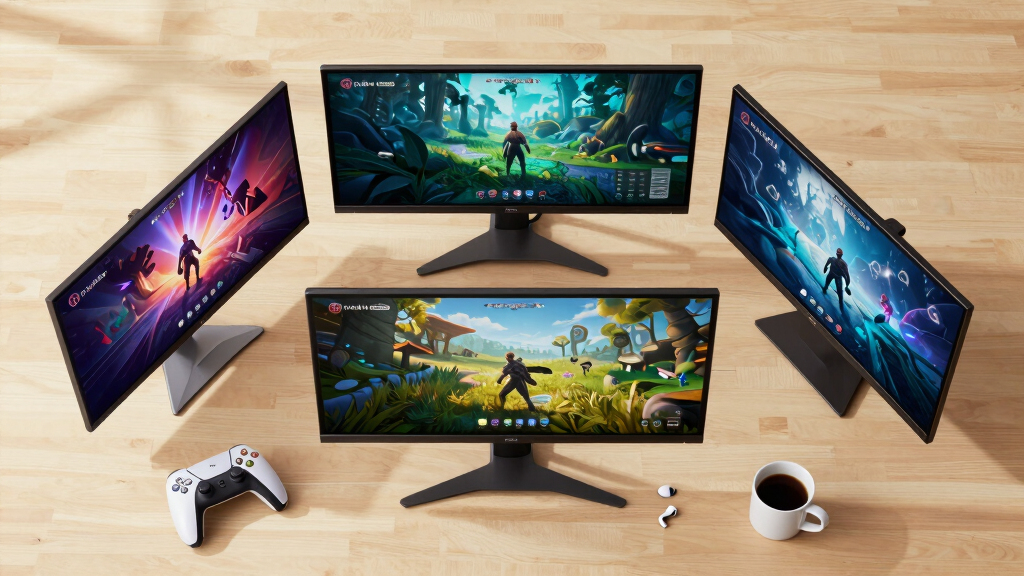

📊 Full opportunity report: Explore The Top 10 OLED Gaming Monitors With AI Technology In 2026 on ThorstenMeyerAI.com — validation score, market gap, and execution plan.

Get business pricing on tech for your team
- Business-only prices and quantity discounts
- Tax-exempt purchasing
- Multiple users, one account, clear invoices
TL;DR
In 2026, the market features the top 10 OLED gaming monitors equipped with AI technology, combining high refresh rates, deep blacks, and advanced image processing. This list helps gamers choose the best model for their needs based on specs and use cases.
The 10 picks
- 1
 Samsung 27” Odyssey OLED G5 (G50SF) QHD Gaming Monitor, 180Hz, 0.03ms GtG, G-…View on Amazon →
 - 2
 Samsung 27" Odyssey OLED G6 Gaming Monitor – QD-OLED, QHD, 240Hz, 0.03ms, HDR…View on Amazon →
 - 3
 Alienware 34 240Hz QD-OLED Curved Gaming Monitor – AW3425DWView on Amazon →
 - 4
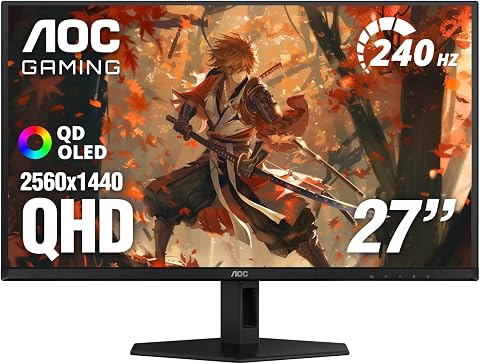 AOC 27" QD OLED Gaming Monitor, QHD 2560×1440, 240Hz, 0.03ms GtG, G-SYNC Comp…View on Amazon →
 - 5
 LG 27GX704A-B 27-inch Ultragear QHD OLED Gaming MonitorView on Amazon →
 - 6
 ASUS ROG Swift OLED 27” 1440P Gaming Monitor (PG27AQDP)View on Amazon →
 - 7
 LG 34GX900A-B 34-Inch Ultragear WQHD OLED Curved Gaming Monitor, 240Hz, 0.03m…View on Amazon →
 - 8
 Acer Predator 26.5" WQHD QD-OLED Gaming Monitor with 240Hz, AMD FreeSync PremiumView on Amazon →
 - 9
 LG 27-inch UltraGear OLED Gaming Monitor QHD 1440p 240HzView on Amazon →
 - 10
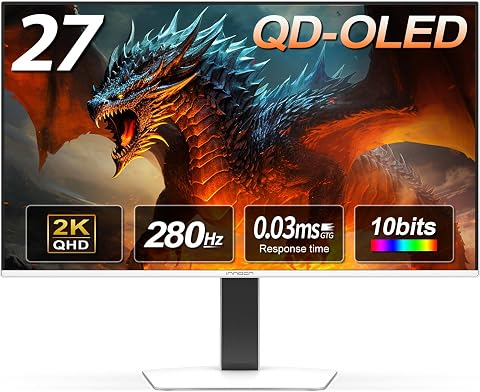 INNOCN 27" QD-OLED Gaming Monitor, 2K QHD 2560×1440, 280Hz, 0.03ms, HDR400, H…View on Amazon →
Why 2026’s OLED Monitors with AI Matter for Gamers
These AI-enabled OLED gaming monitors significantly enhance visual fidelity, responsiveness, and user customization, setting a new standard for gaming displays. They allow gamers to experience deeper blacks, brighter HDR, and smoother motion while benefiting from AI-driven optimizations that improve image clarity and reduce artifacts. This development matters because it offers a combination of cinematic quality and competitive performance, appealing to both casual and professional players. As AI integration becomes more widespread, these monitors are also likely to influence future display design, pushing innovations in panel longevity, energy efficiency, and adaptive features. However, the increased complexity may raise concerns about durability and cost, making informed choices critical for consumers.Evolution of OLED Gaming Monitors and AI Integration in 2026
Over the past few years, OLED technology has gained popularity among gamers for its deep blacks, fast response times, and HDR performance. In 2026, the addition of AI features marks a significant leap, with manufacturers embedding intelligent algorithms to optimize contrast, motion, and color accuracy dynamically. Leading brands like Alienware, Samsung, ASUS, and LG have launched models that combine these features, responding to the growing demand for high-performance, visually stunning gaming displays. The market shift reflects broader trends toward AI-powered consumer electronics, with gaming monitors now offering smarter, more adaptable experiences. Prior models lacked these AI enhancements, focusing primarily on hardware specs such as refresh rate and resolution, but 2026 models integrate software-driven improvements for a more refined user experience.Unconfirmed Aspects of AI-Enhanced OLED Monitors in 2026
It remains unclear how long the panel longevity will be affected by AI-driven dynamic contrast adjustments and static-image wear, as real-world longevity data is still emerging. Additionally, the full extent of AI’s impact on energy consumption and long-term durability of these OLED panels has not been conclusively established. Consumer reports and independent testing are ongoing to verify these aspects, and some manufacturers have not yet disclosed detailed technical data.Future Developments and Market Trends for 2026 OLED Gaming Monitors
Manufacturers are expected to release new models with further refined AI capabilities, including improved panel longevity and more sophisticated image optimization algorithms. Firmware updates may add new AI-driven features, enhancing user customization. Market adoption will likely grow as prices stabilize and more competitive options emerge, making AI-enhanced OLED gaming monitors accessible to a broader audience. Industry analysts predict that AI will become a standard feature in high-end gaming displays by late 2026, shaping future innovations.Key Questions
How do AI features improve OLED gaming monitors?
AI features optimize contrast, motion smoothing, and color accuracy in real-time, enhancing visual quality and responsiveness tailored to each game and environment.
Are OLED monitors with AI technology suitable for long-term use?
While AI enhances image quality, concerns about static-image wear and panel lifespan remain. Manufacturers are implementing panel-care features, but long-term durability data is still being collected.
What is the best size and resolution for gaming in 2026?
Most gamers prefer 27-inch QHD (2560×1440) displays for a balance of performance and desk space, though ultrawide 34-inch models are popular for immersive experiences. The choice depends on game type and hardware capabilities.
Will AI features significantly increase the cost of OLED gaming monitors?
AI integration currently adds some cost, but as technology matures and production scales up, prices are expected to decrease, making these monitors more accessible.
When will more models with AI-enhanced OLED screens become available?
Several new models are expected to be announced or released throughout 2026, with ongoing updates to existing models to incorporate more advanced AI features.
Source: ThorstenMeyerAI.com
Halloween Picks
halloween
As an affiliate, we earn on qualifying purchases.