
📊 Full opportunity report: Fair-value appraisals for used GPUs and AI hardware on IdeaNavigator AI — validation score, market gap, and execution plan.

Get business pricing on tech for your team
- Business-only prices and quantity discounts
- Tax-exempt purchasing
- Multiple users, one account, clear invoices
TL;DR
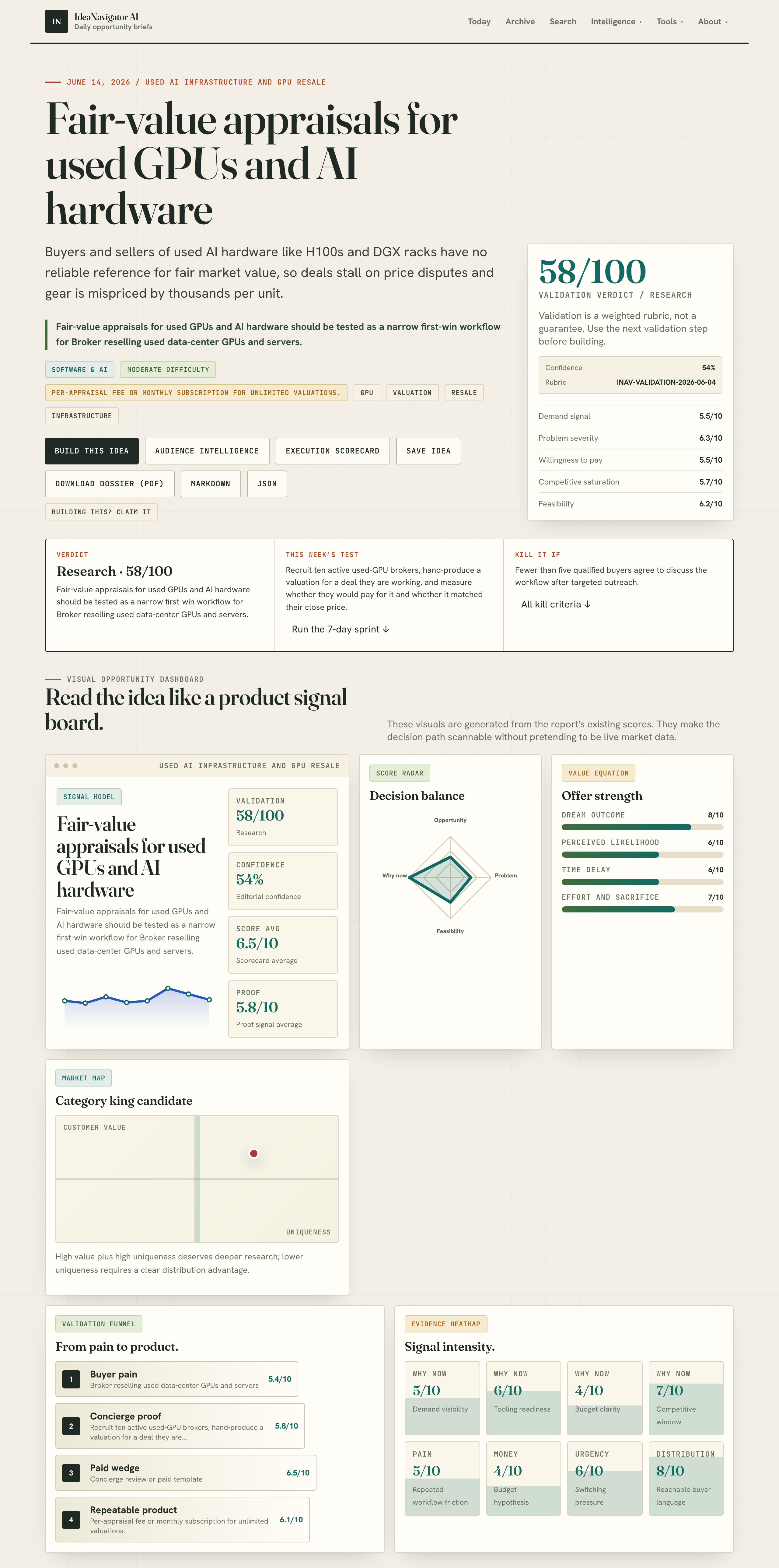
A proposed manual fair-value appraisal system for used GPUs and AI hardware aims to create transparent pricing benchmarks. This development targets brokers reselling data-center hardware amid market volatility. Validation is ongoing with initial testing among active brokers.
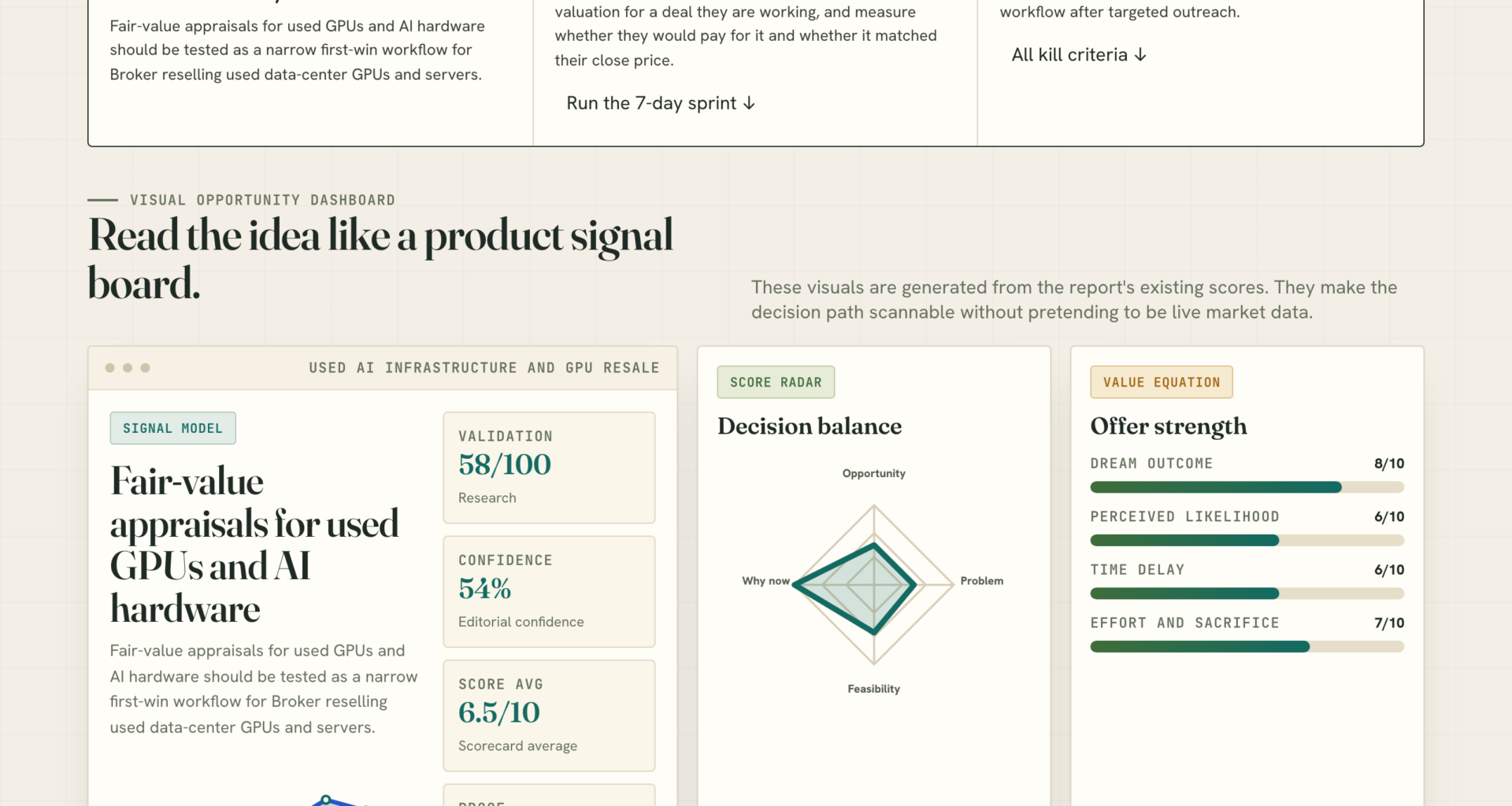
IdeaNavigator AI has introduced a manual fair-value appraisal system for used GPUs and AI hardware, aiming to provide brokers with reliable, transparent pricing benchmarks amid a rapidly changing secondary market.
The initiative responds to a market where buyers and sellers of used AI hardware, such as NVIDIA H100 GPUs and DGX racks, lack consistent references for fair market value. This leads to pricing disputes and mispriced equipment, often by thousands of dollars per unit.
The proposed solution is a manual valuation sheet where brokers input hardware model, condition, and quantity to receive a curated range of fair value estimates. These estimates are based on three recent comparable sales from public listings, offering a practical first step toward establishing transparent pricing.
According to IdeaNavigator AI, the system is designed as a minimal viable product (MVP), with revenue generated via per-appraisal fees or a subscription model for unlimited valuations. The approach aims to improve deal accuracy and reduce pricing disputes in the used AI hardware market.
Implications for Used AI Hardware Resale Market
This development could significantly improve transparency and efficiency in the secondary market for AI hardware. By providing brokers with reliable fair-value estimates, it may reduce deal stalls caused by pricing disagreements and help stabilize hardware valuations during periods of rapid refresh cycles by hyperscalers and labs.
Establishing standardized valuation methods could also attract more participants to the used market, potentially increasing liquidity and facilitating better resource allocation for organizations replacing or reselling hardware. However, the system’s accuracy and adoption remain to be seen as validation efforts continue.
As an affiliate, we earn on qualifying purchases.
Market Dynamics Driving the Need for Fair-Value Appraisals
The secondary market for used AI hardware has grown rapidly as hyperscalers and research labs frequently upgrade their GPU fleets, often selling recent-generation equipment in bulk. Currently, there are no standardized benchmarks for pricing these assets, leading to inconsistent valuations and frequent disputes between buyers and sellers.
Without reliable reference points, brokers and resellers often rely on anecdotal data or outdated pricing, which hampers deal closure and can result in significant financial discrepancies. The lack of transparency has become more acute as hardware prices fluctuate with supply chain dynamics and technological advancements.
This initiative by IdeaNavigator AI aims to fill this gap with a practical, manual valuation tool, starting with a narrow focus on GPU and AI server resales, before potentially expanding to broader hardware categories.
“This manual valuation approach could provide the first reliable benchmark for fair pricing in the used AI hardware market.”
— an anonymous researcher
AI hardware resale valuation tools
As an affiliate, we earn on qualifying purchases.
As an affiliate, we earn on qualifying purchases.
Uncertainties in Validation and Adoption
It is not yet clear how accurately the manual valuation sheet will reflect actual market prices over time or how widely it will be adopted by brokers. Validation efforts are ongoing, with initial testing involving ten active brokers, but broader industry acceptance remains uncertain.
As an affiliate, we earn on qualifying purchases.
Next Steps in Developing and Testing the Valuation Tool
IdeaNavigator AI plans to pilot the valuation system with ten brokers, comparing the appraised values with their closing prices to measure accuracy and willingness to pay. Success in these tests could lead to wider deployment and potential automation features in future iterations.
As an affiliate, we earn on qualifying purchases.
Key Questions
How will the manual valuation system work?
Brokers will input hardware details such as model, condition, and quantity into a curated sheet, which will then generate a fair value range based on recent comparable sales.
Will this system replace existing pricing methods?
It is intended as a first-step, practical benchmark to improve transparency, not a complete replacement for market analysis or automated valuation models.
Who will pay for these appraisals?
The system will generate revenue through per-appraisal fees or monthly subscriptions for unlimited valuations, targeting brokers and resellers.
When will the system be available for wider use?
Following initial validation with ten brokers, broader deployment could occur within the next few months, depending on validation results and industry feedback.
Could this improve hardware resale prices?
Potentially, by providing clearer benchmarks, it could reduce pricing disputes and help establish more consistent valuations, benefiting both buyers and sellers.
Source: IdeaNavigator AI
Columbus Day / Indigenous Peoples' Day Picks
long weekend sales
As an affiliate, we earn on qualifying purchases.