
TL;DR

Get tech for your team delivered free — and shop member deals
- Fast, free delivery on millions of items
- Access to Prime Big Deal Days deals on October 6–7
- Prime Video, Amazon Music and more included
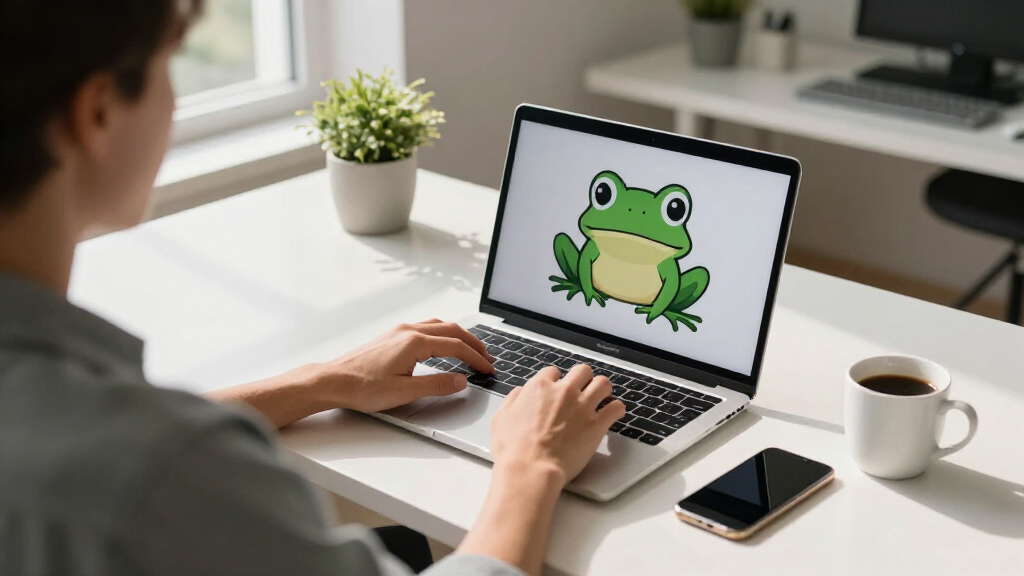
An individual has tested AI image generation by requesting an SVG of a frog with a Habsburg jaw. This personal benchmark illustrates AI’s current creative limits and potential. The development is a subjective test rather than an official measure.
A user has conducted a personal test of AI capabilities by requesting the generation of an SVG image depicting a frog with a Habsburg jaw, highlighting current AI limitations in understanding complex, specific visual prompts.
The individual’s benchmark involves instructing an AI image generator to produce a vector graphic (SVG) of a frog with a distinctive Habsburg jaw, a historical facial trait associated with European royalty. This test aims to evaluate how well AI can interpret nuanced, culturally specific, and anatomically detailed prompts.
While AI models like DALL·E, Midjourney, and Stable Diffusion are capable of producing diverse images, generating precise SVG graphics based on detailed descriptions remains challenging. The user reports mixed results, with some images aligning with expectations and others missing key features or producing distorted representations.
Experts in AI image synthesis confirm that current models often struggle with complex or highly specific prompts, especially when translating detailed anatomical features into vector graphics. The user’s experiment underscores ongoing limitations in AI’s ability to understand and accurately render fine-grained, culturally specific visual traits.
Implications for AI Creativity and Limitations
This personal benchmark reveals the current state of AI’s creative and interpretive capacities, especially in generating detailed, culturally specific images. It illustrates that while AI can produce visually interesting outputs, achieving precise, anatomically accurate, or culturally nuanced images remains difficult.
For developers, this highlights areas for improvement in prompt understanding and rendering accuracy. For users, it underscores the importance of managing expectations when requesting highly specific or detailed images from AI tools.
Ultimately, this experiment contributes to broader discussions about AI’s role in creative fields, emphasizing both its potential and its current technical boundaries.
As an affiliate, we earn on qualifying purchases.
Current Capabilities and Challenges in AI Image Generation
AI image generation models have advanced rapidly over recent years, enabling users to create a wide range of visual content from simple prompts. Popular tools like DALL·E 2, Midjourney, and Stable Diffusion can produce diverse images, often with minimal input.
However, generating precise vector graphics such as SVGs, especially based on complex or culturally specific descriptions, remains a challenge. Most models are optimized for raster images, and translating detailed prompts into scalable vector formats is still an area of active development.
The Habsburg jaw is a historically significant facial trait, often associated with European royal lineages, making it a culturally specific feature that tests an AI’s interpretive understanding. The user’s experiment reflects a broader trend of individuals pushing AI tools beyond their typical use cases to evaluate their limits.
As an affiliate, we earn on qualifying purchases.
Unclear Accuracy and Reproducibility of Results
It is not yet confirmed how consistently AI models can generate accurate SVG images based on highly specific prompts like the Habsburg jaw. Results vary depending on the model, prompt phrasing, and user settings. The subjective nature of this benchmark also means that interpretations of success differ among users.
Further testing and systematic evaluation are needed to determine whether these results can be reproduced reliably across different AI tools and prompts.
As an affiliate, we earn on qualifying purchases.
Next Steps for Personal AI Testing and Development
The user plans to refine prompts and test additional AI models to better understand the variability in results. Developers may also explore improving model training to handle complex anatomical and cultural features more accurately.
Further community-driven benchmarks could emerge, providing more data on AI’s capabilities in generating detailed vector graphics based on nuanced prompts. Researchers might also focus on enhancing AI understanding of anatomical and cultural traits in image synthesis.
As an affiliate, we earn on qualifying purchases.
Key Questions
What is the purpose of this personal AI benchmark?
The purpose is to evaluate AI’s ability to interpret and generate complex, culturally specific visual prompts, specifically in SVG format, as a measure of its creative and technical limits.
Can current AI tools reliably generate SVG images from detailed prompts?
While AI can produce interesting images, generating precise SVGs based on complex prompts like the Habsburg jaw remains challenging and inconsistent across models.
What does this experiment reveal about AI’s creative potential?
It shows that AI has significant potential for creative expression but still faces limitations in understanding and accurately rendering highly specific or nuanced features.
Will this benchmark influence AI development?
This personal test highlights areas for improvement that could guide future AI training and model refinement, especially in understanding detailed anatomical and cultural features.
Is this a formal or standardized test?
No, it is a subjective, individual experiment meant to gauge personal perceptions of AI’s capabilities, not an official benchmarking process.
Source: hn
Fall Picks
fall essentials
As an affiliate, we earn on qualifying purchases.