
🔍 Read the full analysis: What Does Grab And OpenAI’s AI Skills Initiative Mean For Southeast Asia? on ThorstenMeyerAI.com

Get tech for your team delivered free — and shop member deals
- Fast, free delivery on millions of items
- Access to Prime Big Deal Days deals on October 6–7
- Prime Video, Amazon Music and more included
TL;DR
Grab and OpenAI announced a partnership covering an AI assistant in the Grab app, ChatGPT Enterprise for Grab employees and an accessibility pilot for visually impaired users. OpenAI said features will begin rolling out in selected markets, but it has not named the countries or provided a full launch schedule.
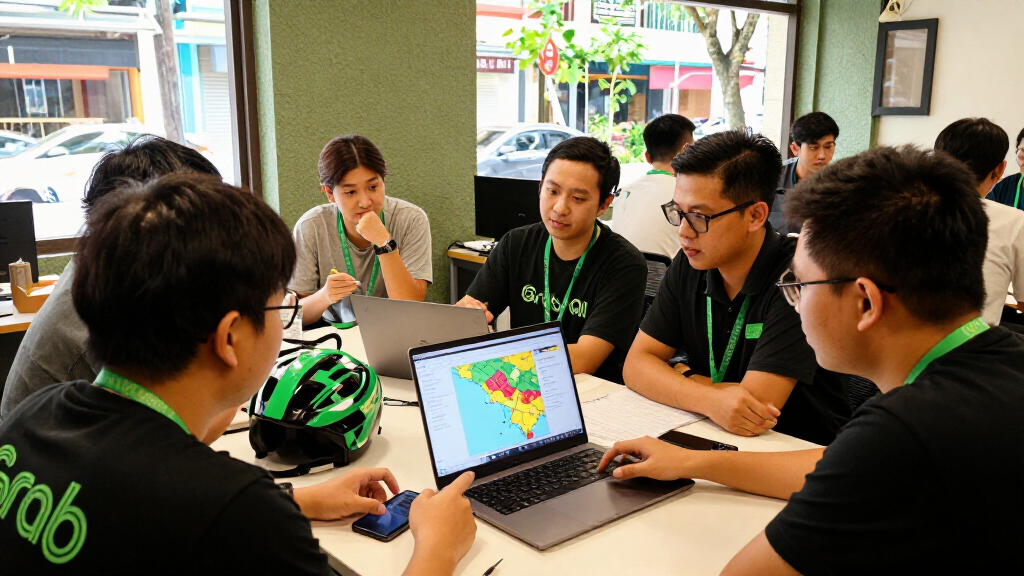
Grab and OpenAI have announced a partnership to bring an AI assistant to the Grab app, deploy ChatGPT Enterprise for Grab employees and trial accessibility tools for visually impaired users. OpenAI said initial features will roll out in selected Southeast Asian markets, positioning the deal to put conversational AI inside an app used for transport, food delivery and other daily services.
The planned in-app assistant will let users ask questions and complete tasks through chat. Grab and OpenAI have described examples such as ordering food, booking rides and seeking local recommendations. The assistant is expected to combine OpenAI models with Grab’s services and data. OpenAI said the rollout will start in selected markets and expand based on user feedback; it did not identify those markets or give dates.
The agreement also covers ChatGPT Enterprise for Grab staff, for tasks such as summarising documents, drafting communications and building internal tools. Separately, the companies are working on voice and accessibility features, including a trial using AI vision and voice technology to help visually impaired users navigate Grab’s services. The announcement does not report results from that trial.
AI Moves Into Everyday Grab Tasks
The partnership could move conversational AI from a separate chatbot into a service many users already open to arrange rides, meals and payments. If the assistant can reliably connect questions to Grab’s local services, people may be able to complete tasks through conversation rather than switching between app screens. That outcome is a possibility described by the companies, not a measured result.
For Grab, the deal offers a way to add AI features using OpenAI’s models rather than developing all of the underlying technology itself. For OpenAI, integration with a regional consumer platform could extend its reach beyond ChatGPT. The accessibility trial has a distinct practical aim: voice and visual assistance could help users who face barriers in text-led app interfaces. Its value will depend on how well it works in real use, which remains unreported.
The partnership also gives both companies a chance to learn whether an AI assistant can handle local requests across multiple services, languages and markets. Users may care less about the model behind the feature than whether it understands what they want, completes the task correctly and makes clear when it cannot. The announcement establishes plans for deployment, not evidence that those standards have been met.
Grab’s Regional App Reach
Grab operates across several Southeast Asian countries, combining ride-hailing, food and grocery delivery, payments and financial services in one app. That service mix gives an assistant potential access to different kinds of everyday tasks. OpenAI said the collaboration will combine its models with Grab’s information about local services, merchants and transport.
The deal fits a broader effort by AI companies to distribute their models through established consumer platforms. It also comes as regional digital businesses add AI features. Grab competes with companies including Indonesia’s GoTo, while Sea’s Shopee is another major regional platform. The announcement does not detail how Grab’s plans compare with specific rival products or establish that it is first to deploy AI at scale across the region.
OpenAI described Grab as among the first companies in Southeast Asia to access and build with these technologies at this scale. That characterization is OpenAI’s claim; the announcement provides no comparative deployment data. The stated plan covers consumer features, staff tools and an accessibility trial, but the pace and reach of each effort have not been specified.
Markets, Performance and Access
The companies have not announced which countries will be included first, when the assistant will launch, or when it may reach other Grab markets. The precise set of tasks the assistant will support is also unclear. The examples include food orders, ride bookings and recommendations, but no performance results are available for complex requests or for Southeast Asian languages beyond English.
There are no published benchmarks showing whether the tools improve customer-service response times or employee productivity. Grab and OpenAI also have not reported findings from the accessibility trial, so its usefulness for visually impaired users has not yet been demonstrated. The announcement does not specify how user feedback will shape expansion or provide detailed information about the data used by the assistant.
Selected-Market Rollout Ahead
The next stated step is the phased introduction of early features in selected Grab markets. OpenAI said expansion will depend on user feedback. The companies have not set out a public timetable, so country announcements and launch dates will clarify how quickly the plan reaches users.
Results from the accessibility pilot and any reported measures of staff productivity or customer-service performance will help show what the partnership delivers in practice. Further announcements may also clarify which languages and tasks the consumer assistant supports. Until then, the scope and effectiveness of the tools remain open questions.
Key Questions
What are Grab and OpenAI planning to introduce?
The partnership covers an AI assistant in the Grab app, ChatGPT Enterprise for Grab employees and a trial of voice and AI vision features intended to help visually impaired users navigate Grab’s services.
When will the Grab AI assistant launch?
OpenAI said early features will roll out in selected markets, but it has not announced launch dates or the countries involved.
What could users ask the assistant to do?
The companies have given examples including ordering food, booking rides and getting local recommendations. They have not confirmed the assistant’s full capabilities or reported how reliably it handles those tasks.
Has the accessibility pilot shown results?
No results have been published. The companies say they are trialling voice and AI vision features to help visually impaired users, but the pilot’s usefulness has not yet been established.
Primary source: OpenAI · via ThorstenMeyerAI.com
Halloween Picks
halloween
As an affiliate, we earn on qualifying purchases.