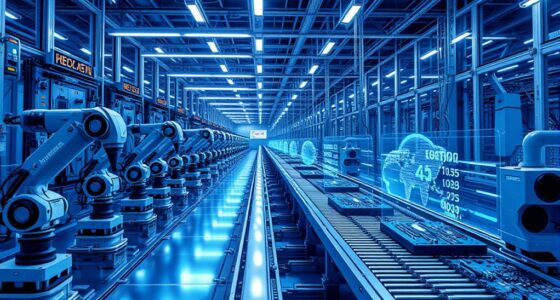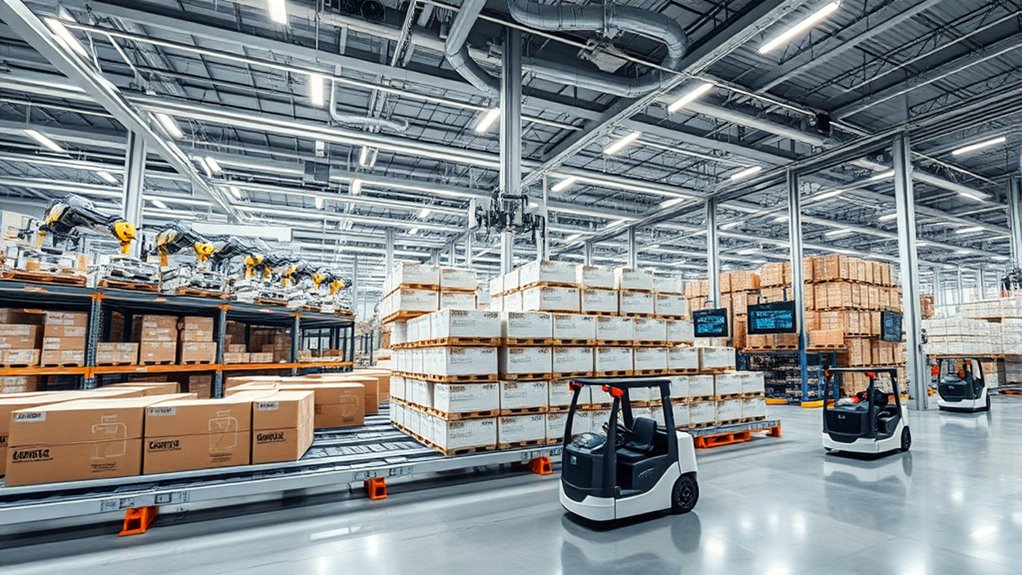

Automation in supply chains uses robotics, IoT, and data analytics to boost efficiency, cut costs, and improve responsiveness. You can automate warehouse tasks like sorting and packing, reduce errors, and speed up order fulfillment. Demand forecasting and inventory management become smarter with real-time data, helping you avoid stockouts. Monitoring systems improve safety and reduce manual effort. To discover exactly how these innovations can transform your operations, keep exploring these technologies and their potential impacts.
Key Takeaways
- Warehouse robotics automate sorting, packing, and movement to increase efficiency and accuracy.
- Demand forecasting uses real-time data to optimize inventory levels and automate replenishment.
- IoT sensors provide real-time visibility into inventory, equipment, and environmental conditions to prevent disruptions.
- Automation reduces labor costs and enhances safety by handling hazardous or repetitive tasks.
- Integrating automation transforms supply chains into agile, data-driven networks for faster, reliable order processing.
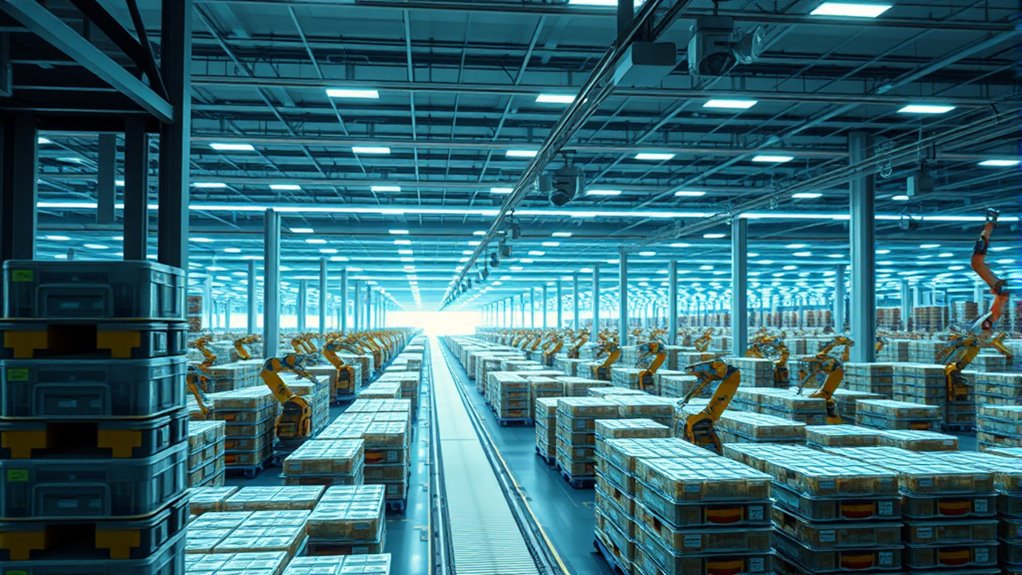
Automation has revolutionized supply chains by streamlining processes and increasing efficiency. As you navigate modern logistics, you quickly realize how warehouse robotics play a pivotal role in transforming operations. These advanced machines automate tasks like sorting, packing, and moving inventory within warehouses. With warehouse robotics, you reduce human error, speed up order fulfillment, and optimize space utilization. This shift allows you to handle larger volumes of products without sacrificing accuracy or speed. The robots operate tirelessly, ensuring that goods move smoothly from storage to shipping, which ultimately shortens delivery times and boosts customer satisfaction.
Warehouse robotics automate tasks, boost accuracy, and speed up order fulfillment for more efficient supply chains.
Beyond the physical aspect, automation enhances your ability to predict future demand accurately. Demand forecasting, powered by sophisticated algorithms and real-time data analysis, helps you anticipate inventory needs more precisely. Instead of relying on historical sales data alone, you tap into patterns from various sources such as market trends, social media, and economic indicators. This enables you to make smarter decisions about stock levels, reducing both excess inventory and stockouts. When demand forecasting is integrated with warehouse robotics, you can automate replenishment processes, ensuring the right products are always available at the right time. This seamless coordination minimizes delays and improves overall supply chain responsiveness.
You also benefit from automation’s capacity to gather and analyze data at every stage of your supply chain. Advanced sensors and IoT devices monitor inventory levels, equipment performance, and environmental conditions. This constant stream of information allows you to identify bottlenecks and respond proactively. For instance, if demand forecasting predicts a surge in a particular product, your system can automatically prioritize its replenishment, leveraging warehouse robotics to expedite handling. This real-time visibility keeps your supply chain agile, adaptable, and less prone to disruptions. Additionally, ensuring the freshness and quality of perishable goods is crucial, and spoiled lemon juice can serve as an example of how proper storage and monitoring prevent waste.
Furthermore, automation reduces labor costs and enhances safety within your warehouses. Robots can perform hazardous or repetitive tasks, freeing your human workers to focus on more strategic activities. This not only improves efficiency but also creates a safer working environment. As you adopt automation tools, you gain a competitive edge by delivering faster, more reliable service while maintaining lower operational costs. The integration of warehouse robotics and demand forecasting creates a smart, responsive supply chain that adapts swiftly to market changes and consumer demands.
In essence, embracing automation transforms your supply chain into a highly efficient, data-driven network. It enables you to process orders faster, predict needs more accurately, and operate with greater agility. As technology continues to evolve, your ability to harness these innovations will determine your success in an increasingly competitive marketplace.
Frequently Asked Questions
How Does Automation Impact Supply Chain Employment Levels?
Automation impacts your supply chain employment levels by causing labor shifts and job displacement. As machines take over repetitive tasks, you might see fewer jobs in traditional roles, but new opportunities emerge for tech-savvy workers. While some workers face displacement, others adapt to new roles, overseeing automation systems. Overall, automation reshapes employment, requiring you to stay flexible and acquire new skills to thrive amid these labor shifts.
What Are the Main Cybersecurity Risks of Automated Supply Chains?
Coincidentally, as you automate your supply chain, cybersecurity vulnerabilities become a major concern. You face data breach risks, where hackers might access sensitive information or disrupt operations. These vulnerabilities can stem from outdated systems, weak passwords, or unsecured networks. If you don’t prioritize cybersecurity, your automated processes could be compromised, leading to financial loss, reputational damage, or supply disruptions that ripple through your entire chain.
How Does Automation Influence Supply Chain Resilience During Disruptions?
Automation boosts your supply chain resilience during disruptions by enabling predictive analytics that forecast issues early. It also improves supplier integration, allowing you to quickly coordinate responses and adapt operations. You can identify vulnerabilities faster and implement solutions proactively. This agility helps maintain flow, minimizes delays, and guarantees your supply chain stays robust even amid unexpected events. Embracing automation makes your supply chain more flexible and better prepared for future disruptions.
What Upfront Costs Are Associated With Implementing Automation Systems?
You’ll face upfront costs like the initial investment in automation systems and technology integration. These expenses cover purchasing equipment, software, and training staff. You might also need to upgrade existing infrastructure to guarantee seamless integration. While these costs can be significant initially, they often lead to long-term savings through increased efficiency and reduced labor costs. Planning carefully helps you manage these investments and maximize automation’s benefits.
How Do Companies Measure ROI on Supply Chain Automation Investments?
You’ll probably think ROI on supply chain automation is all about dollar signs, but it’s really about process efficiency and cost savings. You track improvements in cycle times, error rates, and labor costs, then compare these gains against your initial investment. Ironically, the biggest payoff often comes from smoother workflows and fewer disruptions, proving that sometimes, saving time and effort is the true measure of success.
Conclusion
Embracing automation in supply chains gently guides you toward a more efficient future. While change can seem intimidating, it quietly open doors to new opportunities and streamlines your operations. By taking these thoughtful steps, you’ll find yourself better prepared for the evolving landscape, making growth feel more like a natural progression than a leap. So, consider automation not just as a tool, but as a subtle shift that can transform your supply chain into a more resilient and agile asset.