Industry 4.0 automation transforms manufacturing by incorporating smart technologies like IoT, AI, and robotics to boost your efficiency, flexibility, and responsiveness. It shifts traditional processes toward digital, interconnected systems that adapt quickly to changing demands. However, adopting this tech requires strong cybersecurity measures and upskilling your workforce to manage new tools effectively. If you’re enthusiastic to understand how these elements work together for successful implementation, there’s more to explore ahead.
Key Takeaways
- Industry 4.0 automation integrates IoT, AI, and robotics to optimize manufacturing processes and improve efficiency.
- Automated systems enable real-time data collection and analysis for smarter decision-making.
- Successful automation requires robust cybersecurity measures to protect connected devices and data.
- Workforce skills need to evolve through continuous training to manage and troubleshoot automated technologies.
- Implementing automation in Industry 4.0 enhances flexibility, responsiveness, and future competitiveness of manufacturing operations.
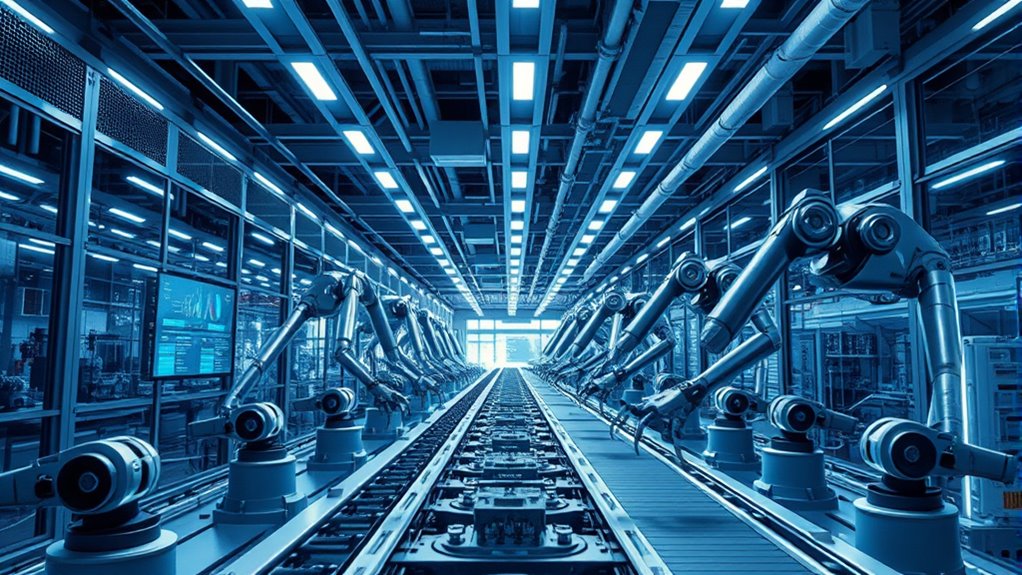
Have you ever wondered how manufacturing is transforming in the digital age? Industry 4.0 is revolutionizing the way factories operate, integrating smart technologies like IoT, AI, and robotics to boost efficiency and flexibility. But with these advancements come new challenges, especially around cybersecurity and workforce development. As you adopt more connected systems, you become a prime target for cyber threats that can disrupt your production lines or compromise sensitive data. Cybersecurity challenges are evolving rapidly, demanding constant vigilance, robust security protocols, and regular updates to protect your infrastructure from hacking, malware, or data breaches. You can’t afford to overlook these risks, because a single breach could halt operations, cause financial loss, or damage your reputation.
Digital manufacturing advances bring security risks; vigilance, robust protocols, and ongoing updates are essential to protect operations and data.
Alongside cybersecurity, workforce skill development becomes critical in this new landscape. As automation takes over routine tasks, your employees need to adapt and learn new skills to operate and maintain advanced machinery. The shift toward Industry 4.0 requires a more technically proficient workforce, capable of understanding complex systems and troubleshooting issues in real time. Investing in training programs, upskilling initiatives, and continuous learning is essential to bridge the gap between existing expertise and future demands. You’ll find that a well-trained workforce not only ensures smoother integration of new technologies but also enhances overall productivity and innovation.
Implementing Industry 4.0 isn’t just about installing new equipment; it’s about transforming your entire approach to manufacturing. You must be proactive in addressing cybersecurity challenges by establishing strong firewalls, encryption, and access controls. Moreover, fostering a culture of cybersecurity awareness among your staff will help prevent human errors that often lead to security breaches. Equally important is cultivating a skilled team that can leverage these digital tools effectively. This means providing ongoing education on emerging technologies, data analytics, and cybersecurity best practices, so your team remains agile and capable of handling the complexities of smart manufacturing.
As you navigate this digital transformation, remember that cybersecurity and workforce skill development are intertwined. A secure system relies on knowledgeable personnel, and a skilled workforce depends on the right tools and protections. Striking a balance between these elements will position your manufacturing operation for success in Industry 4.0. So, embrace the change, invest in your people, and stay vigilant against cyber threats—because the future of manufacturing depends on it.
Frequently Asked Questions
How Does Industry 4.0 Impact Global Supply Chains?
You see that Industry 4.0 boosts global supply chains by enabling smart logistics and real-time data sharing. This tech helps you respond faster to disruptions, improving supply chain resilience. With automation, you can optimize inventory management, predict demand, and streamline transportation. Consequently, your supply chain becomes more agile, cost-effective, and reliable, giving you a competitive edge in today’s fast-paced, interconnected world.
What Are the Cybersecurity Risks Associated With Industry 4.0?
You face significant cybersecurity risks with Industry 4.0, especially due to IoT vulnerabilities that can be exploited by attackers. Data privacy becomes a major concern as more sensitive information is transmitted and stored across interconnected systems. To protect your operations, you need robust security measures, regular updates, and vigilant monitoring to prevent breaches, safeguard data, and guarantee the integrity of your smart manufacturing environment.
How Can Small Businesses Implement Industry 4.0 Technologies Cost-Effectively?
You can implement Industry 4.0 technologies cost-effectively by focusing on affordable integration and scalable solutions. Start small with essential automation tools that fit your budget, then expand as you see results. Leverage cloud-based platforms and open-source software to reduce costs. Partner with technology providers offering flexible plans, and prioritize cybersecurity to safeguard your investments. This approach ensures you grow gradually without overextending your resources.
What Skills Are Needed for the Future Workforce in Industry 4.0?
Think of your future workforce as a finely tuned orchestra, where digital literacy acts as your conductor’s baton and technical adaptability is your versatile instrument. You’ll need sharp digital skills to navigate complex systems and the flexibility to learn new technologies quickly. Embrace continuous learning, stay curious, and develop problem-solving abilities. With these skills, you’ll lead innovation and keep your team harmonized amid rapid technological change.
How Does Industry 4.0 Influence Environmental Sustainability?
Industry 4.0 considerably boosts environmental sustainability through sustainable manufacturing and green technology. You can reduce waste, energy use, and emissions by implementing smart sensors, automation, and data analytics. These innovations enable you to optimize resources, recycle materials more efficiently, and minimize environmental impact. Embracing Industry 4.0 helps you create eco-friendly processes, align with regulations, and promote a greener, more sustainable future for your operations and the planet.
Conclusion
As you embrace Industry 4.0 automation, remember that by 2025, over 75% of manufacturing companies will rely heavily on smart technologies to stay competitive. This shift not only boosts efficiency but also creates new opportunities for innovation. Don’t fear the change—see it as your chance to lead and transform your industry. Embrace automation today, and position yourself at the forefront of this exciting technological revolution.