
TL;DR
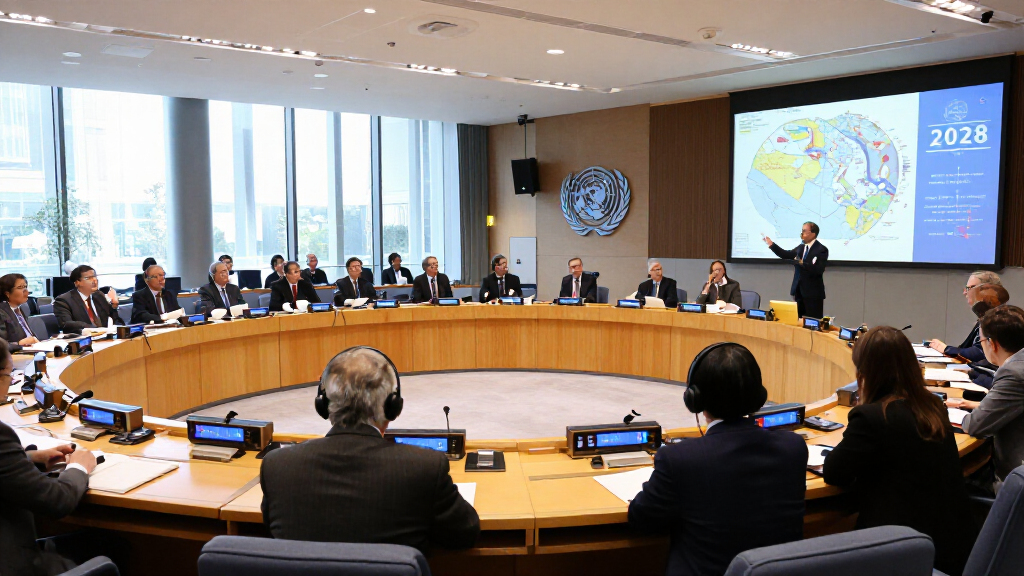
The UN’s Convention on Certain Conventional Weapons review conference agreed to task an expert group with elaborating an instrument on lethal autonomous weapons and reporting in 2028. Whether that instrument will be a binding protocol remains open; the group is scheduled to meet for 10 days in Geneva in 2027.
The decision, adopted at the convention’s Seventh Review Conference in Geneva, directs the open-ended Group of Governmental Experts to elaborate, by consensus, an instrument that addresses international humanitarian law and its implementation for lethal autonomous weapon systems. The text says this work proceeds “without prejudging its nature.” The expert group must recommend the instrument’s legal nature and specific form, including whether states should adopt it as a binding protocol, and submit its report to the 2028 Meeting of High Contracting Parties.

Get business pricing on tech for your team
- Business-only prices and quantity discounts
- Tax-exempt purchasing
- Multiple users, one account, clear invoices
The group is scheduled to meet for 10 days in Geneva in 2027: March 1–5 and August 30–September 3. The mandate also allows informal meetings of legal, military and technical experts. A proposal had sought 15 meeting days each year to negotiate a new protocol; another proposal from seven states called for a year of negotiations with 25 meeting days. The final decision adopted neither timetable.
The conference endorsed 20 paragraphs of elements agreed by the expert group in September 2026. According to the source documents, they cover a working definition, the full application of international humanitarian law, human judgment and control, legal reviews, testing, accountability and measures addressing bias in data sets and AI models. These elements are part of the agreed text, but the mandate does not itself create a new binding legal instrument.

Rules Remain Open Until 2028
The decision keeps negotiations within the UN weapons convention moving, but it does not settle whether states will adopt enforceable new rules. For governments seeking a binding protocol, the 2028 recommendation is a key step still ahead. The group must work by consensus, and its mandate explicitly leaves the instrument’s legal form undecided.
For defense suppliers and companies developing dual-use AI, the endorsed elements describe issues likely to figure in policy and procurement discussions: legal reviews during development, testing, human control and bias safeguards. The source material says nothing changes legally today; it anticipates that these standards may feature in procurement and export talks before 2028. The extent of that effect is not specified in the adopted decision.
Products Worth Considering

Bose QuietComfort Wireless Noise Cancelling Headphones – Petal Pink Limited Edition

Apple Watch SE 3 GPS 40mm Smartwatch

DJI Mic 3 Wireless Microphone (2 Transmitters, 1 Receiver, Charging Case)
As an affiliate, we earn on qualifying purchases.
A Decade of CCW Discussions
UN discussions on lethal autonomous weapons under the Convention on Certain Conventional Weapons have continued since a first meeting of experts in 2013. The convention’s Group of Governmental Experts has examined how international humanitarian law applies and what additional measures may be needed. In September 2026, it agreed on 20 paragraphs of elements that the review conference later endorsed.
The November review conference ran from November 16 to 20. Its final document records the mandate adopted by states. The distinction between a call to “negotiate a new Protocol” and the agreed instruction to “elaborate” an instrument “without prejudging its nature” reflects the unresolved question of whether the process should lead to binding rules.
The Binding Status Is Undecided
The adopted document does not say whether states will ultimately agree to a binding protocol, another legal instrument or a different form of measures. The expert group must make a recommendation by consensus, and the states parties will consider its report in 2028.
Reporting by Reuters, Politico and Al Jazeera, as summarized in the supplied source material, described opposition to binding rules and procedural objections during the conference. The official final document names no country as responsible for blocking or weakening proposals. The precise positions of individual states and how they may affect the 2027 discussions are not fully established by the adopted text.
Two Geneva Sessions in 2027
The expert group is due to meet in Geneva on March 1–5 and August 30–September 3, 2027, for a total of 10 scheduled days. Its chair is also to update the November 2027 meeting of High Contracting Parties. The group’s report and recommendation on the instrument’s legal form are due at the 2028 meeting.
Those sessions will show whether states can reach consensus on the instrument’s contents and whether they recommend a binding protocol. The final decision sets that process and deadline; it does not specify the outcome.
Key Questions
What did the UN conference decide about autonomous weapons?
It tasked the CCW expert group with elaborating, by consensus, an instrument addressing international humanitarian law and lethal autonomous weapons, then reporting its recommendations in 2028.
Did states agree to a binding treaty?
No. The decision leaves the instrument’s legal nature open. The expert group must recommend whether states should adopt it as a binding protocol.
When will the expert group meet?
The scheduled 2027 sessions are March 1–5 and August 30–September 3 in Geneva, totaling 10 days.
Will the decision change the law immediately?
The supplied source material says no new legal obligations take effect today. The mandate calls for further work and a recommendation by 2028.
Source: Thorsten Meyer AI