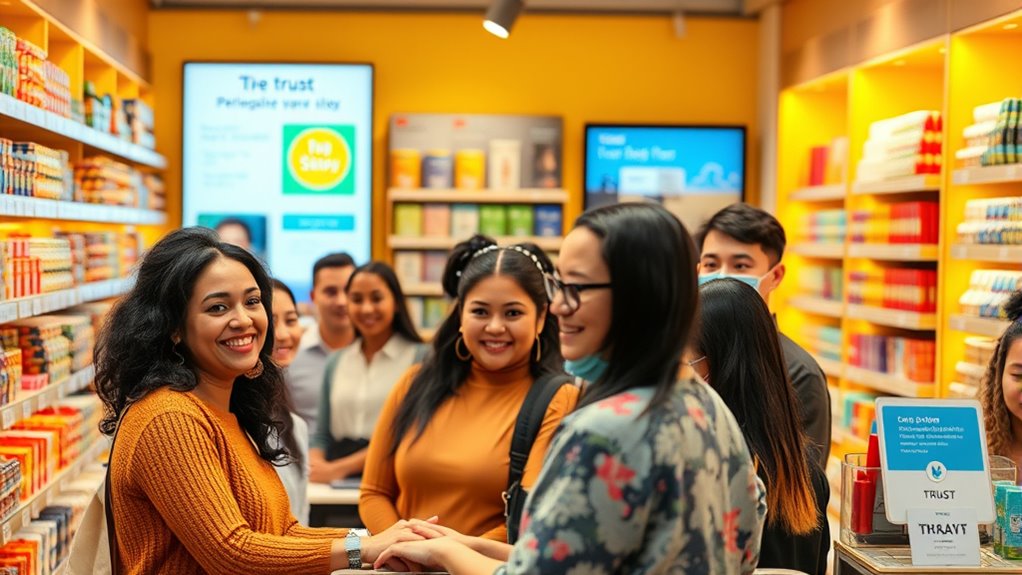

To build customer loyalty, focus on creating personalized experiences that show genuine care, like remembering past purchases and celebrating special occasions. Develop rewarding programs aligned with customer motivations, offering easy-to-redeem perks and clear benefits. Engage consistently across channels—email, social media, in-store—with a friendly tone that fosters emotional connection. Incorporating calming sound healing techniques can enhance the atmosphere and deepen loyalty. Keep exploring to discover more ways to strengthen those valuable relationships.
Key Takeaways
- Personalize interactions by remembering customer preferences and celebrating special occasions to foster trust and connection.
- Design loyalty programs with meaningful rewards aligned to customer motivations, such as discounts and exclusive access.
- Implement tiered benefits to reward engaged customers, encouraging ongoing participation with clear, attainable perks.
- Use multi-channel communication with a consistent, personalized tone to strengthen emotional bonds and responsiveness.
- Incorporate sensory elements like sound healing to create relaxing environments that enhance emotional well-being and brand loyalty.

Building customer loyalty is essential for long-term business success, and it starts with understanding what your customers value most. You need to make them feel recognized, appreciated, and connected to your brand. One of the most effective ways to achieve this is through personalized engagement. When you tailor your interactions to meet individual preferences, you demonstrate that you truly care about their needs. This can be as simple as remembering past purchases, sending personalized recommendations, or acknowledging special occasions like birthdays or anniversaries. Personalized engagement creates a sense of familiarity and trust, encouraging customers to return again and again.
Building loyalty through personalized engagement fosters trust and encourages repeat business.
Developing solid loyalty program strategies plays a vital role in fostering ongoing relationships. Instead of generic rewards, focus on crafting programs that resonate with your customer base. Think about what motivates them—whether it’s discounts, exclusive access, or early product releases—and design rewards that align with those interests. When your loyalty programs offer meaningful benefits that are personalized to each customer, you reinforce their emotional connection to your brand. For example, if a customer frequently buys a particular product, offering a tailored discount on similar items shows that you recognize their preferences, making them more likely to stay loyal.
You should also consider implementing tiered loyalty programs. These reward your most engaged customers with additional perks, incentivizing continued interaction. When customers see tangible benefits from their loyalty, they’re more inclined to participate actively. Make sure your rewards are easy to redeem and clearly communicated. Complicated processes can frustrate customers and diminish their enthusiasm for your program. Keep things straightforward, and regularly update your offerings to reflect changing customer needs and preferences.
Moreover, consistency is key. Engage with your customers regularly through multiple channels—email, social media, in-store interactions—while maintaining a personalized tone. Respond promptly to inquiries and feedback, showing that you value their input. Personalization shouldn’t be a one-time effort; it needs to be woven into your overall customer experience. When customers feel genuinely understood and appreciated, they’re more likely to develop an emotional attachment to your brand, which translates into repeat business and positive word-of-mouth.
In addition, incorporating sound healing science insights into your customer engagement strategies can subtly enhance their overall experience by fostering a calming and positive environment. When customers feel relaxed and valued, their loyalty naturally deepens. When customers feel genuinely understood and appreciated, they’re more likely to develop an emotional attachment to your brand, which translates into repeat business and positive word-of-mouth.
In essence, building customer loyalty revolves around meaningful, personalized engagement and thoughtful loyalty program strategies. When you focus on understanding your customers’ desires and delivering tailored experiences, you foster a genuine connection that keeps them coming back. This approach not only increases sales but also transforms customers into passionate advocates for your brand, ensuring your business’s long-term growth and success.
Frequently Asked Questions
How Can Small Businesses Foster Customer Loyalty Effectively?
You can foster customer loyalty by sharing compelling brand storytelling that resonates with your audience and highlights your values. Engage with your community through local events, social media, or partnerships to build genuine connections. Consistently provide excellent service, listen to feedback, and show appreciation. When customers feel connected and valued, they’re more likely to stay loyal, recommend you, and become repeat buyers.
What Role Does Personalized Communication Play in Customer Retention?
Personalized communication plays a vital role in customer retention because it makes your customers feel valued. By using customer segmentation and data personalization, you can tailor messages to match individual preferences and needs. This targeted approach increases engagement, builds trust, and encourages repeat business. When you show customers you understand their unique interests, they’re more likely to stay loyal and choose your business over competitors.
How Do Loyalty Programs Impact Customer Lifetime Value?
Loyalty programs boost your customer lifetime value by encouraging repeat business and increasing engagement. Well-designed programs, focusing on effective loyalty program design, motivate customers to stay loyal through rewards and exclusive offers. By implementing customer engagement strategies within your loyalty program, you create stronger bonds, leading to higher spending and longer relationships. This strategic approach helps maximize the value each customer brings over time, ultimately growing your business sustainably.
What Metrics Best Measure Customer Loyalty Success?
You might think loyalty success is obvious, but it’s actually measured by subtle signs like customer satisfaction and Net Promoter Score. These metrics show how happy your customers are and how likely they are to recommend you—often more telling than sales figures. Focus on improving these, and you’ll see loyalty deepen. Irony? The best measure isn’t just repeat purchases, but genuine advocacy fueled by true satisfaction.
How Can Businesses Recover Lost Customers and Rebuild Trust?
You can recover lost customers by actively seeking their feedback to understand their concerns and showing genuine effort to address issues. Communicate transparently about improvements and demonstrate your commitment to their satisfaction. Rebuilding trust hinges on consistently delivering quality and honoring promises. Strengthen your brand reputation by engaging with customers openly, acknowledging mistakes, and demonstrating that their opinions matter, which helps turn negative experiences into positive relationships.
Conclusion
Building customer loyalty isn’t just about making quick sales; it’s about creating genuine relationships. By consistently delivering value and listening to your customers, you foster trust that lasts. Did you know that 65% of a company’s revenue comes from existing customers? That stat shows how vital loyalty is—invest in your customers, and they’ll reward you with their continued business and advocacy. Keep focusing on their needs, and you’ll build a loyal, thriving customer base.