
To make your reports trustworthy, you should add clear context, concise notes, and thorough data lineage. Providing background information helps others understand the significance and implications of your data. Document data sources and transformations to guarantee transparency and verify accuracy. Use visual tools to map data flow, and place notes strategically to clarify complex points without clutter. Exploring these practices further will help you build reports that inspire confidence and support better decision-making.
Key Takeaways
- Incorporate background information and interpretation notes to clarify data significance and facilitate stakeholder understanding.
- Trace data origins and transformations through detailed lineage to verify source credibility and ensure data integrity.
- Use visual tools like lineage diagrams to transparently illustrate data flow and build trust in report accuracy.
- Document assumptions, limitations, and transformations to promote transparency and support informed decision-making.
- Keep notes concise and strategically placed to enhance clarity without cluttering, reinforcing key insights effectively.
Why Adding Context and Notes Builds Trust in Reports

Adding context and notes to your reports is essential because it helps readers understand the data’s background and significance. When you provide clear interpretation guidance, you make it easier for stakeholders to grasp what the numbers truly mean. This clarity reduces confusion and builds confidence in your findings. By engaging stakeholders through detailed notes, you encourage them to see the report as transparent and reliable. When everyone understands the context, they can make better-informed decisions. Notes also highlight assumptions, limitations, and sources, which reinforce trust. Additionally, emphasizing the contrast ratio and other technical factors behind image quality can help stakeholders better evaluate the performance of home theater equipment. Incorporating support breakfast and other relevant context from foundational knowledge can further enhance the clarity and reliability of your reports, such as using data lineage to trace the origins of your information. Including grocery savings strategies as part of your context can provide practical insights into cost-effective decision-making, which adds another layer of trustworthiness. Ultimately, adding context turns raw data into meaningful insights, fostering trustworthiness and ensuring your reports serve their purpose effectively. Clear interpretation and stakeholder engagement are the cornerstones of trustworthy reporting.
What Is Data Lineage and Why It Matters for Transparency

Understanding data lineage helps you trace the origins of your data, ensuring you know exactly where it comes from. This clarity allows you to verify data integrity and trust the information in your reports. When you prioritize data lineage, you boost confidence in your reports and promote transparency throughout your processes.
Trace Data Origins
Have you ever wondered where your data really comes from? Tracing data origins involves understanding its journey through various systems. By implementing effective metadata tracking, you can map each step, ensuring transparency. This process helps you verify sources accurately, avoiding errors and inconsistencies. To deepen your understanding, consider this table:
| Data Step | Description |
|---|---|
| Data Collection | Where data is initially gathered |
| Data Transformation | How data is processed or changed |
| Data Storage | Where data is stored for use |
This detailed view helps you verify sources at every stage, making your reports more trustworthy. Knowing the origins of your data not only boosts confidence but also supports compliance and accountability. When you trace data origins carefully, you lay a solid foundation for reliable reporting.
Ensure Data Integrity
Why does ensuring data integrity matter for transparency? Because trustworthy reports depend on accurate, reliable data. Effective metadata management helps you track data’s origin, transformations, and context, making it easier to verify its integrity. Data validation is essential; it ensures your data is complete, consistent, and free of errors before analysis. When you validate data regularly, you catch issues early, preventing flawed insights. Maintaining data integrity builds confidence in your reports, demonstrating that the information is accurate and dependable. By managing metadata properly and applying rigorous data validation, you create a transparent system where stakeholders can trust the data’s lineage and understand its journey from source to report. This transparency strengthens decision-making and credibility. Additionally, understanding cybersecurity vulnerabilities helps safeguard data from malicious attacks, ensuring ongoing data integrity and trustworthiness.
Enhance Report Confidence
Data lineage tracks the full journey of your data, from its original source through all transformations and processes, to its final report. This transparency assures your confidence in the data’s accuracy and helps identify potential issues. To enhance report confidence, use visualization techniques like flowcharts and lineage diagrams to clearly illustrate data paths. Engaging stakeholders throughout this process improves trust and ensures everyone understands the data’s history. Consider this table:
| Aspect | Benefit |
|---|---|
| Visualization Techniques | Clarify data flow, foster transparency |
| Stakeholder Engagement | Build trust, gather feedback |
| Data Lineage Completeness | Ensure accuracy, support decisions |
How to Incorporate Effective Notes Without Cluttering Reports

To include notes effectively, focus on using clear and concise language that gets your point across quickly. Place notes strategically where they add value without overwhelming the main content, and avoid clutter by limiting their number. This approach keeps your reports informative yet easy to read. Incorporating specific essential oils can enhance the credibility of your recommendations and provide context for their use. Additionally, understanding Free Floating concepts can help differentiate between related ideas and clarify your notes’ relevance. Recognizing contextual relevance ensures that notes support the main points without causing confusion or distraction, and paying attention to note placement can further improve report clarity. For example, referencing net worth details helps substantiate financial discussions effectively.
Use Clear, Concise Language
Incorporating notes into reports requires careful balance; too many details can clutter your message, while too few may leave important context out. To maintain report accuracy and guarantee data quality, use clear and concise language. Avoid jargon or complex phrasing that can confuse your audience. Focus on straightforward explanations that highlight key points without unnecessary elaboration. Integrating smart home technology can help provide additional context for your data, ensuring your notes are relevant and comprehensive. – Use bullet points for quick reference and clarity – Keep sentences short and to the point – Highlight essential details without overloading information. Additionally, referencing primitive survival techniques can add historical context to your data, making your notes more robust. This approach helps your notes support your report’s credibility without distracting from the main message. Clear language enhances understanding, making it easier for readers to trust your insights and data. Ultimately, concise notes improve report usability and reinforce data quality.
Place Notes Strategically
Placing notes thoughtfully guarantees they support your report without overwhelming the main content. When you annotate dashboards, focus on highlighting essential details that clarify data points or calculations. Use notes sparingly to emphasize key insights, ensuring they draw attention without cluttering the view. Position notes close to relevant visuals or data sections so viewers immediately understand their context. Keep annotations concise, clear, and purposeful, avoiding extraneous information that might distract from the core message. Strategic placement helps your audience grasp important nuances quickly, reinforcing trust in your report’s accuracy and transparency. Remember, the goal is to enhance understanding, not to overwhelm—so choose your notes carefully and position them where they’ll have the greatest impact.
Limit Note Quantity
Have you ever noticed how too many notes can make a report feel cluttered and hard to follow? Managing note quantity is essential to prevent report clutter while still providing necessary context. To do this effectively:
- Use brief, targeted notes that directly support key data points.
- Consolidate similar notes into a single, inclusive comment.
- Place notes strategically, avoiding overuse in less critical sections.
- Incorporate practical guidance to help maintain clarity and ensure notes add value without overwhelming the report.
- Remember that creative storytelling can also be employed to make complex data more engaging and memorable, provided it does not compromise clarity.
Best Practices for Documenting Data Sources and Transformations
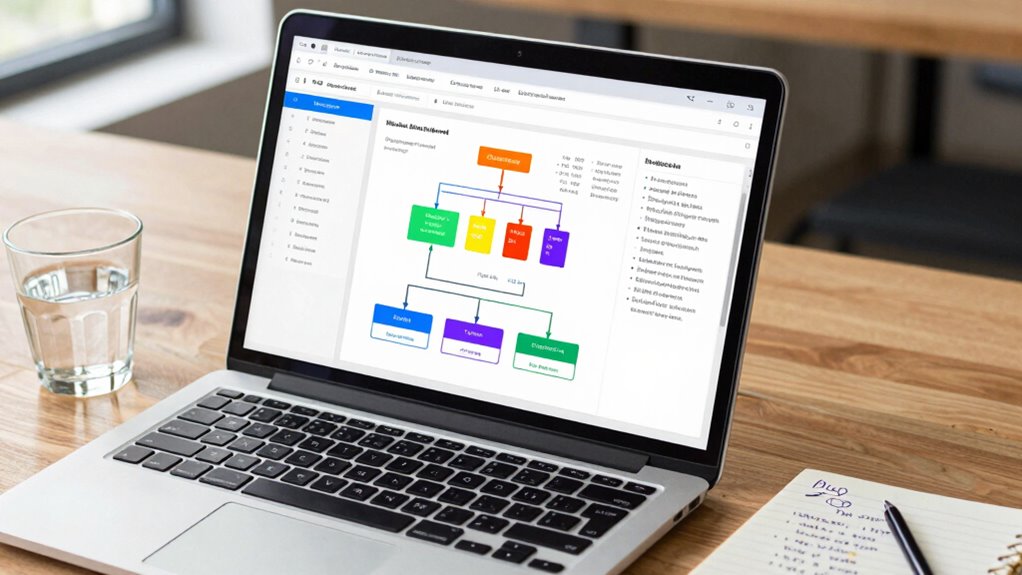
How can you guarantee your reports are trustworthy? By documenting data sources and transformations thoroughly. Use metadata management to keep track of where your data originates and how it’s processed. Implement version control to monitor changes and prevent confusion. This ensures everyone accesses consistent, current information. To make it clearer, consider this table:
| Data Source | Transformation Steps | Responsible Person |
|---|---|---|
| CRM Database | Filter, Aggregate | Data Analyst |
| Sales Data | Join, Clean | Data Engineer |
| External API | Normalize, Enrich | Data Scientist |
| Marketing Data | Segment, Tag | Marketing Team |
Following these practices helps build trust, reduces errors, and makes your reports more reliable. Additionally, understanding the importance of Floating on Water can help create a more balanced approach to data management, ensuring you stay afloat amid complex data environments.
How Context Helps Clarify Complex Data Insights

When dealing with complex data insights, adding context is essential to make the information understandable and actionable. Context transforms raw data into meaningful stories by aligning insights with real-world scenarios. Using analytical frameworks helps you identify key patterns and relationships, making it easier to explain findings clearly. Incorporating storytelling techniques engages your audience, helping them connect emotionally and cognitively with the data. To clarify complex insights, consider:
Adding context transforms raw data into meaningful stories and clearer insights.
- Providing background information to set the stage for your data
- Highlighting the relevance and implications of findings
- Using visual cues and narratives to illustrate how data fits within larger trends
- Applying methodical approach from quality assurance practices to simplify complex information, ensuring that the data’s interpretation remains accurate and trustworthy.
Tools to Track and Visualize Data Lineage

Tracking and visualizing data lineage is essential for ensuring transparency and trust in your reports. Using effective visualization tools, you can map how data flows from source to report, making it easier to identify data transformations and dependencies. Lineage tracking tools help you understand data origins, transformations, and movement across systems, providing clarity and accountability. Many modern data platforms offer built-in visualization features that graphically display data lineage, simplifying complex data processes. These tools enable you to quickly spot inconsistencies, trace errors, and validate data integrity. By leveraging visualization tools designed for lineage tracking, you gain better control over your data’s journey, improving report accuracy and fostering confidence among stakeholders. Understanding data flow within your systems helps you recognize how different components interact and impact your reports. Incorporating data lineage visualization enhances your ability to interpret complex data relationships and ensures comprehensive tracking. This approach ultimately strengthens the trustworthiness of your reports and data-driven decisions, especially when combined with data quality best practices.
Common Mistakes When Making Reports More Trustworthy

One common mistake that can undermine the trustworthiness of your reports is overlooking data quality issues. When data isn’t accurate or complete, it can lead to report bias, causing users to question the validity of your insights. Ignoring these issues increases user skepticism and damages credibility. To avoid this, watch out for these pitfalls:
- Relying on outdated or unverified data sources
- Failing to document assumptions or data transformations
- Ignoring inconsistencies or anomalies in data sets
- Ensuring data accuracy through regular checks and validation processes
Addressing these mistakes helps ensure your reports are reliable and transparent. When users see well-managed data and clear context, their trust grows, and report bias diminishes. Keep data quality front and center to build confidence and reduce skepticism.
How Trustworthy Reports Boost Decision-Making and Confidence

Accurate and transparent reports lay the groundwork for confident decision-making. When your reports provide clear context, notes, and data lineage, stakeholders trust the information more. This transparency reduces analyst skepticism, as they see the data’s origins and methodology, making them more willing to rely on the insights. Engaged stakeholders who understand how data was gathered and analyzed feel more confident making critical choices. Trustworthy reports foster open dialogue, encouraging feedback and validation, which further enhances decision quality. When everyone has access to the same reliable information, decision-making becomes faster and more precise. Additionally, incorporating modern kitchen technology concepts such as automation and connected appliances can streamline data collection and reporting processes. Ultimately, trustworthy reports empower your team to act decisively, knowing their choices are backed by data they can trust.
Frequently Asked Questions
How Often Should Reports Be Updated With New Context or Notes?
You should update reports with new context or notes regularly, ideally aligning with your report versioning process. For most dynamic data, update frequency should be weekly or biweekly to guarantee accuracy. If data or circumstances change rapidly, consider more frequent updates. Consistent versioning helps track changes, and timely updates maintain report trustworthiness, so your insights stay relevant and reliable for decision-making.
What Are the Key Indicators of a Trustworthy Report?
You can tell a report is trustworthy when it has clear metadata, which guarantees transparency and understanding. Consistent updates, detailed notes, and data lineage build stakeholder trust by showing the data’s origin and accuracy. Look for reports that openly explain their sources and methodologies. When metadata is clear and all-encompassing, you demonstrate reliability, making it easier for stakeholders to trust your insights and make informed decisions confidently.
How Can Data Lineage Improve Regulatory Compliance?
Data lineage improves regulatory compliance by providing clear audit trails, showing exactly how data moves and transforms through your systems. This transparency helps you verify adherence to compliance standards, making it easier to spot discrepancies and ensure data integrity. With detailed lineage, you can confidently demonstrate compliance during audits, reduce risks of penalties, and maintain trust with regulators by showing that your data processes are transparent and well-documented.
What Are Common Challenges in Maintaining Data Documentation?
A stitch in time saves nine, so maintaining accurate data documentation can be challenging. You often face issues like ensuring metadata accuracy, keeping documentation up-to-date, and engaging stakeholders consistently. Resistance to change and unclear ownership can hinder efforts. To overcome these, you need clear processes, regular updates, and active stakeholder engagement to keep documentation reliable, fostering trust and compliance in your reports.
How Do Different Industries Implement Data Lineage Tracking?
You implement data lineage tracking by leveraging metadata management tools that map data flow across systems. In industries like finance, you establish detailed audit trails to guarantee transparency and compliance. Healthcare providers use lineage to track data origins for patient records, while manufacturing firms focus on tracing data transformations. By maintaining exhaustive metadata and audit trails, you enhance trustworthiness and facilitate accurate reporting across sectors.
Conclusion
So, next time you think your report’s enough with just the numbers, remember: adding context, notes, and data lineage isn’t just extra fluff—it’s the secret sauce that turns guesswork into trust. Ironically, the more transparent you get, the less mysterious your insights seem. Instead of a crystal ball, you’ll have a clear window. Trustworthy reports might not predict the future, but they sure make your decisions feel a lot more certain.