

To stay compliant, you should register your business, obtain necessary licenses, and choose the right legal structure. Keep detailed records of all financial transactions and review funding agreements carefully with legal help. Protect your intellectual property and ensure employment contracts meet legal standards. Regularly update your legal documents and stay informed about industry regulations. Continuously maintaining organized documentation and compliance practices helps safeguard your startup and supports long-term growth—if you continue exploring, you’ll discover how to stay fully compliant from the start.
Key Takeaways
- Register the business legally and obtain all necessary licenses and permits for operation.
- Maintain detailed records of all financial transactions to ensure transparency and accountability.
- Review and formalize funding agreements with investors or lenders, seeking legal review when needed.
- Protect intellectual property through trademarks, copyrights, and patents, and ensure compliance with employment laws.
- Conduct regular legal audits and stay updated on industry regulations to ensure ongoing compliance.
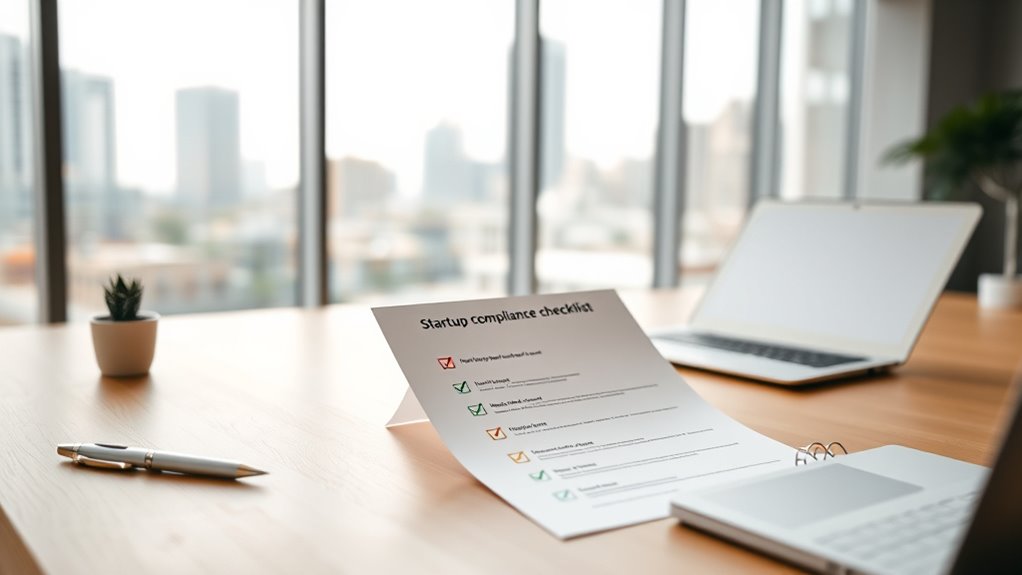
Starting a new business can be exciting, but ensuring you’re compliant with legal and regulatory requirements is essential for long-term success. One of the first steps you need to take is to establish reliable funding sources. Whether you’re using personal savings, seeking venture capital, applying for small business loans, or attracting angel investors, understanding the legal implications of each funding source is key. You must keep detailed records of all financial transactions and guarantee that any agreements or contracts with investors or lenders are properly documented. Proper legal documentation not only protects your interests but also helps you stay transparent and compliant with financial regulations. Before accepting any funds, review the terms carefully and, if necessary, consult a legal professional to draft or review funding agreements. This will help prevent misunderstandings or legal disputes down the line.
Establish clear funding agreements and maintain detailed records to ensure legal compliance and protect your business interests.
Next, you need to focus on legal documentation. This includes registering your business with the appropriate authorities, obtaining necessary licenses or permits, and choosing the right legal structure—be it an LLC, corporation, or sole proprietorship. Each structure has different legal documentation requirements and tax implications. Having these documents in order from the start simplifies compliance and makes future scaling easier. Additionally, draft essential legal documents like operating agreements, shareholder agreements, or partnership contracts. These documents outline ownership stakes, roles, responsibilities, and procedures for resolving disputes. Proper legal documentation ensures clarity among stakeholders and provides legal protection should issues arise. Regularly reviewing your legal documentation is also important to ensure ongoing compliance.
You should also pay attention to intellectual property rights by registering trademarks, copyrights, or patents if applicable. Protecting your brand and innovations helps prevent infringement and strengthens your business’s legal standing. Moreover, familiarize yourself with employment laws if you plan to hire employees. Prepare employment contracts, understand wage laws, and guarantee compliance with workplace safety regulations. If you plan to work with independent contractors, draft clear agreements that specify scope of work, payment terms, and confidentiality clauses.
Finally, staying compliant isn’t a one-time task. Regularly review your legal documentation, update your business registration details, and stay informed about new regulations affecting your industry. Maintaining good records and legal diligence not only helps you avoid penalties but also builds trust with investors, clients, and partners. In the end, thorough preparation and ongoing compliance are key to establishing a solid foundation for your startup’s growth and success.
Frequently Asked Questions
How Often Should Startups Review Their Compliance Policies?
You should review your compliance policies at least annually, especially focusing on employee training and data privacy. Regular updates guarantee your team stays informed about new regulations and best practices. Incorporate refresher courses and adapt policies as your startup grows or faces changes in laws. By doing so, you reduce risks, protect sensitive data, and maintain a strong compliance culture that supports your long-term success.
What Are Common Compliance Mistakes New Startups Make?
Picture a startup rushing to launch, overlooking vital details. You might forget to protect your intellectual property, risking theft or infringement. During employee onboarding, skipping proper training can lead to compliance lapses. These mistakes happen when you ignore legal requirements or rush processes. To avoid pitfalls, stay vigilant about safeguarding your ideas and make certain new hires understand compliance rules. Regular reviews help catch issues before they become costly problems.
How Can Startups Ensure Ongoing Compliance With Changing Laws?
You can stay compliant by regularly reviewing legal updates relevant to your industry and jurisdiction. Conduct ongoing risk assessments to identify potential compliance gaps and adapt your policies accordingly. Subscribing to legal newsletters, attending industry webinars, and consulting with legal experts help you keep up with changing laws. Implement a compliance management system to track updates and ensure your team stays informed, reducing risk and avoiding costly penalties.
Are There Specific Compliance Requirements for Online Startups?
Online startups must prioritize legal documentation and data privacy to stay compliant. You need clear terms of service, privacy policies, and user agreements that comply with laws like GDPR or CCPA. Regularly update your legal documentation to reflect changes in regulations. Implement data privacy measures, such as encryption and access controls, and train your team on compliance. Staying proactive guarantees you safeguard user information and avoid costly legal issues.
What Resources Are Available for Startup Compliance Support?
You can access resources like legal documentation templates and guides from online legal services, which help guarantee your startup meets funding regulations and other legal requirements. Local government agencies and startup incubators often offer workshops and advisory services focused on compliance. Additionally, professional consultants and industry associations can provide tailored support, helping you navigate legal documentation and funding regulations efficiently while staying compliant and avoiding costly penalties.
Conclusion
By following this startup compliance checklist, you set a strong foundation for your business’s success. Did you know that 20% of new businesses fail within their first year due to legal and regulatory issues? Staying compliant not only helps you avoid costly fines but also builds trust with customers and investors. Keep these steps in mind, stay proactive, and you’ll be better positioned to grow confidently and sustainably. Your journey to success starts with the right compliance habits!