

🔍 Read the full analysis: What Does AI Really Bring To Science? on ThorstenMeyerAI.com

Get business pricing on tech for your team
- Business-only prices and quantity discounts
- Tax-exempt purchasing
- Multiple users, one account, clear invoices
TL;DR
The available material identifies a The Atlantic headline, “AI’s Real Gift to Science,” but does not include the article, its author, publication date or evidence. The headline alone cannot establish what benefit the article argues AI brings to scientific research or whether it reports a new development.
The available source item identifies a The Atlantic headline, “AI’s Real Gift to Science,” but provides no article text or evidence behind its framing. The item therefore establishes the topic—not a scientific finding, a particular benefit from AI, or a new development in research.
According to the supplied source item, no scientific field, AI system, research group or measured result is named. The item does not say whether the article discusses hypothesis generation, data analysis, laboratory automation, or another aspect of research. Those may be possible subjects for an article about AI and science, but none can be attributed to this piece based on the headline alone.
The source item also provides no publication date, author, study citations or direct quotations. It points to Anthropic while naming The Atlantic as the publication, but does not explain the connection. The available details do not establish whether Anthropic is an author, publisher, source, or a label attached to the item.
That absence limits what can be verified from the supplied material. There is no described claim to test against a paper, no stated method or comparison, and no reported impact on research speed, cost, accuracy or outcomes. Nor is it possible to determine whether the full article draws on peer-reviewed research, preprints, interviews, company statements or analysis.
Why Evidence Matters for AI Claims
Claims about AI’s contribution to science can affect how researchers, funders and the public think about research priorities and investment. A well-supported account could help distinguish demonstrated improvements from proposals, early results or promotional claims. But the supplied item contains no examples or sources, so readers cannot judge whether the headline’s framing refers to a tested capability, a developing line of work or a broader interpretation.
The difference matters because a tool’s ability to produce an output does not, by itself, show that it improves scientific practice. Assessing a claimed benefit may require knowing what task was tested, what researchers compared it with, how results were measured and what limitations were reported. The supplied headline provides none of those details, so it cannot support a conclusion about AI’s real-world scientific impact.
For now, the news value is limited to the headline’s presentation of AI’s contribution to science as a subject. Treating it as evidence that AI has produced a defined benefit would go beyond the material available.
Products Worth Considering

Apple AirPods Pro (1st Generation) with MagSafe Charging Case
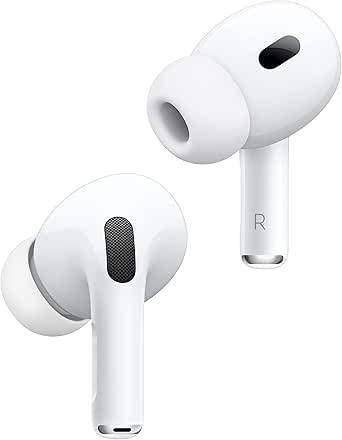
Apple AirPods Pro (2nd Generation) Wireless Earbuds with MagSafe Charging Case (Lightning)

LG UltraGear 34-Inch Curved QHD Gaming Monitor, 160Hz, FreeSync Premium
As an affiliate, we earn on qualifying purchases.
What the Supplied Item Establishes
The supplied source item presents the title as “AI’s Real Gift to Science” and identifies The Atlantic. It includes no excerpt from the article’s body. A headline can signal a writer’s framing, but it is not enough to reconstruct the supporting argument, identify its evidence or determine the scope of its claims.
The source item does not place the piece in a timeline or connect it to a specific study, product launch or policy decision. It also does not establish whether the article is a report, essay or another format. No named person or direct statement is provided, so there is no basis to assign the headline’s argument to an individual or to supply a quotation.
The accompanying Anthropic reference remains unexplained in the supplied material. Without the full item, it is not possible to establish how that label relates to The Atlantic or whether the article discusses the company at all. These limits mean the headline should be treated as a pointer to a possible article, not as a summary of its findings.
The central question—what the article means by AI’s “gift” to science—remains unanswered by the supplied source item. It does not identify the proposed contribution, cite research or state whether any described findings have been independently checked or peer reviewed. It also gives no author or publication date, and does not clarify the Anthropic reference.
As a result, it is not possible to assess the article’s evidence, distinguish reported results from interpretation, or establish whether the title refers to a particular scientific advance. The missing details are not minor qualifications: they are needed to know what claim is being made in the first place. No direct quotes or attributable claims can be reported from the information supplied.
Check the Full Article and Sources
The next step is to obtain the full The Atlantic article, confirm its author and publication date, and identify the examples and sources it cites. If it discusses scientific results, those claims can then be checked against the underlying papers, including their publication status, methods, comparisons and stated limitations.
The supplied source item gives no indication of when further information will be available. Until the article and its evidence are examined, the defensible account remains narrow: a headline presents AI’s contribution to science as a topic, but the specific argument and its support are unknown.
Key Questions
What is the confirmed development?
The supplied source item identifies a The Atlantic article headline, “AI’s Real Gift to Science.” It does not provide the article itself or establish a new scientific result.
What does the headline say AI contributes to science?
The headline frames AI’s contribution as its subject, but the supplied information does not specify what that contribution is. No particular capability or benefit can be attributed to the article from the title alone.
Is there evidence that AI improved a scientific outcome?
None is included in the supplied material. It gives no studies, measurements or comparisons that would support a claim about AI’s effect on research.
Why is Anthropic mentioned?
The supplied source item points to Anthropic as well as naming The Atlantic, but does not explain the relationship. It does not establish whether Anthropic is a source, publisher, author or label associated with the item.
What would be needed to assess the article’s claims?
The full article, its author and date, and any cited research would be needed. Scientific claims could then be assessed against the underlying studies, including their methods, publication status and limitations.
Primary source: Anthropic · via ThorstenMeyerAI.com