
To rank content without backlinks, focus on creating highly relevant, user-centric material that addresses specific search intents. Optimize your on-page elements like titles, headers, and meta descriptions, and incorporate rich media to engage visitors. Use internal links to boost authority within your site and keep content fresh and valuable. By understanding what your audience wants and presenting it effectively, you’ll improve your rankings—continue exploring these strategies to discover your site’s full potential.
Key Takeaways
- Focus on comprehensive, user-intent-aligned content optimized for relevant keywords and structured data.
- Enhance on-page SEO with natural keyword placement, compelling meta descriptions, and clear hierarchy.
- Use rich media like images, videos, and infographics to boost engagement and content understanding.
- Implement internal linking and regular updates to improve site authority and user retention.
- Foster user engagement through interactive features, clear FAQs, and digestible content formats to increase relevance.
What Makes Content Rank Without Backlinks? Core Factors Explained
Ever wondered how some content ranks high in search results without relying on backlinks? The key lies in understanding what makes content naturally appealing to search engines. You should focus on detailed keyword research to identify what your audience is searching for and craft content that directly addresses those queries. Instead of depending on backlink strategies, prioritize creating valuable, well-optimized content that meets user intent. Search engines favor pages that provide clear, relevant, and exhaustive answers. Technical SEO also plays a role—fast-loading pages, mobile-friendliness, and good site structure boost your chances of ranking well. Additionally, optimizing your site’s core web vitals can significantly improve your visibility. High-quality content that aligns with searcher needs and incorporates semantic search principles helps search engines better understand your content, increasing your chances of ranking without heavily relying on backlinks. Incorporating user engagement signals such as time on page and interaction metrics can also influence rankings positively. A thorough understanding of search engine algorithms can also guide your content creation process to enhance rankings naturally. Moreover, leveraging structured data can help search engines interpret your content more effectively, further supporting organic ranking efforts.
Create Search-Intent-Focused Content That Meets User Needs

Create Search-Intent-Focused Content That Meets User Needs. To rank without backlinks, you need to create content that directly addresses what users are searching for. Start by identifying the specific search intent behind their queries and focus on meeting those needs. When your content aligns with user expectations, it naturally becomes more relevant and valuable. Additionally, understanding Global Chaos – Microsoft Outage can help tailor information that addresses current disruptions and concerns.
Identify Search Intent
How do you guarantee your content aligns perfectly with what users are searching for? The key is understanding search intent. Start with thorough keyword research to uncover what your audience seeks and why. Look beyond keywords alone—consider the context behind searches, whether users want information, products, or solutions. Analyzing search intent helps you tailor your content to meet those specific needs, increasing its relevance and usefulness. When you identify the intent, you can craft content that directly answers questions, solves problems, or provides insights, making it more likely to rank organically. Recognizing search behavior patterns and the elements that influence high-quality images can help you create more targeted and engaging content. Additionally, understanding how personality traits linked to attractiveness influence perceptions can deepen your content’s relevance to certain topics. This focus on intent ensures your content resonates with users, keeps them engaged, and reduces reliance on backlinks for visibility. Ultimately, understanding search intent is the foundation of creating content that ranks naturally.
Align Content With Needs
Once you’ve identified the search intent behind your target keywords, the next step is to create content that directly addresses those specific needs. Focus on keyword alignment to guarantee your content matches what users are genuinely searching for. Keep your audience focus clear—understand their questions, pain points, and preferences. By aligning your content with these needs, you make it more relevant and valuable. Avoid generic info; instead, tailor your message to meet specific user expectations. Incorporating detailed information about specific tools like magnifying lamps or UV curing lamps can further enhance relevance and demonstrate expertise in niche topics. Additionally, understanding the importance of user experience and readability can significantly boost your organic performance. Recognizing decoding slang and colloquialisms can also help you connect better with your audience by making your content more relatable and accessible. Exploring cryptid mysteries and other folklore themes can help you craft engaging stories that resonate with enthusiasts searching for eerie and supernatural content. Moreover, discussing the benefits of herbal teas for menstrual relief can attract users seeking natural remedies and improve your content’s alignment with health-related search queries.
Optimize On-Page SEO Elements for Better Visibility
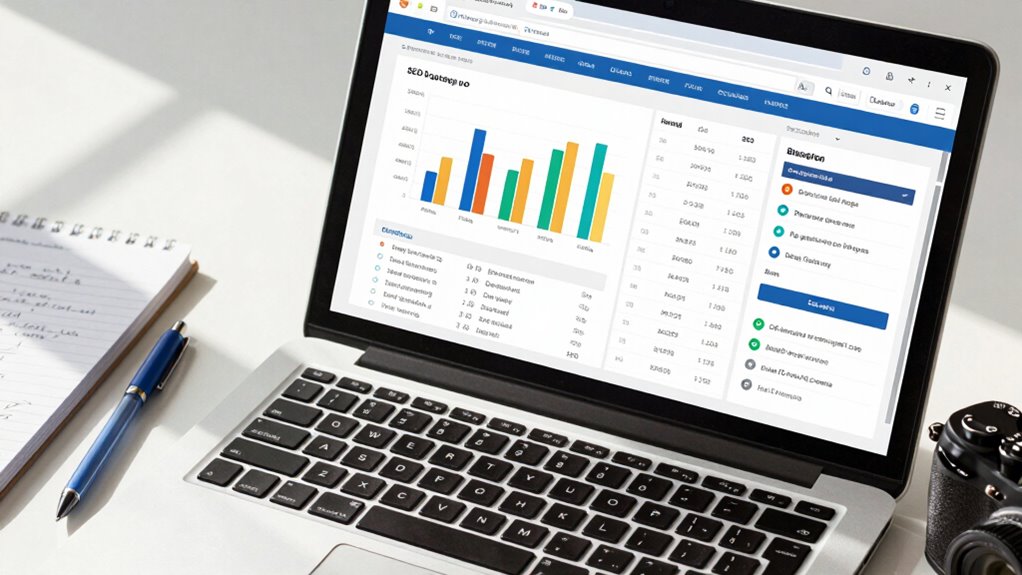
Optimizing on-page SEO elements is crucial for improving your website’s visibility in search engine results. Focus on strategic keyword placement within your content, titles, and headings to signal relevance. Craft compelling meta descriptions that accurately summarize your page and entice clicks. Use clear, descriptive titles and headers to guide both users and search engines. Make certain your URLs are concise and include target keywords. Here’s a quick comparison:
| Element | Best Practice | Impact |
|---|---|---|
| Keyword Placement | Naturally within content and headings | Boosts relevance |
| Meta Descriptions | Concise, compelling summaries | Increases click-through rate |
| Title Tags | Include primary keywords | Improves rankings |
| Header Tags (H1-H6) | Use for structure and keyword focus | Enhances readability |
| URL Structure | Short, keyword-rich, descriptive | Improves indexing |
Prioritize these elements for better visibility without relying solely on backlinks. Additionally, incorporating relevant content elements like engaging images or informative videos can further enhance your page’s appeal and SEO performance.
Use Rich Media and Content Formats to Stand Out in Search Results
To make your content stand out in search results, you need to use rich media effectively. Incorporate visual elements like images and videos that enhance understanding and engagement. Additionally, leverage interactive features such as quizzes or calculators to keep visitors engaged longer. Consider upgrading your content with practical tips and clear guidance that resonate with your audience. Focusing on simple, room-by-room solutions can also help make your content more approachable and easier to implement for readers seeking organized homes. Incorporating multi-functional gear and demonstrating their benefits can further enrich your content, making it more comprehensive and valuable to your audience. Ensuring your content highlights air quality improvements can also boost its relevance and authority in the niche. Emphasizing minimalist workspace design can also contribute to creating distraction-free environments that foster better focus and productivity.
Incorporate Visual Elements Effectively
In today’s search landscape, incorporating visual elements can substantially boost your content’s visibility and engagement. Using visual storytelling and well-designed infographics helps convey complex ideas quickly and clearly, making your content more shareable and memorable. A strong visual presence can also improve dwell time, signaling quality to search engines. To maximize impact, include diverse media formats like images, videos, and charts. Here’s a quick guide:
| Visual Element | Purpose | Best Practice |
|---|---|---|
| Infographic Design | Summarize data visually | Keep it simple, colorful, and clear |
| Images | Enhance storytelling | Use high-quality, relevant visuals |
| Videos | Boost engagement and explain concepts | Use concise, well-edited clips |
Additionally, understanding effective content strategies can help you create more engaging and shareable media. Incorporating Gold IRA markets insights and trends into your visual content can also establish authority and attract targeted audiences interested in precious metal investments.
Leverage Interactive Content Features
Leveraging interactive content features is essential for making your search results stand out. Interactive quizzes engage users directly, encouraging them to participate and spend more time on your page. This increased engagement signals relevance to search engines, boosting your ranking potential. Dynamic infographics are another powerful tool; they present complex information visually and interactively, making your content more shareable and memorable. Incorporating these rich media elements not only enhances user experience but also differentiates your content from competitors. When you leverage interactive quizzes and dynamic infographics effectively, you create a compelling, engaging environment that attracts both users and search engines alike. These features add value without relying solely on backlinks, helping your content rank higher organically.
Build Authority and Relevance With Internal Linking and Fresh Content

Building authority and relevance doesn’t rely solely on backlinks; instead, focusing on internal linking and content freshness can considerably boost your site’s credibility. Internal linking helps distribute link equity across your pages, guiding visitors and search engines to your most valuable content. It also improves site navigation, encouraging longer visits. Regularly updating your content ensures your site stays current and authoritative, signaling to search engines that your site is active and relevant. Fresh content attracts repeat visitors and keeps your site competitive in search rankings. By strategically implementing internal links and maintaining content freshness, you reinforce your site’s relevance and authority without relying heavily on backlinks. This approach creates a strong foundation for sustainable, backlink-free ranking growth.
Anticipate User Questions and Keep Visitors Engaged With Behavioral Search Tactics

Understanding what your visitors want and expect allows you to tailor your content to their needs, increasing engagement and time on site. By applying user psychology and engagement strategies, you can anticipate questions before they arise. For example:
- Use clear headings and FAQs to address common concerns.
- Incorporate interactive elements like quizzes or polls to boost involvement.
- Present information in digestible chunks for quicker understanding.
- Add compelling visuals to keep interest high and reinforce your message.
These tactics help you understand visitor behavior and adapt accordingly. Anticipating user questions creates a smoother experience, encouraging visitors to stay longer and explore more. By focusing on behavioral search tactics, you guide users naturally toward the content that satisfies their needs, boosting engagement without relying on backlinks.
Frequently Asked Questions
Can Content Rank Without Any Backlinks at All?
Yes, your content can rank without backlinks if you focus on high content quality and low keyword difficulty. Search engines prioritize valuable, well-optimized content that satisfies user intent. By targeting less competitive keywords and creating engaging, informative content, you improve your chances of ranking higher. Backlinks help, but excellent content that aligns with search intent often ranks well on its own, especially when keyword difficulty is manageable.
How Long Does It Typically Take for Such Content to Rank?
You can expect content to rank without backlinks within a few weeks to a few months, depending on factors like niche competition and content quality. Timing expectations vary, but generally, you’ll see movement in your ranking timeline around 4 to 12 weeks. By consistently publishing high-quality, optimized content, you increase your chances of faster ranking, though patience is key as search engines take time to recognize your efforts.
Are There Specific Niches Where Backlink-Free Ranking Is Easier?
You might find it easier to rank without backlinks in niches with low niche specificity and a less competitive landscape. These areas often have less content and fewer established sites, giving your content a better chance to stand out. While some niches are naturally more backlink-dependent, targeting specialized, less crowded topics can help you achieve higher rankings more quickly without heavy link-building efforts.
What Metrics Best Measure Success for Backlink-Free Content?
You should focus on metrics like keyword relevance and domain authority to measure your success with backlink-free content. If your keywords closely match what your audience searches for, and your domain authority grows through quality content, you’re likely ranking well without backlinks. Track your organic traffic, search rankings, and keyword position changes regularly. These indicators show whether your content resonates and gains visibility, even without relying on backlinks.
Does Social Media Sharing Impact Ranking Without Backlinks?
You might find that social signals subtly influence your rankings, even without backlinks. Sharing content on social media boosts brand awareness and encourages engagement, which search engines interpret as a sign of value. While social media sharing may not directly boost rankings, increased visibility and user interaction can positively impact your SEO efforts. Embracing this approach helps your content gain recognition and authority organically, enhancing your overall search performance.
Conclusion
Imagine your content as a lighthouse guiding enthusiastic visitors through a foggy sea of search results. By focusing on user intent, optimizing every on-page element, and enriching your site with dynamic media, you create a beacon that stands out without backlinks. Keep your internal pathways clear and your content fresh, like a well-tended garden. When you do, you’ll attract and engage visitors naturally, shining brightly in search results, no matter the backlink landscape.