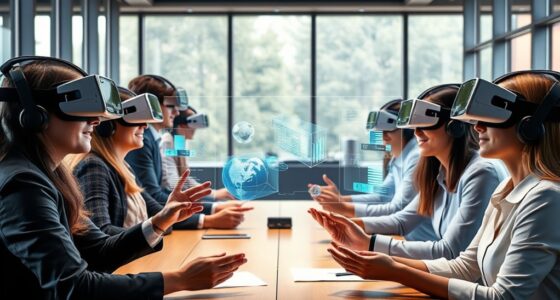
AI in remote hiring helps you streamline candidate screening, making the process faster and more efficient. It automates resume and interview analysis, reducing unconscious biases and promoting fairness. Using chatbots or video assessments, AI allows you to conduct standardized interviews across different time zones, saving time and resources. It enhances transparency and fairness, ensuring you evaluate candidates based on data. To discover more about how AI can transform your hiring, continue exploring its benefits and applications.
Key Takeaways
- AI automates resume screening and initial assessments, speeding up remote hiring processes.
- Interview automation tools use chatbots and video analysis to evaluate candidate responses consistently.
- AI reduces unconscious biases, promoting fairness and inclusivity in remote recruitment.
- Candidates can prepare better by tailoring resumes and practicing AI-friendly interview responses.
- AI enhances transparency and efficiency, enabling quicker, data-driven hiring decisions for remote roles.
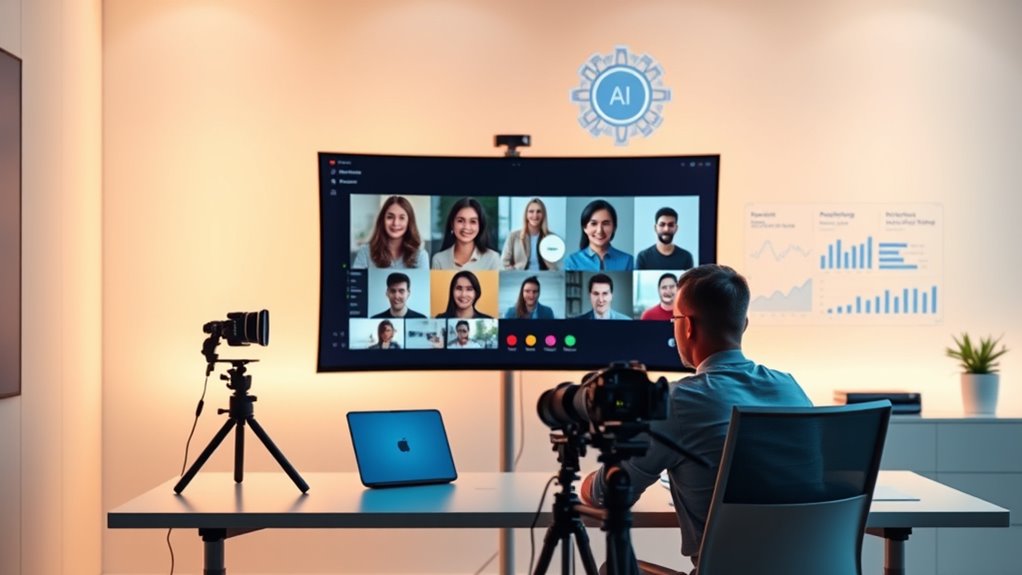
Have you ever wondered how artificial intelligence is transforming the way companies hire remotely? The answer lies in how AI streamlines processes like candidate screening and interview automation, making remote hiring more efficient and effective. When you’re applying for jobs online, AI-powered tools are working behind the scenes to assess your qualifications rapidly. Instead of waiting days or weeks, AI systems analyze resumes and cover letters to identify candidates who best match the role’s requirements. This candidate screening isn’t just faster; it’s often more objective, reducing unconscious biases that can influence human recruiters. By automating this initial step, companies can focus their time and resources on candidates with the highest potential, improving the overall quality of hires.
Once the pool of candidates is narrowed down, interview automation takes center stage. AI-driven interview platforms can conduct initial screening interviews through chatbots or video assessments, asking standardized questions and evaluating responses in real time. This means you might find yourself engaging with an AI-powered interview system rather than a human recruiter early on. These systems analyze your tone, word choice, and even facial expressions to gauge your fit for the role. The benefit for you is a more flexible and accessible interview process—no need to coordinate schedules across time zones or navigate multiple rounds of in-person interviews. For employers, it speeds up the entire hiring pipeline, providing quick insights into your skills and personality traits.
AI interview platforms streamline hiring with quick, standardized assessments, making remote interviews more flexible and efficient for candidates and employers alike
AI also helps eliminate some of the biases that can creep into traditional hiring methods, making remote recruitment fairer. Automated candidate screening evaluates qualifications based solely on data, reducing the influence of unconscious bias related to gender, age, or ethnicity. Similarly, interview automation provides consistent assessments, ensuring each candidate is evaluated on the same parameters. This transparency can make the process feel more equitable and transparent from your perspective.
However, it’s important to remember that AI isn’t perfect. It’s a tool that complements human judgment, not replaces it altogether. As a candidate, understanding that AI handles initial screenings and interviews can help you prepare better—by tailoring your resume to keywords the system might scan for or practicing responses suitable for automated interviews. Overall, AI’s role in remote hiring creates a faster, fairer, and more accessible process, giving you a better chance to showcase your true potential without the constraints of geographic or scheduling limitations.
Frequently Asked Questions
How Does AI Ensure Fairness in Remote Candidate Evaluations?
AI promotes fairness in remote candidate evaluations by applying bias mitigation techniques, reducing unconscious prejudices that might influence hiring decisions. It guarantees candidate transparency by providing clear, consistent criteria for evaluation, so you understand how each candidate is assessed. This combination helps create a more objective process, giving every applicant an equal opportunity, and ultimately leading to fairer hiring outcomes.
What Privacy Concerns Arise With AI in Remote Hiring Processes?
You might worry about data privacy when AI is used in remote hiring, as sensitive candidate information gets processed. There’s also concern about bias mitigation, guaranteeing AI doesn’t perpetuate discrimination. To address these issues, you should ensure robust data privacy measures are in place, like encryption and access controls. Also, regularly audit AI systems to prevent bias, helping create a fair and secure remote hiring process for everyone involved.
Can AI Accurately Assess Soft Skills Remotely?
You might wonder if AI can truly assess soft skills remotely. While behavioral analysis and emotional intelligence are complex traits, AI tools are improving at recognizing subtle cues during video interviews, such as tone, facial expressions, and responses. These insights help gauge interpersonal skills and emotional awareness. Although not perfect, AI can provide valuable, data-driven assessments that support human judgment, making remote soft skill evaluations more objective and consistent.
How Does AI Handle Diverse Language and Cultural Differences?
AI handles diverse language and cultural differences through multilingual processing and cultural adaptation. It can analyze multiple languages accurately, enabling fair assessments across various backgrounds. By integrating cultural context, AI improves understanding of nuanced communication styles and behaviors. This way, you can guarantee more inclusive hiring practices, reduce biases, and better evaluate candidates from different regions, making your remote hiring process more equitable and effective.
What Are the Limitations of AI in Remote Team Integration?
You might think AI seamlessly integrates remote teams, but it’s not perfect. Its limitations include biases that can skew team dynamics and a lack of algorithm transparency, making it hard to trust decisions. While bias mitigation efforts help, they’re not foolproof. AI can assist, but it can’t replace human nuance and understanding, especially when it comes to building cohesive, culturally-aware remote teams. Ironically, tech’s promise often falls short here.
Conclusion
As you consider AI in remote hiring, it’s tempting to believe it’s the ultimate solution. While AI streamlines processes and reduces bias, it’s not perfect—human judgment still matters. Think of AI as a helpful tool, not a magic fix. When used wisely, it can enhance your hiring decisions. Ultimately, blending AI’s efficiency with your intuition creates the best chance of finding the right candidate, making your remote hiring process smarter and more effective.