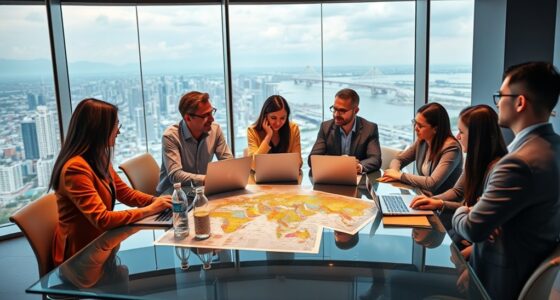
The future of workspaces will see you leveraging smart, adaptable environments that combine technology and flexible design. You’ll use advanced collaboration tools like video conferencing and cloud platforms to work seamlessly across distances. Office spaces will become more intuitive, adjusting lighting, temperature, and layouts based on your needs and occupancy. Data insights will help optimize space use, while hybrid models will support both remote and in-office work. Stay with us to discover how these changes will reshape your work experience.
Key Takeaways
- Workspaces will increasingly integrate smart devices to personalize lighting, temperature, and layout based on individual and team preferences.
- Hybrid models will blend remote and in-office work, supported by flexible, technology-enabled environments.
- Data analytics and sensors will optimize space utilization, reducing costs and improving user experience.
- Physical office designs will become more adaptable, with modular furniture and intelligent spaces that respond to changing needs.
- Collaboration tools will evolve to facilitate seamless communication across physical and virtual teams, boosting productivity.

Have you ever wondered how workplaces will evolve in the coming years? The future of workspaces is shaping up to be dynamic, driven by technological advances and changing employee expectations. One of the most significant shifts you’ll notice is the emphasis on remote collaboration. As companies recognize the benefits of flexible work arrangements, you’ll find that seamless communication tools are becoming essential. Video conferencing, instant messaging, and cloud-based project management platforms are now standard, allowing teams to work together efficiently regardless of physical location. This shift means you’ll need to adapt to new ways of staying connected, sharing ideas, and contributing to projects without being confined to a traditional office.
Remote collaboration tools are revolutionizing how teams connect and share ideas across distances.
Alongside remote collaboration, smart office design is transforming physical workspaces into highly adaptable and intuitive environments. Imagine walking into an office where everything—from lighting and temperature to desk assignments—is tailored to your preferences, all managed through smart devices. These intelligent spaces optimize comfort and productivity by adjusting to your work schedule and preferences in real time. For example, sensors can detect when a meeting room is occupied and automatically adjust lighting and ventilation, reducing energy waste. You might also find that furniture is modular, allowing you to configure your workspace as needed, whether for solo work or collaborative sessions. This focus on smart design helps foster a more engaging and efficient environment, making it easier for you to focus and collaborate.
The integration of smart office design also extends to data-driven insights. Space utilization can be monitored to identify underused areas, leading to more efficient layouts that support your work habits. With sensors tracking movement and occupancy, your company can make smarter decisions about workspace allocation, reducing costs and enhancing your overall experience. As workplaces become more intelligent, you’ll likely see a move toward hybrid models that combine remote and in-office work, creating a flexible environment that adapts to your needs.
Ultimately, the future of workspaces is about enhancing your ability to collaborate remotely and creating smarter, more responsive physical environments. You’ll benefit from tools that keep you connected no matter where you are, and from spaces designed with your comfort and productivity in mind. This evolution isn’t just about technology; it’s about creating a work experience that’s more flexible, efficient, and aligned with how you work best. The workplaces of tomorrow will empower you to be more innovative, collaborative, and productive—whether you’re at home, in a traditional office, or a hybrid of both.
Frequently Asked Questions
How Will AI Impact Job Security in Future Workplaces?
AI automation may threaten your job security by causing job displacement, especially in tasks that can be easily automated. As AI takes over repetitive or routine work, you might face increased competition or layoffs. To stay secure, you should focus on developing skills that complement AI, like critical thinking and creativity, which are harder to automate. Embracing continuous learning will help you adapt to these technological shifts and protect your career.
What Are the Best Practices for Maintaining Employee Well-Being Remotely?
Oh, sure, just pile on the remote engagement and mental health tips like they’re magic pills. To keep employees well, you should schedule regular check-ins, promote work-life balance, and encourage open communication. Don’t forget to recognize achievements and provide resources for mental health support. By actively fostering a supportive environment, you help prevent burnout and keep your remote team motivated—because, after all, who doesn’t love a well-cared-for employee?
How Can Companies Ensure Diversity in Hybrid Work Environments?
To guarantee diversity in hybrid work environments, you should prioritize inclusive hiring practices that actively seek candidates from varied backgrounds. Foster cultural awareness by providing training and open conversations, creating an environment where everyone feels valued. Use unbiased recruitment tools and promote flexible policies that accommodate different needs. By doing so, you build a genuinely diverse workspace where all employees can thrive, regardless of their location or background.
What Legal Challenges Might Arise With Evolving Workspace Technologies?
You might face legal challenges like protecting intellectual property and ensuring contract enforcement as workspace technologies evolve. A recent survey shows 65% of companies worry about safeguarding proprietary info in remote setups. As you adopt new tools, you must update contracts and security measures. Failing to do so risks disputes and IP theft. Staying proactive helps you navigate these legal hurdles and protect your business interests effectively.
How Will Future Workspaces Influence Urban Development and Real Estate?
Future workspaces will substantially influence urban development and real estate by driving urban expansion as more companies adopt flexible, remote-friendly setups. You’ll see changes in zoning regulations to accommodate mixed-use developments and smart office spaces. This shift encourages sustainable growth, reduces commute times, and boosts local economies. As a result, cities become more dynamic, integrating residential, commercial, and recreational areas, shaping vibrant, adaptable urban environments that meet evolving workforce needs.
Conclusion
As you embrace the evolving landscape of workspaces, remember that change is the only constant. By staying adaptable and open to new ideas, you’ll be better equipped to navigate the shifting terrain. The future may be a blank canvas, but with the right mindset, you’ll paint a masterpiece. Keep your eyes on the horizon, and you’ll find that success often comes to those who are willing to roll with the punches.