
Stop relying solely on hours logged to measure remote employee performance. Instead, focus on metrics like task completion, work quality, meeting deadlines, and overall results that show actual impact. Engagement indicators such as proactive communication and collaboration reveal ongoing commitment, while tracking project milestones helps gauge effectiveness. Moving toward outcome-based metrics offers a clearer picture of productivity and success. Keep exploring to discover proven strategies for making this shift smoothly.
Key Takeaways
- Focus on task completion, quality, and deadline adherence instead of logged hours to accurately measure productivity.
- Set clear, outcome-based goals aligned with team priorities to evaluate results effectively.
- Track engagement through proactive communication, collaboration, and responsiveness rather than time spent online.
- Use project milestones, client feedback, and impact metrics to assess true contributions and success.
- Implement tools like performance analytics platforms to monitor results and foster a results-driven remote work culture.
Why Relying on Hours Logged Fails Remote Employee Performance Tests
Relying solely on hours logged to measure remote employee performance is flawed because it equates time spent with productivity, which isn’t always accurate. When you focus only on hours, you risk overlooking signs of employee burnout, as long hours can suggest overwork rather than efficiency. This approach can harm work-life balance, making employees feel pressured to log extra hours even if their output doesn’t justify it. Burnout leads to decreased motivation, higher turnover, and lower overall productivity. Instead of tracking hours, you should consider results and engagement, which more accurately reflect an employee’s contribution. Prioritizing quality over quantity helps maintain a healthy work environment, reducing burnout and supporting sustained performance. Additionally, understanding how performance metrics truly influence overall success can help shift focus from mere hours to meaningful outcomes. Recognizing the importance of employee well-being can further promote a balanced approach to remote work, ensuring long-term productivity. A holistic performance assessment provides a clearer picture of employee contributions beyond just logged hours. A focus on meaningful outcomes encourages managers to assess what truly matters, fostering a more effective and sustainable work culture. Ultimately, effective remote management recognizes that productivity isn’t measured solely by time spent online.
What Performance Metrics Best Show Remote Productivity

Focusing on results rather than hours logged provides a clearer picture of remote employee productivity. Relying solely on time tracking fosters productivity myths that equate activity with achievement, which isn’t accurate. Instead, track metrics like task completion, quality of work, and deadlines met. The table below highlights key performance indicators:
| Metric | What It Measures | Why It Matters |
|---|---|---|
| Task Completion Rate | Number of tasks finished on time | Shows efficiency and output |
| Quality of Work | Accuracy and thoroughness | Indicates value delivered |
| Deadline Adherence | Meeting set timelines | Reflects reliability |
| Feedback & Revisions | Number of revisions requested | Measures clarity and effectiveness |
Focusing on these metrics debunks productivity myths and moves beyond superficial time tracking, revealing true remote performance. Additionally, comprehensive performance metrics provide a more accurate assessment of employee contributions beyond just the hours worked. Recognizing that performance measurement involves multiple factors helps organizations foster a results-oriented environment.
How Can You Measure Results Instead of Just Time Spent?
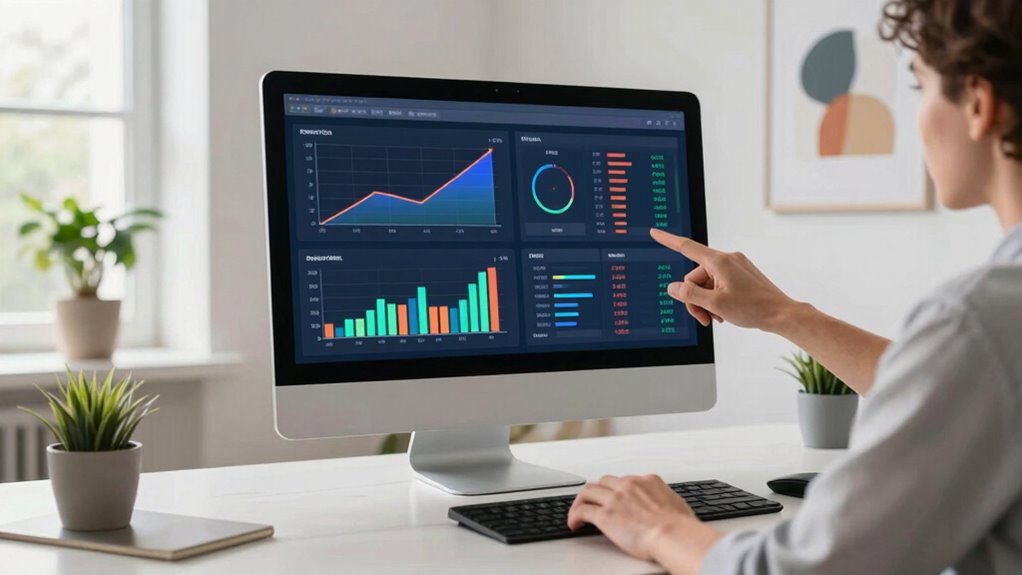
To measure results instead of just time spent, you need to set clear goals that define success. Tracking key outcomes helps you see if work is moving the needle, rather than just logging hours. Focusing on impact guarantees you’re evaluating real contributions, not just effort. Incorporating performance metrics related to specific outcomes ensures a more accurate assessment of productivity and progress. Regularly reviewing these metrics can also help identify which wellness devices or practices are truly making a difference in your performance, especially when considering the importance of piercing aftercare to maintain overall well-being. Additionally, understanding the net worth of public figures like Kate from Breaking Amish can inspire goal-setting strategies by highlighting diverse paths to success. Recognizing the influence of cryptid sightings and folklore can also remind us of the importance of myth and perception in shaping our understanding of reality, which can be metaphorically applied to how we interpret productivity and success.
Set Clear Goals
How can you determine if you’re truly making progress without just tracking hours? The key is setting clear goals that align with your team’s priorities. When goals are well-defined, you can measure results regarding completed projects, quality, or impact, rather than time spent at the desk. Clear goals boost employee motivation, giving your team a sense of purpose and direction. They create a shared understanding of success and help everyone stay focused on outcomes. By emphasizing goal alignment, you guarantee each team member’s efforts contribute meaningfully to broader objectives. This approach makes performance metrics more meaningful, enabling you to track progress based on tangible results rather than hours worked. Ultimately, clear goals empower your team to deliver quality work efficiently.
Track Key Outcomes
Tracking progress based solely on hours can be misleading; instead, you should concentrate on measurable outcomes that demonstrate your team’s success. Focus on key results that align with your goals, such as completed projects, client satisfaction, or sales targets. When you track these outcomes, you boost employee motivation, as team members see their tangible contributions. This approach also enhances remote onboarding, helping new hires understand what’s truly important rather than just clocking hours. By emphasizing results over time spent, you create a culture of accountability and achievement. Regularly review these key outcomes, adjust expectations as needed, and celebrate milestones. This shift ensures you’re measuring what truly matters—progress and impact—rather than just how long someone is logged in.
Focus on Impact
Measuring results instead of just time spent requires defining clear, meaningful impact indicators that reflect your team’s contributions. Focus on outcomes that demonstrate value, rather than falling for productivity myths that equate busyness with achievement. Shift your mindset from traditional time management to impact-driven metrics. Use these indicators to evaluate success:
| Impact Indicator | Example |
|---|---|
| Client Satisfaction | Positive feedback and retention |
| Project Delivery | Meeting deadlines with quality |
| Business Growth | Revenue or user engagement increase |
Which Engagement Metrics Reveal Employee Commitment?

Which engagement metrics best reveal employee commitment? Look for signs of employee enthusiasm, such as proactive participation in meetings and sharing innovative ideas. Consistent communication and responsiveness show they’re engaged and invested in their work. Pay attention to team cohesion, which reflects how well employees collaborate and support one another. When team members openly share feedback and celebrate successes together, it indicates strong commitment and a positive work environment. Additionally, observing the performance of electric dirt bikes can offer insights into technological engagement and adaptability within a team. These metrics go beyond hours logged, revealing genuine dedication. For example, tracking employee feedback can provide deeper understanding of individual and team motivation. Recognizing how team members communicate and support each other also highlights their level of engagement. If your team demonstrates high enthusiasm and cohesive interactions, it’s a clear sign they’re committed to the organization’s goals. Tracking these engagement indicators helps you understand employee dedication without relying on traditional time-based measures. Moreover, observing how employees adapt to remote work tools can indicate their willingness to embrace new technologies and workflows. Additionally, monitoring preventive maintenance practices can reveal proactive behavior and a focus on sustainability and efficiency within the team.
How Do Project and Task Completion Rates Indicate Success?

Project and task completion rates serve as direct indicators of success because they reflect how effectively your team is turning plans into results. When these rates align with your productivity benchmarks and goals, they show progress and efficiency. High completion rates suggest your team stays goal-oriented and maintains momentum, while low rates highlight areas needing improvement. Use the following table to assess your performance:
| Metric | What It Indicates |
|---|---|
| High completion | Strong goal alignment, productivity |
| Low completion | Potential bottlenecks, misaligned goals |
Tracking these rates helps you gauge whether your team meets deadlines and delivers outcomes. Consistent progress in project and task completion signals success, keeping everyone focused on results rather than hours worked. Monitoring simple systems can make managing these metrics easier and more effective, especially since many platforms now incorporate performance metrics to automate tracking. Additionally, understanding astrological signs might offer insights into team dynamics, although these should complement, not replace, data-driven performance measures. Recognizing that measurement accuracy can vary depending on the tools used is also important for interpreting these metrics reliably.
Why Assessing Work Quality and Impact Matters

Evaluating work quality and impact is essential because it shows whether your team’s efforts truly contribute to your organization’s goals. When you focus on results rather than hours, you foster higher employee engagement and a healthier work life balance. This approach encourages your team to prioritize meaningful work and innovation. Key reasons include:
- Measuring actual outcomes instead of time spent
- Boosting motivation through recognition of impact
- Supporting better employee engagement and retention
- Promoting work life balance by reducing unnecessary pressure
- Understanding Gold IRA Markets to inform strategic decisions
What Are the Best Tools to Track Remote Performance Metrics?

To effectively track remote performance, you need the right tools in place. Time tracking apps, performance analytics platforms, and collaboration apps each play a essential role in measuring productivity and engagement. Choosing the best combination depends on your team’s specific needs and goals. Incorporating smart‑home integrations can also enhance monitoring capabilities by providing additional data points and automation options. Leveraging connected devices can further streamline data collection and improve overall accuracy in performance assessments. For example, integrating AI-powered security cameras can offer insights into workspace activity and environment conditions to support well-being and efficiency.
Time Tracking Tools
When it comes to tracking remote performance, choosing the right time tracking tools is essential for gaining accurate insights into productivity. The best tools don’t just log hours—they help you improve time management and uncover productivity hacks. Look for tools that offer features like automatic tracking, detailed reports, and integration with your workflow. These features allow you to identify when you’re most focused and optimize your schedule accordingly.
Some top options include:
- Toggl Track
- Clockify
- RescueTime
- Hubstaff
These tools emphasize activity monitoring, project categorization, and goal setting, helping you focus on results rather than just hours worked. By selecting effective time tracking tools, you can better understand your productivity patterns and enhance your remote work efficiency.
Performance Analytics Platforms
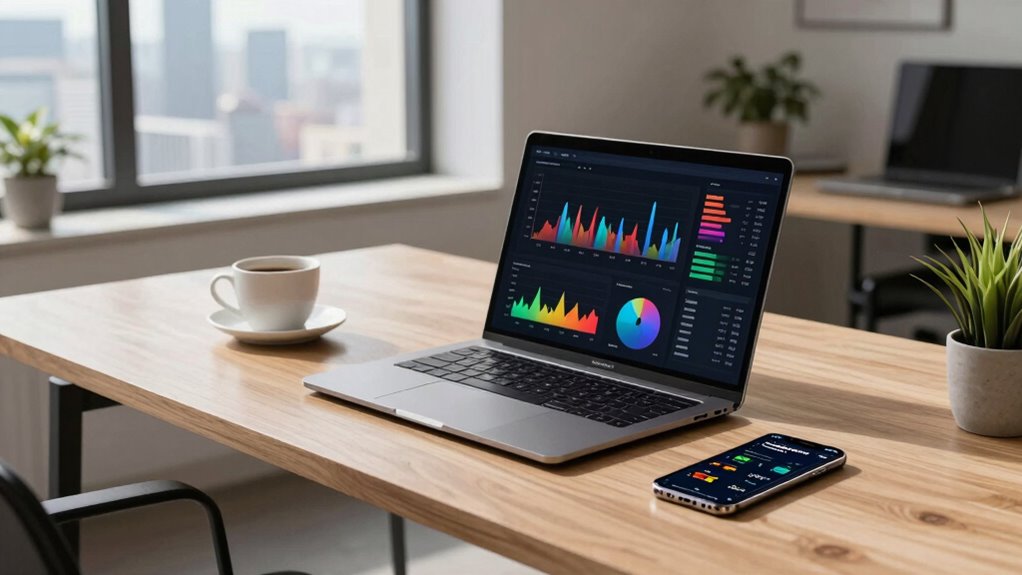
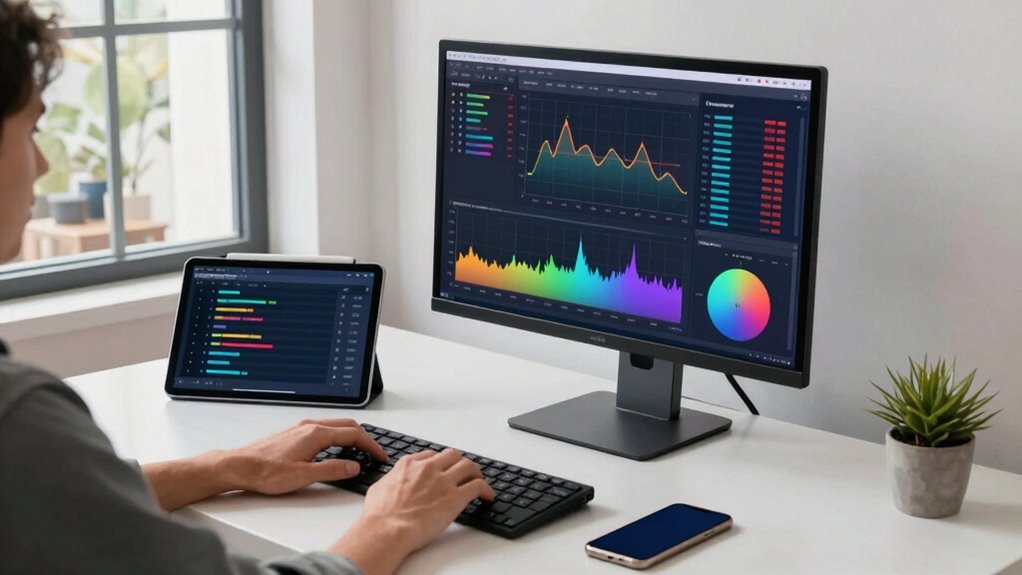
Performance analytics platforms are essential tools for remotely tracking and measuring employee performance effectively. These platforms help you understand how your team stays motivated and maintains workload balance, without relying solely on hours worked. By analyzing productivity patterns, engagement levels, and task completion rates, you gain insights into employee motivation and identify potential burnout risks. They enable you to set realistic goals, adjust workloads, and support a healthy work environment. Tools like Tableau, Power BI, and Sisense integrate data from various sources, offering a thorough view of performance metrics. This approach allows you to focus on quality and results, rather than just time, fostering a more engaged and balanced remote workforce. Ultimately, these platforms empower you to make data-driven decisions that enhance overall team effectiveness.
Collaboration and Communication Apps
Effective collaboration and communication apps are essential for tracking remote performance metrics because they provide real-time insights into team interactions, productivity, and engagement. These tools foster transparency and help identify collaboration patterns that impact overall performance. Using features like virtual watercoolers encourages informal interactions, boosting team cohesion. Digital watermarks embedded in messages or files can monitor document sharing and access, ensuring accountability.
Key benefits include:
- Monitoring active participation in meetings and chats
- Tracking message frequency and response times
- Measuring engagement through virtual watercooler interactions
- Ensuring data security with digital watermarks
How Managers Can Transition From Hours to Results Effectively

Shifting from tracking hours to measuring results requires a mindset shift for managers. You need to focus on outcomes rather than time spent, which builds trust by demonstrating you value productivity over presenteeism. To do this effectively, develop clear expectations and communicate them openly. Use feedback strategies to provide ongoing, constructive input that guides your team toward results, not clock-ins. Encourage autonomy, allowing employees to manage their time while meeting objectives. Regular check-ins help gauge progress and reinforce accountability. By emphasizing results, you foster a performance culture rooted in trust and transparency. This approach not only boosts motivation but also empowers your team to deliver quality work without being constrained by hours. Transitioning successfully hinges on your ability to lead with clarity and confidence.
Frequently Asked Questions
How Do Remote Teams Prefer to Be Evaluated for Performance?
You should evaluate remote teams based on productivity benchmarks and meaningful outcomes, not hours worked. Focus on clear goals and deliverables, and establish regular feedback loops to keep everyone aligned and motivated. This approach helps you measure actual performance, fosters accountability, and guarantees team members are judged fairly for their results rather than just their presence online. It’s about quality and impact, not clock-watching.
What Are Common Pitfalls When Shifting From Hours to Results?
Like a clock ticking without purpose, overemphasizing hours can mislead your team. When shifting from time tracking to results, common pitfalls include undervaluing flexibility and misjudging productivity. You might focus too much on visible hours instead of actual outcomes, causing frustration and misaligned expectations. To avoid this, set clear goals and trust your team’s ability to deliver results, not just clocked hours.
How Does Employee Well-Being Influence Performance Metrics?
Employee well-being directly impacts performance metrics by influencing mental health and burnout prevention. When you prioritize mental health, you’re more likely to see increased productivity, engagement, and job satisfaction. Burnout prevention strategies help reduce fatigue and stress, enabling you to perform consistently. By focusing on well-being, you create a healthier work environment, which leads to better results and sustainable success for both you and your team.
Can These New Metrics Be Applied Across Different Industries?
You can definitely apply these new metrics across different industries, as they focus on results rather than hours worked. While it’s true that industry adaptability varies, emphasizing outcomes fosters cross-sector implementation. Think of it as hitting two birds with one stone—improving performance and employee well-being simultaneously. Just remember, tailoring these metrics to suit specific industry needs heightens their effectiveness and guarantees genuine progress, no matter the sector you’re in.
What Training Is Needed for Managers to Adopt Outcome-Focused Assessments?
You need training in performance coaching and feedback techniques to adopt outcome-focused assessments effectively. This involves learning how to set clear goals, track results, and provide constructive feedback that emphasizes outcomes rather than hours worked. By developing these skills, you’ll help your team stay aligned with objectives, improve motivation, and foster a results-driven culture. Ongoing coaching and practice will guarantee you confidently implement these new performance metrics across your team.
Conclusion
Stop counting hours and start measuring what truly matters—results, impact, and engagement. Like a lighthouse guiding ships safely to shore, focus on meaningful metrics to navigate remote performance. When you shift your perspective from time spent to outcomes achieved, you’ll see your team flourish and productivity soar. Embrace these changes, and watch your remote workplace transform into a thriving harbor of success. The horizon is clearer when you measure what truly moves your team forward.