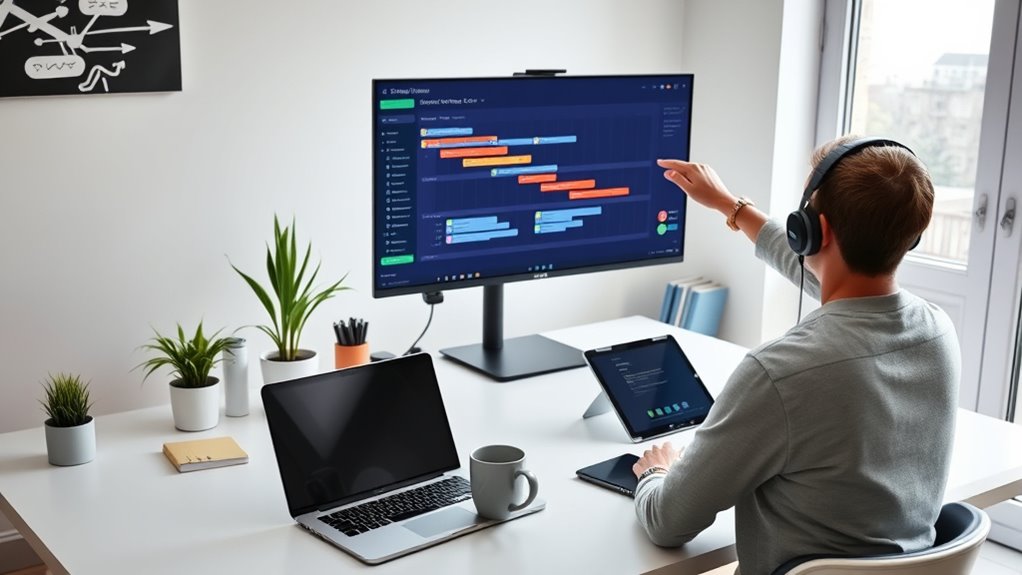

Remote project management involves using digital collaboration tools like Slack, Teams, or Asana to facilitate communication, share documents, and track tasks. You need to coordinate across time zones with flexible schedules, clear expectations, and regular check-ins. Building trust and fostering transparency are key to team cohesion. Adopting these principles helps keep everyone aligned and productive. Keep exploring to discover strategies that can make your remote projects more successful.

Get business pricing on tech for your team
- Business-only prices and quantity discounts
- Tax-exempt purchasing
- Multiple users, one account, clear invoices
Key Takeaways
- Utilize virtual collaboration tools like Slack, Microsoft Teams, and Asana for real-time communication and task management.
- Address time zone differences with flexible scheduling, asynchronous updates, and rotating meeting times.
- Set clear expectations by defining roles, deadlines, and communication norms from the outset.
- Foster trust and team cohesion through transparency, open communication, and recognition of achievements.
- Maintain regular interactions and cultivate a culture of accountability, flexibility, and mutual respect.

Have you ever wondered how teams successfully manage projects from afar? The secret lies in effective remote project management, where virtual collaboration and seamless time zone coordination play vital roles. When you’re working across different locations, you need to guarantee everyone stays connected and productive despite the physical distance. Virtual collaboration tools become your lifeline, enabling real-time communication, document sharing, and task tracking. Platforms like Slack, Microsoft Teams, or Asana help create a centralized space where team members can discuss ideas, ask questions, and update progress instantly. This interconnected environment fosters transparency and accountability, making it easier to keep everyone on the same page.
Effective remote project management relies on virtual collaboration tools and seamless time zone coordination.
But, coordinating across various time zones can be tricky. When team members are spread out globally, meetings might not always happen during regular working hours for everyone. To tackle this, you should prioritize flexible scheduling and establish clear protocols. For example, rotating meeting times ensures no single group bears the brunt of inconvenient hours. You also want to leverage asynchronous communication—sending recorded updates, detailed emails, or shared documents—so team members can review and respond at their convenience. This approach minimizes delays and keeps the workflow steady, even when real-time interactions aren’t possible.
Successful remote project management hinges on setting clear expectations early on. Define roles, deadlines, and communication norms upfront. When everyone understands the project scope and their responsibilities, it reduces misunderstandings and overlaps. Additionally, using project management software allows you to assign tasks, monitor progress, and identify bottlenecks quickly. Regular check-ins, whether through video calls or quick updates, help maintain momentum and build team cohesion. These interactions also provide opportunities to address issues promptly, keeping the project on track.
Trust forms the foundation of virtual collaboration. As a remote manager, you need to empower your team members with autonomy while maintaining oversight. Encouraging transparency and open communication nurtures trust and accountability. Recognizing achievements to boost morale, especially when your team is working in different environments. Additionally, leveraging effective remote management techniques can further improve team coordination and productivity. Remember, managing remotely isn’t just about technology; it’s about cultivating a culture of collaboration, flexibility, and mutual respect.
Frequently Asked Questions
How Do I Handle Time Zone Differences Effectively?
You handle time zone differences effectively by doing thorough time zone mapping to understand everyone’s local times. Use flexible scheduling to accommodate team members’ peak hours and preferences. Communicate clearly about deadlines and meeting times, and leverage tools like shared calendars to keep everyone aligned. Being proactive and considerate of different time zones helps maintain productivity and team cohesion, making collaboration smooth regardless of where everyone is located.
What Tools Are Best for Remote Team Collaboration?
Don’t let scattered tools slow you down—choose platforms that boost collaboration. Virtual whiteboards are perfect for brainstorming and visualizing ideas, while instant messaging keeps your team connected in real time. These tools streamline communication and guarantee everyone stays on the same page, no matter where they are. By integrating them into your workflow, you’ll foster engagement and productivity, making remote teamwork feel just as seamless as in-person collaboration.
How Can I Ensure Accountability Among Remote Team Members?
You can guarantee accountability by setting clear goals and using performance tracking tools. Regularly check in with your team, discuss progress, and address any obstacles. Make expectations transparent from the start, and encourage open communication. By aligning individual tasks with overall objectives and providing feedback, you motivate team members to stay on track and take ownership of their responsibilities, fostering a culture of accountability.
What Strategies Promote Team Cohesion Remotely?
You can promote team cohesion remotely by encouraging virtual bonding activities like online games or casual chats to build trust. Foster cultural awareness by celebrating diverse traditions and encouraging open communication about different backgrounds. Use video calls to create a sense of presence, and regularly check in with team members to strengthen relationships. These strategies help your team feel connected, valued, and motivated, even from afar.
How Do I Manage Remote Project Risks Proactively?
You proactively manage remote project risks by conducting thorough risk assessments early, identifying potential issues before they escalate. Keep stakeholder communication clear and consistent to guarantee everyone stays informed about risks and mitigation plans. Use project management tools to monitor risk factors continuously, and encourage your team to report concerns promptly. This approach allows you to address risks swiftly, maintain project stability, and keep all stakeholders engaged and confident in the process.
Conclusion
Remote project management is shaping the future of work, offering flexibility and efficiency. Did you know that 85% of organizations report increased productivity with remote teams? By embracing remote tools and clear communication, you can lead successful projects from anywhere. Stay adaptable, keep your team connected, and leverage technology to overcome challenges. With the right approach, remote project management can boost your project’s success and your team’s satisfaction.
Fall Picks
fall essentials
As an affiliate, we earn on qualifying purchases.