

AI-powered email automation tools are transforming how businesses engage with their audiences, offering smarter, more personalized outreach at scale. The best options vary from simple, beginner-friendly platforms to advanced systems tailored for marketing professionals. Constant improvements in AI accuracy and integration capabilities mean choosing the right tool depends heavily on your specific needs and technical comfort level. Tradeoffs often involve balancing ease of use against customization and AI sophistication. Continue reading for a detailed comparison of the top tools to help you make an informed decision.

Get business pricing on tech for your team
- Business-only prices and quantity discounts
- Tax-exempt purchasing
- Multiple users, one account, clear invoices
Key Takeaways
- The most effective AI email tools combine strong automation with advanced personalization features.
- Ease of setup and user-friendliness often trade off with customization depth and AI complexity.
- Pricing varies widely, with premium tools offering more sophisticated AI but at higher costs.
- Integration with existing CRM and marketing platforms is a key factor for seamless workflows.
- Choosing the right tool depends on your technical skills, budget, and specific marketing goals.




More Details on Our Top Picks
AI-Powered Sales for Small Business Owners: How to Use AI to Find Leads, Close Deals, and Grow Revenue (AI Productivity for Small Business Owners, Book 4)
This book stands out for its focused approach on helping small business owners leverage AI across the entire sales cycle, from lead generation to closing deals. Compared to broader AI automation guides like AI Business Automation, it offers tailored tactics specifically for sales, making it highly practical for owners seeking immediate results. Its structured series on AI productivity ensures a step-by-step learning path, but the lack of customer reviews makes assessing its real-world effectiveness challenging. For owners eager to boost sales without complex tech, this guide provides actionable insights, though it doesn’t cover technical implementation details.
Pros:- Focused specifically on small business sales use cases
- Part of a structured series on AI productivity
- Covers the full sales cycle from lead generation to closing deals
Cons:- No customer reviews or ratings available to evaluate quality
- Lacks detailed technical or implementation guidance
Best for: Small business owners looking to improve sales outcomes with AI-driven strategies
Not ideal for: Entrepreneurs seeking technical step-by-step instructions or in-depth AI tool setup guidance
- Series:AI Productivity for Small Business Owners
- Book Number:4
- Format:Book
Our verdict“This book is ideal for small business owners wanting practical sales-focused AI insights without deep technical complexity.”
Claude AI for Excel: The Beginner-Friendly Guide to Claude AI in Excel, Word, PowerPoint, and Outlook (Microsoft 365)
This guide makes AI integration accessible for newcomers, with a clear focus on using Claude AI across Microsoft 365 applications, simplifying tasks with plain English commands. Unlike The AI-Powered Accountant, which targets specific professional workflows, this book emphasizes ease of use over depth, making it perfect for users unfamiliar with AI or formulas. However, its superficial coverage means advanced users seeking detailed technical insights may find it lacking. If you want to start automating routine tasks without a steep learning curve, this guide offers a friendly entry point.
Pros:- User-friendly for beginners
- Covers multiple Microsoft 365 applications
- Simplifies AI integration without complex formulas
Cons:- No detailed technical content
- No pricing or ratings available
Best for: Beginners in Microsoft 365 wanting straightforward AI automation
Not ideal for: Advanced users needing in-depth technical explanations or customization options
- Application Focus:Excel, Word, PowerPoint, Outlook
- Ease of Use:Beginner-friendly
- Content Depth:Basic, introductory
Our verdict“This guide is best suited for new users aiming to add AI capabilities across Microsoft 365 without technical hurdles.”
The AI-Powered Accountant: How to Use ChatGPT, AI Tools and Smart Automation to Save 10+ Hours a Week, Win Better Clients, and Build a Future-Proof Practice (AI Workflow Guides for Professionals)
This book is tailored for accounting professionals eager to adopt AI, focusing on automating workflows to save over 10 hours weekly, much like The AI Business Automation but with an accounting-specific lens. Its emphasis on practical time savings and client acquisition makes it highly relevant, though the absence of detailed content or reviews leaves its actual depth uncertain. For accountants wanting targeted automation strategies, this guide offers a promising starting point, but those seeking technical step-by-step instructions may find it insufficient.
Pros:- Focused on practical time savings of 10+ hours per week
- Tailored specifically to accounting workflows
- Part of a series dedicated to professional AI integration
Cons:- No detailed description or review content available
- Limited insights into specific tools or technical steps
Best for: Accountants and bookkeepers aiming to streamline workflows and improve client services
Not ideal for: General AI users or professionals outside accounting seeking broad automation strategies
- Series:AI Workflow Guides for Professionals
- Topic:AI tools and automation for accounting
- Format:Book
Our verdict“This guide is ideal for accountants wanting targeted, time-saving AI automation strategies tailored to their workflows.”
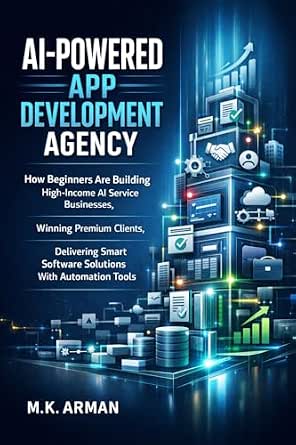
AI-Powered App Development Agency: How Beginners Are Building High-Income AI Service Businesses, Winning Premium Clients, Delivering Smart Software Solutions
This book offers foundational strategies for beginners interested in launching an AI app development agency, emphasizing attracting premium clients and delivering value. Compared to AI Business Automation, which targets scaling automation processes, this title focuses on agency building and client acquisition, making it suitable for newcomers to the AI service industry. Its lack of technical detail or step-by-step instructions means that aspiring entrepreneurs should seek additional resources for actual development skills. If your goal is to start a profitable AI service business, this book provides motivation and strategic guidance, though it doesn’t cover specific tools or coding details.
Pros:- Provides practical strategies for building an AI service agency
- Focuses on attracting premium clients
- Suitable for beginners entering the AI industry
Cons:- No detailed technical content or step-by-step instructions
- Limited information on specific tools or software
Best for: Beginners aiming to build a profitable AI app development agency
Not ideal for: Experienced developers or those seeking technical training in AI programming
- Focus:AI service business building
- Target Audience:Beginners
- Content Type:Strategy and business growth
Our verdict“This book suits aspiring entrepreneurs who want strategic advice on starting and growing an AI service agency without technical coding guidance.”
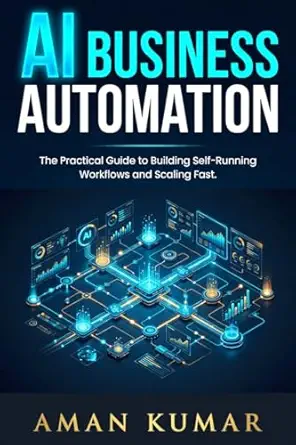
AI Business Automation: The Practical Guide to Building Self-Running Workflows and Scaling Fast
This guide emphasizes scalable AI-driven workflows designed to automate business processes for rapid growth, echoing themes in The AI-Powered Funnels but with a broader focus on self-running systems. It’s well-suited for entrepreneurs and managers who want practical, actionable strategies for building automated workflows, yet it falls short on technical specifics, leaving implementation details vague. Its lack of reviews and detailed content means users should supplement with technical resources. For those seeking a high-level roadmap to scaling operations through AI, this book offers a solid foundation, but it’s not a hands-on technical manual.
Pros:- Provides practical, actionable strategies for AI automation
- Focuses on scalable workflows for business growth
- Suitable for entrepreneurs and managers
Cons:- Lacks detailed technical implementation
- No customer reviews available
Best for: Entrepreneurs and managers aiming to automate and scale business operations
Not ideal for: Tech-savvy users looking for detailed technical implementation or coding guidance
- Focus:Business process automation
- Target Audience:Entrepreneurs, Managers
- Content Type:Strategy and workflow design
Our verdict“This book is best for business leaders seeking strategic guidance to create scalable, automated workflows for growth without in-depth technical instructions.”
AI for Accountants and Bookkeepers: A Beginner’s Guide to Using ChatGPT and AI Tools to Automate Client Emails, Bookkeeping, and Reports
This book stands out as an accessible entry point for finance professionals new to AI, offering a straightforward approach with 50 ready-to-use prompts that can save over 10 hours weekly. Unlike more complex tools that require technical setup, this guide emphasizes ease of use and practical automation of emails, bookkeeping, and report generation, making it ideal for those just starting to incorporate AI into their workflows. However, for users already familiar with ChatGPT or advanced automation systems, its fundamental level may feel limiting. It provides clear directions but lacks the depth of more comprehensive tools, which could be a drawback for seasoned professionals seeking advanced features.
Pros:- Beginner-friendly introduction with simple instructions
- Includes 50 ready-to-use prompts for immediate application
- Focuses on automating routine client communications and bookkeeping
Cons:- May be too basic for users with existing AI automation experience
- Limited depth on advanced AI integrations or customization
Best for: Accountants and bookkeepers new to AI seeking practical, easy-to-implement automation strategies
Not ideal for: Experienced finance professionals already familiar with AI tools looking for advanced automation solutions
- Format:Book
- Audience:Accountants and Bookkeepers
- Topic:AI, ChatGPT, Automation
- Includes:50 Ready-to-Use Prompts
- Claimed Benefit:Save 10+ hours a week
Our verdict“This book is ideal for finance professionals starting to explore AI-driven automation without prior technical expertise.”
AI-Powered Funnels: Build Smart Automated Sales Systems That Turn Strangers into Loyal Customers on Autopilot Using AI, Chatbots, Email Automation, and Marketing
This book offers a broad overview of constructing automated sales funnels using AI, chatbots, and email systems, making it an appealing choice for entrepreneurs aiming to streamline their customer acquisition processes. Compared with the more niche-focused products like the AI-Powered Email Marketing Specialist, this guide emphasizes strategic funnel creation over technical execution, which benefits marketers seeking a comprehensive approach. However, its lack of specific tool recommendations or step-by-step instructions makes it more theoretical, potentially leaving readers unsure how to implement the concepts practically. It’s best suited for those wanting to grasp the big picture rather than detailed setup.
Pros:- Provides comprehensive strategies for AI-based sales funnels
- Focuses on modern marketing automation techniques
- Ideal for those aiming to boost sales efficiency through AI
Cons:- Lacks specific technical details or implementation steps
- Content is more theoretical than practical for immediate application
Best for: Entrepreneurs and marketers interested in automating sales processes with AI-driven funnels
Not ideal for: Users seeking detailed technical guidance or specific automation tool instructions
Our verdict“This book suits marketers who want to understand high-level AI-driven sales funnel strategies without diving into technical setup details.”
The AI-Powered Solopreneur: How to Build a Profitable One-Person Business and Double Your Output Using Modern Generative AI Workflow Systems
This guide targets solo entrepreneurs seeking to leverage AI to automate workflows and double productivity, fitting well into the niche of one-person businesses. Unlike the more general marketing-focused books like AI-Powered Funnels, this title emphasizes practical, structured AI workflows that help streamline daily tasks. Its articulation of specific AI tools and processes makes it particularly valuable, though the lack of available detailed content or reviews leaves some uncertainty about its depth. For entrepreneurs ready to implement AI systematically, this book offers a focused path to scaling efficiently.
Pros:- Specialized focus on solopreneurs and single-person businesses
- Covers practical AI workflow systems for productivity boosts
- Part of a structured series on mastering AI
Cons:- Limited available content or detailed reviews to verify depth
- May lack advanced or highly technical guidance for seasoned users
Best for: Solo entrepreneurs and small business owners aiming to automate and scale their operations
Not ideal for: Large teams or those expecting detailed technical tutorials beyond workflow concepts
- ASIN:B0GX2YL6W6
- Format:Book
- Series:Master AI, Lead Your Industry (Book 3)
- Topic:Generative AI for one-person businesses
Our verdict“This book makes the most sense for solo entrepreneurs eager to systematically implement AI workflows to grow their business efficiently.”
The AI-Powered Email Marketing Specialist: How to Use ChatGPT, AI Tools and Smart Automation to Write Emails That Convert, Master Deliverability, and More
This guide emphasizes using AI tools like ChatGPT to craft compelling emails, improve deliverability, and automate campaigns, making it ideal for marketing professionals aiming to enhance their email performance. Compared with the broader automation focus of the AI for Accountants, this title zeroes in on conversion-driven email strategies. While it provides practical insights into automation and deliverability, it lacks specific technical instructions or tool integrations, which may frustrate users seeking hands-on setup guidance. This makes it more suitable for marketers with some experience rather than complete beginners.
Pros:- Practical strategies for creating high-converting emails
- Covers automation and deliverability optimization
- Designed to help improve campaign results
Cons:- No detailed technical or tool setup instructions
- May be too advanced for complete beginners seeking simple solutions
Best for: Email marketing professionals wanting to boost campaign effectiveness with AI
Not ideal for: Beginners or users looking for step-by-step technical tutorials
Our verdict“This book is best for experienced email marketers aiming to leverage AI for better conversions and deliverability.”
Autonomous Intern V1 Personal AI Assistant Mini PC
This plug-and-play AI mini PC offers a versatile solution for automating emails, scheduling, follow-ups, and research through popular messaging apps. Unlike the more specialized books or guides, this device provides a tangible, operational AI assistant that can handle complex multi-step workflows without coding or API setup, which makes it accessible for non-technical users. However, its reliance on cloud-based models and a limited monthly token allowance may restrict heavy or sensitive data use, and trust in cloud services is required. Still, its ability to retain context over time makes it stand out for continuous personal automation.
Pros:- No coding or technical setup needed
- Automates multi-step workflows across various messaging platforms
- Retains user preferences and context for ongoing use
- Supports multiple switchable cloud-based AI models
Cons:- Dependent on cloud-based AI models which may raise privacy concerns
- Monthly token plan may limit heavy or complex usage
- Handling sensitive data requires trust in cloud services
Best for: Busy professionals wanting a straightforward, all-in-one AI assistant for daily tasks
Not ideal for: Organizations handling sensitive information or requiring extensive heavy-duty automation without cloud dependency
- Product Type:Personal AI assistant mini PC
- Setup:Plug-and-play QR code setup
- Supported Messaging Platforms:WhatsApp, Telegram, Slack, others
- Functions:Email, scheduling, follow-ups, research, workflows
- AI Models:Multiple switchable cloud-based
- Memory:Retains preferences and context
Our verdict“This device is well-suited for professionals seeking an easy-to-deploy, multi-functional AI assistant for routine automation tasks.”
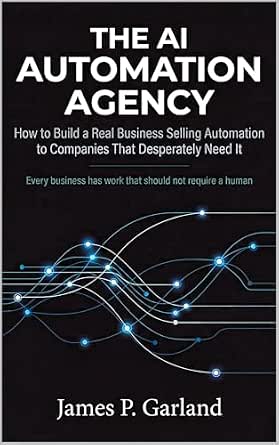
The AI Automation Agency: How to Build a Real Business Selling Automation to Companies That Desperately Need It
This book stands out for its focus on transforming the demand for AI automation into a profitable service model. Unlike product-centric tools like The AI-Powered Email Marketing Specialist, which target marketers directly, this guide is tailored for entrepreneurs aiming to build a consulting or agency business. It provides actionable strategies for selling automation solutions to companies, emphasizing the business development side rather than technical implementation. The tradeoff is that it lacks detailed technical content or step-by-step software instructions, making it less suitable for those looking to implement automation themselves. Instead, it’s a valuable resource for those wanting to understand how to package and sell AI automation services effectively.
Pros:- Provides practical frameworks for building an AI automation agency
- Focuses on selling automation solutions to real business needs
- Part of a specialized series that deepens understanding of AI practitioner strategies
Cons:- Lacks detailed advice on technical setup or automation tools
- No specific case studies or real-world examples included
- Limited focus on actual software or platform implementation
Best for: Aspiring agency owners or consultants who want to build a scalable AI automation service business targeting corporate clients.
Not ideal for: Technical professionals seeking detailed implementation guides or hands-on automation tutorials, as it focuses more on business development than technical steps.
- Format:Book
- Series:The AI Practitioner Library
- Topic:AI automation agency development
Our verdict“This book is ideal for entrepreneurs and consultants aiming to develop a profitable automation services business, rather than those looking for hands-on technical guidance.”

How We Picked
I evaluated these AI-powered email automation tools based on several key criteria that matter to buyers: performance in automating and personalizing emails, ease of use, build quality, integration capabilities, and overall value. Tools were ranked to reflect their balance of sophistication and accessibility, ensuring options for different skill levels and budgets. We prioritized platforms with proven AI accuracy, flexible automation workflows, and positive user feedback, filtering out solutions that fell short in either usability or features. This approach aims to highlight tools that truly enhance email marketing productivity and effectiveness.Factors to Consider When Choosing AI-powered Email Automation Tools
Choosing the right AI-powered email automation tool involves more than just features. Consider your current marketing setup, technical skills, and budget to identify the best fit. Additionally, evaluate how well the platform integrates with your existing tools, how customizable it is, and whether its AI capabilities align with your outreach goals. Avoid common pitfalls like overpaying for features you won’t use or selecting a platform with poor deliverability or limited support. The following factors will help you navigate these choices more confidently.Ease of Use and Learning Curve
If you’re new to AI-driven email marketing, prioritize platforms with intuitive interfaces and guided onboarding. Overly complex systems can hinder adoption and reduce ROI, especially if your team lacks technical expertise. Conversely, experienced marketers may need more advanced customization options that require a steeper learning curve. Balancing usability with features ensures you can start quickly without sacrificing future scalability.AI Personalization and Segmentation
Effective AI tools should go beyond basic automation by delivering personalized content based on recipient behavior, preferences, or demographics. Look for platforms that offer dynamic segmentation and real-time AI insights. While more sophisticated AI can drive higher engagement, it often comes at a higher price point and complexity. Consider your campaign goals to determine the level of AI-driven personalization that makes sense for your business.Integration with Existing Systems
Seamless integration with your CRM, marketing automation, and analytics platforms is critical to maximizing efficiency. Poor integration can lead to fragmented workflows and data silos, reducing the effectiveness of your campaigns. Check whether the tool supports popular APIs or native integrations you already use, and verify compatibility with your current tech stack before committing.Pricing and Value
Pricing structures range from flat-rate plans to usage-based models, often with tiered features. Cheaper options may lack advanced AI capabilities or limit email volume, while premium tools can be costly but deliver superior automation and insights. Evaluate whether the added features justify the expense for your specific needs. Also, consider scalability — will the platform grow with your business without requiring a costly overhaul?Deliverability and Support
High deliverability rates are essential for your emails to reach recipients’ inboxes. Choose platforms with strong reputations for spam management and email authentication. Additionally, reliable customer support and ongoing updates are vital, especially if your campaigns rely heavily on AI customization. A platform that offers comprehensive tutorials and responsive help can save you time and frustration.Frequently Asked Questions
How do AI-powered email automation tools improve engagement?
AI-powered tools enhance engagement by delivering highly personalized and timely content tailored to each recipient’s behavior and preferences. By analyzing data in real-time, these platforms can segment audiences dynamically and optimize send times, increasing open and click-through rates. This targeted approach results in more relevant messaging, which naturally boosts overall engagement and conversions.
Are AI email tools suitable for small businesses with limited tech experience?
Many AI email automation platforms are designed with user-friendly interfaces and step-by-step guides, making them accessible even for small business owners with limited technical skills. While some advanced features may require a learning curve, most providers offer onboarding support, templates, and tutorials to help you get started quickly. Choosing a simpler, intuitive tool can still deliver significant automation benefits without overwhelming your team.
What should I watch out for when choosing an AI email automation platform?
Be wary of platforms that overpromise AI capabilities without clear results or those with poor deliverability rates. It’s important to verify integration options, especially with your existing CRM or marketing tools. Also, consider the platform’s scalability, support quality, and pricing structure. Avoid solutions that lock you into expensive plans for minimal additional features, and prioritize those that offer trial periods to test real-world performance.
Can AI help improve email deliverability and avoid spam filters?
Yes, many AI tools incorporate features to enhance deliverability, such as optimizing subject lines, avoiding spam trigger words, and managing sender reputation. AI can analyze engagement signals to refine sending strategies, reducing bounce rates and avoiding spam filters. However, the effectiveness depends on the platform’s sophistication and your email list management practices. Combining AI with best deliverability practices will yield the best results.
Is it worth investing in premium AI email tools or should I start with cheaper options?
The decision depends on your goals and budget. Premium tools usually offer more advanced AI personalization, automation, and integration options that can significantly improve campaign performance. If your email marketing is a core revenue driver, investing in a higher-tier platform might justify the cost through better results. However, smaller businesses or those just beginning should consider more affordable options to test AI capabilities before scaling up.
Conclusion
For small businesses and beginners, a user-friendly, affordable platform like AI-Powered Email Marketing Specialist makes sense, delivering automation without complexity. Marketers seeking a balance of power and ease should consider AI Business Automation, which offers flexible workflows at a reasonable price. For those ready to invest in cutting-edge AI personalization, the Best Overall pick provides robust features, while high-end users or agencies may find value in premium options that integrate deeply with their existing systems. Ultimately, your choice should align with your technical skills, marketing ambitions, and budget constraints.
Halloween Picks
halloween
As an affiliate, we earn on qualifying purchases.