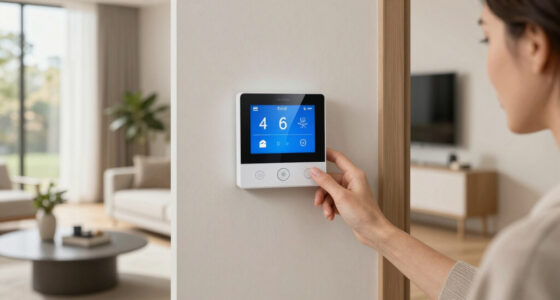

AI-powered home automation devices are transforming how we live, offering smarter, more responsive environments. The Hubitat Elevation C-8 Pro stands out for its robust local control and wide compatibility, making it a top overall choice. The SwitchBot AI Hub excels with open integration and local camera support, perfect for tech-savvy users. However, choosing the right device involves tradeoffs between complexity, customization, and cost. Continue reading for a detailed breakdown of the best options in 2026 and what makes each stand out.
Key Takeaways
- Local control remains a key factor for privacy-conscious buyers, with products like Hubitat Elevation C-8 Pro leading the pack.
- AI learning features significantly improve automation accuracy, as seen in the Meross Matter Presence Sensor.
- Ease of setup varies widely; beginner-friendly options often sacrifice some customization for simplicity.
- Compatibility with multiple smart home ecosystems (HomeKit, Alexa, Zigbee, Z-Wave) is essential for flexible integration.
- Energy monitoring features are increasingly common, enabling smarter energy use and cost savings.


More Details on Our Top Picks
AI-Powered Smart Home Guide 2026: A Step-by-Step Guide to Designing, Optimizing, and Mastering a Fully Automated Smart Ecosystem
This comprehensive guide stands out for those who want a structured approach to designing a fully automated home ecosystem, emphasizing the latest AI techniques. Unlike hardware-focused options like the SwitchBot AI Hub or motion sensors, this book provides detailed strategies for mastering automation systems, making it ideal for users who prefer planning over immediate setup. However, its lack of technical specifics or device compatibility info means it’s less useful for hands-on implementation. It’s best suited for homeowners who seek a thorough understanding before investing in hardware, rather than those looking for ready-to-deploy solutions.
Pros:- Provides detailed, step-by-step instructions for designing smart ecosystems
- Covers the latest AI-powered home techniques
- Helps users optimize and master their automation strategies
Cons:- No specific technical details or device compatibility info
- Lacks practical guidance on hardware setup or integration
- No customer reviews or ratings to gauge effectiveness
Best for: Homeowners new to AI home automation who want a solid foundation before choosing devices
Not ideal for: Tech-savvy users seeking quick setup or detailed device integration instructions
Our verdict“This guide is perfect for homeowners who want to understand the principles of AI home automation before selecting hardware.”
SwitchBot AI Hub with OpenClaw Support and Local Camera Storage
The SwitchBot AI Hub excels as a versatile control center, supporting OpenClaw for integrated camera and device management, with local storage for security footage. Compared to simpler controllers, it offers pre-installed Home Assistant and a Matter bridge, broadening device compatibility. Its ability to support automations directly on the hub reduces reliance on cloud services, enhancing privacy. However, the AI features require an additional subscription, and it doesn’t include IR control, limiting compatibility with some older appliances. This pick makes sense for users seeking a robust, expandable hub that balances local storage with broad device support.
Pros:- Supports OpenClaw for integrated camera and device control
- Local storage for camera events enhances privacy
- Pre-installed Home Assistant and Matter Bridge for extensive compatibility
- Supports multiple automations without cloud dependence
Cons:- AI features require an ongoing subscription
- No IR control limits compatibility with certain appliances
- Limited to compatible cameras and devices
Best for: Homeowners looking for a flexible, local-control hub that supports a wide range of devices and security footage storage
Not ideal for: Users who want out-of-the-box AI automation without extra subscriptions or those relying heavily on IR-controlled appliances
- Product Dimensions:7.8 x 5.79 x 2.2 inches
- Item Weight:1.17 pounds
- MicroSD Card Included:16GB
Our verdict“This hub is ideal for users who want a powerful, locally controlled smart home center with broad device integration.”
The Ultimate Smart Home Devices Guide: How to Choose, Set Up, and Use the Best Smart Technology for Everyday Living
This book offers a detailed roadmap for selecting and setting up smart home devices, making it a valuable resource for those overwhelmed by options like the SwitchBot motion sensors or energy monitors. Unlike hardware products, it provides practical advice on usage, integration, and common pitfalls. Its comprehensive coverage is helpful, but for buyers seeking instant automation solutions, it lacks the immediacy and technical specifics of hardware products. It’s best for homeowners who want to understand the technology landscape before making purchasing decisions.
Pros:- Provides detailed guidance on selecting smart devices
- Practical tips for integration and daily use
- Covers a wide range of smart technologies in one resource
Cons:- No information on product pricing or user ratings
- Limited to a guide format, not a physical or digital device
- Requires time investment to read and digest
Best for: Homeowners who prefer a thorough understanding of smart devices and want practical setup tips
Not ideal for: People seeking quick hardware solutions or detailed technical specs for specific products
Our verdict“This guide is best for homeowners wanting a comprehensive understanding of smart home technology fundamentals.”
SwitchBot Smart mmWave Radar Motion Sensor, Bluetooth Presence Sensor with Dynamic Detection & Zone Positioning (Pack of 2)
The SwitchBot mmWave Radar Motion Sensor delivers highly accurate detection, making it ideal for automating lighting or security based on subtle movements. Its radar and PIR sensors outperform traditional motion detectors, especially in complex environments, but setup can be somewhat complex, especially for advanced automations that require pairing with other devices or a hub. Its flexible installation options and long battery life make it practical for varied locations. Compared with simple PIR sensors, this model offers more precise detection, though environmental interference can occasionally affect performance. It’s best for users who prioritize accuracy in motion detection and are comfortable with some initial configuration.
Pros:- Highly accurate detection with radar and PIR sensors
- Long battery life of up to 2 years
- Flexible installation with magnetic and wall-mount options
- Supports multiple smart platforms including Alexa and Apple HomeKit
Cons:- Requires pairing with other devices or hub for full automation capabilities
- Detection range can be affected by environmental factors
- Setup may be complex for less technical users
Best for: Homeowners wanting precise, reliable motion detection for automation in larger or more complex spaces
Not ideal for: Casual users seeking simple, plug-and-play motion sensors with minimal setup
- Detection Angle:120°
- Detection Range:Up to 8 meters for moving humans, 5 meters for stationary
- Battery Life:Up to 2 years
- Power:Battery-powered
- Compatibility:Alexa, Apple HomeKit, Google Home, Home Assistant
- Installation:Magnetic base, wall mount, adjustable zone
Our verdict“This sensor is suitable for users seeking precise motion detection and are willing to handle a more involved setup process.”
Home Energy Monitor for Home Assistant – Real-Time Electricity Usage and Power Meter
This energy monitor excels at providing real-time data on power consumption across multiple circuits, making it a strong choice for energy-conscious homeowners using Home Assistant. It supports solar and battery systems, allowing for detailed automation based on actual usage. Compared with general-purpose smart plugs, this monitor offers a scalable solution for whole-home energy management. Its reliance on technical setup and the limitation to North American power systems means it’s less suitable for less experienced users or those outside North America. Still, for those who want to optimize energy costs and integrate renewable sources, this device offers powerful insights.
Pros:- Seamless integration with Home Assistant for automation
- Supports multiple circuits and renewable energy sources
- Secure local data storage enhances privacy
- Easy setup with automatic device discovery
Cons:- Initial setup requires technical knowledge
- Limited to North American power systems without software adjustments
- Higher cost compared to basic energy monitors
Best for: Homeowners with solar, BESS, or multiple circuits seeking detailed energy data and automation via Home Assistant
Not ideal for: Less technical users or those outside North America needing plug-and-play energy monitoring
Our verdict“Ideal for tech-savvy homeowners aiming for detailed energy insights and automation capabilities within Home Assistant.”
Hubitat Elevation C-8 Pro Smart Home Hub – Local Control & Automation for Z-Wave, Zigbee, Matter, Bluetooth, Wi-Fi
The Hubitat Elevation C-8 Pro stands out by prioritizing local control, ensuring your automation runs reliably without internet dependency. Unlike cloud-based hubs, it processes commands locally, which reduces latency and enhances privacy. Its support for multiple protocols like Z-Wave, Zigbee, and Matter makes it highly versatile, capable of integrating a broad range of devices. While setup involves some technical familiarity, its continuous free updates and AI-powered automation rules make routine management easier. Compared to simpler solutions that rely solely on Wi-Fi or cloud services, this hub offers more security and stability, though it lacks integrated voice hardware, which could be a drawback for voice-centric users. Overall, this hub suits users seeking robust, private, and flexible home automation.Pros:- Supports multiple smart home protocols for broad device compatibility
- Local processing ensures fast, reliable automation without internet dependency
- Continuous free software updates enhance device longevity and features
- AI-powered automation simplifies complex routines
Cons:- Requires some technical setup for optimal use
- Limited to devices supporting supported protocols
- No integrated voice assistant hardware
Best for: Tech-savvy homeowners who value local processing and broad device compatibility without ongoing subscription fees.
Not ideal for: Casual users who prefer plug-and-play solutions with built-in voice assistants and minimal setup.
- Protocols Supported:Z-Wave 800 LR, Zigbee 3.0, Matter 1.5, Bluetooth, Wi-Fi
- Control:Local processing with no cloud dependency
- Updates:Continuous free software updates
- Automation:AI-powered automation with customizable rules
- Subscription:No subscription required
Our verdict“This hub is ideal for those who prioritize privacy, protocol flexibility, and reliable local automation over simplicity.”
AI-Powered Smart Home Devices
This collection of AI-powered devices makes it straightforward to add automation and remote control to your home, especially for users new to smart technology. While it lacks the protocol diversity of the Hubitat, it excels at integrating various smart gadgets into a cohesive system, boosting convenience and security. Its AI features help optimize routines without extensive manual programming, but setup can be complex for those unfamiliar with smart home ecosystems. Compared with hubs like the Hubitat Elevation, it emphasizes ease of use and app-based control, which might limit advanced customization. For consumers seeking a quick upgrade to smarter living, this package offers tangible benefits, though tech novices should be prepared for some initial configuration.Pros:- Enhances home automation and convenience
- Provides remote control capabilities
- Improves security and energy efficiency
- Designed for easy app-based management
Cons:- May require technical setup
- Dependent on Wi-Fi connectivity
- Limited detail on device compatibility
Best for: Homeowners new to automation who want a simple, effective way to enhance convenience and security remotely.
Not ideal for: Advanced users seeking deep customization or protocol flexibility, who might find this solution too limited.
Our verdict“This option is best suited for users looking for straightforward smart automation with remote control features.”
SwitchBot Smart mmWave Radar Motion Sensor with Bluetooth and Voice Control
The SwitchBot mmWave Radar Motion Sensor offers precise detection of subtle movements, making it an excellent choice for automated lighting or security in busy environments. Its radar technology surpasses traditional PIR sensors in sensitivity, especially in cluttered spaces, which is a clear advantage over simpler motion sensors. Battery life extends up to two years, reducing maintenance, and flexible mounting options mean it adapts well to different locations. Compatibility with Alexa, HomeKit, and Google Home ensures easy integration into existing setups. However, it requires a compatible smart hub for full platform support, and detection accuracy can vary depending on environmental factors. Compared to the Meross presence sensor, it offers more advanced detection but demands compatible infrastructure for full functionality.Pros:- Accurate detection of subtle movements with radar technology
- Long-lasting battery life up to 2 years
- Flexible installation with magnetic base and adjustable zones
- Supports multiple voice and smart home platforms
Cons:- Requires a compatible smart hub for full platform integration
- Detection range may vary in cluttered environments
Best for: Homeowners who want highly accurate motion detection for lighting automation and security, especially in complex spaces.
Not ideal for: Users without existing smart hubs or those seeking a simple, standalone sensor without additional platform requirements.
- Detection Angle:120°
- Detection Range:8 meters for moving humans, 5 meters for stationary humans
- Battery Life:Up to 2 years
- Compatibility:Alexa, Apple HomeKit, Google Home, Home Assistant, SwitchBot Matter Hub
Our verdict“Ideal for users needing precise motion detection that integrates seamlessly into multi-platform smart homes.”
Meross Matter Presence Sensor MS605, Battery-Powered 4-in-1 Smart Motion Sensor with AI Learning, IP67 Waterproof
The Meross MS605 combines AI-driven detection with a robust waterproof design, making it a versatile sensor for both indoor and outdoor automation. Its 3-in-1 sensors—PIR, mmWave, and light—offer a high degree of accuracy, reducing false triggers common with simpler sensors. Support for Matter over Thread broadens compatibility, although a firmware update may be needed for full Alexa integration. Its long-lasting three-year battery life and IP67 rating add to its appeal for outdoor use. Compared with the SwitchBot radar sensor, it offers more comprehensive environmental sensing, but its 6-meter detection range might limit use in larger spaces. This sensor suits those seeking durability and precision in challenging environments.Pros:- AI-driven detection minimizes false triggers
- Supports Matter over Thread for broad device compatibility
- Flexible mounting options for indoor and outdoor use
- Long 3-year battery life and waterproof design
Cons:- Requires a firmware update for full Alexa support
- Limited detection range of 6 meters in large spaces
Best for: Homeowners wanting a weatherproof, high-precision sensor for outdoor security or extended indoor automation.
Not ideal for: Users with very large spaces needing detection beyond 6 meters or those without a compatible hub supporting Matter over Thread.
- Power Source:Battery Powered
- Maximum Range:6 Meters
- Mounting Type:Wall Mount
- Waterproof Rating:IP67
Our verdict“This sensor is well-suited for outdoor or demanding environments requiring durable, accurate motion detection.”
Home Energy Monitor – Real Time Electricity Usage & AI-Powered Energy Management
The Home Energy Monitor offers detailed real-time electricity usage across 10 circuits, making it a strong choice for those wanting to optimize energy consumption actively. Unlike simpler monitors, it provides extensive data logging and analysis, supporting integration with home automation for automated energy savings. Its support for multiple systems like Home Assistant and MQTT allows for customized setups, but installation could be complex for users unfamiliar with electrical panels. Its certification and safety standards make it reliable for residential use. Compared to the other sensors focused on motion detection, this device emphasizes energy management, making it ideal for energy-conscious homeowners who want to reduce costs and improve safety.Pros:- Supports real-time monitoring and detailed energy analysis
- Integrates with home automation systems for smart energy management
- Supports up to 30 circuits with multiple units
- Certified for safety and reliability
Cons:- Installation may require technical electrical knowledge
- Requires app or web access for full functionality
- Limited to North American electrical systems
Best for: Homeowners seeking detailed, real-time energy monitoring and integration into existing automation systems.
Not ideal for: Less technical users or those with non-standard electrical setups outside North America.
- Number of circuits:10
- Connectivity:WiFi and Ethernet
- Supported systems:Home Assistant, MQTT API, ModBus TCP
- Data retention:45 days (minute), 36 months (monthly/yearly)
Our verdict“This energy monitor is perfect for energy-conscious homeowners who want detailed insights and automation integration.”
AI Powered Smart Home Guide for Beginners 2026
This guide stands out for its comprehensive approach tailored specifically to newcomers, offering step-by-step instructions that demystify complex concepts like AI assistants, energy efficiency, and connected devices. Compared to the SenseCAP Watcher W1-A, which is a physical device requiring technical setup, this guide provides the foundational knowledge needed to understand and implement various smart solutions. While it excels in education and practical advice, its lack of detailed technical specs makes it less suitable for users seeking in-depth configuration guidance. This pick makes the most sense for those just starting to explore home automation who need a clear, structured introduction rather than technical deep dives.
Pros:- Provides a complete, step-by-step approach for beginners
- Covers a wide range of smart home topics including security, energy, and AI assistants
- Offers practical advice to implement smart tech effectively
Cons:- Lacks detailed technical specifications or device integration instructions
- Content may be too basic for experienced users or tech-savvy enthusiasts
Best for: Homeowners new to automation seeking a foundational understanding and practical steps
Not ideal for: Advanced users who want technical specifications or hands-on device guidance
Our verdict“This guide is best suited for newcomers who need a clear, structured introduction to home automation fundamentals.”
SenseCAP Watcher W1-A Physical AI Agent, Clear Enclosure, Compatible with Home Assistant
The SenseCAP Watcher W1-A excels at providing real-time space monitoring with a visible, transparent enclosure that showcases its internal sensors and processing units. Unlike the broader educational scope of the AI Powered Smart Home Guide, this device focuses on precise environmental data collection and automation integration, making it ideal for users who want tangible, hardware-based monitoring. Its seamless compatibility with Home Assistant allows for straightforward automation setup, yet the lack of details on additional sensors or advanced features might limit its appeal for those seeking a multi-sensor platform. The 30-day DOA guarantee offers reassurance, but full functionality depends on a compatible ecosystem.
Pros:- Transparent enclosure allows visibility of internal components and sensors
- Seamless integration with Home Assistant enhances automation capabilities
- Reliable performance backed by a 30-day DOA guarantee
- Advanced sensors enable accurate, real-time space monitoring
Cons:- Limited information on additional sensors or extended features
- Requires a compatible smart home ecosystem for full functionality
Best for: Tech-savvy homeowners or hobbyists wanting real-time environmental data integrated into their existing smart home system
Not ideal for: Casual users or those without a compatible smart home platform who seek simple or plug-and-play solutions
- Model:W1-A
- Enclosure:Clear plastic
- Compatibility:Home Assistant
- Guarantee:30-day DOA
Our verdict“This device is ideal for automation enthusiasts who want a visible, real-time environmental monitor integrated into their smart setup.”
How We Picked
To determine the best AI-powered home automation devices, I evaluated each product based on performance, ease of use, build quality, integration capabilities, and value. Devices that offered robust AI features, reliable local control, and broad compatibility ranked higher, as these factors directly impact user experience and privacy. Additional considerations included setup complexity, ongoing maintenance, and potential for future expansion. The ranking reflects a balance between advanced features and user-friendliness, ensuring options suit a range of technical skill levels and needs.Factors to Consider When Choosing AI-powered Home Automation Devices
When selecting AI-powered home automation devices, it’s crucial to consider how they will fit into your existing ecosystem, your technical comfort level, and your goals for automation. Beyond individual features, understanding broader factors can help you avoid common pitfalls and make smarter investments in your smart home.Compatibility and Ecosystem Integration
Ensuring your new device works seamlessly with your existing systems (such as Apple HomeKit, Alexa, Google Assistant, Zigbee, Z-Wave, or Matter) saves frustration and maximizes automation potential. Think about your current devices and future expansion plans. Compatibility issues often lead to additional costs or the need for adapters, so prioritize devices that support your preferred platforms.
Local Control vs Cloud Dependency
Devices with local control options enhance privacy, reduce latency, and often improve reliability, especially during internet outages. While cloud-based solutions may offer more AI features or easier setup, they can introduce privacy concerns and dependence on external servers. Weigh your priorities: if privacy and responsiveness matter most, local control should be a top criterion.
Ease of Setup and Use
Some devices require technical expertise to install and configure, while others are designed for beginners. Overly complex setups can cause frustration and lead to underuse. Look for products with clear instructions, intuitive apps, and good customer support. Remember, a device that’s too complicated for your comfort level might end up unused.
AI and Automation Capabilities
Not all AI features are created equal. Some devices learn your routines and adapt over time, providing smarter automation. Others rely on predefined rules or manual programming. Decide whether you want a device that learns from your habits or one that offers straightforward, rule-based automation. Your choice impacts how adaptive and hands-free your smart home can be.
Cost and Long-Term Value
High-end devices with advanced AI and extensive compatibility tend to cost more upfront. However, they may offer better longevity and expansion options, providing greater overall value. Conversely, cheaper products might be suitable for initial testing but could require replacement or upgrade sooner. Balance your budget with your long-term automation goals.
Frequently Asked Questions
Can I mix different brands of AI home automation devices?
Yes, many AI-powered devices support multiple ecosystems and communication protocols, allowing for mixing brands. However, compatibility can vary, so it’s important to verify that each device supports your existing smart home platforms. Using a central hub or controller that supports multiple standards can also simplify integration, ensuring your devices work together smoothly.
How secure are AI-powered home automation devices?
Security depends largely on the device’s design and your network setup. Devices with local control and strong encryption tend to offer better privacy and security. Regular firmware updates and strong, unique passwords are essential. Choosing reputable brands with transparent privacy policies further reduces risks associated with hacking or data breaches.
Do AI home automation devices require ongoing maintenance?
Most devices need periodic updates to improve features and patch security vulnerabilities. Some may require recalibration or reconfiguration over time, especially if they learn from your routines. Investing in devices with easy update mechanisms and good support can reduce the hassle involved in long-term maintenance.
Are AI-powered devices worth the extra cost?
AI features can significantly enhance automation efficiency and personalization, making them worthwhile for tech enthusiasts or those seeking a highly responsive environment. However, if your needs are basic or budget is tight, simpler devices or rule-based systems may suffice. Consider your automation goals and whether AI capabilities align with your priorities before paying a premium.
What should I prioritize when choosing a smart home hub?
A good hub should support multiple protocols like Zigbee, Z-Wave, and Matter for maximum flexibility. Local control is a plus for privacy and reliability, while AI learning features add convenience. Ease of use, expandability, and compatibility with your devices are also key considerations. A well-chosen hub acts as the backbone of your smart ecosystem, simplifying device management and automation.
Conclusion
For those new to home automation, a user-friendly device with straightforward setup, like the SwitchBot AI Hub, is ideal. Tech-savvy users aiming for maximum customization will appreciate the Hubitat Elevation C-8 Pro for its local control and broad compatibility. Budget-conscious buyers should consider devices with essential AI features but lower costs, while premium users seeking advanced learning capabilities may prefer higher-end options like the Meross Matter Sensor. Ultimately, your choice depends on your technical comfort, privacy priorities, and automation ambitions—select the device that best aligns with your home and lifestyle.