
AI-powered home automation devices are transforming how we manage our living spaces, offering smarter, more responsive environments. The SwitchBot AI Hub stands out as the best overall for its versatile integration and local storage options. For those seeking advanced AI voice processing, the Local AI Voices Command Processor delivers impressive command recognition and customization. Meanwhile, the Hubitat Elevation C-8 Pro excels for users prioritizing local control and robust automation capabilities. Readers face tradeoffs between cost, ease of setup, integration scope, and privacy—this guide breaks down these options to help you find a device that fits your needs. Keep reading for the full breakdown and expert insights.

Get business pricing on tech for your team
- Business-only prices and quantity discounts
- Tax-exempt purchasing
- Multiple users, one account, clear invoices
Key Takeaways
- Top-tier devices combine local AI processing with broad ecosystem compatibility for seamless automation.
- The most versatile options balance advanced features with user-friendly setup, but often come at a higher price.
- Devices emphasizing local control tend to prioritize privacy and reliability over cloud-dependent features.
- Integration with popular voice assistants remains a key factor, but some high-end products push beyond basic compatibility.
- Choosing between dedicated AI hubs and sensor-based solutions depends heavily on your existing smart home infrastructure.
| SwitchBot AI Hub with OpenClaw Support, Local NVR Camera Storage, Home Assistant Pre-Installed, Matter Bridge, Dual-Band Wi-Fi, 16GB MicroSD |  | Best Overall Smart Home Controller for Advanced Automation | Product Dimensions: 7.8 x 5.79 x 2.2 inches | Item Weight: 1.17 pounds | MicroSD Included: 16GB | VIEW LATEST PRICE | See Our Full Breakdown |
| SenseCAP Watcher W1-A Physical AI Agent, Clear Enclosure, Compatible with Home Assistant |  | Best for Visual Transparency and Real-Time Space Monitoring | Model: W1-A | Enclosure: Clear plastic | Compatibility: Home Assistant | VIEW LATEST PRICE | See Our Full Breakdown |
| Local AI Voices Command Processor for Home Automation Systems |  | Best for Offline Voice Recognition in DIY Projects | Recognition Distance: 3-5 meters | Power Consumption: 1mA standby | Size: 2.1×1.50cm | VIEW LATEST PRICE | See Our Full Breakdown |
| SwitchBot Smart mmWave Radar Motion Sensor, Bluetooth Presence Sensor with Dynamic Detection & Zone Positioning, Compatible with Alexa, HomeKit & Apple Home |  | Best for Accurate Motion Detection and Presence Sensing | Power Source: 2 AAA batteries | Maximum Range: 393 feet | Mounting Type: Wall mount | VIEW LATEST PRICE | See Our Full Breakdown |
| AI-Powered Smart Home Guide 2026: A Step-by-Step Guide to Designing, Optimizing, and Mastering a Fully Automated Smart Ecosystem |  | Best for Advanced Smart Ecosystem Planning and Strategy | VIEW LATEST PRICE | See Our Full Breakdown | |||
| iSG Box SE ZB Smart Home Hub with Preinstalled Home Assistant |  | Best Overall for Advanced Automation and Protocol Compatibility | Protocols Supported: Matter, Zigbee, Z-Wave | Pre-installed Software: Home Assistant with HACS and integrations | Compatibility: Apple HomeKit, Alexa, Google Assistant | VIEW LATEST PRICE | See Our Full Breakdown |
| AI Powered Smart Home Guide for Beginners 2026 |  | Best for Beginners Seeking a Clear Introduction to Home Automation | VIEW LATEST PRICE | See Our Full Breakdown | |||
| Multi-Functional AI Voice Control Panel with Mechanical LCD Keys and Secondary Screen |  | Best for Customizable Voice and Macro Automation Control | Item Type: AI Voice Control Panel | Material: ABS | Key Resolution: 128×128 | VIEW LATEST PRICE | See Our Full Breakdown |
| AI-Powered Smart Home Devices |  | Best Entry-Level for Basic Automation and Remote Control | VIEW LATEST PRICE | See Our Full Breakdown | |||
| iSG Box SE Smart Home Hub with Preinstalled Home Assistant |  | Best for Seamless Integration and Privacy-Focused Automation | Connectivity Technology: Wi-Fi, Ethernet, Zigbee, Z-Wave | Color: White | Supported Protocols: Matter, Zigbee, Z-Wave | VIEW LATEST PRICE | See Our Full Breakdown |
| Meross Presence Sensor MS605, IP67 Battery-Powered, Matter over Thread |  | Best for Reliable Indoor/Outdoor Presence Detection | Sensor Type: 3-in-1 mmWave, PIR, Light sensors | Battery: CR123A, included | Battery Life: 3 years | VIEW LATEST PRICE | See Our Full Breakdown |
| Hubitat Elevation C-8 Pro Smart Home Hub, Local Control and Automations |  | Best for Advanced Local Automation and Protocol Support | Product Dimensions: 2.95 x 3.23 x 0.67 inches | Item Weight: 2.56 ounces | Processor: 2.0 GHz | VIEW LATEST PRICE | See Our Full Breakdown |
| Home Energy Monitor with IoT and AI Integration |  | Best for Energy Usage Optimization and Detailed Monitoring | Circuit Monitoring Channels: 10 | Connectivity: WiFi and Ethernet | Supported Power Systems: Single-phase and three-phase | VIEW LATEST PRICE | See Our Full Breakdown |
More Details on Our Top Picks
SwitchBot AI Hub with OpenClaw Support, Local NVR Camera Storage, Home Assistant Pre-Installed, Matter Bridge, Dual-Band Wi-Fi, 16GB MicroSD
This hub stands out for its comprehensive support for OpenClaw, enabling seamless integration of cameras and devices, while its pre-installed Home Assistant simplifies setup. Compared to other controllers like the Hubitat Elevation C-8 Pro, it offers more native AI features and local storage options, making it ideal for users who want a highly customizable system. However, its reliance on an AI+ subscription for advanced features adds ongoing costs, and it doesn’t include IR control for TVs or air conditioners, which might limit some smart home setups. Its edge hub capabilities ensure faster automations, but compatibility is limited to supported devices and cameras.
Pros:- Supports OpenClaw for broad camera and device integration
- Pre-installed Home Assistant for quick setup
- Local storage options with microSD and external drives
- Faster automations via edge processing
Cons:- AI features require a paid subscription
- Limited to compatible cameras and devices
- No IR control for common appliances
Best for: Tech-savvy homeowners seeking a flexible, feature-rich automation hub with local storage and camera support.
Not ideal for: Casual users or those who prefer plug-and-play solutions without subscription fees or complex integrations.
- Product Dimensions:7.8 x 5.79 x 2.2 inches
- Item Weight:1.17 pounds
- MicroSD Included:16GB
- Supports External Storage:Yes
- Wi-Fi Bands:Dual-Band
- Pre-installed Software:Home Assistant
Our verdict“This pick is best for experienced users who want deep customization and local control in their smart home ecosystem.”
SenseCAP Watcher W1-A Physical AI Agent, Clear Enclosure, Compatible with Home Assistant
This device excels in providing visibility into its internal components with a transparent enclosure, making it ideal for enthusiasts who appreciate hardware transparency. Its seamless integration with Home Assistant enhances automation, similar to the SwitchBot AI Hub but with a focus on space sensing. Still, details on its specific sensors are limited, which could impact confidence in its capabilities. Its 30-day DOA guarantee offers reassurance, but the lack of detailed technical specs may be a drawback for advanced users seeking precise sensor data.
Pros:- Clear enclosure for visibility of internal components
- Seamless integration with Home Assistant
- Supports real-time space monitoring
- Reliable performance backed by guarantee
Cons:- Limited info on specific sensor capabilities
- Requires compatible ecosystem for full functionality
- No detailed technical specs available
Best for: Homeowners who value hardware transparency and want real-time space monitoring within a familiar platform.
Not ideal for: Users needing detailed sensor specifications or advanced environmental sensing beyond basic monitoring.
- Model:W1-A
- Enclosure:Clear plastic
- Compatibility:Home Assistant
- Guarantee:30-day DOA
Our verdict“Ideal for users who want a visually appealing AI agent that integrates smoothly with existing smart home platforms.”
Local AI Voices Command Processor for Home Automation Systems
This module offers fast, offline voice command processing, making it suitable for environments where internet access is limited or security is critical. Its support for 30+ customizable commands and multiple interfaces like UART, I2C, and GPIO enables rapid prototyping, especially compared to cloud-dependent solutions like the SwitchBot Radar Sensor. However, its limited recognition range of 3-5 meters and susceptibility to noise can restrict its use in larger or noisier spaces. Its small size and manual setup requirement make it ideal for developers but less so for typical homeowners.
Pros:- Fast response time (<0.5 seconds)
- Supports multiple interfaces for flexible integration
- Low power consumption suitable for battery-powered devices
- Highly customizable commands
Cons:- Limited recognition range (3-5 meters)
- Requires manual configuration and setup
- Small size may limit some applications
Best for: DIY enthusiasts and developers needing offline, customizable voice control for smart home prototypes.
Not ideal for: Average consumers seeking plug-and-play voice control with extensive range or multi-room coverage.
- Recognition Distance:3-5 meters
- Power Consumption:1mA standby
- Size:2.1×1.50cm
- Interfaces:UART, I2C, GPIO
- Commands:30+ customizable
Our verdict“This pick is best for tech-savvy users creating offline voice solutions and tailored automation projects.”
SwitchBot Smart mmWave Radar Motion Sensor, Bluetooth Presence Sensor with Dynamic Detection & Zone Positioning, Compatible with Alexa, HomeKit & Apple Home
This radar sensor leverages advanced mmWave technology for subtle movement detection, outperforming traditional PIR sensors like those in the Meross Presence Sensor MS605. Its flexible mounting options and adjustable detection zones make it suitable for varied home layouts. Its long battery life of up to 3 years is a significant advantage, but the need for 2 AAA batteries means ongoing replacement costs. Some users report false triggers unless finely tuned, which underscores the importance of proper setup. This sensor offers precise presence detection, especially in larger or more complex spaces.
Pros:- Detects subtle movements with high accuracy
- Flexible installation with magnetic mount and adjustable zones
- Long battery life up to 3 years
- Supports multiple platforms including Alexa and HomeKit
Cons:- Requires 2 AAA batteries which need replacement
- False triggers may occur if not properly configured
- Limited detection range for stationary humans (up to 5 meters)
Best for: Homeowners seeking high-precision motion detection for security or automation in larger or multi-room spaces.
Not ideal for: Users who prefer battery-free sensors or have very small spaces where radar might be overkill.
- Power Source:2 AAA batteries
- Maximum Range:393 feet
- Mounting Type:Wall mount
- Frequency:60 GHz
- Item Dimensions:2.1″D x 1.2″W x 2.1″H
- Compatibility:Alexa, HomeKit, Google
Our verdict“This sensor is best suited for users needing reliable, long-term presence detection with fine-tuned zone control.”
AI-Powered Smart Home Guide 2026: A Step-by-Step Guide to Designing, Optimizing, and Mastering a Fully Automated Smart Ecosystem
This guide offers detailed instructions for creating a comprehensive automated home, ideal for users who want to understand the latest AI technologies and system integration. Unlike device-specific products like the SwitchBot Hub or Radar sensor, this resource provides strategic insights and optimization tips for building a seamless ecosystem. However, its lack of technical specifications and focus on high-level planning make it less suitable for beginners or those seeking quick setup. It’s best for homeowners committed to designing a future-proof, AI-driven smart environment.
Pros:- Provides detailed, step-by-step instructions
- Covers the latest AI tech trends for smart homes
- Helps optimize ecosystem performance
- Designed for strategic, long-term success
Cons:- Lacks specific technical details or device specifications
- More suited for advanced users than casual homeowners
- No quick-start guidance or plug-and-play tips
Best for: Experienced homeowners or builders interested in mastering the principles of AI-powered automation design.
Not ideal for: Beginners or users seeking immediate, ready-to-use solutions without extensive planning.
Our verdict“This guide is best for homeowners prepared to invest time in designing a sophisticated, AI-powered smart home system.”
iSG Box SE ZB Smart Home Hub with Preinstalled Home Assistant
The iSG Box SE ZB stands out as the most versatile hub in this lineup, supporting over 2,500 brands and major protocols like Matter, Zigbee, and Z-Wave. Unlike the simpler AI Hub, it offers preloaded Home Assistant with extensive integrations, making it ideal for tech-savvy users seeking deep customization. Its local-first architecture guarantees quick response times and enhanced privacy, while built-in Apple HomeKit compatibility simplifies device management for Apple users. The tradeoff involves needing some technical skill to unlock its full potential, especially since the Z-Wave USB stick must be purchased separately. Compared to the iSG Box SE, it provides more comprehensive protocol support, but might overwhelm beginners or those who prefer plug-and-play solutions without extra accessories.
Pros:- Supports over 2,500 brands and major protocols for broad device compatibility
- Preloaded with Home Assistant for deep automation customization
- Local control architecture ensures instant response and privacy
- Built-in Apple HomeKit bridge for seamless Apple ecosystem integration
Cons:- Z-Wave USB stick must be purchased separately, adding extra cost
- Requires some technical knowledge for setup and advanced features
- Limited details on compatibility with certain niche devices
Best for: Home automation enthusiasts and advanced users who want extensive protocol support and customization options.
Not ideal for: Casual users or those preferring a simple, out-of-the-box setup without additional purchases or technical complexity.
- Protocols Supported:Matter, Zigbee, Z-Wave
- Pre-installed Software:Home Assistant with HACS and integrations
- Compatibility:Apple HomeKit, Alexa, Google Assistant
- Connectivity:Zigbee USB stick included, Z-Wave USB stick sold separately
- Local Control:Yes
- Voice Control:AI Home Agent, WhatsApp, Telegram
Our verdict“This hub is best suited for users who need advanced automation capabilities and broad protocol support, despite some setup complexity.”
AI Powered Smart Home Guide for Beginners 2026
This guide makes the list because it provides a straightforward introduction to smart home concepts, ideal for newcomers who feel overwhelmed by products like the Multi-Functional AI Voice Control Panel. Its step-by-step instructions demystify automation, security, and energy management, helping users build confidence without needing technical expertise. Unlike the complex setup required for advanced hubs, this guide offers practical advice and foundational knowledge, though it doesn’t specify device models or technical details—something to consider as your needs grow. Its content could become outdated as technology evolves, but for now, it’s a valuable starting point for smart home novices.
Pros:- Easy-to-follow, step-by-step instructions
- Covers broad topics like energy, security, and AI assistants
- Ideal for complete beginners building foundational knowledge
Cons:- Lacks specific technical details or device recommendations
- Content risks becoming outdated as technology advances
Best for: Homeowners new to automation who want a clear, easy-to-understand starting point.
Not ideal for: Experienced users or those seeking detailed technical guidance on specific devices and integrations.
Our verdict“This guide is perfect for beginners looking to understand the basics of smart home automation without technical hurdles.”
Multi-Functional AI Voice Control Panel with Mechanical LCD Keys and Secondary Screen
The AI Voice Control Panel offers a unique physical interface with 10 mechanical LCD macro keys and a secondary display, making it stand out for users who want tactile control combined with visual feedback. Its support for macros and voice commands makes it more flexible than simple voice assistants like the AI-Powered Smart Home Devices. However, its setup can be complex, especially for those unfamiliar with multi-system integrations, and limited information exists about ongoing software support or updates. This pick best suits DIY enthusiasts or power users who want a centralized control panel that they can personalize extensively, but it may be less appealing to those seeking quick, plug-and-play solutions.
Pros:- Supports voice commands and macro operations for automation
- Dual-screen with customizable themes enhances usability
- Compatible with multiple operating systems and WiFi for flexibility
Cons:- Setup process may be technically challenging
- Limited info on ongoing software support and updates
Best for: Tech-savvy users and automation enthusiasts who want customizable physical controls and macros.
Not ideal for: Casual users or anyone uncomfortable with intricate setup procedures and manual configurations.
- Item Type:AI Voice Control Panel
- Material:ABS
- Key Resolution:128×128
- Secondary Screen:240 x 296
- Memory Card:4G (Included)
- Support:WiFi 2.4GHz, AI Voice Recognition
Our verdict“This panel is ideal for users seeking a personalized, tactile control hub for complex automation tasks, despite a steeper learning curve.”
AI-Powered Smart Home Devices
The AI-Powered Smart Home Devices are designed to enhance everyday living through automation, security, and energy management. Compared with dedicated hubs like the iSG Box SE, these devices focus more on individual functionalities rather than centralized control, making them suitable for users just starting out. They improve convenience and security with intelligent features, but the lack of detailed specifications and potential compatibility issues mean they’re less suited for complex or large-scale setups. This product line offers a straightforward way to add AI-driven automation without heavy technical investment, appealing to homeowners who want quick benefits rather than extensive customization.
Pros:- Enhances home automation and convenience
- Includes intelligent technology for security improvements
- Supports remote control for easy management
Cons:- Limited detailed specifications available
- Potential compatibility issues with existing devices
Best for: Homeowners wanting simple, AI-enhanced automation and remote control without complexity.
Not ideal for: Power users seeking comprehensive protocol support or deep customization.
Our verdict“This product line fits users looking for uncomplicated AI automation features with remote access, though it may lack depth for advanced setups.”
iSG Box SE Smart Home Hub with Preinstalled Home Assistant
The iSG Box SE supports a broad array of protocols and brands, making it a strong choice for users who want a unified control point. Compared to the iSG Box SE ZB, this version emphasizes connectivity options like Ethernet and Wi-Fi, along with compatibility across devices such as TVs, tablets, and PCs. Its pre-installed Home Assistant offers extensive automation, and its local-first architecture prioritizes privacy and speed. The absence of included Zigbee or Z-Wave USB sticks means additional purchases are necessary for full protocol support, which could be inconvenient for some. Overall, this hub offers seamless integration for users comfortable with technical setup and seeking privacy-centric control.
Pros:- Supports a wide range of protocols and brands
- Pre-installed with Home Assistant for advanced automation
- Local control architecture ensures speed and privacy
- Supports multiple device types including TVs and PCs
Cons:- Does not include Zigbee or Z-Wave USB sticks, which must be purchased separately
- Requires some technical knowledge for full setup
- Limited warranty and customer support info available
Best for: Power users and tech-savvy homeowners who want a highly versatile, privacy-focused hub with broad device support.
Not ideal for: Beginners or those seeking an all-in-one, plug-and-play hub without extra accessories or setup complexity.
- Connectivity Technology:Wi-Fi, Ethernet, Zigbee, Z-Wave
- Color:White
- Supported Protocols:Matter, Zigbee, Z-Wave
- Compatible Devices:TV, Smartphone, PC, Laptop, Tablet
- Features:Home Assistant, HomeKit Bridge, Local Control, AI Home Agent
Our verdict“Ideal for experienced users wanting a flexible, privacy-conscious hub with extensive device compatibility, despite the need for additional accessories.”
Meross Presence Sensor MS605, IP67 Battery-Powered, Matter over Thread
The Meross MS605 Presence Sensor stands out for its combination of AI-driven accuracy and versatile mounting options, making it ideal for both indoor and outdoor automation tasks. Unlike the SwitchBot Motion Sensor, which relies solely on radar and zone positioning, the MS605 combines mmWave, PIR, and light sensors for more precise detection, reducing false triggers. Its support for Matter over Thread streamlines compatibility with many smart home platforms, but it requires a firmware update for full Alexa control, which could be a hassle for some users. The 3-year battery life and waterproof IP67 rating add to its appeal for outdoor use, though its detection sensitivity settings are somewhat limited without detailed customization. This sensor makes the most sense for homeowners seeking robust, low-maintenance presence detection integrated into a broader Matter ecosystem.
Pros:- AI-driven accurate presence detection with minimal false triggers
- Supports Matter over Thread for broad smart home compatibility
- Flexible mounting options for various environments
- Long-lasting 3-year battery life
Cons:- Firmware update required for optimal Alexa control
- Dependent on compatible hubs for third-party platform integration
- Limited detailed control over detection sensitivity
Best for: Homeowners needing durable outdoor/indoor presence sensors with seamless Matter integration
Not ideal for: Users seeking highly customizable detection sensitivity or advanced app-based tuning
- Sensor Type:3-in-1 mmWave, PIR, Light sensors
- Battery:CR123A, included
- Battery Life:3 years
- Waterproof Rating:IP67
- Connectivity:Matter over Thread, Wi-Fi
- Mounting:Ceilings, walls, corners with foldable + rotatable stand
- Detection Range:Adjustable zones up to 6m
Our verdict“This sensor is best suited for users who prioritize reliable, outdoor-ready presence detection with easy ecosystem integration.”
Hubitat Elevation C-8 Pro Smart Home Hub, Local Control and Automations
The Hubitat Elevation C-8 Pro makes a compelling choice for those who value fast, privacy-focused automations processed locally, especially compared with the Meross sensor which relies on cloud-based AI detection. Its support for multiple protocols—including Z-Wave, Zigbee, Matter, and Bluetooth—offers unmatched flexibility for integrating over a thousand devices from various brands. Unlike cloud-dependent hubs, the C-8 Pro guarantees quick response times and enhanced privacy, but setup can be complex, requiring some technical knowledge. Additionally, it lacks a built-in battery, relying entirely on external power, which limits placement options. This device is ideal for tech-savvy users who want a highly customizable, locally processed automation core for their smart home ecosystem.
Pros:- Processes automations locally for quick response and privacy
- Supports a wide range of protocols including Z-Wave, Zigbee, Matter, and Bluetooth
- Compatible with over 1,000 smart devices and ecosystems
- Regular free software updates expand capabilities
Cons:- Setup and configuration may be complex for non-technical users
- No built-in battery, relies on external power
- Advanced features might require additional configuration
Best for: Enthusiasts seeking a highly flexible, protocol-rich hub with local processing
Not ideal for: Casual users or those uncomfortable with technical setup or wiring
- Product Dimensions:2.95 x 3.23 x 0.67 inches
- Item Weight:2.56 ounces
- Processor:2.0 GHz
- RAM:2 GB
- Connectivity:Wi-Fi, Ethernet
- Protocols Supported:Z-Wave 800 Series, Zigbee 3.0, Matter 1.5, Bluetooth
Our verdict“This hub is best for users who want ultimate control, protocol compatibility, and local processing for their smart home setup.”
Home Energy Monitor with IoT and AI Integration
The Home Energy Monitor targets homeowners eager to cut energy costs through detailed consumption insights, unlike the sensors and hubs primarily focused on presence and automation control. Its 10 circuit channels and real-time data offering make it highly effective for identifying waste, but it’s less suitable for those seeking direct automation triggers—its main role is monitoring and reporting. Compared with the Meross sensor, which detects presence, or the Hubitat hub, which automates responses, this device emphasizes energy analytics, yet its average customer rating signals some user dissatisfaction, possibly due to installation complexity or limited regional compatibility. It’s most ideal for technically proficient users intent on fine-tuning energy use, not for simple automation or casual monitoring.
Pros:- Supports up to 10 circuits with bidirectional metering
- Provides real-time data and long-term storage options
- Integrates with home automation systems for remote monitoring
- Certified for safety and reliability in harsh environments
Cons:- Installation requires technical skill and understanding of electrical systems
- Limited compatibility outside North American power standards
Best for: Homeowners focused on detailed energy management and cost reduction
Not ideal for: Casual users expecting plug-and-play energy monitoring or automation triggers
- Circuit Monitoring Channels:10
- Connectivity:WiFi and Ethernet
- Supported Power Systems:Single-phase and three-phase
- Data Retention:45 days (minute data), 36 months (monthly/yearly)
- Compatibility:Home Assistant, MQTT, ModBus TCP
- Dimensions:4.73 x 3.15 x 1.22 inches
Our verdict“This monitor is best for users who want in-depth energy insights and are comfortable with technical installation, rather than quick automation solutions.”
How We Picked
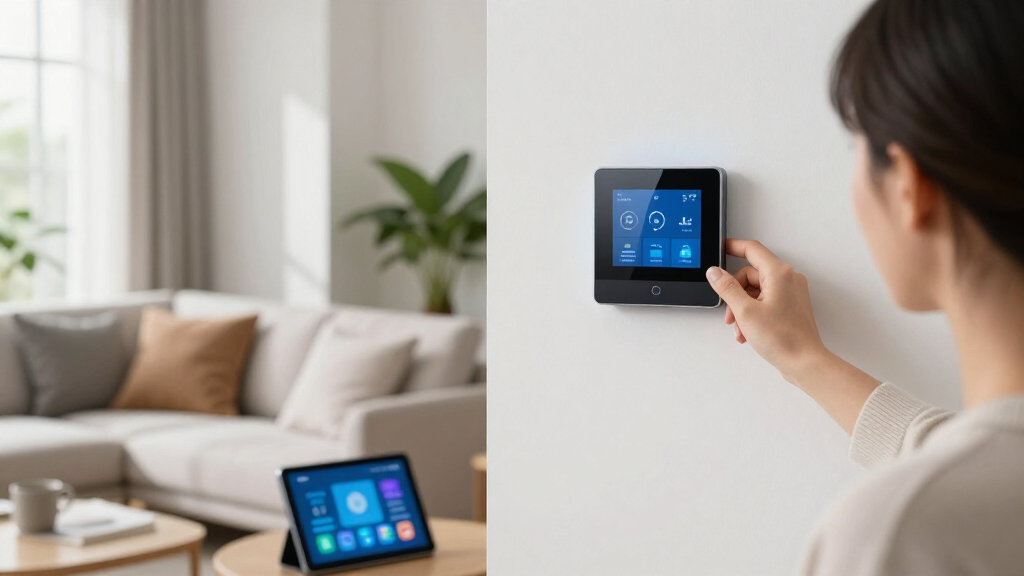
Our evaluation focused on performance, ease of use, build quality, and integration capabilities. We prioritized devices with robust AI processing, either locally or via cloud, to ensure responsiveness and privacy. Ease of setup and user interface played a significant role, as did compatibility with major smart home ecosystems like Alexa, Google Home, and Apple HomeKit. Cost and value were also considered, with an eye toward how much each device adds in terms of AI features relative to its price. Lastly, we looked at the versatility of each product—whether it can handle multiple automation scenarios or is limited to specific functions—and ranked accordingly.
Factors to Consider When Choosing AI-powered Home Automation Devices
Choosing the right AI-powered home automation device requires understanding your specific needs and the broader smart home environment you want to build. Beyond basic features, consider how much control you want locally versus through the cloud, your preferred ecosystems, and your budget. The following factors will help you navigate these choices effectively.Compatibility and Ecosystem Integration
Ensuring your AI device works seamlessly with existing smart home hubs, voice assistants, and sensors is essential. Some devices prioritize native integration with ecosystems like HomeKit or Alexa, which simplifies setup and reduces compatibility issues. Others may offer open standards or support multiple protocols, providing greater flexibility but potentially requiring more configuration. Consider your current smart home setup and future expansion plans to avoid costly mismatches or the need for additional hubs.
Local Processing vs. Cloud Dependence
Devices with local AI processing tend to offer faster response times and better privacy, as data doesn’t need to be transmitted to the cloud. However, they might have limited capabilities compared to cloud-based solutions, which can leverage more powerful servers for complex AI tasks. Cloud-dependent devices often come with subscription fees but can deliver more advanced features. Your decision here hinges on your priorities around privacy, reliability, and the complexity of automation tasks you want to implement.
Ease of Setup and User Interface
Intuitive setup processes and clear user interfaces make managing your smart home less frustrating. Many AI devices now feature apps with guided setups, but some still require technical know-how. Devices with pre-installed software and straightforward controls are better suited for beginners, while more advanced users might appreciate customizable options. Balancing ease of use with feature complexity is key—overly complicated systems can hinder long-term satisfaction.
Privacy and Data Security
AI devices handling sensitive information—like voice commands or motion data—must prioritize privacy. Devices with local AI processing inherently offer better data security, but cloud-connected devices might transmit data to third parties. Look for products with transparent privacy policies, data encryption, and local processing options if privacy is a primary concern. Avoid devices that require constant cloud connectivity if you want to minimize data exposure.
Cost and Long-Term Value
High upfront costs can be justified if a device offers extensive AI features, reliable performance, and future-proofing. Cheaper options may seem appealing initially but often lack advanced AI capabilities or require frequent upgrades. Consider whether the device’s AI features significantly enhance automation or user experience to determine if the investment is worthwhile. Additionally, factor in ongoing costs like subscriptions or maintenance over the device’s lifespan.
Frequently Asked Questions
Can these AI home automation devices work without an internet connection?
Many devices with local AI processing can operate independently of the internet, providing greater reliability and privacy. These devices handle commands and automation locally, reducing latency and dependency on cloud services. However, some advanced features or integrations may still require an internet connection, especially if they rely on cloud-based AI models. Always check whether the core functionalities you need are supported offline before making a purchase.
How secure are AI-powered home automation devices from hacking?
Security varies widely depending on the device’s design and update practices. Devices that prioritize local processing and have robust encryption protocols tend to be more secure against hacking attempts. Regular firmware updates and strong, unique passwords also improve security. It’s wise to choose products from reputable brands that actively maintain security features and provide transparency about data handling, especially since these devices often access sensitive home data.
Are AI-powered devices compatible with existing smart home hubs?
This depends on the device and your current setup. Many AI devices are designed to integrate with popular ecosystems like Alexa, Google Home, or Apple HomeKit, but compatibility isn’t universal. Some devices offer open standards or support multiple protocols, making integration easier. Always verify compatibility with your existing hubs and automation platforms before purchasing, to ensure smooth operation and avoid redundancy or additional hardware costs.
Is it worth investing in a dedicated AI hub versus sensor-based solutions?
Dedicated AI hubs typically offer more comprehensive control, processing power, and broader integration options, making them suitable for complex automation setups. Sensor-based solutions are often simpler and more affordable, ideal for adding specific functionalities like motion detection or presence sensing. Your choice should depend on your automation complexity and whether you prefer a centralized control point or modular, task-specific devices.
How do I decide between local AI processing and cloud-based AI devices?
Choosing between local and cloud-based AI depends on your priorities. Local processing offers faster responses, enhanced privacy, and less reliance on internet stability, but may have limited AI capabilities. Cloud-based solutions generally provide more advanced AI features and updates but involve ongoing subscription costs and potential privacy concerns. Consider your automation needs, privacy stance, and budget to determine which approach aligns best with your home environment.
Conclusion
For those seeking an all-around reliable and versatile system, the SwitchBot AI Hub offers excellent integration and local storage, making it the best overall choice. Beginners or casual users will appreciate the simplicity of the AI-Powered Smart Home Guide 2026 or the Local AI Voices Command Processor for straightforward setup and operation. Power users and smart home enthusiasts aiming for advanced automation should look into the Hubitat Elevation C-8 Pro or similar premium options, which deliver robust local control and customization. Budget-conscious buyers should focus on sensor-based solutions like the Meross Presence Sensor, which deliver core automation without breaking the bank. Ultimately, your ideal choice hinges on your automation complexity, privacy preferences, and budget constraints.
Halloween Picks

8.5 Foot Halloween Inflatable Haunted House Castle with Skeleton, Ghost & Skulls

MGparty 14.5FT Halloween Inflatable Walk-in Pumpkin House with LED Lights

12.2 ft Halloween Inflatable Outdoor Decoration – Giant Pumpkin
As an affiliate, we earn on qualifying purchases.