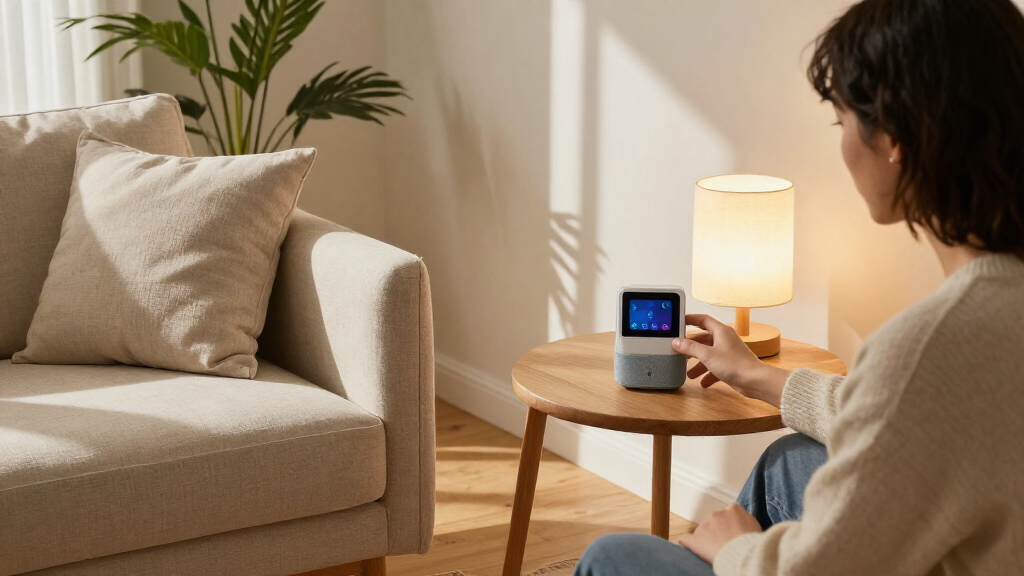
AI-powered smart home devices can automate routines, respond to voice commands, and help you keep an eye on your home, but their abilities depend on the products and platforms you choose. I rank the Amazon Echo Hub as the best overall pick for its dedicated control-panel approach, while the Home Assistant Green stands out for people who want flexible automation and the Ring Battery Doorbell 2K for a camera-focused setup. The main tradeoff is between easy, ecosystem-led control and the greater flexibility that can bring more setup work or compatibility checks. Smaller speakers and displays suit everyday voice assistance, while hubs and cameras address more specific needs. Read on for the full breakdown of all 14 devices and how to choose among them.

Get business pricing on tech for your team
- Business-only prices and quantity discounts
- Tax-exempt purchasing
- Multiple users, one account, clear invoices
Key Takeaways
- The Echo Hub leads as a dedicated controller, while the Echo Dot models are better suited to voice assistance than managing a complex smart home.
- Home Assistant Green is the flexibility pick; it makes more sense for buyers who value adaptable automation than for people seeking a ready-to-go display.
- Doorbells and indoor cameras solve different monitoring needs: the Orbitell and Ring options focus on the entrance, while the 4K and Noahlink cameras are indoor picks.
- Not every device with AI in its name offers the same kind of intelligence; check which automations, integrations, or assistant functions are actually supported.
- Several devices overlap in everyday control, including two Echo Dot listings, so buyers should choose based on placement and ecosystem fit rather than treating them as distinct capabilities.
| Orbitell 1080p Wireless Video Doorbell Camera with Two-Way Audio and Night Vision |  | Best for AI Person Alerts | Resolution: 1080p | Connectivity: 2.4GHz Wi-Fi | Motion detection: AI identifies people and filters vehicles and animals | VIEW LATEST PRICE | See Our Full Breakdown |
| Amazon Echo Hub Smart Home Control Panel (8-inch, Newest Model) |  | Best Dedicated Smart Home Controller | Display: 8-inch touchscreen, 1280 x 800 resolution | Connectivity: Dual-band Wi-Fi, Bluetooth, Zigbee, Thread, Matter, and Sidewalk | Audio: Pair of top-ported full-range speakers with stereo playback | VIEW LATEST PRICE | See Our Full Breakdown |
| Next-Generation Smart 4K Indoor Security Camera with Dual-Band Wi-Fi |  | Best for High-Detail Indoor Monitoring | Resolution: 4K Ultra HD (3840 pixels) | Sensor: 8 MP CMOS | Connectivity: Dual-band Wi-Fi, 2.4GHz and 5GHz | VIEW LATEST PRICE | See Our Full Breakdown |
| Home Assistant Green Smart Home Hub |  | Best for Local-First Automation | Operating system: Home Assistant OS | Processor: Quad-core | Memory: 4 GB LPDDR4X | VIEW LATEST PRICE | See Our Full Breakdown |
| Amazon Echo Dot (5th Gen) Smart Speaker, Deep Sea Blue |  | Best Voice-Control Entry Point | Generation: 5th Gen | Speaker: 1.6-inch full-range driver, mono playback | Audio bandwidth: 62 Hz–19 kHz | VIEW LATEST PRICE | See Our Full Breakdown |
| SwitchBot AI Art Frame 13.3″ Wireless E-Ink Digital Photo Frame |  | Best for AI-Generated Art | Screen size: 13.3 inches | Display: Electronic Ink (E-Ink) | Resolution: 1200 × 1600 | VIEW LATEST PRICE | See Our Full Breakdown |
| Azpen D115AI 5-in-1 AI Home Companion Speaker and Wireless Charger |  | Best for Family AI Conversations | Model: D115AI | AI features: ChatGPT-powered multi-turn conversations with contextual memory, plus family learning and wellness | Audio: Stereo; dual 5W Bluetooth 5.2 speakers | VIEW LATEST PRICE | See Our Full Breakdown |
| Google Nest Hub 7″ Smart Display with Google Assistant (1st Gen) – Chalk (Bulk Packaging) |  | Best for Google Home Beginners | Display size: 7 inches | Model: H1A, 1st Generation | Color: Chalk | VIEW LATEST PRICE | See Our Full Breakdown |
| Noahlink 2K Indoor Clock Camera with Temperature and Humidity Display |  | Best for Clock-Style Room Monitoring | Video resolution: 2K, 3 MP (1440p) | Night vision: Color | Wi-Fi: 2.4 GHz and 5 GHz | VIEW LATEST PRICE | See Our Full Breakdown |
| Amazon Echo Show 11 Smart Display with Full HD Touchscreen and Spatial Audio, Graphite |  | Best Overall Smart Display | Display: 10.95-inch Full HD touchscreen, 1920 × 1200 | Dimensions: 10 × 5 × 7.2 inches | Weight: 45.92 oz (1302 g) | VIEW LATEST PRICE | See Our Full Breakdown |
| Tapo H500 Smart Home Hub | 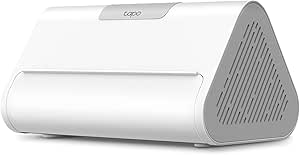 | Best for Tapo-Centered Security | Model: H500 | Device capacity: Up to 16 Tapo cameras and 64 Tapo Sub-G sensors | Storage: 16GB built-in; expandable with a 2.5-inch SATA HDD or SSD up to 16TB | VIEW LATEST PRICE | See Our Full Breakdown |
| Ring Battery Doorbell 2K (2nd Gen) – Matte Mocha |  | Best for Alexa-Connected Entry Monitoring | Video resolution: Retinal 2K | Field of view: 140° horizontal and 140° vertical | Zoom: 6x enhanced zoom | VIEW LATEST PRICE | See Our Full Breakdown |
| SwitchBot AI Smart Home Hub with OpenClaw Support and 16GB MicroSD Card |  | Best for Home Assistant and Local Camera Events | Model: W8002100 | Included storage: 16GB MicroSD card | Expandable storage: Up to 1TB MicroSD card or 16TB external hard drive | VIEW LATEST PRICE | See Our Full Breakdown |
| Echo Dot (5th Gen) – Charcoal |  | Best Compact Voice-Control Starter | Dimensions: 3.9 x 3.9 x 3.5 inches | Weight: 10.7 oz (304 g) | Audio: 1.6-inch full-range driver; mono playback | VIEW LATEST PRICE | See Our Full Breakdown |
| AI-powered smart home device | Connectivity | Dimensions | Audio |
|---|---|---|---|
| Orbitell 1080p Wireless Video | 2.4GHz Wi-Fi | 1.77 x 1.34 x 5.4 inches | Two-way audio |
| Amazon Echo Hub Smart Home Con | Dual-band Wi-Fi, Bluetooth, Zigbee, Thread, Matter, and Sidewalk | — | Pair of top-ported full-range speakers with stereo playback |
| Next-Generation Smart 4K Indoo | Dual-band Wi-Fi, 2.4GHz and 5GHz | — | — |
| Home Assistant Green Smart Hom | Ethernet and USB | 4.41 × 4.41 × 1.26 inches | — |
| Amazon Echo Dot | — | 3.9 × 3.9 × 3.5 inches | — |
| SwitchBot AI Art Frame 13.3" W | Wi-Fi and Bluetooth | — | — |
| Azpen D115AI 5-in-1 AI Home Co | Bluetooth and Wi-Fi | 5 × 5 × 5 inches | Stereo; dual 5W Bluetooth 5.2 speakers |
| Google Nest Hub 7" Smart Displ | — | 7 × 2.65 × 4.65 inches | — |
| Noahlink 2K Indoor Clock Camer | — | — | Two-way audio |
| Amazon Echo Show 11 Smart Disp | — | 10 × 5 × 7.2 inches | 1 × 2.8-inch woofer and 2 full-range drivers; spatial audio |
| Tapo H500 Smart Home Hub | Wi-Fi and Ethernet (RJ45) | — | — |
| Ring Battery Doorbell 2K | Wi-Fi 4, 2.4GHz single band | 2.11 x 5.78 x 1.41 inches | Two-way talk |
| SwitchBot AI Smart Home Hub wi | Dual-band Wi-Fi | — | — |
| Echo Dot | — | 3.9 x 3.9 x 3.5 inches | 1.6-inch full-range driver; mono playback |
More Details on Our Top Picks
Orbitell 1080p Wireless Video Doorbell Camera with Two-Way Audio and Night Vision
The Orbitell M52 earns its place for buyers who want a doorbell to distinguish people from everyday motion, rather than flagging every passing animal or vehicle. Its AI motion detection can make alerts more useful, while two-way audio lets you speak to a visitor without opening the door. Compared with the Next-Generation Smart 4K Indoor Security Camera, this pick is designed for an outdoor entryway and adds an IP65-rated body, but it records at 1080p rather than 4K. Infrared night vision supports dark conditions; the tradeoff is 2.4GHz Wi-Fi only, which rules out 5GHz networks. Cloud storage is encrypted, though pre-capture recording requires a subscription, so buyers wanting that feature without a recurring plan should look elsewhere.
Pros:- AI detection identifies people and filters vehicles and animals.
- Two-way audio supports real-time communication with visitors.
- Infrared night vision provides visibility in darkness.
- IP65-rated design is intended for outdoor weather exposure.
Cons:- Connects to 2.4GHz Wi-Fi only, not 5GHz networks.
- Pre-capture recording requires a cloud subscription.
Best for: Homeowners who want person-focused alerts and two-way communication at a weather-exposed front door.
Not ideal for: Households whose Wi-Fi uses only 5GHz or buyers who want pre-capture recording without a cloud subscription.
- Resolution:1080p
- Connectivity:2.4GHz Wi-Fi
- Motion detection:AI identifies people and filters vehicles and animals
- Audio:Two-way audio
- Night vision:Infrared LEDs
- Storage:AES-128 encrypted cloud storage
- Weather resistance:IP65
- Dimensions:1.77 x 1.34 x 5.4 inches
Our verdict“Choose the Orbitell if useful person alerts and outdoor two-way communication matter more than 4K detail or subscription-free pre-capture.”
Amazon Echo Hub Smart Home Control Panel (8-inch, Newest Model)
The Echo Hub is the lineup’s clearest choice for people who want a fixed command center, not another speaker or camera. Its customizable 8-inch dashboard puts devices, camera views, and routines within reach, while support for Zigbee, Thread, Matter, Wi-Fi, and Bluetooth lets it connect across a wider mix of smart home gear than the Echo Dot. That breadth makes the Hub better suited to managing a connected home than the Dot, which is more convenient for voice control and audio in a room. The Hub’s tradeoffs are its stationary design and extra setup choices: wall installation is supported, but cable pass-throughs and PoE adapters are separate. Some Ring camera summaries and voice-search features also require separate Alexa+ and Ring subscriptions.
Pros:- Customizable dashboard organizes controls and routines around household needs.
- Supports Wi-Fi, Bluetooth, Zigbee, Thread, and Matter devices.
- Can be wall-mounted or used with a tabletop stand.
- Physical mic-off button provides a direct privacy control.
Cons:- Not designed for handheld or portable use.
- In-wall cable pass-throughs and PoE adapters are sold separately.
- Some advanced Alexa+ and Ring features require separate subscriptions.
Best for: Alexa households with multiple connected devices that want a wall-mounted or tabletop dashboard for routines, device controls, and camera views.
Not ideal for: People seeking a portable speaker, or buyers who want advanced Ring summaries and voice search without separate subscriptions.
- Display:8-inch touchscreen, 1280 x 800 resolution
- Connectivity:Dual-band Wi-Fi, Bluetooth, Zigbee, Thread, Matter, and Sidewalk
- Audio:Pair of top-ported full-range speakers with stereo playback
- Sensors:PIR proximity sensor and ambient light sensor
- Power:12.5W adapter included; supports USB-C PD and PoE
- Installation:Wall mount included; tabletop use supported with a separate stand
- Privacy:Physical mic-off button
- Materials:27% recycled materials
Our verdict“Pick the Echo Hub if you want a stationary, broad-compatibility control panel; choose the Echo Dot instead for a simpler voice-first device.”
Next-Generation Smart 4K Indoor Security Camera with Dual-Band Wi-Fi
This camera suits buyers who want indoor footage with enough detail to inspect a wide area, rather than just receive a basic motion alert. Its 4K resolution and 160-degree view cover more of a room than the Orbitell doorbell’s 1080p entryway view, while dual-band Wi-Fi gives it a 5GHz option for compatible networks. AI motion detection helps make alerts more relevant, and the choice between a rechargeable battery and USB-powered continuous operation offers flexibility the fixed Echo Hub does not. That versatility comes with limits: microSD storage is not included, the 6x zoom is digital rather than optical, and the camera is for indoor use. Buyers seeking an outdoor entryway device should favor the Orbitell; this camera is the better fit for detailed room monitoring.
Pros:- 4K video and an 8 MP sensor capture fine indoor detail.
- 160-degree viewing angle covers a broad area.
- Dual-band Wi-Fi supports both 2.4GHz and 5GHz networks.
- Battery or USB power allows portable placement or continuous operation.
Cons:- MicroSD card for local recording is not included.
- 6x zoom is digital, not optical.
- Indoor-only design is not intended for harsh outdoor conditions.
Best for: Households that want high-resolution indoor coverage, flexible placement, and a choice between battery use and continuous USB power.
Not ideal for: Buyers who need weather-resistant outdoor surveillance or expect optical zoom and included local storage.
- Resolution:4K Ultra HD (3840 pixels)
- Sensor:8 MP CMOS
- Connectivity:Dual-band Wi-Fi, 2.4GHz and 5GHz
- Viewing angle:160 degrees
- Zoom:6x digital zoom
- Storage:MicroSD up to 512GB; card not included
- Power:Built-in rechargeable battery or USB power
- Mounting:Magnetic, wall, ceiling, or tabletop
Our verdict“Choose this camera for detailed, flexible indoor monitoring; choose the Orbitell for a weather-rated doorbell and visitor communication.”
Home Assistant Green Smart Home Hub
Home Assistant Green is aimed at buyers who want automations and device control centered on a local hub rather than an Alexa screen. Home Assistant OS comes preinstalled, and home data is stored on the device, making this a distinct alternative to the Echo Hub’s dashboard-led Alexa ecosystem. Its fanless, low-power design can sit quietly in a network area, while USB ports allow expansion with Z-Wave, Zigbee, or Thread adapters. That control comes with more setup responsibility: the Green needs Ethernet to get started, and wireless compatibility is limited to Bluetooth unless users add suitable hardware. Compared with the Echo Hub, it lacks a built-in display and broad radios out of the box, but it makes more sense for people who prioritize local processing and flexible automation over an easy visual interface.
Pros:- Home Assistant OS is preinstalled for a direct start with the platform.
- Stores home data locally on the hub.
- Fanless design runs quietly and uses only a few watts.
- USB ports support expansion with Z-Wave, Zigbee, or Thread devices.
Cons:- Requires Ethernet for initial connectivity.
- Wi-Fi is not listed; added wireless protocols require compatible USB devices.
Best for: Privacy-conscious smart home builders who want locally stored data and are comfortable connecting a hub by Ethernet and adding radio adapters.
Not ideal for: Beginners who want a ready-to-use touchscreen controller or households without an Ethernet connection near the hub.
- Operating system:Home Assistant OS
- Processor:Quad-core
- Memory:4 GB LPDDR4X
- Storage:32 GB
- Connectivity:Ethernet and USB
- USB ports:2
- Dimensions:4.41 × 4.41 × 1.26 inches
- Weight:12 ounces
Our verdict“Pick Home Assistant Green if local data and expandable automations matter more than the Echo Hub’s built-in screen and ready-made wireless protocols.”
Amazon Echo Dot (5th Gen) Smart Speaker, Deep Sea Blue
The Echo Dot is the least involved way in this lineup to add voice control and simple sensor-driven routines to a room. Its motion and temperature sensors can trigger compatible routines, while Alexa voice commands let it control compatible devices without the larger fixed setup of the Echo Hub. It also supports Matter, though the Hub offers a broader set of built-in protocols, including Zigbee and Thread, and a visual dashboard. The Dot’s strength is its compact speaker format: it combines smart home commands with music and spoken audio, rather than focusing on surveillance or central control. Eero Built-in can extend compatible eero coverage, but only with the required router and account setup. Buyers should also note that some skills and services may carry additional fees.
Pros:- Motion and temperature sensors can support smart home routines.
- Plays audio from supported services and Bluetooth devices.
- Matter support helps connect compatible smart home devices.
- Includes a mic-off button and can extend compatible eero coverage.
Cons:- Eero Built-in requires a compatible eero router, account linking, and the eero app.
- Does not offer the Echo Hub’s touchscreen dashboard or its Zigbee and Thread support.
- Some skills and services may require subscriptions or extra fees.
Best for: Alexa newcomers who want a compact room speaker for voice control, audio, and basic motion- or temperature-based routines.
Not ideal for: People who need a visual device dashboard, broad built-in smart home protocols, or a standalone Wi-Fi extender.
- Generation:5th Gen
- Speaker:1.6-inch full-range driver, mono playback
- Audio bandwidth:62 Hz–19 kHz
- Wi-Fi:Dual-band 802.11a/b/g/n/ac, 2.4GHz and 5GHz
- Smart home compatibility:Wi-Fi, Bluetooth Low Energy Mesh, and Matter
- Sensors:Motion and temperature
- Dimensions:3.9 × 3.9 × 3.5 inches
- Eero Built-in:Coverage up to 1,000 sq. ft. with a compatible eero router
Our verdict“Choose the Echo Dot for an affordable-in-complexity voice-and-audio starting point, but choose the Echo Hub for visible controls and broader built-in device support.”
SwitchBot AI Art Frame 13.3″ Wireless E-Ink Digital Photo Frame
The SwitchBot AI Art Frame makes the most sense for someone who wants a changing, low-glare display rather than a bright screen for videos or vivid photos. Its E-Ink panel looks closer to printed art, uses no blue-light backlight, and can stay visible even if the battery runs out. Compared with the Google Nest Hub, it is far less suited to interactive media, but its wireless placement and infrequent charging make it a better fit for a wall or shelf without a nearby outlet. AI-generated art and scheduled updates add a smart-home angle, though access to those art features requires a subscription. The tradeoffs are muted color, coarse-looking pixels best viewed from at least three feet away, and room for only 10 locally stored images.
Pros:- E-Ink screen has a glare-free, paper-like appearance with no blue-light emission.
- Battery can last up to two years at one refresh per week, enabling flexible placement.
- Supports scheduled image updates through the SwitchBot app and Alexa.
- Images remain visible when the battery is depleted.
Cons:- AI-generated art features require a $3.99 monthly subscription.
- Low resolution and coarse pixel structure make close viewing less appealing.
- Local storage is limited to 10 images, and colors are muted compared with LCD displays.
Best for: People who want a cord-free, paper-like display for rotating AI-generated art in a bedroom, hallway, or other low-glare space.
Not ideal for: Buyers who want sharp, vivid photos, video playback, large local galleries, or AI art without a recurring subscription.
- Screen size:13.3 inches
- Display:Electronic Ink (E-Ink)
- Resolution:1200 × 1600
- Aspect ratio:4:3
- Battery capacity:2000mAh
- Battery life:Up to 2 years at 1 refresh per week
- Connectivity:Wi-Fi and Bluetooth
- Local storage:Up to 10 images
- Controls and compatibility:App, remote, and voice; Alexa and smartphone
Our verdict“Choose this frame for cord-free, subdued AI art display, but pick the Google Nest Hub if you want a screen for videos and interactive controls.”
Azpen D115AI 5-in-1 AI Home Companion Speaker and Wireless Charger
The Azpen D115AI is the lineup’s most conversation-focused pick: it pairs ChatGPT-powered multi-turn dialogue and contextual memory with family learning and wellness features. That gives it a different role from the Amazon Echo Show 11, which puts its emphasis on a large screen, smart-home hub functions, and richer media control. Azpen instead combines a compact speaker, hands-free calling, and a 15W Qi charging pad, so it can serve as a bedside or family-room companion without needing a separate charging station. Its ability to charge up to three devices adds practical utility, but the product data does not clarify how that charging is divided, and the speaker’s listed frequency response lacks a lower bound. It is also not waterproof, so kitchens and bathrooms are poor placements.
Pros:- Supports contextual, multi-turn AI conversations.
- Includes family-oriented learning, guidance, and wellness features.
- Combines stereo Bluetooth speakers, hands-free calling, and 15W Qi charging.
- Can charge up to three devices simultaneously.
Cons:- No water resistance, limiting suitable placement near sinks or in bathrooms.
- Listed frequency response provides no lower bound, making bass performance hard to judge.
- Offers no display for visual smart-home controls or video.
Best for: Families seeking a compact shared device for conversational AI, learning and wellness features, hands-free calls, and wireless charging.
Not ideal for: Buyers who need a display-based smart-home controller, water resistance, or clearly documented full-range audio performance.
- Model:D115AI
- AI features:ChatGPT-powered multi-turn conversations with contextual memory, plus family learning and wellness
- Audio:Stereo; dual 5W Bluetooth 5.2 speakers
- Wireless charging:15W Qi with tri-coil alignment
- Connectivity:Bluetooth and Wi-Fi
- Microphone:Built-in, long-range
- Dimensions:5 × 5 × 5 inches
- Power source:Battery
- Waterproofing:Not waterproof
Our verdict“Choose the Azpen for a family-oriented conversational AI and charging station, while the Echo Show 11 is a stronger fit for visual controls and entertainment.”
Google Nest Hub 7″ Smart Display with Google Assistant (1st Gen) – Chalk (Bulk Packaging)
The first-generation Nest Hub is a straightforward entry point for people who want voice help and a small touchscreen in one place. Google Assistant handles compatible smart-home controls, while the display adds reminders, photos, music, and video—functions a voice-only speaker cannot show. Compared with the Echo Show 11, this model takes up less space and suits a nightstand or compact counter, but its seven-inch screen is a less capable surface for video and visual control. It also lacks a built-in camera, which avoids an always-present camera but rules out video calls. The listing identifies this as a Korean spec version, so English-language setup may take extra steps. This is a practical pick for a Google-centered home, not a current-generation hub for buyers who need broad protocol support.
Pros:- Combines voice commands and touchscreen controls.
- Compact 7-inch display fits nightstands and smaller counters.
- Works with a broad range of Google Assistant-compatible smart-home devices.
- Can stream music and videos and display photos.
Cons:- No built-in camera, so it cannot support video calls.
- Korean spec version may require extra language setup for English users.
- Smaller display offers less room for media and controls than the Echo Show 11.
Best for: Google Assistant users who want a compact touchscreen for basic device control, reminders, photos, and casual media in a bedroom or small kitchen.
Not ideal for: People who need video calling, a larger display, or a plug-and-play English setup without possible language configuration.
- Display size:7 inches
- Model:H1A, 1st Generation
- Color:Chalk
- Dimensions:7 × 2.65 × 4.65 inches
- Weight:1.8 pounds
- Assistant:Google Assistant
- Controls:Voice and touchscreen
- Included components:Cable
Our verdict“Pick the Nest Hub for compact Google Assistant control, but choose the Echo Show 11 if you want a larger screen and built-in smart-home hub protocols.”
Noahlink 2K Indoor Clock Camera with Temperature and Humidity Display
The Noahlink combines a tabletop clock with 2K indoor monitoring, making it a discreet-looking option for buyers who want room conditions and camera alerts in one device. Its AI detection can flag people, vehicles, and pets, while color night vision and two-way audio add practical monitoring tools. Compared with the Orbitell 1080p Wireless Video Doorbell Camera, this is meant for a room rather than an entryway and adds time, temperature, and humidity readings; it also requires a cord, unlike a battery-powered placement. Alexa compatibility provides voice-assistant access, though the product data does not detail the scope of commands. Footage can go to a microSD card or cloud storage, but the card is not included and cloud access requires a subscription. Buyers should also account for a visible power cable.
Pros:- Combines a clock and temperature and humidity display with an indoor camera.
- AI detection can identify people, vehicles, and pets for targeted alerts.
- Color night vision and two-way audio support low-light monitoring and communication.
- Offers local microSD or subscription-based cloud storage.
Cons:- Requires corded electric power, limiting placement flexibility.
- microSD card is not included, while cloud storage requires a subscription.
- Indoor-only design is not suited to monitoring outdoor areas.
Best for: Households that want a powered indoor camera on a table, with AI motion alerts and time, temperature, and humidity shown at a glance.
Not ideal for: Anyone seeking a wireless or outdoor camera, included local storage, or cloud recording without a subscription.
- Video resolution:2K, 3 MP (1440p)
- Night vision:Color
- Wi-Fi:2.4 GHz and 5 GHz
- AI detection:People, vehicles, and pets
- Audio:Two-way audio
- Display:Time, temperature (°F), and humidity
- Storage:microSD card (not included) or cloud storage (subscription required)
- Voice assistant:Amazon Alexa
- Power and placement:Corded electric; indoor tabletop
Our verdict“Choose the Noahlink for a corded, clock-style indoor monitor with AI detection, but choose a doorbell camera for entryway coverage.”
Amazon Echo Show 11 Smart Display with Full HD Touchscreen and Spatial Audio, Graphite
The Echo Show 11 earns the broadest role here by combining a Full HD touchscreen, Alexa control, spatial audio, and a built-in hub for Zigbee, Matter, and Thread devices. That hub support gives it a wider smart-home job than the compact Google Nest Hub, while its screen and camera make it more useful for media and calls than the SwitchBot E-Ink frame. The 13MP camera can auto-frame callers, and physical controls let owners disable the camera and microphone. An AZ3 Pro processor with an AI accelerator and presence and ambient sensors add room-aware capabilities, although the provided data does not specify exactly which features use them. The tradeoff is a larger, heavier countertop footprint, and it does not support PIN-required Bluetooth speakers or hands-free control of connected mobile devices running Mac OS X.
Pros:- Built-in hub supports Zigbee, Matter, and Thread devices.
- Large Full HD touchscreen is suited to visual controls, photos, and video.
- Spatial audio system includes a woofer and two full-range drivers.
- 13MP auto-framing camera and controls to disable the camera and microphone.
Cons:- Larger and heavier than the 7-inch Google Nest Hub, requiring more counter space.
- Does not support Bluetooth speakers that require PIN codes.
- Hands-free voice control of connected mobile devices is not supported for Mac OS X.
Best for: Alexa households that want one countertop device for smart-home control, video calls, media, and support for Zigbee, Matter, and Thread accessories.
Not ideal for: Buyers who need a compact display, depend on PIN-paired Bluetooth speakers, or want hands-free control of connected Mac OS X devices.
- Display:10.95-inch Full HD touchscreen, 1920 × 1200
- Dimensions:10 × 5 × 7.2 inches
- Weight:45.92 oz (1302 g)
- Camera:13 MP with auto framing and 3.3× zoom
- Audio:1 × 2.8-inch woofer and 2 full-range drivers; spatial audio
- Wi-Fi and Bluetooth:Wi-Fi 6E; Bluetooth 5.4
- Smart-home hub:Zigbee, Matter, and Thread Border Router
- Processor:AZ3 Pro with AI Accelerator
- Sensors:Ambient temperature, ambient light, presence detection, and camera-based Omnisense technology
Our verdict“Choose the Echo Show 11 if you want an Alexa display that also serves as a multi-protocol smart-home hub; skip it if space or unsupported Bluetooth pairing is a concern.”
Tapo H500 Smart Home Hub
I’d choose the Tapo H500 when the goal is to bring a sizeable Tapo camera and sensor setup together, rather than add another voice assistant. It can connect up to 16 cameras and 64 Sub-G sensors, and expandable local storage gives security footage a path beyond a subscription-dependent cloud setup. Facial recognition can help sort familiar faces from other alerts, though availability is restricted in Illinois and Texas. Compared with the SwitchBot AI Smart Home Hub, the H500 supports more cameras and offers HDMI viewing, while SwitchBot includes Home Assistant and a Matter bridge. The tradeoff is that H500 continuous recording covers only four cameras at once, and Thread-based Matter devices need a separate hub. I’d favor this for Tapo households, not buyers seeking a universal hub for mixed ecosystems.
Pros:- Connects up to 16 Tapo cameras and 64 Sub-G sensors.
- Expandable SATA storage supports local recording without a required monthly storage subscription.
- Facial recognition can help distinguish familiar faces from other alerts where the feature is available.
- HDMI output enables viewing on a TV as well as through mobile apps.
Cons:- Continuous recording is limited to four cameras simultaneously.
- Facial recognition is unavailable in Illinois and Texas.
- Thread-based Matter devices require a separate Thread hub.
Best for: Households already using Tapo cameras or Sub-G sensors that want local storage and centralized security control.
Not ideal for: Buyers building a mixed-brand Matter or Thread setup, or anyone who needs continuous recording across more than four cameras at once.
- Model:H500
- Device capacity:Up to 16 Tapo cameras and 64 Tapo Sub-G sensors
- Storage:16GB built-in; expandable with a 2.5-inch SATA HDD or SSD up to 16TB
- Connectivity:Wi-Fi and Ethernet (RJ45)
- Ports:USB 2.0, USB Type-C, HDMI, LAN, and power
- Smart home integration:Google Assistant, Amazon Alexa, and Matter-compatible
- Security:WPA3 encryption, 128-bit AES, and SSL/TLS
- Dimensions and weight:6.31 x 3.89 x 3.28 inches; 1.3 lb
Our verdict“Choose the H500 if your security setup is built around Tapo and local footage matters more than broad, plug-and-play ecosystem support.”
Ring Battery Doorbell 2K (2nd Gen) – Matte Mocha
The Ring Battery Doorbell 2K is the clearest fit here for renters or homeowners who want a high-resolution view of the entrance without wiring. Its 140-degree field of view in both directions and 6x enhanced zoom aim to show visitors and useful detail, while two-way talk lets you respond through the doorbell. Compared with the wired-versus-wireless choices elsewhere in this roundup, its battery and USB-C recharging make installation flexible, and Alexa integration pairs naturally with an Echo Dot for hands-free alerts. The AI-related catch is important: advanced alerts, Familiar Faces, and cloud storage require a Ring Protect subscription. It also connects on 2.4GHz Wi-Fi only, so it won’t suit a network operating exclusively on 5GHz. I’d pick it for Alexa homes, but not for subscription-free AI detection.
Pros:- Retinal 2K video and 6x enhanced zoom provide detail for checking visitors.
- Broad 140-degree horizontal and vertical views cover more of the entry area.
- Rechargeable battery avoids the need for doorbell wiring.
- Works with Alexa devices for alerts and video viewing.
Cons:- Advanced AI alerts, Familiar Faces, and cloud storage require a Ring Protect subscription.
- Wi-Fi connectivity is limited to 2.4GHz.
- USB-C charging cable is not included.
Best for: Renters and homeowners who want a wire-free, high-resolution doorbell and already use Alexa-enabled devices.
Not ideal for: Buyers who want advanced AI alerts or cloud recording without a subscription, or whose Wi-Fi network supports only 5GHz.
- Video resolution:Retinal 2K
- Field of view:140° horizontal and 140° vertical
- Zoom:6x enhanced zoom
- Audio:Two-way talk
- Power:Rechargeable lithium-ion battery
- Connectivity:Wi-Fi 4, 2.4GHz single band
- Dimensions:2.11 x 5.78 x 1.41 inches
- Operating temperature:-4°F to 120°F (-20°C to 48.5°C)
Our verdict“Choose this Ring doorbell for flexible installation and Alexa-linked entry monitoring, provided you’re comfortable with a subscription for its advanced AI features.”
SwitchBot AI Smart Home Hub with OpenClaw Support and 16GB MicroSD Card
I’d give the SwitchBot AI Smart Home Hub the nod for buyers who want more control over a mixed smart-home setup, especially one built around Home Assistant. It comes with Home Assistant pre-installed, a Matter bridge, and storage for camera events, with support for compatible SwitchBot and RTSP cameras. OpenClaw adds chat-based control, but the AI features depend on an AI+ subscription and compatible cameras, so the hub’s “AI” appeal isn’t fully available out of the box. Compared with the Tapo H500, SwitchBot supports fewer cameras—up to eight—but offers a more open smart-home angle through Home Assistant. It lacks IR control for televisions and air conditioners, and buyers should check device compatibility before building around it. This is a better fit for hands-on tinkerers than for a simple, brand-specific camera system.
Pros:- Home Assistant is pre-installed, reducing setup work for users building a more customizable system.
- Includes a Matter bridge for compatible smart-home devices.
- Stores camera events locally and supports up to eight compatible cameras.
- Storage can expand to a 1TB MicroSD card or a 16TB external hard drive.
Cons:- AI features require an AI+ subscription and compatible cameras.
- Supports fewer cameras than the Tapo H500.
- No IR control for televisions or air conditioners.
Best for: Smart-home enthusiasts who want Home Assistant, a Matter bridge, and local camera-event storage in one hub.
Not ideal for: Buyers seeking a ready-to-use AI camera system without a subscription, or those who need IR control for TVs and air conditioners.
- Model:W8002100
- Included storage:16GB MicroSD card
- Expandable storage:Up to 1TB MicroSD card or 16TB external hard drive
- Camera capacity:Up to 8 compatible cameras
- Camera compatibility:Compatible SwitchBot cameras and RTSP cameras
- Connectivity:Dual-band Wi-Fi
- Smart home features:OpenClaw support, Home Assistant pre-installed, and Matter bridge
- Dimensions and weight:7.8 x 5.79 x 2.2 inches; 1.17 lb
Our verdict“Choose SwitchBot if Home Assistant flexibility and local camera events matter more than a larger camera limit or subscription-free AI.”
Echo Dot (5th Gen) – Charcoal
The Echo Dot (5th Gen) is the simplest starting point in this group for voice-driven smart-home routines: Alexa can answer questions, set timers, play audio, and control compatible devices from a small speaker. It is not a dedicated AI security hub like the Tapo H500 or a camera-focused system like the SwitchBot hub; its value is being an everyday voice interface that can make compatible devices easier to operate. The built-in eero feature can also extend coverage when paired with an eero network, though its stated coverage and speed are limited. Its microphone-off button gives privacy-conscious buyers a direct control, while mono playback means it won’t replace a stereo setup. I’d choose it for Alexa-first homes needing a compact control point, not for buyers seeking advanced home-monitoring AI.
Pros:- Hands-free Alexa control makes compatible devices and everyday tasks accessible by voice.
- Compact size suits desks, bedside tables, and smaller rooms.
- Can add eero network coverage when paired with an eero network.
- A physical microphone-off button provides a direct privacy control.
Cons:- Mono playback does not provide stereo sound from one speaker.
- Eero coverage extension requires a compatible eero network and is limited to speeds up to 100Mbps.
- Some Bluetooth speaker connections may require a PIN code.
Best for: Alexa users who want a small voice-control point for compatible smart-home devices, music, timers, and basic routines.
Not ideal for: Buyers who need local camera analysis, a dedicated smart-home hub, or stereo sound from a single speaker.
- Dimensions:3.9 x 3.9 x 3.5 inches
- Weight:10.7 oz (304 g)
- Audio:1.6-inch full-range driver; mono playback
- Audio bandwidth:62Hz–19kHz
- Wi-Fi:Dual-band 802.11a/b/g/n/ac, 2.4GHz and 5GHz
- Bluetooth:A2DP and AVRCP profiles
- Smart home compatibility:BLE Mesh and Matter compatibility
- Eero Built-in:Adds up to 1,000 sq ft of coverage; speeds up to 100Mbps when paired with an eero network
Our verdict“Pick the Echo Dot for compact Alexa-based control and everyday audio, but choose a dedicated hub if camera-focused AI is your priority.”
How We Picked
I compared these 14 products by the job they are meant to do: coordinate devices, provide voice or screen-based control, or monitor a room or doorway. The ranking favors clear household usefulness, ease of everyday interaction, the potential to connect with other smart-home devices, and whether the product’s form factor fits its intended role. I also weighed setup demands, maintenance needs such as charging or storage, and how much capability is concentrated in one device.
The Echo Hub ranks first because a dedicated control panel is a useful middle ground between voice-first speakers and more involved automation hubs. Home Assistant Green ranks highly for buyers who prioritize flexibility, while camera and doorbell options rank for narrower security needs rather than broad home control. The Echo Dot entries and smart displays are judged as accessible control and assistant devices, not as substitutes for a full hub. Product names alone do not establish how much AI processing a device performs, so buyers should verify current features, compatibility, subscriptions, and data handling before choosing.
Factors to Consider When Choosing AI-powered Smart Home Devices
Before choosing, decide what you want the device to do repeatedly, not just which features sound advanced. A useful setup depends on how devices work together, where control happens, and how much ongoing management you are willing to take on.
Start With the Job You Want Automated
Write down one or two recurring tasks before comparing devices, such as checking the door, controlling lights, or viewing multiple devices from one place. A camera can provide monitoring, but it will not necessarily coordinate lights or sensors; a hub may organize devices without offering a useful camera view. This distinction prevents the common mistake of buying a product with an appealing AI label that does not solve the daily problem. If you want several kinds of automation, prioritize a hub or controller that fits your planned setup. If you only need one task, a focused device may mean fewer settings and less upkeep.
Check Ecosystem and Device Compatibility
Compatibility is more than whether a device connects to Wi-Fi: voice assistants, device standards, apps, and automation features all affect how reliably a mixed setup works. Make a list of your existing devices and check the exact integrations supported by the model and software version you plan to use. A product that works with one assistant may not expose every feature through another. Avoid assuming that two devices from the same broad category will share automations or settings. For a home with mixed brands, flexibility may be worth extra setup; for a small, consistent setup, one familiar ecosystem can be easier to manage.
Know What ‘AI’ Means for This Device
The AI label can refer to voice recognition, image or motion analysis, personalized suggestions, or automation logic, and those functions are not interchangeable. Ask what the device can do locally, what requires an internet connection, and whether its software features depend on an account or subscription. A camera that detects events has a different role from an assistant that responds to requests or a hub that runs routines. Marketing terms can make these categories sound more alike than they are. Choose based on a specific supported function you will use, rather than assuming every device learns habits or makes independent decisions.
Balance Ease of Use Against Control
Voice speakers and smart displays can make common commands approachable, while a dedicated hub or configurable controller can offer a more organized view of devices. More control may involve additional setup, routine design, or troubleshooting, so it is not automatically a better fit for every household. Consider who will use the system: a shared display may be easier for guests and family members than relying on one person’s phone. Also think about how you prefer to make changes, since voice, touch, and app controls suit different routines. Paying more for advanced control only makes sense if you plan to use it regularly.
Account for Power, Storage, and Ongoing Care
Smart-home devices can add small recurring tasks that are easy to overlook: recharging a battery, managing camera recordings, updating software, or keeping an account active. Doorbell placement and charging access can shape the experience as much as camera resolution. For indoor cameras, check how footage is stored and how long it remains accessible under your chosen setup. Displays and speakers avoid some camera upkeep but still need a suitable location, reliable connectivity, and software support. Compare the whole ownership routine, not only what the device can do on its first day.
Plan for Privacy and Household Consent
Microphones, cameras, and cloud-connected automation raise different privacy questions, so decide where recording is appropriate before placing devices. Check mute controls, camera shutters or activity settings where available, account permissions, and options for deleting stored data. A device that fits a hallway may be unsuitable for a private room, even if its technical features are attractive. Shared households should agree on who can view feeds, change routines, or receive alerts. When privacy requirements are strict, favor clear controls and a setup whose data practices you can verify.
Frequently Asked Questions
Do I need a smart home hub if I already own an Echo Dot?
Not necessarily: an Echo Dot can handle voice requests and basic control for compatible devices, which may be enough for a small setup. A dedicated hub or control panel becomes more useful when you want a shared interface, broader device coordination, or routines that are harder to manage by voice alone. Check the exact devices and features you plan to connect, since the word “hub” does not guarantee compatibility with every product. If your current setup works reliably and you rarely change it, adding another controller may create extra complexity without much benefit.
Can I mix Amazon, Google, and other smart home devices?
Often, but cross-platform support varies by device and feature. A product may appear in more than one app yet still lack certain controls, alerts, or automation triggers outside its preferred ecosystem. Before buying, confirm compatibility for the specific action you need, not just whether the product can be connected. Mixed-brand setups can offer more choice, but they may also require maintaining several apps and accounts. If simplicity matters most, choose devices that work well with the assistant or controller your household already uses.
Does an AI-powered camera need a subscription to be useful?
That depends on the camera’s recording, alert, and analysis features, which can differ by model and service plan. Some functions may work without an ongoing plan, while cloud recording or expanded event history may require one. Check what happens to alerts and stored clips if you do not subscribe before relying on the camera for security. Also compare local storage options, retention limits, and account requirements. The right choice depends on whether you need live viewing, event notifications, or a searchable history of recordings.
Should I choose a camera doorbell or an indoor security camera?
Choose by location and purpose: a doorbell camera is designed to monitor an entrance and support interactions there, while an indoor camera watches a room from inside the home. A doorbell may need a suitable mounting position and regular battery attention, whereas an indoor camera needs a place with a useful view and appropriate privacy boundaries. Neither form factor automatically replaces the other. If your priority is visitor awareness, start with the door; if you need to check a room or monitor activity indoors, focus on an indoor model. Review storage and alert features separately from camera resolution.
Is a more advanced smart home hub worth the extra setup?
It can be worthwhile if you have several devices, want custom routines, or need more control than a voice speaker provides. The tradeoff is time spent checking compatibility, configuring automations, and maintaining the system as devices or software change. For a few lights and a speaker, a simpler control option may be easier to live with. For a growing mixed-brand setup, flexibility can reduce reliance on one narrow control path. Choose the more configurable route only if you are comfortable managing those settings.
Conclusion
For the best overall fit, I recommend the Amazon Echo Hub for buyers who want a dedicated way to manage a smart home. For value, the Echo Dot (5th Gen) is the straightforward choice when voice assistance matters more than a large control screen; the two Echo Dot listings should be compared as color or listing variants, not separate feature tiers. For a premium display experience, consider the Amazon Echo Show 11, while the Google Nest Hub suits buyers already oriented around Google Assistant. For beginners, start with an Echo Dot and add devices as clear needs emerge; for automation flexibility, choose Home Assistant Green, and for entrance monitoring, compare the Ring Battery Doorbell 2K with the Orbitell video doorbell. Check compatibility, recording terms, and the specific AI functions you expect before settling on a setup.