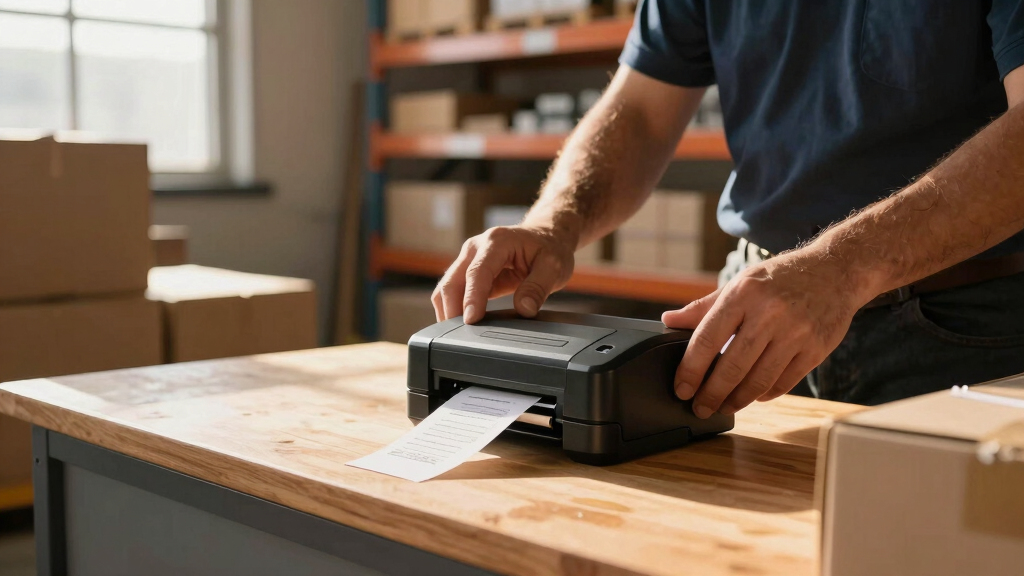

Finding the best thermal label printer for warehouse workflows involves balancing speed, durability, connectivity, and ease of integration with your existing systems. The Rollo USB Shipping Label Printer stands out as the overall top choice thanks to its high speed and reliable performance. For those needing wireless flexibility, the Bluetooth Thermal Shipping Label Printer offers seamless mobility, while the LabelTac Pro X 4″ excels in industrial environments requiring tougher labels. Each option presents tradeoffs—such as price, setup complexity, or portability—so continue reading for a detailed breakdown to find the best fit for your warehouse needs.
Key Takeaways
- Wireless connectivity, especially Bluetooth, is a key feature for flexible warehouse workflows and varies significantly across models.
- Speed and print resolution directly impact efficiency, with some models designed for high-volume environments and others for lighter use.
- Industrial labels and durability are better supported by specialized printers like LabelTac, but they often come at a higher cost.
- Compatibility with popular shipping platforms like USPS, Amazon, and Shopify is a common consideration influencing choice.
- Price often correlates with features: budget models might lack durability or speed, while premium options offer advanced features at a higher investment.


More Details on Our Top Picks
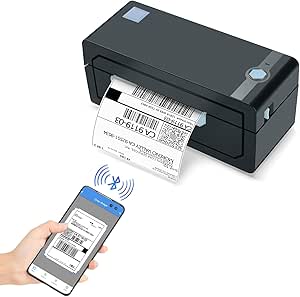
Bluetooth Thermal Label Printer for Mac, Windows, Phone, Tablet, Wireless 4×6 Shipping Label Printer for Shipping Packages, Support USPS, Amazon, Pirate Ship, Shopify
This model stands out for its impressive wireless support, functioning seamlessly across Mac, Windows, iOS, Android, Linux, and Chrome OS—making it suitable for varied warehouse setups. Compared to the Rongta Bluetooth Shipping Label Printer, it offers broader device compatibility at the cost of a slightly higher price. Its compact size and support for multiple label sizes, including 4×6″ shipping labels, make it ideal for fast-paced warehouse environments needing flexible, wireless printing. The free app enhances label customization, which is a plus for detailed labeling tasks, though the reliance on app setup might be a hurdle for less tech-savvy users. The 203dpi resolution ensures professional output, while its high-speed 60 ppm printing can handle volume efficiently. However, the setup process can be complex for some, and the all-in-one app might be limiting for advanced label designs.
Pros:- Seamless wireless support across Mac, Windows, iOS, Android, Linux, and Chrome OS
- Supports a broad range of label sizes up to 4.4 inches wide
- Lightweight and portable design facilitates flexible placement
- High-speed printing at 60 labels per minute
Cons:- Initial setup and app configuration can be time-consuming for some users
- Dependence on app for printing may limit advanced label customization
Best for: Warehouse managers needing a reliable, multi-device compatible wireless printer for diverse label types.
Not ideal for: Small warehouses or environments with limited Bluetooth infrastructure, where wired options could be simpler.
- Print Resolution:203 dpi
- Print Speed:60 ppm
- Connectivity:Bluetooth, Wi-Fi
- Supported Media Size:1″ to 4.4″ width
- Weight:1.08 pounds
- Dimensions:3.27″D x 7.28″W x 2.36″H
Bottom line: This pick suits warehouses that prioritize device versatility and wireless convenience over ultra-simple setup.
Rongta Bluetooth Shipping Label Printer, Wireless 4×6 Thermal Label Printer for Shipping Packages, Support Android, iPhone, Widely Used for Amazon, Ebay, Shopify, Etsy, UPS, Black
This model excels in user-friendly features like automatic label detection and broad device compatibility, making it a solid choice for busy warehouses that need quick setup. Unlike the LabelTac Pro X, which is more industrial and complex, the Rongta is designed for straightforward, wireless operation via a dedicated app, supporting all common label sizes up to 4.37 inches wide. Its automatic label feeding reduces setup time, and its support for major e-commerce platforms simplifies logistics. The 203dpi print resolution guarantees clarity for scanning, but the device’s reliance on app-based controls might limit customization for complex labeling needs. Its compact size ensures easy storage, though some users report occasional connectivity hiccups, especially on older devices.
Pros:- Automatic label detection reduces manual adjustments
- Supports all major shipping platforms and label sizes up to 4.37″
- Wireless Bluetooth connectivity with easy app setup
- Compact and portable design for limited space environments
Cons:- Connectivity issues may occur on some devices, affecting workflow
- Limited advanced customization options for labels
Best for: Small to medium warehouses seeking a simple, reliable wireless printer with minimal setup time.
Not ideal for: Warehouses requiring highly customizable labels or industrial-grade durability, where the LabelTac Pro X would be better suited.
- Print Resolution:203 dpi
- Print Speed:up to 72 labels/min
- Connectivity:Bluetooth, USB
- Media Width Support:0.98″ to 4.37″
- Weight:approximately 1.17 pounds
- Dimensions:8″D x 4.73″W x 6.9″H
Bottom line: Ideal for warehouses prioritizing quick, hassle-free wireless label printing with minimal technical fuss.
Bluetooth Thermal Shipping Label Printer: 4×6 Wireless Label Maker with Tape for Small Business – Compatible with iPhone, Android, Windows & Mac, Widely Used for USPS UPS Amazon Shopify Etsy
This pick makes the most sense for high-volume warehouses needing rapid, high-resolution printing across multiple platforms. Its 250 ppm speed surpasses many competitors like the Rongta Bluetooth Printer, making it ideal for peak periods. The 4×6″ labels are supported with a 203 dpi resolution ensuring clear, scannable output. While its wired USB connection limits wireless flexibility, the high speed compensates for the static setup, especially in environments where speed is critical. The printer’s straightforward operation with USB makes it accessible, but it lacks wireless support, which might be a downside for mobile workflows. Its 300 dpi resolution is a bonus for detailed labels, though the device’s size and limited media capacity (30 sheets) may be restrictive for some users.
Pros:- Exceptional printing speed at 250 pages per minute
- High-resolution 203 dpi output for clear labels
- Compatible with Windows, Mac, iOS, Android via USB
- Supports multiple label sizes from 1.57″ to 4.1″
Cons:- Limited mobility due to wired connection only
- Small sheet capacity (30 sheets) may require frequent reloads
Best for: Large warehouses with high-volume shipping needs that prefer wired connections for speed and reliability.
Not ideal for: Small warehouses or those requiring wireless flexibility, where Wi-Fi or Bluetooth-only models are preferred.
- Print Resolution:203 dpi
- Print Speed:250 ppm
- Connectivity:USB
- Supported Media Size:up to 4″ width
- Weight:2.2 pounds
- Dimensions:4″D x 8″W x 4″H
Bottom line: Best suited for high-volume, wired warehouse setups that value speed and label clarity above mobility.
LabelTac Pro X 4″ Industrial Label Printer – Thermal Vinyl Maker for OSHA, Pipe, Electrical & Warehouse Safety Labels
This industrial-grade printer is tailored for warehouses that require OSHA-compliant safety labels and custom in-house labeling. Its 300 dpi resolution and robust design outperform the Rollo USB Shipping Label Printer in durability and label quality, especially for hazardous or safety-critical labels. The included LabelSuite software simplifies design with templates and symbols, making it suitable for creating complex safety and pipe labels. Its LCD screen provides real-time status, reducing downtime. The main tradeoff is its larger size and higher cost, which might be overkill for smaller warehouses or simple shipping labels. The Ethernet and USB connectivity support industrial environments, but it does not offer wireless options, limiting mobility.
Pros:- High 300 dpi resolution for detailed, compliant labels
- Includes intuitive LabelSuite design software with templates
- Built for industrial environments with Ethernet and USB connectivity
- Durable chassis suitable for demanding warehouse conditions
Cons:- Larger footprint and higher price point
- Lacks wireless or Bluetooth support for mobile use
Best for: Warehouses requiring durable, OSHA-compliant safety labels and highly customizable in-house labels.
Not ideal for: Small warehouses or those needing wireless, mobile label printing solutions, where a compact, wireless device is preferable.
- Print Resolution:300 dpi
- Media Compatibility:4″ wide labels
- Connectivity:Ethernet, USB
- Display:Color LCD
- Weight:3.75 kg
- Warranty:Lifetime
Bottom line: This is the go-to for warehouses focused on safety, durability, and complex label design, despite its size and cost.
Rollo USB Shipping Label Printer – Commercial Grade 4×6 Thermal Label Printer for Shipping Packages – High Speed Custom Sticker Label Maker for Small Business
This model delivers exceptional speed with 150mm/s and a 203 dpi resolution, making it ideal for warehouses that process a large number of labels daily. Its USB-only connection simplifies setup, similar to the Bluetooth Thermal Shipping Label Printer, but with faster throughput—perfect for high-volume environments. Its support for labels from 1.57″ to 4.1″ wide and the ability to generate custom stickers makes it versatile beyond shipping, including barcode and product labels. While its wired setup limits mobility, the high speed and reliable output make it a favorite for large warehouses with dedicated workstations. The 1-year warranty and straightforward driver installation add to its appeal, though the lack of wireless options could be a drawback for mobile workflows.
Pros:- High-speed printing at 150mm/sec for rapid throughput
- Clear 203 dpi resolution for legible labels
- Supports a wide range of label widths from 1.57″ to 4.1″
- Easy USB connection and driver installation
Cons:- Limited mobility due to wired connection
- No wireless support, which may hinder flexible workflows
Best for: Large warehouses with high-volume, wired label printing needs that prioritize speed and reliability.
Not ideal for: Warehouses that need wireless mobility or have space constraints, where a portable or wireless model would be better.
- Print Resolution:203 dpi
- Print Speed:150 mm/sec
- Connectivity:USB
- Supported Media Size:1.57″ to 4.1″ wide
- Weight:2.2 pounds
- Dimensions:4″D x 8″W x 4″H
Bottom line: This printer is perfect for high-volume, wired warehouse operations demanding speed and consistent quality.
Bluetooth Thermal Shipping Label Printer, 4×6 Portable Thermal Printer, Compatible with iPhone, Android, Windows and Mac, Works with USPS, UPS, Amazon, Shopify, Etsy (White)
This wireless Bluetooth option stands out for its compatibility with multiple platforms, including iOS, Android, Windows, and Mac, making it highly adaptable for small warehouse operations that need mobility. Unlike the JADENS Bluetooth Thermal Shipping Label Printer, which requires app downloads for mobile printing on phones, this model supports direct Bluetooth pairing with computers, simplifying setup. Its compact size and support for various label sizes (1.57″-4.1″) make it ideal for space-constrained warehouses handling diverse shipping needs. The app-based customization with templates and icons adds a professional touch, but relying solely on the app limits rapid mobile printing without a computer. The 203 DPI resolution delivers sharp labels, essential for clear barcodes. However, the Bluetooth connection is only supported via the app, which could delay workflows if connectivity issues arise. This pick makes the most sense for small teams needing versatile, portable printing with straightforward driver installation.
Pros:- Supports multiple operating systems including iOS, Android, Windows, and Mac
- Wireless Bluetooth connectivity for maximum mobility
- Supports a variety of label sizes up to 4.1 inches wide
- App includes extensive templates, icons, and fonts for customization
Cons:- Bluetooth connection relies on app, limiting quick mobile printing on phones without app setup
- No Ethernet or Wi-Fi support for networked workflows
- Limited to 203 DPI resolution, which might be insufficient for very detailed labels
Best for: Small warehouse teams that prioritize wireless flexibility and multi-platform compatibility.
Not ideal for: Large warehouses with high-volume, automated workflows that require faster, Ethernet-connected printers.
- Print Resolution:203 DPI
- Connectivity:USB, Bluetooth (app-based)
- Label Size Support:1.57″ to 4.1″
- Maximum Print Speed:60 ppm
- Supported Platforms:iOS 13+, Android, Windows, Mac
- Warranty:Limited
Bottom line: This printer is ideal for small warehouses or businesses needing portable, versatile printing with broad device compatibility but limited network integration.
JADENS Bluetooth Thermal Shipping Label Printer – Wireless 4×6 Shipping Label Printer, Compatible with Android, iPhone, Windows & Mac, Widely Used for, Amazon, Shopify, Etsy, USPS(Blue)
This model makes a strong case for small businesses seeking a straightforward, high-quality wireless label printer that can handle various shipping platforms. Compared to the ETIKEZ Bluetooth Thermal Shipping Label Printer, which offers app-based customization, the JADENS printer emphasizes quick setup with a Japanese high-tech thermal head delivering consistent 203 DPI resolution, ensuring clear barcode labels. Its support for both fanfold and roll labels increases flexibility, especially for warehouses with variable label needs. While the JADENS supports wireless printing via Bluetooth on Windows and Mac, mobile printing on Android and iOS requires the dedicated app, which may add an extra step but still simplifies printing from multiple devices. Its ability to work with popular shipping and marketplace platforms like ShipStation and eBay simplifies integration. The main tradeoff is that it lacks Ethernet or Wi-Fi, which could hinder larger or more automated workflows. This printer suits small to medium warehouses that value quick setup and broad platform compatibility without complex network requirements.
Pros:- High-quality 203 DPI print resolution for sharp labels
- Supports both fanfold and roll labels for versatility
- Quick setup with detailed driver and troubleshooting resources
- Compatible with multiple marketplace and shipping platforms
Cons:- Lacks Ethernet or Wi-Fi, limiting networked workflow options
- Mobile Bluetooth printing requires app download, which could slow down rapid workflows
- Requires calibration each time label size changes
Best for: Small to medium-sized warehouse operations that need reliable wireless printing for diverse marketplace integrations.
Not ideal for: Large-scale warehouses requiring high-speed, networked printing capable of handling high volumes continuously.
- Print Resolution:203 DPI
- Connectivity:Bluetooth, USB
- Label Size Support:1.57″ to 4.1″
- Supported Platforms:Windows 7+, Mac OS 10.9+
- Print Speed:High quality, not specified for volume
- Label Types:Fanfold and roll
Bottom line: This printer provides dependable, easy-to-set-up wireless printing perfect for small warehouse teams prioritizing simplicity and broad platform support but not continuous high-volume throughput.
How We Picked
I evaluated these thermal label printers based on performance, ease of setup, connectivity options, build quality, and overall value for warehouse workflows. Priority was given to models that strike a balance between speed and reliability, as these are critical in high-volume environments. Compatibility with major shipping platforms and operating systems was also a key factor, ensuring seamless integration. The ranking reflects a combination of user feedback, feature sets, and price-to-performance ratios, emphasizing printers that excel in real-world warehouse tasks without unnecessary extras.Factors to Consider When Choosing Best Thermal Label Printer For Warehouse Workflows
Choosing the right thermal label printer for warehouse workflows requires understanding several key factors. Not all printers are equally suited to high-volume, fast-paced environments, so weighing these considerations can help prevent costly mistakes and ensure smooth operations.Connectivity and Compatibility
Wireless options like Bluetooth or Wi-Fi are often essential for flexible warehouse setups, allowing mobile printing from tablets or smartphones. Compatibility with your existing operating systems and shipping platforms ensures smooth integration and minimizes setup headaches. Look for printers that support multiple connection types if you anticipate changing workflows or devices.
Speed and Throughput
In busy warehouse settings, print speed directly affects productivity. High-speed printers can handle larger volumes without bottlenecks, but they often come at a higher cost. Consider your daily volume and future growth to select a model that won’t become a limiting factor as your warehouse expands.
Durability and Label Quality
Warehouse labels need to withstand handling, moisture, or environmental factors. Industrial printers like LabelTac are built to produce durable labels, but they cost more and may be more complex to operate. For smaller operations, standard models may suffice if proper label materials are chosen, but always match the printer’s capabilities with your environment.
Ease of Use and Maintenance
Intuitive setup and straightforward maintenance reduce downtime and training costs. Some printers feature automatic calibration or easy label loading, which can be significant advantages in a fast-paced setting. Consider the availability of support and replacement parts to keep your workflow uninterrupted.
Price and Total Cost of Ownership
While budget models can be tempting, they may lack durability or speed, leading to higher long-term costs. Investing in a slightly more expensive printer with better reliability and support can save money and headaches over time. Evaluate the total cost, including consumables and maintenance, to determine the best value for your specific operations.
Frequently Asked Questions
Can I use a standard thermal label printer for high-volume warehouse shipping?
Standard thermal label printers can work for high-volume shipping, but they might not deliver the speed or durability required for demanding warehouse environments. High-volume printers like the Rollo or LabelTac are designed to handle continuous use with minimal downtime, making them more suitable for busy workflows. Consider your daily volume and choose a model rated for high throughput to avoid bottlenecks.
What’s the main difference between wired and wireless thermal label printers?
Wired printers typically offer more stable connections and slightly higher speeds, making them reliable in fixed setups. Wireless models, especially Bluetooth, provide greater flexibility, allowing you to print from mobile devices anywhere in the warehouse. The choice depends on your workflow: if mobility and quick setup are priorities, a wireless printer is preferable, but for consistent, high-volume tasks, a wired connection might be more dependable.
Are industrial label printers worth the extra cost for warehouse use?
Industrial printers like LabelTac are designed for heavy-duty use and produce labels that withstand tough conditions. They are worth considering if your warehouse requires labels that resist moisture, chemicals, or rough handling. However, for smaller operations or less demanding environments, standard commercial models often provide sufficient durability at a lower price point.
How important is print resolution for warehouse labels?
Print resolution affects label clarity, especially for barcodes and small text. Higher resolution printers produce sharper, more scannable labels, which reduces errors in order fulfillment. For most warehouse applications, a resolution of 300 dpi or higher is recommended to ensure barcode readability and professional appearance, especially when labels are handled frequently.
What should I consider when choosing between a thermal transfer and direct thermal printer?
Direct thermal printers use heat-sensitive paper and require no ribbon, making them simpler and less costly upfront. However, their labels are less durable over time, especially in humid or outdoor environments. Thermal transfer printers, on the other hand, use ribbons to produce more durable labels suitable for long-term storage or harsh conditions. Your choice depends on how long your labels need to last and your environmental conditions.
Conclusion
If you need a reliable, high-speed option for large-scale warehouse shipping, the Rollo USB Shipping Label Printer offers outstanding value and performance. For those prioritizing wireless flexibility, the Bluetooth Thermal Shipping Label Printer makes moving around the warehouse effortless. Industrial environments demanding tough labels should consider the LabelTac Pro X despite its higher price. Beginners or smaller operations might find the JADENS Bluetooth Thermal Shipping Label Printer easier to set up and use. Ultimately, your choice depends on your volume, environment, and budget, but these picks cover the most common warehouse needs effectively.