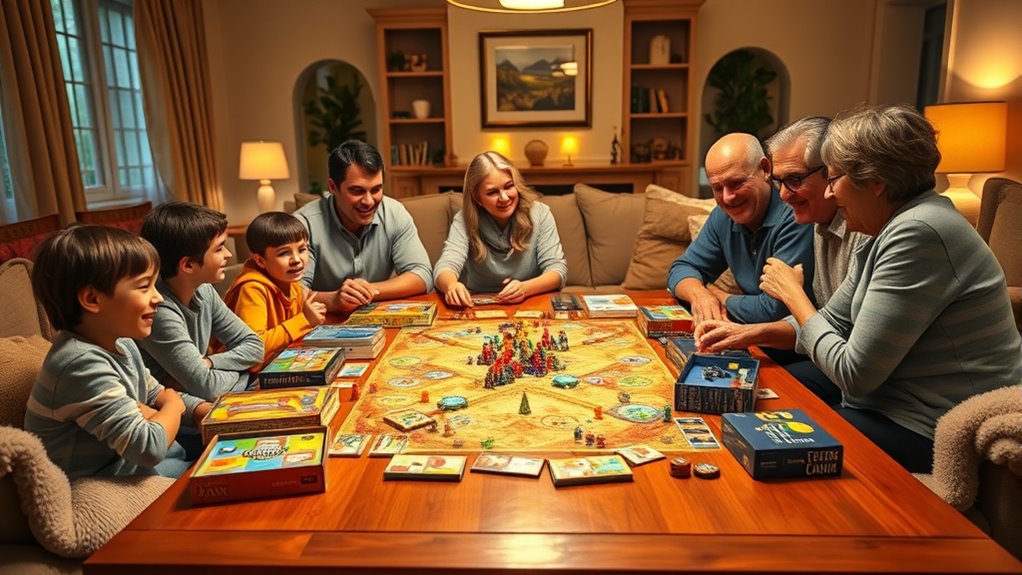

Finding the perfect board game for family night can be tricky, especially with so many options available. The best choices balance fun, inclusivity, and ease of learning, making everyone feel involved. The Sorry! Board Game stands out as a top pick for younger kids, while UNO offers quick, engaging gameplay for all ages. Meanwhile, games like Monopoly provide a longer, strategy-based experience that works well for families willing to invest more time. The main tradeoffs involve balancing complexity against accessibility and replay value. Keep reading for a detailed breakdown of each option and how they compare.

Get business pricing on tech for your team
- Business-only prices and quantity discounts
- Tax-exempt purchasing
- Multiple users, one account, clear invoices
Key Takeaways
- Top-ranked games combine straightforward rules with engaging gameplay, appealing to a wide age range.
- The best options offer quick setup and minimal downtime, keeping family members interested from start to finish.
- Price point varies widely, with some classics offering more value through longevity and replayability.
- Games that include physical components or digital features tend to enhance family interaction and fun.
- Choosing the right game depends heavily on the family’s age mix and preferred play style—strategy, party, or quick rounds.
| Sorry! Board Game for Kids Ages 6 and Up |  | Best Overall for Family Nights with Younger Kids | Number of Players: 2-4 | Ages: 6 and up | Includes: 4 pawns per player | VIEW ON AMAZON | See Our Full Breakdown |
| Hasbro Gaming Trouble Board Game for Kids Ages 5 and Up |  | Best for Easy, Fast-Paced Fun with Younger Children | Ages: 5 and up | Players: 2-4 | Includes: Pop-o-Matic die roller | VIEW ON AMAZON | See Our Full Breakdown |
| Mattel Games UNO Card Game for Kids, Adults & Families |  | Best for Larger Groups and Versatile Play | Number of players: 2 to 10 | Ages: 7+ | Includes: 3 blank Wild Cards | VIEW ON AMAZON | See Our Full Breakdown |
| Hasbro Gaming Jenga Game with Digital Die |  | Best for Physical Challenges and Versatility | Includes: 54 wooden blocks | Ages: 6+ | Players: 1+ | VIEW ON AMAZON | See Our Full Breakdown |
| USAOPOLY The Original TAPPLE Family Board Game |  | Best for Quick Thinking and Word Skills | Players: 2-8 | Ages: 8 and up | Play Time: 15-20 minutes | VIEW ON AMAZON | See Our Full Breakdown |
| Hasbro Gaming Yahtzee Game |  | Best Overall for Strategy and Quick Play | Number of Players: 2 or more | Ages: 8 and up | Game Type: Dice game | VIEW ON AMAZON | See Our Full Breakdown |
| Taco Cat Goat Cheese Pizza Card Game |  | Best for Fast, Portable Fun | Number of Players: 2-8 | Game Duration: 10-15 minutes | Age Range: Kids, Teens, Adults, Families | VIEW ON AMAZON | See Our Full Breakdown |
| Hasbro Gaming Scrabble Board Game, Classic Word Game for Kids Ages 8 and Up |  | Best for Word Lovers and Strategic Thinkers | Number of Players: 2-4 | Ages: 8 and up | Includes: 100 wooden letter tiles, wooden tile racks, gameboard | VIEW ON AMAZON | See Our Full Breakdown |
| Hasbro Gaming Candy Land Kingdom of Sweet Adventures Board Game for Kids |  | Best for Young Children and Beginners | Ages: 3 and up | Game Type: Board game | Theme: Candy Land | VIEW ON AMAZON | See Our Full Breakdown |
| Monopoly Family Board Game for 2-6 Players, Ages 8 and Up |  | Best for Classic Property Trading and Longer Sessions | Brand: Monopoly | Genre: Family | Number of Players: 2-6 | VIEW ON AMAZON | See Our Full Breakdown |
| Mattel Games Deep Sea Diamond Dive Board Game for 2-4 Players |  | Best for Quick, Family-Friendly Treasure Hunts | Number of Players: 2-4 | Ages: 6+ | Gameplay: Quick, family-friendly, treasure-hunting | VIEW ON AMAZON | See Our Full Breakdown |
| USAOPOLY Flip 7 Card Game |  | Best for Fast, Press-Your-Luck Card Action | Players: 3+ | Ages: 8 and up | Play Time: 20 minutes | VIEW ON AMAZON | See Our Full Breakdown |
| board games for family night | Ages | Number of Players | Includes |
|---|---|---|---|
| Sorry! Board Game for Kids Age | 6 and up | 2-4 | 4 pawns per player |
| Hasbro Gaming Trouble Board Ga | 5 and up | — | Pop-o-Matic die roller |
| Mattel Games UNO Card Game for | 7+ | 2 to 10 | 3 blank Wild Cards |
| Hasbro Gaming Jenga Game with | 6+ | — | 54 wooden blocks |
| USAOPOLY The Original TAPPLE F | 8 and up | — | Tapple wheel with built-in timer, 36 cards |
| Hasbro Gaming Yahtzee Game | 8 and up | 2 or more | — |
| Taco Cat Goat Cheese Pizza Car | — | 2-8 | — |
| Hasbro Gaming Scrabble Board G | 8 and up | 2-4 | 100 wooden letter tiles, wooden tile racks, gameboard |
| Hasbro Gaming Candy Land Kingd | 3 and up | — | — |
| Monopoly Family Board Game for | — | 2-6 | — |
| Mattel Games Deep Sea Diamond | 6+ | 2-4 | — |
| USAOPOLY Flip 7 Card Game | 8 and up | — | — |
More Details on Our Top Picks
Sorry! Board Game for Kids Ages 6 and Up
This classic Sorry! game stands out for its simple yet engaging gameplay that appeals to both kids and adults. Compared to the more strategic UNO Card Game, Sorry! offers a more physical and visually engaging experience, making it ideal for younger children. Its straightforward rules encourage strategic thinking without overwhelming players, but this simplicity means it may become dull for older kids or adults seeking greater challenge. The game’s compact setup and limited player count (2-4) are perfect for smaller family groups or casual gatherings.
Pros:- Classic, familiar gameplay that appeals across ages
- Encourages strategic thinking and friendly competition
- Compact and easy to set up for quick play sessions
Cons:- May feel too simple and repetitive for older players
- Limited to small groups of up to 4 players
Best for: Families with children aged 6 to 10 who want a quick, easy-to-understand game that everyone can enjoy together
Not ideal for: Families with older children or adults looking for more complex or longer-lasting gameplay experiences
- Number of Players:2-4
- Ages:6 and up
- Includes:4 pawns per player
Our verdict“This game makes the most sense for families seeking a quick, accessible game for younger children during family nights.”
Hasbro Gaming Trouble Board Game for Kids Ages 5 and Up
Compared to Sorry!, Trouble is even simpler to learn, thanks to its iconic Pop-o-Matic die roller which adds excitement and quick decision-making. It’s perfect for children as young as 5, making it an excellent choice for families with very young kids. However, its limited player capacity (2-4) and potential repetitiveness may leave older children or larger groups wanting more variety. The game’s engaging bubble pop and straightforward race to the finish make it a lively addition to family game nights, especially when time is short.
Pros:- Simple rules that young children can grasp quickly
- Iconic Pop-o-Matic adds a fun, sensory element
- Fast setup and quick gameplay perfect for short sessions
Cons:- Limited to small groups, restricting larger family play
- Can become repetitive if played frequently
Best for: Families with kids aged 5 to 8 who need an easy-to-understand, fast-moving game
Not ideal for: Families seeking longer, more strategic gameplay or larger groups over four players
- Ages:5 and up
- Players:2-4
- Includes:Pop-o-Matic die roller
- Game Type:Family board game
Our verdict“This pick is best for families wanting a quick, engaging game for very young children that fits into busy evenings.”
Mattel Games UNO Card Game for Kids, Adults & Families
Unlike Sorry! or Trouble, UNO offers a highly adaptable card game that accommodates up to 10 players, making it ideal for bigger family nights or parties. Its simple matching mechanics appeal to a wide age range, and the inclusion of action and wild cards adds strategic depth. The addition of customizable Wild Cards and color blind symbols enhances its accessibility and replayability. However, the game can extend unpredictably depending on players’ strategies, which might be less appealing for those preferring quick sessions. Compared with Jenga’s physical challenge, UNO emphasizes quick thinking and interaction, making it a staple for diverse family groups.
Pros:- Supports up to 10 players, great for large families
- Color blind accessible with graphic symbols
- Includes customizable Wild Cards for house rules
Cons:- Game length can vary widely, possibly leading to boredom
- May require adult supervision for younger children unfamiliar with the rules
Best for: Families with 7+ members seeking a flexible, inclusive game that can involve everyone at once
Not ideal for: Families preferring more physical or less variable game lengths, or those with very young children under 7
- Number of players:2 to 10
- Ages:7+
- Includes:3 blank Wild Cards
- Accessibility:Color blind accessible with graphic symbols
Our verdict“This game suits larger families or groups wanting a quick, social card game with flexible rules and accessibility features.”
Hasbro Gaming Jenga Game with Digital Die
Compared to traditional Jenga, this version introduces a digital die that offers multiple ways to spice up the game, making it more interactive and unpredictable. It works well for mixed-age groups, including solo players who want a casual challenge. The digital components do depend on external devices, which can be a downside if technology isn’t readily accessible or reliable. For families seeking a portable, physical game with a tech twist, this Jenga provides a fresh take on a familiar classic. However, some challenges may be too difficult for the youngest players, and reliance on external devices can complicate gameplay.
Pros:- Includes a digital die with multiple ways to play
- Suitable for solo, family, or party settings
- Compact and portable for travel
Cons:- Requires external device and app, which may not always be available
- Some challenges may be too difficult for younger children
Best for: Families who enjoy physical dexterity games and want a modern twist for game variety
Not ideal for: Families without access to compatible smartphones or who prefer purely traditional, non-digital games
- Includes:54 wooden blocks
- Ages:6+
- Players:1+
- Materials:Wood
- Additional Features:Digital die with 6+ ways to play
Our verdict“This game is best for families seeking to combine physical dexterity with tech-enhanced gameplay and portability.”
USAOPOLY The Original TAPPLE Family Board Game
Unlike Sorry! or Jenga, TAPPLE pushes players to think quickly within a timed setting, making it a lively addition for families who enjoy word challenges. Its portability and simple setup make it easy to bring along for trips or quick game sessions. However, its fast pace might be overwhelming for younger children or those who prefer more relaxed gameplay. While it’s limited to word categories, the game’s speed and time pressure foster energetic family interactions, especially when you want a game that encourages rapid thinking and verbal skills over physical dexterity or strategic planning.
Pros:- Fast-paced, engaging gameplay that encourages quick thinking
- Portable and easy to store with a built-in timer wheel
- Suitable for a wide age range, from 8 to adults
Cons:- Game can be over quickly, which may frustrate some players
- Limited to word categories, reducing variety
Best for: Families with children aged 8 and up who enjoy fast-paced, time-sensitive word games
Not ideal for: Families with very young children or those seeking longer, more relaxed game sessions
- Players:2-8
- Ages:8 and up
- Play Time:15-20 minutes
- Includes:Tapple wheel with built-in timer, 36 cards
Our verdict“This game is ideal for families looking for a quick, energetic word challenge that keeps everyone on their toes.”
Hasbro Gaming Yahtzee Game
This classic dice game stands out as the best overall choice for family night because it combines strategic thinking with luck, appealing to a broad age range. Compared to the simpler Taco Cat Goat Cheese Pizza, Yahtzee offers more depth, making it better suited for families who enjoy a bit of competition and skill. However, its reliance on multiple players for full enjoyment can be a drawback for smaller families or when only two are available. Its compact size and quick rounds make it easy to integrate into a variety of gatherings, and the familiar gameplay ensures everyone can join in with minimal learning curve.
Pros:- Timeless and widely loved game with simple rules
- Encourages strategic decision-making and luck
- Suitable for players aged 8 and up, making it versatile
Cons:- Requires at least two players for full enjoyment
- Less engaging for those who prefer complex or narrative-driven games
Best for: Families who want a strategic, quick-to-learn game that can accommodate different ages and skill levels
Not ideal for: Families seeking longer, more complex games or solo play options
- Number of Players:2 or more
- Ages:8 and up
- Game Type:Dice game
- Theme:Strategy, Family
Our verdict“This game is ideal for families looking for a quick, strategic dice game that everyone can enjoy together.”
Taco Cat Goat Cheese Pizza Card Game
This game makes the list as the best portable card game for family night, thanks to its quick rounds and simple rules. Unlike Yahtzee, which requires dice and some strategic planning, Taco Cat Goat Cheese Pizza focuses on rapid reactions and hilarious moments, perfect for short attention spans or on-the-go play. Its limited depth might disappoint families seeking longer, more involved gameplay, but its ease of learning and quick setup make it an excellent choice for impromptu gatherings or travel. Its compact size ensures it fits into any bag, making it ideal for families on the move.
Pros:- Instantly understandable rules for all ages
- Highly portable and easy to pack
- Creates hilarious moments with quick rounds
Cons:- Gameplay may be too simple for players seeking depth
- Limited playtime might leave some wanting more
Best for: Families needing a fast, engaging game suitable for all ages and portable enough to bring anywhere
Not ideal for: Families wanting longer, more strategic game sessions or more complex gameplay
- Number of Players:2-8
- Game Duration:10-15 minutes
- Age Range:Kids, Teens, Adults, Families
Our verdict“Perfect for families seeking a quick, fun game that’s easy to take anywhere and play on the fly.”
Hasbro Gaming Scrabble Board Game, Classic Word Game for Kids Ages 8 and Up
Scrabble earns its spot as the best word game for families who enjoy a bit of vocabulary building alongside friendly competition. While Yahtzee emphasizes luck and Candy Land caters to very young children, Scrabble offers a more intellectual challenge suited for older kids and adults. Its wooden tiles and racks contribute to a quality feel, but the need for at least two players limits solo play options, and the game can seem simple for very experienced players. Compared to the fast-paced nature of Taco Cat, Scrabble demands more thinking, making it ideal for families who want a more cerebral game night experience.
Pros:- Engages players in vocabulary and strategic thinking
- High-quality components add durability and appeal
- Suitable for a range of ages, especially older kids and adults
Cons:- Requires at least two players, limiting solo or very small groups
- Might be too simple or slow for players seeking fast-paced gameplay
Best for: Families with older children or adults who enjoy word puzzles and strategic gameplay
Not ideal for: Families with young children under 8 or those seeking quick, casual fun without much thinking
- Number of Players:2-4
- Ages:8 and up
- Includes:100 wooden letter tiles, wooden tile racks, gameboard
Our verdict“Ideal for families wanting a classic, strategic word game that promotes mental engagement for older children and adults.”
Hasbro Gaming Candy Land Kingdom of Sweet Adventures Board Game for Kids
Candy Land stands out as the best choice for very young children just starting their board game journey. Its bright, colorful design and simple mechanics make it accessible without reading skills, unlike Monopoly, which involves more complex rules and longer playtimes. Although its simplicity limits strategic depth and may bore older kids quickly, it excels at introducing preschoolers and early elementary students to the fun of family game nights. The visually stimulating game board and friendly theme keep young children engaged, making it a reliable first game for the youngest players.
Pros:- Ideal for very young children with no reading required
- Bright, colorful, and highly engaging visuals
- Introduces kids to basic game concepts in a fun way
Cons:- Limited complexity and strategic options
- Best suited for small groups, as game length is short
Best for: Families with preschoolers or early elementary children needing a simple, engaging game
Not ideal for: Families with older children or those seeking more strategic or longer gameplay sessions
- Ages:3 and up
- Game Type:Board game
- Theme:Candy Land
- Players:2 or more
Our verdict“Perfect as a first game for preschoolers or early elementary children, focusing on fun and simple gameplay.”
Monopoly Family Board Game for 2-6 Players, Ages 8 and Up
Monopoly remains the quintessential family game for those who enjoy property trading and strategic resource management. Compared with Yahtzee and Scrabble, Monopoly offers a longer, more involved experience that can span up to two hours, making it ideal for a dedicated game night rather than quick sessions. Its familiar gameplay and colorful tokens appeal to a broad age range, but the lengthy playtime and dependency on multiple players can be drawbacks for families seeking quick entertainment. Despite these tradeoffs, Monopoly’s enduring appeal lies in its ability to foster negotiation, planning, and friendly rivalry over several hours.
Pros:- Timeless gameplay that appeals to all ages
- Includes a variety of tokens for personalization
- Encourages strategic thinking and negotiation
Cons:- Can take up to 2 hours, which may be too long for some families
- Requires multiple players for full experience, limiting solo or small-group options
Best for: Families seeking a classic, immersive game with longer play sessions and strategic depth
Not ideal for: Families with young children or those preferring shorter, casual game nights
- Brand:Monopoly
- Genre:Family
- Number of Players:2-6
- Estimated Playing Time:120 Minutes
- Minimum Age:8
Our verdict“Best suited for families willing to commit time to a classic, strategic game that fosters negotiation and planning.”
Mattel Games Deep Sea Diamond Dive Board Game for 2-4 Players
Deep Sea Diamond Dive stands out as an engaging game that balances simplicity with strategic decision-making, making it ideal for families seeking a fast-paced, lighthearted activity. Unlike the more complex Sorry! or Monopoly, this game keeps players moving quickly, with straightforward rules that kids as young as 6 can grasp easily. Its quick gameplay—usually around 15-20 minutes—fits well into busy family nights. However, the reliance on luck for gem selection can sometimes reduce strategic depth, and repetitive gameplay might wear thin for frequent players. Still, its lively theme and ease of learning make it perfect for younger children and casual family groups who want instant fun without long setups or complex rules.
Pros:- Fun and engaging for kids and adults alike
- Easy rules and quick gameplay fit into busy schedules
- Encourages basic strategic decision-making
Cons:- May become repetitive for frequent players
- Relies heavily on luck, limiting strategic depth
Best for: Families with young children who want a quick, engaging game that combines luck and strategy without a steep learning curve
Not ideal for: Families seeking highly strategic or long-term gameplay, or players who prefer games with high variability in decision-making
- Number of Players:2-4
- Ages:6+
- Gameplay:Quick, family-friendly, treasure-hunting
Our verdict“This game is perfect for families wanting a quick, lively treasure-hunt experience suitable for all ages.”
USAOPOLY Flip 7 Card Game
Flip 7 offers a lively, fast-paced card game experience that appeals to families who enjoy quick rounds with a strategic twist. Compared with the more straightforward Deep Sea Diamond Dive, Flip 7 emphasizes risk management and strategic decision-making, especially with its action and modifier cards that keep gameplay unpredictable. Its 20-minute playtime makes it ideal for shorter family nights, but the game can feel too simple for more seasoned gamers or those craving longer, more complex sessions. It requires at least three players to fully enjoy the gameplay, which is a consideration for smaller families or pairs. Overall, this game shines as a quick, engaging option for kids age 8 and above who like a bit of risk and excitement.
Pros:- Fast-paced and highly engaging
- Easy to learn and quick to teach
- Includes exciting action and modifier cards for variety
Cons:- May be too simple for advanced gamers
- Limited playtime per round can reduce depth
Best for: Families with children age 8 and older who enjoy quick, strategic card games with a push-your-luck element
Not ideal for: Families with younger children or players seeking longer, more complex games that develop deeper strategy
- Players:3+
- Ages:8 and up
- Play Time:20 minutes
- Number of Cards:Multiple copies of each number, action, and modifier cards
Our verdict“Flip 7 is a perfect pick for families wanting a quick, strategic card game that sparks excitement and risk-taking.”


How We Picked
We evaluated each game based on several key factors relevant to family night: ease of learning, game duration, replayability, player engagement, and build quality. We prioritized titles that are versatile enough to include both younger children and adults, ensuring everyone can participate comfortably. Additionally, we considered value for money and how well each game fosters social interaction. Rankings reflect a balance of these criteria, highlighting options that offer the best overall experience for typical family settings while acknowledging tradeoffs like complexity or price.Factors to Consider When Choosing Board Games For Family Night
Choosing the right board game for family night involves more than just picking a popular title. It’s important to consider the age range of players, the typical duration of your game sessions, and how much strategic thinking you prefer. Accessibility is key—you want games that are easy to learn but still engaging enough to hold everyone’s attention. Additionally, think about the physical components and durability, especially if your family tends to play frequently. Budget is another factor; some games offer more longevity for a lower cost, but premium options might provide richer experiences. Making the right choice ensures family nights are fun, inclusive, and memorable.Age Range and Complexity
Matching a game to your family’s age range is vital. Younger children may struggle with complex rules, so simpler games like Sorry! or Candy Land are ideal. Older children and adults often enjoy games like Yahtzee or Monopoly that require more strategic thinking. Picking a game that everyone can understand quickly helps keep the session lively and inclusive, avoiding frustration or boredom.Game Duration
Consider how long your family typically wants to spend playing. If time is limited, quick-to-play options like UNO or Flip 7 make sense. For longer evenings, classics like Monopoly or Sorry! offer more in-depth experiences. Balancing game length with your family’s attention span ensures everyone stays engaged without feeling rushed or restless.Gameplay Style and Engagement
Some families prefer fast-paced, light-hearted games, while others enjoy strategic or cooperative play. Party games like Taco Cat Goat Cheese Pizza boost laughter and quick rounds, whereas games like Jenga or Yahtzee encourage skill and decision-making. Choosing games that match your family’s play style will lead to more memorable nights and repeat play.Physical Components and Durability
Durability matters, especially if your family plays frequently. Well-made components and sturdy game boards prevent wear and tear, maintaining the game’s appeal over time. If your kids are younger, look for options with safe, non-toxic pieces. Some games also include digital features or unique physical elements that enhance interaction, making them worth considering despite a higher price.Budget and Longevity
While some budget-friendly games provide great value, investing in higher-quality titles can offer better longevity and replayability. Classics like Monopoly or Scrabble tend to last for years, making them worth a higher upfront cost. Consider how often your family plays and whether a game’s replayability justifies its price, balancing immediate affordability with long-term enjoyment.Frequently Asked Questions
What is the best board game for a mixed-age family?
For a family with children and adults, games like UNO or Sorry! are excellent choices because they are easy to learn and quick to play, allowing everyone to join in without lengthy explanations. These games encourage interaction and are flexible enough to be enjoyed by a wide age range, making them perfect for mixed-age groups. If your family prefers more strategic play, Scrabble or Yahtzee can also work well, offering depth while remaining accessible.
How do I choose between a quick game and a longer, more strategic one?
Your choice depends on your typical family session length and patience levels. Quick games like Flip 7 or Taco Cat are great for busy evenings or if you want multiple rounds in a short span. Longer games like Monopoly or Sorry! suit families who enjoy more in-depth play and have enough time for extended sessions. Consider how much commitment your family is willing to make, and mix both types for variety.
Are digital or electronic features worth paying extra for?
Digital features can enhance the gaming experience by speeding up setup, providing automatic scoring, or adding interactive elements. However, they aren’t essential and can sometimes distract from face-to-face interaction. If your family values physical interaction and tactile engagement, opt for traditional games. Conversely, if your kids are tech-savvy or enjoy interactive play, games with digital components can add a fun twist, just be mindful of the higher cost.
What should I avoid when selecting a family board game?
Avoid games that are overly complex for your family’s age group, as they can cause frustration and reduce enjoyment. Also, steer clear of titles with poorly made components that break easily or have small parts that could be safety hazards. Lastly, don’t choose a game solely based on popularity—consider your family’s interests and play style to ensure everyone will enjoy it. Taking these factors into account leads to more engaging and stress-free game nights.
Is it better to buy multiple inexpensive games or a few quality ones?
While multiple inexpensive games may seem attractive, investing in a few higher-quality titles often provides better durability and replay value over time. Quality games tend to have better components and more engaging gameplay, encouraging repeat play and longer-lasting fun. If your family plays frequently, prioritizing well-made games can be more cost-effective in the long run, offering a richer experience without the need for constant replacements.
Conclusion
For families seeking a reliable all-rounder, Sorry! makes a strong case as the best overall choice thanks to its broad appeal and straightforward gameplay. Budget-conscious families will appreciate UNO for its quick, versatile rounds. Families new to gaming or those with younger children should consider Candy Land or Sorry! for easy learning curves. For those wanting a longer, strategic game, Monopoly remains a classic, while the Jenga set offers a physical challenge for more active play. Tailor your choice to your family’s age range, play style, and session length to ensure everyone has a memorable night.
As an affiliate, we earn on qualifying purchases.Halloween Picks
halloween