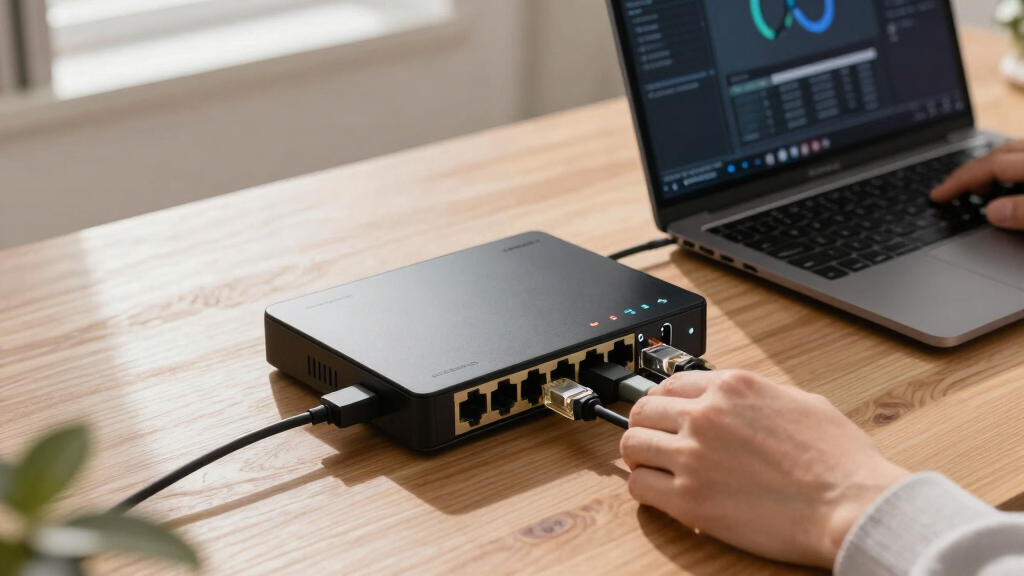

Choosing the best managed switch for homelab networking in 2026 involves balancing performance, features, and budget. The TP-Link TL-SG1428PE stands out as the top overall pick thanks to its robust PoE+ support and manageable interface. For those prioritizing simplicity, the NETGEAR GS308E offers reliable performance at an affordable price. Meanwhile, the Omada SG3428X-M2 caters to advanced users needing multi-gigabit speeds and extensive VLAN options. Buyers face tradeoffs between affordability, port count, and feature complexity. Continue reading for a detailed breakdown of each option and how to choose the right switch for your homelab.

Get tech for your team delivered free — and shop member deals
- Fast, free delivery on millions of items
- Access to Prime Big Deal Days deals on October 6–7
- Prime Video, Amazon Music and more included
Key Takeaways
- The highest performance options typically come with higher costs and more complex management features.
- Affordable switches like the NETGEAR GS308E deliver solid performance suitable for small homelabs without overwhelming complexity.
- PoE support remains a key feature for powering network devices without extra wiring, available on select models like the TP-Link TL-SG1428PE.
- Multi-gigabit ports are increasingly common and beneficial for future-proofing high-speed data transfers.
- Ease of setup varies; models with web-based management interfaces and plug-and-play features reduce the learning curve for beginners.
| TP-Link 8 Port Gigabit Switch – Easy Smart Managed, Plug & Play, Desktop/Wall-Mount, Metal with Shielded Ports |  | Best Overall Managed Switch for Homelab Networking | Number of Ports: 8 | Port Type: Gigabit Ethernet | Management: Smart Managed | VIEW LATEST PRICE | See Our Full Breakdown |
| SODOLA 6 Port 2.5Gb Easy Web Managed Switch |  | Best for Multi-Gig Upgrades with Silent Operation | Ports: 4x 2.5G RJ-45, 2x 10G SFP+ | Management: Web-based interface | Housing: Aluminum alloy | VIEW LATEST PRICE | See Our Full Breakdown |
| TP-Link TL-SG1428PE 24-Port Gigabit Easy Smart Managed PoE+ Switch |  | Best PoE-Enabled Switch for Powering Homelab Devices | Number of Ports: 24 PoE+ ports, 2 non-PoE | PoE Power Budget: 250W | PoE Standard: 802.3at/af | VIEW LATEST PRICE | See Our Full Breakdown |
| Omada SG3428X-M2, 24 Port Multi-Gigabit L2+ Managed Switch |  | Best High-Performance Multi-Gig Switch with Advanced Security | Number of Ports: 24 | Port Speed: 2.5Gbps | Uplink Ports: 4x 10Gbps SFP+ | VIEW LATEST PRICE | See Our Full Breakdown |
| NETGEAR 8-Port Gigabit Ethernet Easy Smart Managed Network Switch (GS308E) |  | Best Compact, Silent Managed Switch for Small Homelabs | Number of Ports: 8 | Port Speed: Gigabit Ethernet | Management: Web GUI | VIEW LATEST PRICE | See Our Full Breakdown |
| TP-Link TL-SG1024DE 24-Port Gigabit Easy Smart Managed Ethernet Switch |  | Best Overall for Balanced Performance and Manageability | Number of Ports: 24 | Port Type: Gigabit Ethernet | Management: Smart Managed | VIEW LATEST PRICE | See Our Full Breakdown |
| Omada ES206X-M2 5-Port 2.5G Managed Switch |  | Best for Compact High-Speed Setups and Remote Management | Ports: 5× 2.5 Gbps RJ45 ports | SFP+ Slot: 1× 10 Gbps | Management: Cloud management via web or app | VIEW LATEST PRICE | See Our Full Breakdown |
| managed switch for homelab networking | Management | Number of Ports |
|---|---|---|
| TP-Link 8 Port Gigabit Switch | Smart Managed | 8 |
| SODOLA 6 Port 2.5Gb Easy Web M | Web-based interface | — |
| TP-Link TL-SG1428PE 24-Port Gi | Web-based | 24 PoE+ ports, 2 non-PoE |
| Omada SG3428X-M2 | — | 24 |
| NETGEAR 8-Port Gigabit Etherne | Web GUI | 8 |
| TP-Link TL-SG1024DE 24-Port Gi | Smart Managed | 24 |
| Omada ES206X-M2 5-Port 2.5G Ma | Cloud management via web or app | — |
More Details on Our Top Picks
TP-Link 8 Port Gigabit Switch – Easy Smart Managed, Plug & Play, Desktop/Wall-Mount, Metal with Shielded Ports
The TP-Link TL-SG108E stands out as the best all-around choice for homelabs seeking a reliable, manageable switch. Its simple setup and intuitive web interface make it accessible for users new to network management, while its VLAN support and Layer 2 features provide the flexibility needed for segmented, secure networks. Compared to the NETGEAR GS308E, it offers more advanced management options, though it lacks PoE support and Layer 3 routing. Its sturdy metal build and shielded ports ensure durability in a home environment, though the absence of a fanless design means some noise may be noticeable under load. This switch makes the most sense for homelab enthusiasts who want straightforward management combined with solid build quality without the complexity or cost of enterprise-grade gear.
Pros:- Easy setup via web interface or software
- Supports VLAN, QoS, IGMP Snooping for flexible management
- Sturdy metal construction with shielded ports for durability
Cons:- Limited to Layer 2 features, no Layer 3 routing
- No PoE support
- No fanless design, may produce noise under load
Best for: Homelab users desiring an easy-to-manage, durable switch with VLAN support and Layer 2 features.
Not ideal for: Those needing PoE, Layer 3 routing, or silent operation in noise-sensitive environments.
- Number of Ports:8
- Port Type:Gigabit Ethernet
- Management:Smart Managed
- Installation:Desktop/Wall-Mount
- Material:Sturdy Metal
- VLAN Support:Yes, up to 32 VLANs
Our verdict“This switch is ideal for homelab builders who want reliable, manageable networking with good durability, but don’t need PoE or advanced routing features.”
SODOLA 6 Port 2.5Gb Easy Web Managed Switch
The SODOLA 6 Port 2.5Gb Switch caters to homelabs looking to upgrade their bandwidth without sacrificing quiet operation. Its fanless aluminum housing ensures silent operation, making it suitable for home offices or media setups where noise matters. Compared to the TP-Link TL-SG108E, it offers higher speeds—up to 2.5Gb and 10Gb via SFP+—but only has 6 ports, which limits expansion. Its web management interface makes configuration straightforward, though it requires compatible devices to fully utilize its multi-gig capabilities. This switch is perfect for users with a handful of high-speed devices or NAS systems needing faster links, but less so for larger, more complex networks.
Pros:- Fanless, silent aluminum housing
- Supports 2.5Gb and 10Gb speeds for faster transfers
- Easy web management without CLI
Cons:- Limited to 6 ports, which may restrict network growth
- Requires compatible devices to leverage multi-gig speeds
- No included power supply details
Best for: Users upgrading to multi-gig speeds who prioritize silent operation and simple management.
Not ideal for: Large networks requiring more than 6 ports or advanced Layer 3 features.
- Ports:4x 2.5G RJ-45, 2x 10G SFP+
- Management:Web-based interface
- Housing:Aluminum alloy
- Cooling:Fanless
- Placement:Magnetic feet, rubber feet included
- Compatibility:Backward compatible with 1G/100M devices
Our verdict“This switch is best for homelabs needing fast, quiet connections but not extensive port counts or complex features.”
TP-Link TL-SG1428PE 24-Port Gigabit Easy Smart Managed PoE+ Switch
The TP-Link TL-SG1428PE offers a compelling solution for homelabs that need to power PoE devices such as cameras, access points, or small servers. Its 24 ports with PoE+ support, along with a 250W power budget, provide ample room for device deployment. Compared to the NETGEAR GS308E, which lacks PoE, this switch excels in powering multiple devices without additional power supplies. Its web interface makes configuration straightforward, although it requires some familiarity with network management to optimize PoE auto recovery and security features. While it lacks multi-gig ports or stacking capabilities, its PoE support makes it a strong choice for expanding a homelab with network devices that need power over Ethernet.
Pros:- Supports PoE+ with 250W budget for multiple devices
- Easy to configure via web management
- Network segmentation with VLAN support
Cons:- No multi-gig or stacking capabilities
- Requires configuration for PoE auto recovery
- Limited to 24 ports without additional expansion
Best for: Homelab setups requiring PoE to power cameras, APs, or small servers.
Not ideal for: Networks that demand high throughput beyond gigabit speeds or advanced stacking features.
- Number of Ports:24 PoE+ ports, 2 non-PoE
- PoE Power Budget:250W
- PoE Standard:802.3at/af
- Maximum Power per Port:30W
- Management:Web-based
- Warranty:3 years
Our verdict“This switch is best suited for homelabs that need to power multiple PoE devices with reliable, manageable network segmentation.”
Omada SG3428X-M2, 24 Port Multi-Gigabit L2+ Managed Switch
The Omada SG3428X-M2 elevates homelab networking with 2.5Gbps ports and 10Gbps uplinks, making it ideal for high-bandwidth demands. Its support for Omada SDN simplifies centralized management across multiple switches, which is advantageous for larger or more complex setups. Compared with the TP-Link TL-SG1428PE, it offers multi-gig ports and advanced security features like ACLs, IP-MAC binding, and DoS protection, but at the expense of a more complex setup that may challenge beginners. Its multi-gig capability ensures faster data transfer within the network, perfect for NAS, VM hosts, or media servers. However, it lacks built-in Wi-Fi and might be overkill for simple home networks.
Pros:- High-speed 2.5Gbps ports for quick data movement
- Multiple 10Gbps uplinks support demanding setups
- Centralized management via Omada SDN
- Robust security features to protect network integrity
Cons:- Familiarity with network management needed
- No Wi-Fi or wireless capabilities
- Setup complexity for less experienced users
Best for: Advanced homelab users needing high-speed interconnects and centralized management.
Not ideal for: Beginners or small networks that don’t require multi-gig speeds or extensive security features.
- Number of Ports:24
- Port Speed:2.5Gbps
- Uplink Ports:4x 10Gbps SFP+
- Management Platform:Omada SDN
- Security Features:802.1Q VLAN, ACL, IP-MAC-Port binding
- Operation System:L2+
Our verdict“Best for experienced homelab users seeking high-performance, secure, and scalable networking with centralized control.”
NETGEAR 8-Port Gigabit Ethernet Easy Smart Managed Network Switch (GS308E)
The NETGEAR GS308E offers a straightforward, plug-and-play management experience perfect for small homelabs or home offices. Its simple web GUI supports VLANs, QoS, and IGMP snooping, providing essential features without overwhelming users. The fanless, rugged metal housing guarantees silent operation in quiet environments, and its small footprint makes it easy to place anywhere. Compared to the TP-Link TL-SG108E, it boasts a more durable construction and a slightly higher VLAN capacity, but it doesn’t support PoE or multi-gig speeds, limiting its flexibility for larger or more demanding setups. It’s an excellent choice for users who need a reliable, silent switch for basic network management.
Pros:- Plug-and-play setup with web GUI
- Supports VLANs, QoS, IGMP Snooping
- Fanless, silent operation with rugged metal housing
Cons:- Limited to small networks, no PoE support
- No multi-gig or stacking capabilities
- Basic feature set may not satisfy advanced users
Best for: Small homelabs or home offices needing a silent, durable switch with manageable features.
Not ideal for: Networks requiring PoE, multi-gig speeds, or extensive port expansion.
- Number of Ports:8
- Port Speed:Gigabit Ethernet
- Management:Web GUI
- VLAN Support:Up to 64 VLANs
- Housing:Rugged metal
- Operation Noise:0 dBA
Our verdict“This switch is ideal for small, quiet environments where reliability and silent operation are priorities, but it lacks advanced features for larger setups.”
TP-Link TL-SG1024DE 24-Port Gigabit Easy Smart Managed Ethernet Switch
The TP-Link TL-SG1024DE stands out as the most versatile choice for homelab enthusiasts who need a reliable, manageable switch without the complexity of full enterprise gear. Its 24 Gigabit ports provide ample connectivity for expanding labs, and features like VLAN support and QoS help optimize traffic flow, similar to more advanced switches like the Omada ES206X-M2. Unlike the Omada model, it offers a broader port count, making it ideal for those needing more connections, but it lacks PoE and advanced management features found in higher-end options. This switch is perfect for users seeking straightforward network monitoring without the steep learning curve or higher cost. The main tradeoff is that management options are limited compared to fully managed switches, and it isn’t suitable for setups needing PoE or ultra-specific configurations.
Pros:- Easy plug-and-play setup, minimizing configuration time
- Supports essential network management features like VLAN and QoS
- Reliable with a 3-year warranty, suited for consistent home lab use
Cons:- Limited management options compared to fully managed switches
- No Power over Ethernet (PoE) support, restricting device integration
Best for: Homelab operators who want a straightforward, reliable switch with ample ports and simple management features
Not ideal for: Users needing PoE for powering devices or highly granular management controls for complex setups
- Number of Ports:24
- Port Type:Gigabit Ethernet
- Management:Smart Managed
- Jumbo Frame:9K
- Warranty:3 years
Our verdict“This switch makes the most sense for homelab users seeking a balance of manageability, port density, and ease of use without enterprise complexity.”
Omada ES206X-M2 5-Port 2.5G Managed Switch
The Omada ES206X-M2 is tailored for homelab builders who prioritize high-speed connections and remote control, especially when space is limited. Its 5 ports of 2.5Gbps Ethernet, complemented by a 10Gbps SFP+ port, support demanding data flows, outperforming basic Gigabit switches like the TP-Link TL-SG1024DE. The cloud management feature simplifies remote access and configuration, making it ideal for those managing a homelab from afar or experimenting with multi-gig setups. However, its port count limits expansion, making it less suitable for larger networks. The fanless, durable metal design ensures silent operation, yet it requires some network expertise to unlock its advanced capabilities fully. This choice works best for users who need speed and remote management in a compact form, but not for those requiring a large number of ports.
Pros:- Supports 2.5Gbps Ethernet ports for faster local data transfer
- Features a 10Gbps SFP+ port for flexible uplinks or storage connections
- Cloud management via web or app enables remote control and configuration
- Fanless design ensures silent, heat-free operation
Cons:- Limited to 5 ports, which may not accommodate bigger homelabs
- No PoE support, restricting device power options
- Advanced features may require familiarity with network management
Best for: Homelab users who want high-speed, multi-gig connections with remote management in a small, quiet form factor
Not ideal for: Larger setups that demand more than 5 ports or PoE support for powering devices
- Ports:5× 2.5 Gbps RJ45 ports
- SFP+ Slot:1× 10 Gbps
- Management:Cloud management via web or app
- Design:Fanless, metal casing
- Mounting:Desktop or wall mount
Our verdict“This switch is ideal for small, speed-focused homelabs that value remote control and quiet operation over port quantity.”
How We Picked
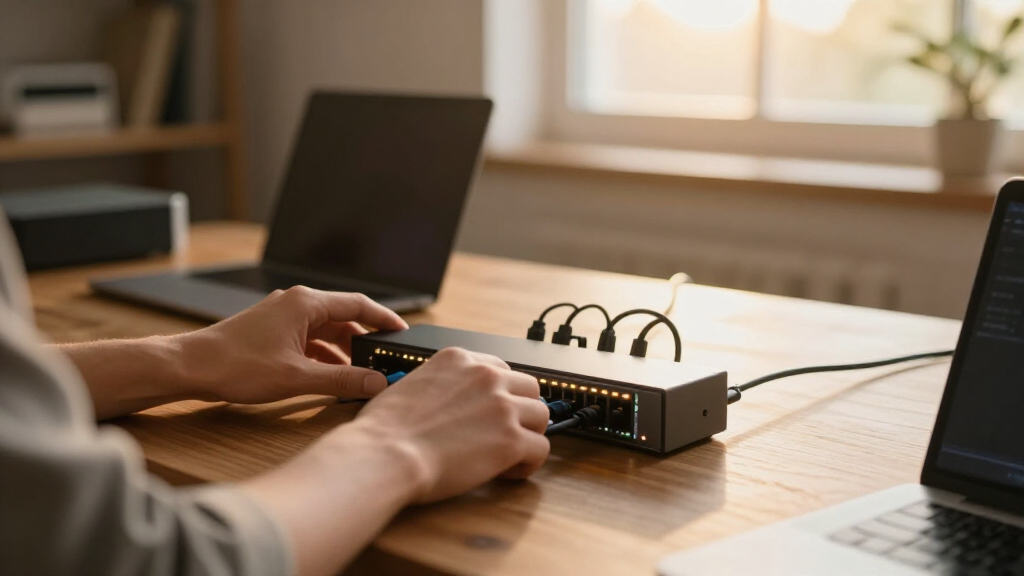
These switches were selected based on their balance of performance, features, build quality, and value specifically for homelab environments. Priority was given to models that offer manageable setup, reliable hardware, and expandability for future needs. We also considered the variety of management features—ranging from simple web interfaces to advanced VLAN and PoE configurations—to match different user skill levels. Finally, cost-effectiveness played a role, ensuring options cater to a range of budgets without sacrificing essential capabilities. The ranking reflects a combination of overall versatility, ease of use, and future-proofing potential for homelab builders.| managed switch for homelab networking | Management |
|---|---|
| TP-Link 8 Port Gigabit Switch | Smart Managed |
| SODOLA 6 Port 2.5Gb Easy Web M | Web-based interface |
| TP-Link TL-SG1428PE 24-Port Gi | Web-based |
| Omada SG3428X-M2 | — |
| NETGEAR 8-Port Gigabit Etherne | Web GUI |
| TP-Link TL-SG1024DE 24-Port Gi | Smart Managed |
| Omada ES206X-M2 5-Port 2.5G Ma | Cloud management via web or app |
Factors to Consider When Choosing Best Managed Switch For Homelab Networking
Selecting the right managed switch for your homelab requires careful consideration of several key factors. Beyond basic port count, understanding management complexity, power options, and speed capabilities ensures your setup remains scalable and manageable. Avoiding common pitfalls like overpaying for features you won’t use or choosing underpowered hardware helps optimize your investment. This guide highlights the critical aspects to evaluate before making a decision, helping you find a switch that matches your current needs and future plans.Port Count and Speed
Determine how many devices you plan to connect now and in the near future. While 8 to 16 ports are often sufficient for small homelabs, larger setups benefit from 24 or more ports. Consider switches with multi-gigabit (2.5G or 10G) ports if you handle large data transfers or run virtual machines with high bandwidth requirements. Choosing a switch with extra ports or the ability to upgrade via stacking or modular options can save money long-term.
Management Features and Ease of Use
Managed switches vary from simple web interfaces to advanced CLI configurations. For most homelab users, an intuitive GUI simplifies setup and ongoing management. Avoid overly complex switches if you lack networking experience, but ensure the switch supports essential features like VLANs, QoS, and SNMP for future expansion. Balance the management capabilities with your comfort level and the complexity of your network architecture.
Power over Ethernet (PoE)
If you plan to power devices like IP cameras, access points, or VoIP phones directly through the switch, PoE support is a valuable feature. Not all switches include PoE, and those that do often come at a higher price. Evaluate your device needs carefully—buying a switch with unnecessary PoE can inflate costs, while missing PoE on a growing network can lead to costly rewiring later.
Build Quality and Reliability
A homelab switch should be sturdy enough to operate continuously without failure. Metal enclosures and shielded ports contribute to durability and heat dissipation. Consider brands with a reputation for reliability, especially if your homelab runs 24/7. Investing in a well-built switch reduces downtime and maintenance costs over time.
Budget and Future-Proofing
Set a realistic budget based on your current needs and potential growth. Cheap switches may save money initially but often lack features or durability. Conversely, overspending on high-end gear might be unnecessary for small setups. Focus on scalable options, such as switches supporting stacking or multi-gig ports, to accommodate future expansion without replacing hardware prematurely.
Frequently Asked Questions
Do I need a managed switch for my homelab, or is an unmanaged switch enough?
A managed switch offers essential features like VLAN support, QoS, and remote management, which make it easier to optimize and troubleshoot your network. While unmanaged switches are simpler and often cheaper, they limit your control and scalability. For a small, static setup, unmanaged might suffice, but as your homelab grows or becomes more complex, a managed switch provides the flexibility and tools needed for efficient management.
What is the benefit of choosing a switch with multi-gigabit ports?
Multi-gigabit ports, such as 2.5G or 10G, future-proof your network by supporting higher data transfer speeds without replacing your switch. They are especially beneficial if you run virtual machines, large data backups, or media servers that demand fast bandwidth. While more expensive, these ports can prevent bottlenecks as your homelab requirements increase over time.
Is PoE necessary in a homelab environment?
PoE simplifies wiring by powering compatible devices directly through the network cable, reducing clutter and installation effort. If you plan to deploy multiple access points, cameras, or VoIP phones, PoE can be a major convenience. However, if your homelab does not currently utilize PoE devices, investing in a non-PoE switch can save money, but consider future needs as your network expands.
How important is the management interface’s user-friendliness?
An intuitive management interface reduces setup time and ongoing maintenance, especially for those new to networking. Web-based GUIs are generally easier to navigate than CLI-only options. If you prefer a plug-and-play experience or have limited networking experience, prioritize switches with straightforward management tools to avoid frustration and errors.
Should I prioritize brand reputation or features when choosing a switch?
Brand reputation often correlates with reliability and support, which are vital for a homelab that runs continuously. However, feature sets vary widely, so assess whether the switch offers the specific capabilities you need. Balancing brand trust with your feature requirements ensures you get a durable, capable device that fits your budget and future plans.
Conclusion
For most users starting with a small to medium homelab, the NETGEAR GS308E provides reliable performance at a budget-friendly price, making it ideal for beginners or those with simple needs. The TP-Link TL-SG1428PE offers a great balance of features like PoE and manageable complexity for those expanding their network. The Omada SG3428X-M2 is best suited for advanced users requiring multi-gigabit support and extensive VLAN options, making it the top pick for professional-grade setups. Ultimately, choose based on your current requirements and future growth plans—whether that’s ease of use, scalability, or high-speed features.
Fall Picks
fall essentials
As an affiliate, we earn on qualifying purchases.