
Finding the best 3D printer for hardware prototyping means balancing speed, precision, build volume, and material versatility. The Original Prusa XL 2-Toolhead stands out as the overall top pick for its large format and multi-material capabilities. The Bambu Lab A1 offers impressive speed and reliability for rapid iterations, while the FlashForge Creator 5 Pro provides multi-material flexibility at a more accessible price point. Each of these options presents tradeoffs between cost, complexity, and performance, making the right choice depend heavily on your specific prototyping needs. Continue reading for a detailed breakdown of these and other top contenders.

Get business pricing on tech for your team
- Business-only prices and quantity discounts
- Tax-exempt purchasing
- Multiple users, one account, clear invoices
Complete the kit


Key Takeaways
- Large build volume is essential for creating full-scale prototypes; models like the Original Prusa XL excel here.
- Multi-material and multi-color capabilities significantly streamline complex prototyping workflows.
- Speed varies widely; high-speed printers like the FlashForge AD5X are best for rapid iteration cycles.
- Enclosed chambers and active heating improve accuracy with engineering-grade materials but add cost and complexity.
- Ease of use and maintenance are often outweighed by performance features in high-end models, so consider your technical comfort.
| Original Prusa XL 2-Toolhead Multi-Material Large-Format CoreXY 3D Printer |  | Best Overall for Large-Scale, Multi-Material Prototyping | Build Volume: 14.17×14.17×14.17 in | Tool System: Dual toolhead multi-material | Heated Bed: Segmented heated bed system | VIEW LATEST PRICE | See Our Full Breakdown |
| QIDI Max4 Combo 3D Printer, 390×390×340mm Build Volume, 65℃ Heated Chamber |  | Best for Industrial-Scale Prototyping with Materials Compatibility | Build Volume: 390×390×340mm | Heated Chamber: 65°C | Maximum Printing Speed: 800mm/s | VIEW LATEST PRICE | See Our Full Breakdown |
| Bambu Lab A1 3D Printer |  | Best for Beginners and Speed-Focused Prototyping | Acceleration: 10,000 mm/s² | Multi-Color Printing: Yes (with AMS lite) | Calibration: Full-Auto | VIEW LATEST PRICE | See Our Full Breakdown |
| FlashForge Creator 5 Pro 3D Printer with 4 Toolheads and Multi-Material Printing |  | Best for Multi-Material, Multi-Color Industrial Prototyping | Number of Toolheads: 4 | Heated Chamber Temperature: 65°C | Max Printing Speed: 600mm/s | VIEW LATEST PRICE | See Our Full Breakdown |
| Snapmaker U1 3D Printer, 4-Toolhead with 5s Toolchanger, Multi-Color Printing |  | Best for Fast, Multi-Color Prototyping with Easy Automation | Product Dimensions: 22.6 x 13 x 14.2 inches | Item Weight: 59 pounds | Build Volume: 270 x 270 x 270 mm | VIEW LATEST PRICE | See Our Full Breakdown |
| FLASHFORGE Creator 5 Pro 3D Printer, 4 Toolheads with 7s Toolchanger, Multi-Material & Mixed-Material Printing, Fully Enclosed CoreXY, 65°C Active Chamber Heating |  | Best for Complex, Multi-Material Engineering Parts | Toolheads: 4 preloaded, preheated toolheads | Material Compatibility: PLA, PETG, TPU, ABS, PVA, ASA, PA-CF, PET-CF, PAHT-CF, PPA-CF, PPS-CF, HIPS | Nozzle Temperature: 320°C | VIEW LATEST PRICE | See Our Full Breakdown |
| FlashForge AD5X Multi-Color 3D Printer, CoreXY, 600mm/s High-Speed, Auto Leveling, 300°C Extruder, 220x220x220mm Build Volume | 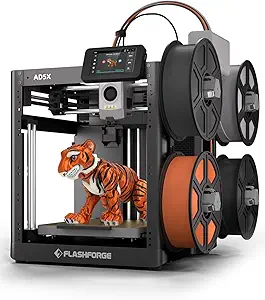 | Best for Rapid Multi-Color Prototyping with Speed | Print Speed: 600mm/s | Build Volume: 220x220x220mm | Maximum Extruder Temperature: 300°C | VIEW LATEST PRICE | See Our Full Breakdown |
| Bambu Lab P2S Combo, P2S 3D Printer & AMS 2 Pro, Multi-Color 3D Printing |  | Best for Seamless Multi-Color and Multi-Material Workflow | Print Speed: 600 mm/s | Setup Time: 15 minutes | Filament Drying Temperature: 65 °C | VIEW LATEST PRICE | See Our Full Breakdown |
| 3d printer for hardware prototyping | Build Volume |
|---|---|
| Original Prusa XL 2-Toolhead M | 14.17×14.17×14.17 in |
| QIDI Max4 Combo 3D Printer | 390×390×340mm |
| Bambu Lab A1 3D Printer | — |
| FlashForge Creator 5 Pro 3D Pr | — |
| Snapmaker U1 3D Printer | 270 x 270 x 270 mm |
| FLASHFORGE Creator 5 Pro 3D Pr | — |
| FlashForge AD5X Multi-Color 3D | 220x220x220mm |
| Bambu Lab P2S Combo | — |
More Details on Our Top Picks
Original Prusa XL 2-Toolhead Multi-Material Large-Format CoreXY 3D Printer
The Prusa XL stands out for its impressive 14x14x14 inch build volume, making it ideal for complex, large prototypes that smaller printers simply can’t handle. Its dual multi-material toolheads enable seamless switching between materials, streamlining multi-step prototyping workflows, especially for professional environments. Compared to the Bambu Lab A1, which targets speed and ease of use, the XL prioritizes scale and multi-material robustness, though at a higher price and with a more complex setup—less suited for beginners. The segmented heated bed ensures reliable adhesion over large prints, but the fragile parts require careful handling during transport. This printer makes the most sense for teams that need high-quality, large, multi-material prototypes regularly, and are prepared for a steeper learning curve and investment.
Pros:- Massive build volume suitable for complex projects
- Multi-material capability with seamless switching
- Reliable industrial-grade performance
Cons:- Fragile parts require careful handling during transport
- Setup can be complex for those new to large-format printers
- Higher price point may be prohibitive for some
Best for: Large-scale, multi-material prototyping teams or professional R&D labs needing high reliability and size.
Not ideal for: Hobbyists or small startups with limited space or budget who seek quick, simpler prototypes.
- Build Volume:14.17×14.17×14.17 in
- Tool System:Dual toolhead multi-material
- Heated Bed:Segmented heated bed system
- Motion System:CoreXY
- Included Accessories:Satin print sheet, 1kg spool of Prusament PLA
Our verdict“This is a top choice for professionals needing large, multi-material prototypes with high reliability, despite its complexity and cost.”
QIDI Max4 Combo 3D Printer, 390×390×340mm Build Volume, 65℃ Heated Chamber
The QIDI Max4 Combo offers a substantial build area of 390×390×340mm, making it well-suited for printing large industrial parts and molds. Its high-precision features, including closed-loop motors and anti-backlash Z-axis, help achieve accurate, detailed prototypes. The heated chamber up to 65°C supports high-temperature filaments like ABS and carbon fiber-reinforced nylon, comparable to the FlashForge Creator 5 Pro, but with the advantage of a larger build volume. Its smart AI camera for failure detection adds a layer of automation, although the setup can be complex, especially for newcomers. The heavy, sizable frame demands dedicated space, but for manufacturing environments requiring large, multi-material parts, this printer offers a reliable and versatile solution.
Pros:- Large build volume for industrial parts
- High precision with advanced motor systems
- Supports high-temperature materials like ABS and nylon
- Smart AI camera for automatic failure detection
Cons:- Requires significant space and setup effort
- Heavy weight complicates relocation
- Complex initial configuration for beginners
Best for: Industrial designers and manufacturing engineers needing large, high-temperature prototypes with advanced monitoring.
Not ideal for: Small-scale hobbyists or those with limited space and technical experience, due to its size and setup demands.
- Build Volume:390×390×340mm
- Heated Chamber:65°C
- Maximum Printing Speed:800mm/s
- Print Bed:Full-surface silicone heated bed
- Material Compatibility:PLA, ABS, carbon fiber-reinforced nylon, high-temperature materials
- Printer Dimensions:28 x 28 x 30 inches
Our verdict“Ideal for professional environments demanding large, high-temp prototypes with automated monitoring, provided space and setup complexity are manageable.”
Bambu Lab A1 3D Printer
The Bambu Lab A1 excels in combining speed and user-friendliness, making it a compelling choice for teams that prioritize rapid iteration. Its automatic calibration and multi-color printing with AMS lite simplify operations, reducing setup time compared to more complex systems like the FlashForge Creator 5 Pro. While it may not match the XL’s size or multi-material complexity, it offers high-speed printing at up to 10,000 mm/s² acceleration, ensuring quick prototyping cycles. The quiet operation and touchscreen interface make it accessible to less experienced users, though the need for the optional AMS lite for multi-color adds an extra step. For teams seeking reliable, fast, and easy-to-use technology that still supports multi-color workflows, the A1 is a strong pick.
Pros:- High-speed printing with excellent accuracy
- Automatic calibration simplifies setup
- Multi-color printing with AMS lite
- Quiet operation for shared workspaces
Cons:- Requires additional purchase of AMS lite for multi-color
- Setup can be complex for absolute beginners
- Limited build volume compared to larger printers
Best for: Startups, educational labs, or small teams looking for quick, multi-color prototypes without complex setup.
Not ideal for: Large-scale professional prototyping projects requiring massive build volume or multi-material switching without additional accessories.
- Acceleration:10,000 mm/s²
- Multi-Color Printing:Yes (with AMS lite)
- Calibration:Full-Auto
- Flow Rate Compensation:Active
- Nozzle:1-Clip quick swap
Our verdict“A well-balanced option for fast, multi-color prototypes in educational or startup settings, with some setup considerations.”
FlashForge Creator 5 Pro 3D Printer with 4 Toolheads and Multi-Material Printing
The FlashForge Creator 5 Pro offers an industrial-grade setup featuring four independent toolheads, enabling complex multi-material and multi-color prints with minimal waste. Its 65°C heated chamber supports high-performance filaments like ABS and PC, making it suitable for demanding prototypes. The high-speed capability of up to 600mm/s and automated calibration ensure efficient, precise output—comparable to the Snapmaker U1 but with more advanced safety features, including HEPA and activated carbon filtration. The main tradeoff lies in its complex setup, which may require technical expertise, and the absence of specific build volume data, making it less straightforward for hobbyist use. This printer is best suited for professional environments focused on multi-material, multi-color, high-temperature prototyping.
Pros:- Independent four toolheads enable multi-material printing
- High-speed operation for efficient prototyping
- Advanced safety features with filtration
- Automated calibration and real-time monitoring
Cons:- Complex setup requiring technical expertise
- Higher cost limits accessibility for small operations
- Build volume details are not specified, limiting size expectations
Best for: Industrial prototyping teams needing multi-material, multi-color, and high-temperature filament support in a robust, automated system.
Not ideal for: Small workshops or hobbyists seeking a straightforward, budget-friendly 3D printer due to its complexity and cost.
- Number of Toolheads:4
- Heated Chamber Temperature:65°C
- Max Printing Speed:600mm/s
- Filament Compatibility:ABS, PC, PA
- Filtration System:HEPA 13 and activated carbon
Our verdict“A powerful, multi-material solution for professional prototyping environments that can handle complex, demanding projects with safety and automation.”
Snapmaker U1 3D Printer, 4-Toolhead with 5s Toolchanger, Multi-Color Printing
The Snapmaker U1 combines speed and multi-color capability with its innovative 5-second tool changer and four independent toolheads. It excels in rapid prototyping workflows, offering a max speed of 500mm/s and smart calibration features that reduce setup time. Its multi-material and multi-color printing capabilities with minimal waste make it suitable for both beginners and experienced users who need quick iteration cycles. The tradeoff involves its size—being fairly bulky—and the potentially steep learning curve during initial setup, especially for first-time users. For teams that value fast turnarounds and multi-material flexibility, this model is a compelling choice, provided space and setup complexity are manageable.
Pros:- Rapid 5-second automatic tool changer
- Supports multi-material/multi-color with minimal waste
- High-speed printing up to 500 mm/s
- User-friendly with smart calibration
Cons:- Relatively large and heavy, requiring ample space
- Setup can be complex for first-time users
- Higher price point compared to entry-level printers
Best for: Designers and small teams needing rapid, multi-material, multi-color prototypes with minimal setup time.
Not ideal for: Large-scale manufacturing or teams with limited space, due to its larger footprint and complexity.
- Product Dimensions:22.6 x 13 x 14.2 inches
- Item Weight:59 pounds
- Build Volume:270 x 270 x 270 mm
- Max Printing Speed:500 mm/s
- Number of Toolheads:4
- Warranty:1 year
Our verdict“An excellent choice for fast, multi-material prototyping in creative settings where speed and automation matter, with some space and learning considerations.”
FLASHFORGE Creator 5 Pro 3D Printer, 4 Toolheads with 7s Toolchanger, Multi-Material & Mixed-Material Printing, Fully Enclosed CoreXY, 65°C Active Chamber Heating
The FLASHFORGE Creator 5 Pro stands out for its ability to handle multiple materials simultaneously thanks to four preloaded toolheads, making it ideal for creating complex, high-strength engineering prototypes. Unlike the Bambu Lab P2S Combo, which emphasizes speed and multi-color workflows, this model prioritizes material versatility and precision, especially with its active heated chamber that ensures stable conditions for demanding materials like PPA-CF or ABS. The fully enclosed CoreXY design enhances accuracy but requires more technical setup, so it’s better suited for professional environments rather than casual hobbyists. Its support for advanced composites and multi-material mixing makes it a go-to for developers needing intricate parts, though the complexity and price point could be barriers for smaller teams or startups just beginning to experiment with multi-material prototyping.
Pros:- Supports a wide range of advanced engineering materials including PPA-CF and PAHT-CF
- Four independent toolheads enable seamless multi-material and mixed-material printing
- Active chamber heating and adaptive airflow improve print stability and quality
- Quick toolhead swapping enhances productivity in multi-material workflows
Cons:- Setup and calibration can be complex, demanding technical expertise
- Higher price makes it less accessible for casual or small-scale users
- Limited user interface details could pose a learning curve
Best for: Engineering teams and professionals requiring multi-material, high-strength prototypes with complex geometries
Not ideal for: Hobbyists or small startups seeking a budget-friendly, easy-to-use 3D printer for simple prototypes
- Toolheads:4 preloaded, preheated toolheads
- Material Compatibility:PLA, PETG, TPU, ABS, PVA, ASA, PA-CF, PET-CF, PAHT-CF, PPA-CF, PPS-CF, HIPS
- Nozzle Temperature:320°C
- Chamber Temperature:65°C active heated chamber
- Print Technology:CoreXY
- Chamber Features:Fully enclosed, active airflow system
Our verdict“This printer is best suited for experienced professionals or engineering teams who need multi-material, high-strength prototypes with complex geometries.”
FlashForge AD5X Multi-Color 3D Printer, CoreXY, 600mm/s High-Speed, Auto Leveling, 300°C Extruder, 220x220x220mm Build Volume
The FlashForge AD5X excels in delivering rapid, multi-color prototypes thanks to its impressive 600mm/s print speed and auto bed leveling, making it ideal for projects where speed is critical. Compared with the Bambu Lab P2S Combo, which offers seamless multi-material workflows, the AD5X emphasizes high-speed printing with support for multiple nozzle sizes, catering to different layer resolutions and detail levels. Its relatively compact build volume suits small to medium-sized prototypes but may limit larger part production. Its high speed can sometimes compromise detail if not carefully managed, and its complex setup might challenge beginners, especially when managing multiple colors or materials simultaneously. Nonetheless, for teams needing quick iteration cycles, this model offers a compelling balance of speed and multi-color functionality.
Pros:- Outstanding print speeds up to 600mm/s reduce production time
- Automatic bed leveling simplifies setup and ensures consistent first layers
- Supports multiple nozzle sizes for varied resolution and detail
- Compact design suitable for small workspaces
Cons:- High-speed operation may reduce fine detail accuracy without careful tuning
- Complex setup process could be daunting for less experienced users
- Limited build volume for larger prototypes
Best for: Designers and engineers needing fast multi-color prototypes with flexible nozzle options
Not ideal for: Beginners or hobbyists seeking a simple, plug-and-play machine for occasional use
- Print Speed:600mm/s
- Build Volume:220x220x220mm
- Maximum Extruder Temperature:300°C
- Nozzle Sizes:0.25mm to 0.8mm
- Auto Leveling:Yes
- Connectivity:Mobile app control
Our verdict“This printer is ideal for professionals who prioritize rapid multi-color prototyping over large build sizes or ultra-fine detail.”
Bambu Lab P2S Combo, P2S 3D Printer & AMS 2 Pro, Multi-Color 3D Printing
The Bambu Lab P2S Combo combines high-speed precision with an integrated automatic filament management system, making it particularly appealing for users seeking a streamlined multi-color and multi-material workflow. While the FlashForge Creator 5 Pro offers extensive material compatibility and multi-material capabilities, the P2S excels in speed and ease of multi-color transitions with its AMS 2 Pro, designed to minimize manual filament swaps. Its automatic calibration and quick setup process make it suitable for both beginners and professionals, although the system’s complexity might require some initial learning. The inclusion of smart airflow and filament drying ensures high-quality, consistent results, yet it’s not as focused on demanding engineering-grade composites as the Creator 5 Pro. This pick makes the most sense for those prioritizing workflow simplicity combined with speed and multi-color versatility.
Pros:- Fast print speeds up to 600mm/s for rapid iteration
- Automatic calibration and quick setup reduce downtime
- Seamless multi-color/multi-material printing with AMS 2 Pro
- Smart airflow and filament drying improve print consistency
Cons:- Limited support for engineering-grade, high-temperature materials
- Complex feature set may require some learning curve for newcomers
- Supports smaller build volume compared to industrial systems
Best for: Designers and teams needing fast, multi-color, multi-material prototyping with minimal fuss
Not ideal for: Users requiring high-strength composite parts or very large build volumes
- Print Speed:600 mm/s
- Setup Time:15 minutes
- Filament Drying Temperature:65 °C
- Chamber Temperature:50 °C
- Filament Compatibility:Multi-color/multi-material (AMS 2 Pro)
- Airflow System:Adaptive Airflow System
Our verdict“This system is best suited for users who want high-speed, multi-material, multi-color prototyping with straightforward workflow integration.”

How We Picked
These printers were evaluated based on performance metrics such as print speed, precision, and build volume, which are critical for hardware prototyping. Usability factors like setup complexity, interface design, and maintenance requirements also played a role. We prioritized versatility in material compatibility, especially for engineering-grade filaments, and checked reliability and support networks. Cost was balanced against feature set, ensuring recommendations suit both professional prototyping labs and serious hobbyists. The ranking reflects a combination of value, capability, and overall fit for demanding prototyping workflows.Factors to Consider When Choosing Best 3d Printer For Hardware Prototyping
Choosing the best 3D printer for hardware prototyping involves understanding several key factors. While high-end features can improve productivity, they often come with increased costs and complexity. It’s crucial to match a printer’s capabilities with your specific project requirements to avoid overspending or underdelivering on quality. Here are the main considerations to keep in mind.Build Volume and Scale
Prototyping often requires creating sizable parts or multiple components simultaneously. Prioritize printers with larger build volumes if your projects tend to be big, but remember that larger machines can be more expensive and less precise at scale. Smaller printers may be suitable for quick, detailed prototypes but can limit your design scope.
Material Compatibility
Hardware prototypes usually demand engineering-grade materials like ABS, PETG, or nylon. Ensure your chosen printer supports these filaments, preferably with heated chambers and enclosed designs to manage warping. Multi-material capabilities can also reduce the need for post-processing and assembly, saving time and effort.
Speed and Throughput
Rapid iteration is often key in hardware development. Look for printers with high extrusion speeds and efficient workflows, such as auto-bed leveling and quick tool changes. Keep in mind that faster printing can sometimes compromise detail or accuracy, so balance speed with quality needs.
Ease of Use and Maintenance
Prototyping teams benefit from reliable, user-friendly machines with straightforward maintenance. Features like touchscreens, clear documentation, and automated calibration can reduce downtime. However, high-performance printers often require more technical knowledge, so assess your team’s expertise before investing in complex setups.
Cost and Future Expansion
While premium printers deliver advanced features, they come with higher initial costs. Consider your budget and whether future needs might justify stepping up to more sophisticated models. Sometimes, investing slightly more upfront yields better long-term value through durability and expanded capabilities.
Frequently Asked Questions
Can I use standard desktop 3D printers for large-scale hardware prototypes?
Standard desktop 3D printers typically have limited build volumes and may struggle with larger hardware parts. For sizable prototypes, machines with larger build areas like the Original Prusa XL are more suitable, as they can handle bigger models without assembly. However, smaller printers may still be useful for detailed components or early-stage mockups, just not for full-scale prototypes.
What materials should I prioritize for functional hardware prototypes?
Engineering-grade materials such as ABS, PETG, nylon, or composite filaments are essential for functional prototypes due to their strength and temperature resistance. Ensure the printer supports heated chambers and enclosed designs to prevent warping during printing. Material compatibility directly impacts the prototype’s realism and durability, making it a critical consideration.
Is multi-material printing worth the extra cost for prototyping?
Multi-material printing can significantly reduce assembly time and improve the fidelity of complex parts by combining different properties in a single print. For intricate prototypes that require multiple materials or colors, this capability justifies the higher investment. However, it also increases machine complexity and maintenance, so evaluate whether your projects demand such features before choosing a multi-material capable printer.
How important is print speed in hardware prototyping?
Speed is vital when rapid iteration determines project success, but it often comes at the expense of detail or accuracy. High-speed printers like the FlashForge AD5X are great for quick testing of basic designs, but slower, more precise models may be better for final prototypes. Balancing speed and quality depends on your project stage and specific requirements.
What maintenance considerations should I keep in mind?
High-performance printers often require regular calibration, cleaning, and occasional part replacement. Look for models with automated calibration features and accessible parts to minimize downtime. Proper maintenance extends the lifespan of the machine and ensures consistent print quality, which is critical in a prototyping environment.
Conclusion
For most professional hardware prototyping needs, the Original Prusa XL offers the best combination of build volume, multi-material support, and reliability, making it the top overall choice. Budget-conscious teams or hobbyists might find the FlashForge Creator 5 Pro provides excellent multi-material capabilities at a more accessible price. Those seeking ultra-fast turnaround times will appreciate the FlashForge AD5X for its high-speed performance. Beginners or smaller workshops should consider simpler, more user-friendly models, while advanced users aiming for complex, multi-material prototypes may lean toward premium options like the Bambu Lab A1.
Halloween Picks
halloween
As an affiliate, we earn on qualifying purchases.