
Finding the best Mac alternative laptop for developers in 2026 involves balancing performance, compatibility, and price. The Apple 2026 MacBook Air with M5 chip stands out as the top overall pick for its powerful AI capabilities and sleek design. For those prioritizing raw performance, the MacBook Pro with M2 chip offers excellent speed and build quality, while budget-conscious buyers might appreciate the MacBook Air with M1 chip for its affordability. Each option presents tradeoffs, such as cost versus power or portability versus expandability. Continue reading for a detailed comparison to find the perfect fit for your development needs.
Key Takeaways
- The latest Apple silicon chips (M2, M5) significantly boost performance for development tasks compared to older Intel models.
- Battery life remains strong across all M-series models, making portability feasible without sacrificing runtime.
- More affordable options like the M1 MacBook Air still deliver excellent value but may lack some newer features and power.
- Premium models with larger displays and more RAM suit intensive development workloads but come at a higher cost.
- Compatibility with development tools and ecosystems influences the best choice, especially for cross-platform work.




More Details on Our Top Picks
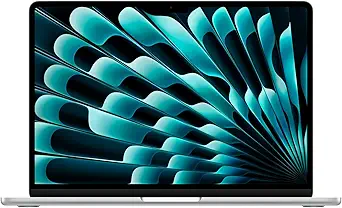
Apple 2026 MacBook Air 13-inch Laptop with M5 chip: Built for AI, 13.6-inch Liquid Retina Display, 16GB Unified Memory, 512GB SSD, 12MP Center Stage Camera, Touch ID, Wi-Fi 7; Silver
This MacBook Air with the M5 chip stands out for combining impressive speed with exceptional portability, making it a top choice for developers needing a lightweight yet capable machine. Compared to the MacBook Pro 13.3-inch Retina, it offers longer battery life—up to 18 hours—while maintaining a fanless, silent operation that keeps your workspace quiet. Its Liquid Retina display provides vivid visuals, and the unified 16GB memory ensures smooth multitasking across demanding apps. A key tradeoff is the limited external display support—only two monitors—versus the Pro’s more robust port selection. Its AI capabilities and fast SSD make it suitable for machine learning tasks, but the smaller screen and 60Hz refresh rate might be less ideal for detailed design work. Best for developers who prioritize portability without sacrificing performance.
Pros:- Lightweight and slim design for portability
- Excellent battery life—up to 18 hours
- Powerful M5 chip with AI capabilities
- Vivid Liquid Retina display
Cons:- Supports only two external displays, limiting multi-monitor setups
- Relatively small screen size may affect multitasking for some users
Best for: Developers who need a portable yet powerful machine for coding, AI tasks, and media consumption
Not ideal for: Developers requiring extensive external display support or professional-grade graphics for 3D rendering
- Display Size:13.6 inches
- Processor:Apple M5 chip
- Memory:16GB Unified Memory
- Storage:512GB SSD
- Battery Life:Up to 18 hours
- Display Technology:Liquid Retina
Bottom line: This model is perfect for developers seeking a balance of power and portability for everyday coding and AI projects.
Apple 2026 MacBook Neo 13-inch Laptop with A18 Pro chip: Built for AI and Apple Intelligence, Liquid Retina Display, 8GB Unified Memory, 256GB SSD Storage, 1080p FaceTime HD Camera; Blush
The MacBook Neo with the A18 Pro chip offers solid performance for everyday development tasks at a surprisingly affordable price. Its vibrant Liquid Retina display supports a billion colors, making it ideal for UI design and media work. Compared with the MacBook Air M5, the Neo’s AI features are optimized for on-device activities, though with only 8GB of unified memory, it may struggle with heavy multitasking or large datasets. The 256GB SSD is sufficient for most projects but less than the 512GB offered by the Air, which could be limiting over time. Its four color options and stylish aluminum design appeal to users who want both function and fashion. However, the processor, while capable, is less powerful than the M5, making it less suitable for intensive machine learning or compiling large codebases. Best for developers on a budget who also value style and display quality.
Pros:- Vivid, color-rich Liquid Retina display
- Stylish and colorful aluminum design
- Long battery life—up to 16 hours
- Good AI features with Apple Intelligence
Cons:- Limited to 8GB of RAM, restricting heavy multitasking
- Lower processing power compared to M5-based machines
Best for: Students or early-career developers needing a colorful, stylish device for moderate coding and AI tasks
Not ideal for: Developers working with large datasets, extensive multitasking, or high-end AI workloads
- Display Size:13 inches
- Processor:A18 Pro chip
- Memory:8GB Unified Memory
- Storage:256GB SSD
- Battery Life:Up to 16 hours
- Display Technology:Liquid Retina
Bottom line: This laptop makes sense for developers seeking a stylish, colorful machine for everyday tasks and moderate AI work on a budget.
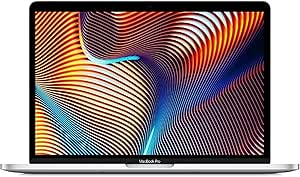
Apple MacBook Pro 13.3in Retina Laptop Intel i5 Dual Core 2.6GHz 8GB 128GB SSD – MGX72LL/A (Renewed)
This 2018 MacBook Pro with Intel i5 offers a reliable, familiar experience for developers who prioritize stability and a traditional design. Its 13.3-inch Retina display provides sharp visuals, and the 8GB RAM supports multitasking for moderate workloads. Compared to the newer Apple M-series laptops, it falls short in AI capabilities and battery life, but it remains a solid choice for those who prefer Intel-based systems or need compatibility with legacy software. The 128GB SSD can be limiting for larger projects, and its dual-core processor might bottleneck more demanding tasks. Its port selection includes two Thunderbolt 3 ports, but lacking in newer connectivity options. This model is less suited for heavy multitasking or AI training but excels for basic coding, testing, and general use. Best for developers who value stability and legacy software support over raw AI power.
Pros:- Retina display with sharp visuals
- Reliable build and stability
- Good port selection with Thunderbolt 3
- Familiar keyboard and touchpad experience
Cons:- Limited to 128GB SSD, potentially restrictive for storage
- Older processor and shorter battery life compared to newer models
- Not optimized for AI or heavy multitasking
Best for: Developers requiring a dependable machine for light coding, testing, and legacy app compatibility
Not ideal for: AI researchers, heavy multitaskers, or those working with large datasets and modern hardware demands
- Display Size:13.3 inches
- Processor:Intel i5 Dual Core 2.6GHz
- Memory:8GB RAM
- Storage:128GB SSD
- Display Technology:Retina LED
- Ports:2 Thunderbolt 3
Bottom line: This machine is suitable for developers needing stable, legacy-compatible hardware for lighter development tasks.
Apple MacBook Pro with Retina Display – Intel Core i5 Dual Core 2.3GHz, (13-inches, 16GB RAM, 256GB SSD) – Silver (Renewed)
This 2017 MacBook Pro with 16GB RAM offers a combination of portability and performance, especially for developers who multitask heavily. Its 13-inch Retina display with 2560×1600 resolution ensures crisp visuals for coding, UI work, and media editing. Compared to the 2018 Pro model, it has a slightly older processor but benefits from more RAM, which improves multitasking and virtual machine performance. The dual-core i5 processor may limit performance with very CPU-intensive tasks or compilation, but it’s still capable for most development workflows. External connectivity is limited to two Thunderbolt 3 ports, which can be a constraint for complex setups. Its 256GB SSD is adequate for most projects, but larger datasets will require external drives. Best for developers who prioritize multitasking and visual clarity in a portable package.
Pros:- High-resolution Retina display
- 16GB RAM supports heavy multitasking
- Reliable build quality and portability
- Good for UI and media development
Cons:- Older CPU with lower performance ceiling
- Limited internal storage at 256GB
- Fewer ports—only two Thunderbolt 3
Best for: Developers needing a portable machine with ample RAM for multitasking and UI work
Not ideal for: Heavy AI workloads, large data processing, or intensive compilation tasks
- Display Size:13 inches
- Processor:Intel Core i5 Dual Core 2.3GHz
- Memory:16GB RAM
- Storage:256GB SSD
- Display Technology:Retina
- Ports:2 Thunderbolt 3
Bottom line: This MacBook Pro suits developers who need a portable, high-RAM machine for multitasking and visual development tasks.
Late 2020 Apple MacBook Air with Apple M1 Chip (13.3 inch, 16GB RAM, 512GB SSD) Space Gray (Renewed)
This MacBook Air stands out for its impressive performance gains thanks to the Apple M1 chip, which makes it a compelling choice for developers seeking a lightweight yet powerful machine. Compared to the Intel-based MacBook Pro, the M1 Air offers up to 3.5x faster CPU performance and 5x faster graphics, all while maintaining excellent battery life—up to 29 hours. Its fanless design ensures silent operation, perfect for long coding sessions. However, it sacrifices some expandability and has only two Thunderbolt ports, which might limit connectivity for power users. This model makes the most sense for developers who prioritize portability without sacrificing speed and want a machine that can handle demanding tasks on the go.
Pros:- Exceptional CPU and GPU performance with M1 chip
- Extremely long battery life of up to 29 hours
- Silent operation due to fanless design
- 16GB unified memory improves multitasking
Cons:- Limited port selection (only two Thunderbolt ports)
- No dedicated GPU, limiting high-end graphics or intensive tasks
- No option for user upgrade of RAM or storage
Best for: Developers who need a portable, fast, and reliable laptop for coding and testing on the move
Not ideal for: Developers requiring multiple external displays or extensive port options, as the M1 MacBook Air has limited ports
- Processor:Apple M1
- RAM:16GB
- Storage:512GB SSD
- Display:13.3-inch Retina, 2560×1600
- Battery Life:Up to 29 hours
- Ports:2 Thunderbolt
Bottom line: This pick is ideal for developers seeking a balance between power, portability, and battery longevity without the need for extensive connectivity.
New Apple MacBook Pro (13-inch, 8GB RAM, 256GB Storage) – Space Gray (Renewed)
This MacBook Pro offers a step up in performance with its 8th-generation Intel Core i5 processor and brilliant Retina display, making it suitable for developers working on more resource-intensive projects. Compared to the M1 MacBook Air, it provides more traditional port options including Thunderbolt and USB-C, which are advantageous for multiple peripherals. The inclusion of the Touch Bar and Touch ID adds convenience during workflow. However, its battery life is significantly shorter, around 10 hours, and it’s heavier, which reduces portability. This model is better suited for developers who need compatibility with legacy software and more connectivity options than the M1 Air provides.
Pros:- Powerful quad-core Intel processor
- Good display quality with True Tone technology
- Multiple port options including Thunderbolt and USB-C
- Touch Bar and Touch ID for quick access
Cons:- Shorter battery life (~10 hours)
- Heavier and less portable than M1 models
- Older Intel architecture may lag behind M1 in efficiency
Best for: Developers who need a powerful, well-connected machine for multitasking and legacy app compatibility
Not ideal for: Developers prioritizing battery life and portability, as this model is heavier and has shorter battery duration
- Processor:Intel Core i5 1.4GHz
- RAM:8GB
- Storage:256GB SSD
- Display:13.3-inch Retina, True Tone
- Battery Life:Up to 10 hours
- Ports:Thunderbolt, USB-C
Bottom line: This choice is tailored for developers who need legacy compatibility and more connectivity, accepting some tradeoffs in weight and battery life.
Apple MacBook Air MJVE2LL/A 13-inch Laptop (1.6GHz Core i5,8GB RAM,128GB SSD) (Renewed)
This older MacBook Air configuration provides decent performance for basic development tasks, especially with its 1.6GHz Core i5 processor and 8GB RAM. Compared to newer models like the M1 Air, it offers a lower-cost entry point, suitable for learners or developers working on lightweight projects. Its smaller SSD capacity, at 128GB, could be a limitation for larger projects or datasets. The display resolution remains solid at 1440×900, but it’s less sharp than Retina displays. The main tradeoff involves slower performance and reduced storage capacity, which may affect productivity with heavier workloads. It’s best for budget-conscious developers who primarily focus on coding, testing smaller apps, or learning.
Pros:- Affordable price point
- Decent performance for basic tasks
- Lightweight and portable
- Reliable build quality
Cons:- Limited storage (128GB SSD)
- Older processor architecture (Broadwell)
- Lower display resolution compared to Retina screens
Best for: Budget-conscious developers needing a capable yet affordable machine for lightweight coding and testing
Not ideal for: Developers working with large files, virtualization, or intensive compiling, due to limited storage and older architecture
- Processor:Intel Core i5 1.6GHz
- RAM:8GB
- Storage:128GB SSD
- Display:13.3-inch, 1440×900
- Battery Life:Approx. 10 hours
- Ports:USB-A, Thunderbolt
Bottom line: This model fits developers on a tight budget who mainly do lightweight coding and testing, but it won’t handle heavy workloads efficiently.
Apple 2018 MacBook Pro with 2.3GHz Intel Core i5 (13-inch, 8GB RAM, 256GB SSD Storage) Space Gray (Renewed)
This 2018 MacBook Pro combines a 2.3GHz Core i5 processor with 8GB RAM, offering a more traditional MacBook Pro experience with better performance for demanding tasks. Compared to the newer M1 or M2 Macs, it provides a familiar, upgradeable design and multiple ports, including Thunderbolt 3, making it suitable for developers with extensive peripheral needs. Its retina display ensures crisp visuals, and the Touch Bar offers quick access to tools. The main drawback is its older hardware, which results in less efficiency and shorter remaining support lifespan. This machine is better suited for developers who need a robust, upgradeable workhorse with legacy software compatibility, rather than the latest efficiency gains.
Pros:- Strong performance with 2.3GHz Core i5
- High-quality Retina display
- Multiple ports including Thunderbolt 3
- Familiar MacBook Pro form factor
Cons:- Older hardware with less efficiency
- Heavier and less portable than newer models
- Limited future software support as hardware ages
Best for: Developers who prefer a traditional, upgradeable MacBook Pro with high performance for intensive tasks
Not ideal for: Developers seeking a lightweight, fanless, and future-proof machine with the latest architecture
- Processor:2.3GHz Core i5
- RAM:8GB
- Storage:256GB SSD
- Display:13-inch Retina
- Battery Life:Approx. 10 hours
- Ports:Thunderbolt 3
Bottom line: This MacBook Pro is a solid choice for developers needing a traditional, powerful Mac with extensive port options and upgradeability, despite its age.
2022 Apple MacBook Pro Laptop with M2 chip: 13-inch Retina Display, 8GB RAM, 256GB SSD Storage, Touch Bar, Backlit Keyboard, FaceTime HD Camera
This MacBook Pro with the M2 chip stands out for combining impressive processing power with a highly portable design, making it ideal for developers who need performance on the go. Compared to the MacBook Air with M5 chip, the Pro’s active cooling allows sustained high-intensity workloads, which is crucial for compiling code or running virtual machines. Its 20-hour battery life offers unmatched endurance, while the vibrant Retina display enhances detailed work like UI design or debugging. However, the 8GB RAM base limits multitasking somewhat compared to the 16GB found on the 15.4-inch Intel-based MacBook Pro, which might be better suited for heavy multitasking or large projects. The Touch Bar, while useful for some workflows, might not appeal to those preferring traditional function keys. Overall, this model makes the most sense for developers who prioritize performance and portability over raw power, and are willing to pay a premium for seamless Apple ecosystem integration.
Pros:- Excellent battery life up to 20 hours, ideal for long coding sessions away from power sources
- Active cooling system sustains performance during intensive tasks
- Vibrant Retina display with P3 wide color for detailed visuals
Cons:- Base 8GB RAM can limit multitasking with multiple heavy applications
- Limited to two Thunderbolt ports, restricting peripheral expansion
Best for: Developers seeking a balanced, highly portable machine with excellent performance for everyday coding and multitasking.
Not ideal for: Heavy-duty software engineers working with large datasets or demanding virtualization who need maximum RAM and dedicated graphics.
- Processor:8-core CPU
- Graphics:10-core GPU
- Memory:8GB unified memory (up to 24GB supported)
- Storage:256GB SSD
- Display:13.3-inch Retina, 500 nits, P3 wide color
- Battery Life:Up to 20 hours
- Ports:2 Thunderbolt ports
- Camera:FaceTime HD
- Weight:3 pounds
Bottom line: This MacBook Pro is a solid choice for developers who prioritize portability without sacrificing too much performance.
Apple MacBook Pro 15.4 Laptop Intel Core i7 2.50GHz 16GB RAM 512GB SSD MJLT2LL/A
This 15.4-inch MacBook Pro with an Intel Core i7 and 16GB RAM caters to developers who need raw power and a larger display for multitasking or running resource-intensive applications. Its high-resolution 2880×1800 Retina display surpasses the 13-inch Retina in size, making it better suited for detailed coding, UI design, or debugging multiple windows side by side. The 512GB SSD offers ample storage for large projects, and the dedicated AMD Radeon R9 M370X graphics can handle some GPU-accelerated tasks, unlike the integrated graphics in the M2 models. Compared to the M2-powered 13-inch MacBook Pro, this older model may lack the latest efficiency gains and battery endurance, but it compensates with a more powerful CPU and more extensive port options, including an SD card slot and multiple Thunderbolt ports. This makes it a better fit for developers who prioritize raw processing power and expandability over battery life and weight.
Pros:- Larger 15.4-inch Retina display enhances multitasking and detailed work
- 16GB RAM supports heavy multitasking and large projects
- Dedicated AMD Radeon graphics for GPU-accelerated tasks
Cons:- Heavier and less portable compared to newer M2 models
- Lower battery life, requiring frequent charging during long work sessions
- Older Intel architecture may be less efficient and future-proof
Best for: Power users who need a larger display, more RAM, and dedicated graphics for intensive development workflows.
Not ideal for: Frequent travelers or those prioritizing battery longevity and lightweight design, as this model is heavier and consumes more power.
- Processor:2.5GHz Intel Core i7
- Graphics:AMD Radeon R9 M370X 2GB
- Memory:16GB RAM
- Storage:512GB SSD
- Display:15.4-inch Retina, 2880×1800
- Battery Life:Approximately 8-10 hours
- Ports:Multiple Thunderbolt, SD card slot
- Weight:4 pounds
- OS:macOS
Bottom line: This MacBook Pro is suited for developers needing high processing power and expandability, accepting portability tradeoffs.

How We Picked
Our evaluation focused on key factors that matter most to developers: raw performance, build quality, display quality, battery life, and value. We prioritized models with the latest Apple silicon chips for their superior speed and energy efficiency, which directly impact development workflows. Ease of use, port selection, and compatibility with development environments also played crucial roles. The ranking reflects a balance between cutting-edge features and affordability, aiming to help a broad spectrum of developers—from students to seasoned professionals—find a suitable Mac alternative.
Factors to Consider When Choosing Best Mac Alternative Laptop For Developers
Choosing the right Mac alternative for development involves understanding your specific needs and how different features impact your workflow. It’s important to consider performance, portability, and ecosystem compatibility. Making the wrong choice can lead to bottlenecks or unnecessary expenses, especially if you overlook key tradeoffs. This guide highlights key factors to help you navigate these decisions effectively.
Performance and Chipset
For development work, processor power and efficiency are paramount. Apple’s M-series chips (M1, M2, M5) have set a high bar with their combination of speed, energy efficiency, and integrated graphics. When selecting a laptop, prioritize the latest chip your budget allows, as it directly impacts compile times, virtualization, and multitasking. Older Intel models may struggle with newer development tools or heavier workloads, but they often come at lower prices.
Display Quality and Size
A clear, high-resolution display enhances productivity by reducing eye strain and making code easier to read. Larger screens (13-inch and above) are advantageous for multitasking and detailed work, but they also add to weight and portability considerations. Developers working remotely or on the go should weigh the benefits of a bigger display against portability. Liquid Retina technology offers better color accuracy and sharpness, which is beneficial for UI/UX development.
Memory and Storage
Ample RAM (8GB minimum, ideally 16GB or more) ensures smooth multitasking and future-proofing, especially with resource-intensive development environments. Storage capacity is also vital; SSDs provide faster load times and data access. Opt for at least 256GB, but 512GB or higher is preferable if you handle large projects or use local virtual machines. Balancing these specs against your budget is key to avoiding performance bottlenecks.
Battery Life and Portability
Developers often work remotely or on the move, making battery life and weight crucial. Apple silicon models excel here, with many lasting over 12 hours on a single charge. If mobility is a priority, lighter options like the MacBook Air variants make sense, but be aware they may compromise on raw power or ports. Conversely, larger Pro models tend to have better sustained performance but are heavier and less portable.
Ecosystem Compatibility and Future-proofing
Compatibility with development tools and ecosystems is a key factor. Apple silicon models support most major development environments, but some specialized tools may lag or require workarounds. Consider how well your existing workflow integrates with macOS and whether the device can support future updates. Investing in recent models helps ensure longevity and compatibility with upcoming software.
Frequently Asked Questions
Can a Mac alternative run Xcode and iOS development tools effectively?
Yes, many Mac alternatives with Apple silicon chips are capable of running Xcode and related iOS development tools smoothly. These chips provide the necessary processing power and compatibility. However, some older or lower-end models might experience slight delays or limitations, especially when compiling large projects. For optimal performance, choose a model with at least 8GB RAM and the latest chip your budget allows.
Is it worth paying extra for a higher RAM or storage configuration?
Upgrading RAM and storage can significantly improve your experience, especially if you handle large codebases, virtual machines, or multiple development environments simultaneously. While the initial cost is higher, these upgrades reduce the risk of performance bottlenecks and extend the device’s useful lifespan. For most developers, investing in at least 16GB RAM and 512GB storage offers a good balance of performance and future-proofing.
Are non-Apple hardware options a better choice for development?
Non-Apple hardware can offer more variety, potentially lower prices, and different hardware features, but they often lack the seamless integration and optimized performance of Apple silicon Macs. For developers who rely heavily on macOS-specific tools or prefer the Apple ecosystem, sticking with a Mac alternative that runs Apple silicon is usually more efficient. However, for cross-platform development or budget constraints, some high-end Windows laptops may suffice.
How important is a high-resolution display for coding?
High-resolution displays, like Retina or 4K screens, reduce eye strain and make long coding sessions more comfortable. They also allow for more code to be visible at once, improving productivity. If you work for extended periods or do UI/UX design, investing in a model with a high-quality display is worthwhile, even if it costs more upfront.
Should I prioritize portability or raw power in my choice?
This depends on your typical work environment. Portability favors lightweight models like the MacBook Air, which are easier to carry but may have limited performance for heavy tasks. Prioritizing raw power points toward larger MacBook Pro models with more RAM and better cooling, suitable for intensive workloads. Consider where you’ll mostly work and whether portability or performance is more critical to your workflow.
Conclusion
For general development needs, the Apple MacBook Air with M5 chip offers a compelling blend of performance, portability, and value, making it ideal for most developers. Those requiring serious processing power and larger displays should consider the MacBook Pro with M2 chip, especially if they work with demanding applications or large codebases. Budget-conscious buyers can find great value in the M1 MacBook Air, which still handles most tasks well. Beginners or students might prefer a more affordable, entry-level model, while professionals working on intensive projects should lean toward premium configurations for longevity and speed.