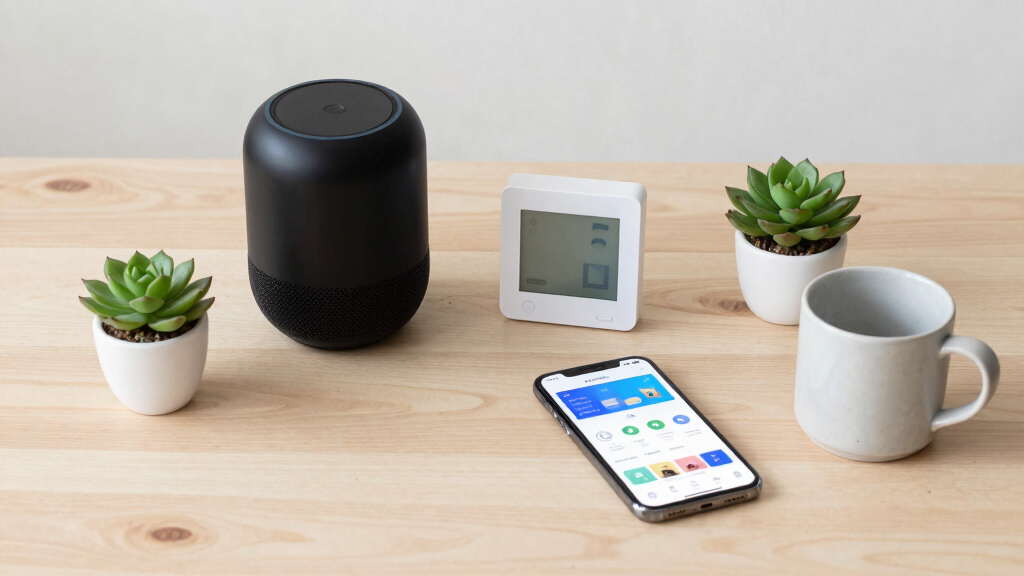

In 2026, AI-powered home automation devices have become essential for creating smarter, more responsive living spaces. The Hubitat Elevation C-8 Pro stands out as the best overall for its local control and broad protocol support. For those seeking a budget-friendly yet capable option, the Meross Matter Human Presence Sensor offers reliable automation at a lower price point. Meanwhile, the SwitchBot AI Hub shines for its integration flexibility and local processing. These choices highlight the main tradeoffs: balancing advanced AI features versus ease of setup, local control versus cloud reliance, and cost versus capability. Continue reading for a detailed breakdown of each device and what makes them suitable for different needs.
Key Takeaways
- Local control remains a key advantage for privacy-focused users, as seen with the Hubitat Elevation C-8 Pro.
- AI learning capabilities significantly improve automation accuracy, making sensors like Meross Matter stand out for cost-effective intelligence.
- Integration versatility is crucial; devices supporting multiple protocols like Z-Wave, Zigbee, and Matter offer greater flexibility.
- Ease of setup and user interface quality can determine whether beginners or tech-savvy users prefer a device.
- Price remains a decisive factor; the best devices balance affordability with AI sophistication and expandability.


More Details on Our Top Picks
The Ultimate Smart Home Devices Guide: How to Choose, Set Up, and Use the Best Smart Technology for Everyday Living
This book stands out for offering a thorough overview of smart home technology, making it ideal for those just starting out. Unlike product-specific guides like the AI Powered Smart Home Guide for Beginners 2026, it provides foundational knowledge and practical tips that can help you understand the landscape before choosing devices. The main tradeoff is that it doesn’t include specific product reviews or technical details, so experienced users seeking immediate device recommendations may find it less useful. Still, it serves as an essential primer for understanding the broader smart home ecosystem.
Pros:- Provides a broad understanding of smart home concepts
- Practical tips for setup and daily use
- Easy to follow for newcomers
Cons:- Lacks detailed product reviews or technical specs
- No specific device recommendations or compatibility info
Best for: Beginners or homeowners seeking a comprehensive introduction to smart home concepts
Not ideal for: Advanced users who need detailed technical specs or specific device recommendations
Our verdict“This guide is best suited for those new to smart home technology wanting a solid foundational understanding before making device choices.”
Smart Courtyard Butler 3.5-Inch Touch Screen Tuya App Control with DIY Scenes, Bluetooth Speaker, Doorbell, and Alarm
This device excels at providing intuitive control over outdoor smart devices with its 3.5-inch touch screen and DIY scene customization, making it ideal for users who want hands-on management of courtyard automation. Compared with the Hubitat Elevation C-8 Pro, which offers more extensive device integration and local control, the Courtyard Butler focuses on simplicity and outdoor-friendly features, though it falls short in weather resistance details and compatibility transparency. Its built-in Bluetooth speaker and alarm add convenience, but the potential complexity for less tech-savvy users could be a drawback.
Pros:- Large, easy-to-navigate touch screen
- Supports DIY scene customization
- Includes Bluetooth speaker, doorbell, and alarm
Cons:- Limited info on outdoor weather resistance
- Compatibility with other smart systems is unclear
Best for: Homeowners who want easy outdoor control with DIY scene options and basic multimedia features
Not ideal for: Users seeking a weatherproof, outdoor-optimized device or extensive integration with multiple ecosystems
- Screen Size:3.5 inches
- Connectivity:Mesh network, Bluetooth
- App Compatibility:Tuya Smart Life
- Built-in Features:Bluetooth speaker, SD card slot, doorbell, alarm
- Installation:Tabletop or wall-mounted
- Power:Included power adapter
Our verdict“This pick makes the most sense for users wanting straightforward outdoor device control with added multimedia features, despite some outdoor durability uncertainties.”
Meross Matter Human Presence Sensor, 3-in-1 PIR & Light & mmWave Radar Motion Sensor, Smart Home Automation
The Meross Matter Presence Sensor shines with its multi-sensor approach—combining PIR, radar, and light detection—to provide highly accurate occupancy detection across various smart ecosystems including HomeKit, Alexa, Google, and Matter. This makes it a flexible choice compared to the Hubitat Elevation C-8 Pro, which offers broader device support but less specialized sensor accuracy. Its pet-proof design and wide detection range up to 12 meters are definite advantages, though the need for continuous power and potential hub requirements for full Matter support could pose hurdles for some users.
Pros:- Multi-ecosystem compatibility (HomeKit, Alexa, Google, Matter)
- Highly accurate 3-in-1 sensor detection
- Wide detection range up to 12 meters and pet-proof shield
Cons:- Requires constant power, no battery option
- Some features may need a hub for full Matter support
Best for: Homeowners seeking a reliable, multi-ecosystem compatible presence sensor for automations
Not ideal for: Those requiring portable sensors or battery-powered options
- Power Source:Corded Electric
- Maximum Range:12 Meters
- Mounting Type:Wall Mount
- Compatible Devices:HomeKit, Alexa, Google, Home Assistant, Matter
- Item Dimensions:2.97″D x 1.5″W x 1.37″H
- Color:White
Our verdict“This sensor is ideal for users wanting precise, multi-platform occupancy detection with pet-proofing, accepting the need for a continuous power supply.”
AI Powered Smart Home Guide for Beginners 2026
This guide offers a broad overview of smart home automation, perfect for beginners looking to understand the basics of energy efficiency, security, and AI assistants. Unlike the Hubitat Elevation C-8 Pro, which is a physical device focused on local control, this book provides practical steps and foundational knowledge, though it lacks detailed technical specs. For advanced users or those ready to implement specific devices, this resource may be too general, but it effectively demystifies the concepts behind AI-powered automation.
Pros:- Complete overview of smart home concepts
- Step-by-step guidance for beginners
- Covers security, energy, and AI assistants
Cons:- No detailed technical specifications
- May be too basic for experienced users
Best for: Newcomers seeking a step-by-step introduction to home automation
Not ideal for: Experienced users who need technical specifications or device compatibility details
Our verdict“This book is best for newcomers wanting to understand the fundamentals of AI-powered home automation without technical overload.”
Hubitat Elevation C-8 Pro Smart Home Hub – Local Control & Automation for Z-Wave, Zigbee, Matter, Bluetooth, Wi-Fi
The Hubitat Elevation C-8 Pro is designed for users prioritizing reliable local control and broad device support, including Z-Wave, Zigbee, and Matter. Compared to the Smart Courtyard Butler, which focuses on outdoor scenes and simplicity, the Hubitat offers extensive compatibility and advanced automation capabilities, though setup can be complex for newcomers. Its support for the latest standards and local operation ensures automation remains functional during internet outages, making it ideal for users who want resilience and flexibility in their smart home ecosystem.
Pros:- Operates locally without internet dependency
- Supports latest standards including Matter and Z-Wave 800
- Regular updates expand device support and features
- Strong signal range thanks to external antennas
Cons:- Initial setup may be challenging for beginners
- Compatibility depends on device support list
Best for: Tech-savvy homeowners who want robust local control and extensive device compatibility
Not ideal for: Beginners or users seeking plug-and-play solutions with minimal setup
- Compatibility:Z-Wave 800 LR, Zigbee 3.0, Matter 1.5, Bluetooth, Wi-Fi
- Device Support:Over 1,000 devices from 100+ brands
- Connectivity:External antennas for enhanced range
- Automation:Local control, AI-assisted automations
- Voice Assistants:Alexa, Google, Apple
Our verdict“This hub makes the most sense for users needing dependable local automation with broad device compatibility and resilience against internet outages.”
AI-Powered Smart Home Guide 2026: A Step-by-Step Guide to Designing, Optimizing, and Mastering a Fully Automated Smart Ecosystem
This comprehensive guide stands out for its detailed, step-by-step instructions on designing and optimizing a smart home ecosystem using the latest AI techniques. Compared with hardware-focused products like the SwitchBot AI Hub, this guide is more suited to experienced homeowners who want to craft a tailored, fully integrated system. However, it lacks specific technical details and device compatibility info, which can leave less tech-savvy users uncertain about implementation. Its strength lies in helping users understand complex AI-driven automation strategies, but it doesn’t provide hands-on device setup guidance. Ideal for tech-savvy enthusiasts aiming to deepen their understanding, not for those seeking quick plug-and-play solutions.
Pros:- Provides in-depth, step-by-step instructions for complex setups
- Covers the latest AI techniques to optimize automation workflows
- Helps master both design and troubleshooting of smart ecosystems
Cons:- Lacks specific device compatibility and technical specifications
- Content may be too advanced for casual users
Best for: Homeowners with technical expertise seeking a strategic roadmap to advanced automation
Not ideal for: Beginners or users looking for ready-to-go devices without deep technical knowledge
Our verdict“This guide is perfect for DIY enthusiasts and advanced users planning a comprehensive smart home ecosystem from scratch.”
Home Energy Monitor for Home Assistant – Real-Time Electricity Usage & Solar Self-Consumption Tracking
This energy monitor excels at integrating with Home Assistant, offering real-time data on electricity consumption and solar performance, making it ideal for users aiming to reduce energy costs. Unlike the iSG Box SE, which supports multiple protocols and offers advanced automation, this device focuses narrowly on energy tracking, providing detailed dashboards and circuit-level insights. Its reliance on professional installation and limited support for non-North American electrical systems are notable tradeoffs. The device’s deep integration with energy data makes it invaluable for conscious energy users but can be less appealing for those seeking broader smart home control. Best suited for energy-conscious households wanting detailed, real-time insights and automation for their power systems.
Pros:- Deep integration with Home Assistant for real-time energy data
- Supports up to 30 circuits with scalable units
- Secure local data storage enhances privacy
Cons:- Installation may require professional electrical work
- Limited to North American electrical standards
Best for: Homeowners with solar setups or high energy consumption who want precise control and automation
Not ideal for: Users outside North America or those seeking a multi-protocol smart home hub
- Weight:2.8 pounds
- Dimensions:4.73 x 3.15 x 1.22 inches
- Connectivity:Wi-Fi and Ethernet
- Supported Systems:North American split-phase, single-phase, three-phase
- Monitoring Circuits:Up to 30
- Certifications:FCC, CE, UL/IEC
Our verdict“This monitor is an excellent choice for energy-focused users who want detailed insights and automation in their existing systems.”
SwitchBot AI Hub with OpenClaw Support, Local NVR Camera Storage, Home Assistant Pre-Installed, Matter Bridge, Dual-Band Wi-Fi, 16GB MicroSD Included
The SwitchBot AI Hub is a powerful controller that supports OpenClaw, making it ideal for integrating cameras and devices within a local network. Its pre-installed Home Assistant and Matter Bridge enable expanded compatibility, surpassing the standalone capabilities of the iSG Box SE. However, its AI features depend on an AI+ subscription, and it doesn’t include IR control for common appliances, limiting its out-of-the-box functionality. Its local storage options and support for multiple cameras make it a strong choice for users prioritizing fast, local automations and security. Yet, those seeking a plug-and-play device with minimal setup may find it less convenient. Best suited for tech-savvy users needing local control and camera integration.
Pros:- Supports OpenClaw for camera and device control
- Pre-installed Home Assistant and Matter Bridge for broad compatibility
- Local storage with 16GB MicroSD and support for up to 16TB external drives
Cons:- AI features require a subscription
- Limited to compatible cameras and devices for AI functions
Best for: Homeowners with security cameras and a desire for fast local automations
Not ideal for: Casual users or those seeking a device with built-in IR control for TVs and air conditioners
- Product Dimensions:7.8 x 5.79 x 2.2 inches
- Item Weight:1.12 pounds
- MicroSD Card Included:16GB
Our verdict“This hub makes the most sense for users who want local control, camera integration, and a flexible, expandable setup.”
iSG Box SE Smart Home Hub with Built-in Home Assistant & HomeKit Bridge
The iSG Box SE offers extensive protocol support, including Zigbee, Z-Wave, and Matter, making it a flexible choice for diverse smart home setups. Its pre-installed Home Assistant allows for advanced automation, and local control ensures quick responses. Unlike the SwitchBot AI Hub, which can support cameras and devices, the iSG Box SE excels in supporting a wide range of protocols but requires separate Zigbee or Z-Wave USB sticks, adding to setup complexity. Its seamless integration with Apple HomeKit and other assistants makes it suitable for Apple users who want a broad, protocol-agnostic hub. However, the lack of included hardware for Zigbee and Z-Wave connectivity and a potentially complex setup may deter less technical buyers. Best for users with diverse device ecosystems seeking broad compatibility and local control.
Pros:- Supports a wide range of protocols and brands
- Pre-installed with Home Assistant for automation
- Local control for instant response and privacy
Cons:- Requires separate purchase of Zigbee/Z-Wave USB sticks
- Setup can be complex for non-technical users
Best for: Apple-centric users with multiple protocol devices seeking a highly compatible hub
Not ideal for: Less technical users or those seeking a simple, out-of-the-box solution
- Connectivity Technology:Wi-Fi, Ethernet, Zigbee, Z-Wave
- Special Features:Home Assistant, HomeKit Bridge, Local Control
- Compatible Devices:Smartphones, Tablets, PCs
- Color:White
Our verdict“This hub is ideal for tech-savvy users with diverse device ecosystems who prioritize local control and broad compatibility.”
Local AI Voices Command Processor for Home Automation Systems
This voice command processor stands out for enabling offline, instant voice responses, ideal for privacy-conscious users. Its low power consumption and support for customizable commands make it suitable for DIY IoT projects, especially when integrated with development boards. Compared with cloud-based voice assistants, this module offers a reliable, private alternative, but its limited recognition range in noisy environments and lack of a built-in microphone or speaker restrict its standalone usability. It demands technical skill to embed and configure, making it less suitable for casual users. Best for developers or enthusiasts seeking offline voice control in custom systems.
Pros:- Offline voice recognition preserves privacy
- Fast response times (<0.5 seconds)
- Supports customizable voice commands
Cons:- Limited recognition range in noisy environments
- Requires technical knowledge for integration
- No built-in microphone or speaker
Best for: Tech-savvy DIYers and developers wanting offline voice recognition for home automation
Not ideal for: Average homeowners or users seeking plug-and-play voice control solutions
- Recognition Distance:3-5 meters
- Power Consumption:1mA standby
- Commands:30+ customizable
- Interfaces:UART, I2C, GPIO
- Noise Tolerance:under 60dB
Our verdict“This module suits developers and DIY enthusiasts aiming for private, offline voice control in custom automation projects.”
Meross Matter Presence Sensor MS605, Battery-Powered 4-in-1 Smart Motion Sensor with AI Learning, IP67 Waterproof, Supports HomeKit, Alexa, Home Assistant
The Meross MS605 stands out for its sophisticated AI-driven detection, which effectively reduces false triggers compared with simpler motion sensors. Its support for Matter over Thread ensures smooth integration across popular smart home platforms like HomeKit, Alexa, and Home Assistant, making it a flexible choice for users with diverse ecosystems. The IP67 waterproof rating and multiple mounting options make it suitable for outdoor use, unlike many indoor-only sensors. However, its setup can be complex, especially for those unfamiliar with firmware updates, and the three-year battery life requires periodic replacement. Compared with the AI-Powered Smart Home Devices, which offers broad automation but less hardware specificity, the MS605 provides targeted detection with local control but demands a bit more configuration effort.
Pros:- AI-driven detection minimizes false alarms
- Supports Matter over Thread for broad compatibility
- Flexible mounting options for various locations
- IP67 waterproof rating for outdoor use
Cons:- Requires firmware updates for optimal Alexa control
- Battery replacement needed every 3 years
- Setup may be complex for less tech-savvy users
Best for: Homeowners seeking a reliable, outdoor-capable presence sensor with advanced AI detection and broad platform support
Not ideal for: Users looking for a simple, plug-and-play sensor without the need for firmware updates or complex setup
- Sensor Type:3-in-1 mmWave, PIR, Light
- Battery:CR123A (included)
- Battery Life:3 years
- Waterproof Rating:IP67
- Connectivity:Matter over Thread, Wi-Fi
- Mounting:Ceiling, wall, corner
- Detection Range:Adjustable zones
- Compatibility:HomeKit, Alexa, Home Assistant
Our verdict“This sensor is ideal for those who need a durable, AI-enhanced presence detector that works both indoors and outdoors, despite some setup complexity.”
AI-Powered Smart Home Devices
This collection of AI-powered smart home devices offers a wide range of automation options designed to elevate convenience, security, and energy management across your entire home. Unlike specialized sensors like the Meross MS605, these devices focus on providing intelligent connectivity and automation that adapt to your lifestyle, rather than just detecting motion or presence. The setup is generally straightforward for users already invested in smart ecosystems, but the lack of detailed technical specifications means you might need to confirm compatibility with your existing devices. While they excel at enhancing overall home automation, they lack the hardware specificity of dedicated sensors, which could be a drawback for those requiring precise detection. Compared to the Meross sensor, these devices prioritize broad automation and user experience over specialized sensing capabilities.
Pros:- Enhances overall home automation and convenience
- Improves security through integrated AI features
- Energy-efficient and designed for smart ecosystem integration
Cons:- Limited detailed specifications provided
- Requires a compatible smart home ecosystem for full functionality
Best for: Homeowners looking to boost overall automation, convenience, and security with a suite of intelligent devices
Not ideal for: Users seeking a single, focused sensor for outdoor or precise motion detection without additional automation features
Our verdict“This product line is best suited for those aiming to expand their smart home with intelligent automation rather than specialized sensors.”
How We Picked
These products were evaluated based on their AI integration quality, ease of setup, compatibility with existing smart home ecosystems, and overall build quality. We prioritized devices that offer meaningful AI features such as learning algorithms, voice command processing, or automation customization. Cost-effectiveness and the ability to support multiple protocols also played a key role, as versatile devices tend to provide better long-term value. Devices that rely solely on cloud processing were rated lower than those with local AI processing, which enhances privacy and reduces latency. The final ranking reflects a balance of innovation, usability, and ecosystem compatibility.
Factors to Consider When Choosing AI-powered Home Automation Devices
Choosing the right AI-powered home automation device involves considering several key factors beyond basic features. Your decision should align with your specific needs, existing smart home setup, and priorities such as privacy, ease of use, and scalability. Understanding these factors helps avoid common pitfalls like overpaying for unnecessary features or investing in incompatible systems.Compatibility with Ecosystems and Protocols
Ensure the device supports your existing smart home protocols, whether Z-Wave, Zigbee, Wi-Fi, or Matter. Compatibility guarantees that the device will integrate smoothly and reduces setup headaches. Overlooking protocol support can lead to frustration, especially if you plan to expand your system later. Opt for devices that support multiple standards if you want flexibility and future-proofing.
Local vs. Cloud-Based AI Processing
Devices with local AI processing often provide faster responses, better privacy, and fewer dependency issues. Cloud-based AI, while sometimes more powerful, introduces latency and potential data security concerns. Consider your privacy preferences and whether real-time automation is critical for your setup. Investing in local AI devices pays off if you value responsiveness and data control.
Ease of Use and Setup
Simplicity in setup and an intuitive user interface matter greatly, especially for beginners. Devices with clear instructions, streamlined apps, and straightforward integration reduce frustration and make routine adjustments easier. Advanced users might prefer more customizable options, but for most, a user-friendly design enhances the smart home experience.
Scalability and Expandability
Consider whether the device can grow with your needs. Can it connect to additional sensors, hubs, or voice assistants? Devices supporting open standards like Matter or multiple protocols generally offer more room for expansion. A scalable system saves money and effort in the long run, especially if you plan to add more automation features later.
Budget and Long-term Value
While cutting costs might seem attractive, investing in more capable AI features or versatile protocols often provides better value over time. Balance your initial budget with the potential savings from fewer replacements or upgrades. Remember, a device that integrates well and offers AI learning capabilities can reduce manual adjustments and improve your overall automation experience.
Frequently Asked Questions
Do I need a dedicated hub for AI-powered home automation devices?
Many AI-powered devices can function independently via Wi-Fi or Zigbee, but a dedicated hub like the Hubitat Elevation C-8 Pro can centralize control, improve reliability, and support complex automations across multiple protocols. If your setup involves numerous devices or protocols, investing in a hub enhances stability and simplifies management. However, for smaller or simpler systems, a hub may be optional, especially if the devices are compatible with your existing ecosystem.
How important is AI learning capability in home automation devices?
AI learning significantly enhances automation by adapting to your routines and preferences over time, reducing manual adjustments. Devices with AI learning can optimize responses, improve accuracy, and create more seamless experiences. If you prefer a set-it-and-forget-it approach, prioritizing AI-driven sensors or hubs makes sense. For basic needs or budget constraints, simpler rule-based devices might suffice, but they won’t offer the same level of personalization.
Can I replace all my existing smart devices with AI-powered options?
While many AI-powered devices can integrate with existing setups, replacing everything isn’t always necessary or practical. Compatibility plays a key role—ensure new devices support your current protocols and ecosystems. Sometimes, hybrid systems work best, combining traditional smart devices with AI-enhanced sensors for smarter automation. Be cautious of proprietary systems that might lock you into specific brands or platforms, limiting future flexibility.
What should I consider when choosing AI sensors for home automation?
Look for sensors with AI capabilities such as learning algorithms or multi-sensor integration, which improve automation accuracy. Consider their compatibility with your hub or ecosystem, as well as their power source—battery or wired—for maintenance ease. Sensitivity settings, waterproofing, and placement flexibility are also important for reliable performance. Balancing these factors ensures sensors provide meaningful automation without frequent manual adjustments.
Is investing in premium AI devices worth it for a basic smart home?
Premium AI devices often deliver faster, more accurate automation and better privacy through local processing. If your needs are simple, a basic device might suffice, but investing in higher-quality options can improve reliability and scalability. For those interested in future-proofing or expanding their system, choosing more capable devices now can save costs and effort later. Ultimately, weigh the added features against your current needs and budget.
Conclusion
For general users seeking a reliable, easy-to-use system, the Hubitat Elevation C-8 Pro remains the best overall choice, thanks to its strong local control and broad compatibility. Budget-conscious buyers will find the Meross Matter Human Presence Sensor offers solid AI features at a lower price point. Those wanting a premium experience with extensive automation and customization should consider high-end options like advanced hubs supporting multiple protocols. Beginners will benefit from devices with straightforward setup, while tech enthusiasts should prioritize expandable systems supporting multiple standards. Tailoring your choice to your familiarity level and specific needs will result in a smarter, more responsive home in 2026.