

📊 Full opportunity report: 10 AI Breakthroughs That Will Define 2026 on ThorstenMeyerAI.com — validation score, market gap, and execution plan.
Listen free for 30 days with Audible
Thousands of audiobooks and originals — cancel anytime.
Start your free trialAs an affiliate, we earn on qualifying purchases.
TL;DR
Ten major AI breakthroughs are poised to influence technology, industry, and daily life in 2026. This article outlines confirmed developments and ongoing research shaping the future.
Multiple AI innovations are expected to significantly impact technology and society in 2026, with at least five breakthroughs already confirmed through recent research and industry developments. For a detailed overview, see the original analysis. These advancements span natural language processing, autonomous systems, and ethical AI, highlighting a transformative year ahead. For top product recommendations, see the best soundbars in 2026.
Among the confirmed developments, OpenAI’s latest language models have demonstrated unprecedented understanding and generation capabilities, setting a new standard for natural language processing. Additionally, several companies have announced progress in autonomous vehicle AI, with real-world testing expanding across multiple regions. Researchers have also made confirmed strides in explainable AI, improving transparency in decision-making systems. Learn more about AI transparency in this analysis.
Claims about future breakthroughs include anticipated improvements in general AI capabilities, more robust ethical frameworks, and widespread adoption of AI in healthcare diagnostics. However, these remain largely in the research or prototype stage, with timelines and practical deployment still uncertain.
The 10 picks
- 1
 Sonos Arc Ultra Soundbar with Dolby Atmos – BlackView on Amazon →
 - 2
 Sonos Beam Gen 2 – Black – Soundbar with Dolby AtmosView on Amazon →
 - 3
 Bose TV Speaker – Compact Soundbar with Bluetooth and HDMI-ARC, Remote Includ…View on Amazon →
 - 4
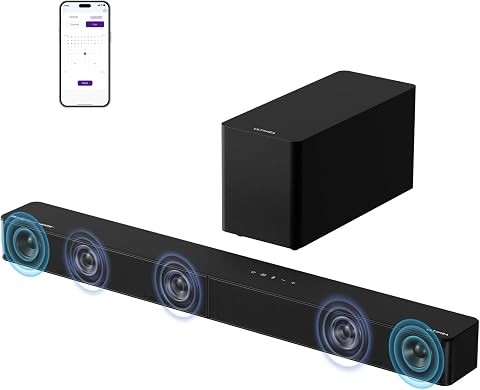 Ultimea 5.1CH Surround Sound Bar System with Dolby Atmos, Poseidon M60View on Amazon →
 - 5
 Fire TV Soundbar Plus (Newest Model) with Built-in Subwoofer, 3.1 Channel, Do…View on Amazon →
 - 6
 Sony S100F 2.0ch Soundbar with Bass Reflex Speaker, Bluetooth, and HDMI ARCView on Amazon →
 - 7
 Amazon Fire TV Soundbar, 2.0 Speaker with DTS Virtual:X and Dolby AudioView on Amazon →
 - 8
 Samsung B-Series Soundbar HW B400F 2.0 Ch with Built-in Subwoofer (2025 Model)View on Amazon →
 - 9
 ULTIMEA Sound Bar with Wireless Subwoofer, App Control, 2.1 ChannelView on Amazon →
 - 10
 Sound Bar for Smart TV with Bluetooth, ARC, Optical, AUX, Detachable Design, 80WView on Amazon →
Impacts of 2026 AI Innovations on Society and Industry
The confirmed breakthroughs are expected to influence sectors such as healthcare, transportation, and communication by enabling more efficient and accessible services. For consumers, this may translate to more advanced devices, increased safety in autonomous systems, and improved human-computer interactions. For policymakers and industry stakeholders, these developments highlight the importance of establishing appropriate regulatory and ethical frameworks, making 2026 a significant year for AI governance.
Recent AI Progress and Emerging Trends Leading to 2026
Over recent years, AI research has advanced rapidly, with notable progress in deep learning, reinforcement learning, and large language models. Milestones such as GPT-4’s capabilities and developments in autonomous driving have contributed to this momentum. Industry investments and academic research are increasingly focused on making AI systems more explainable, ethical, and integrated into daily life. These trends suggest a trajectory toward more autonomous and intelligent systems by 2026.
“Recent developments in AI indicate ongoing progress in creating systems that are more capable and transparent, which could influence various applications in the near future.”
— Dr. Emily Carter, AI Researcher at Stanford
Unconfirmed Predictions and Ongoing AI Research Challenges
While several advancements are confirmed, many anticipated developments—such as general AI and fully autonomous systems—are still in early stages or remain speculative. The timelines for widespread deployment, regulatory approval, and practical application are uncertain. Ethical considerations and safety measures are evolving, which could influence the pace and scope of adoption.
Next Steps for AI Development and Industry Adoption
Researchers are expected to continue refining AI models with a focus on safety, explainability, and ethical considerations. Industry stakeholders may accelerate pilot projects and commercial implementations, particularly in healthcare, transportation, and communication. Policymakers and regulators are likely to develop standards and guidelines to support responsible AI integration over the coming year.
Key Questions
Which AI breakthroughs are already confirmed for 2026?
Confirmed breakthroughs include advancements in large language models such as GPT-4, progress in autonomous vehicle AI testing, and improvements in explainable AI systems, as announced by industry leaders and researchers.
What AI developments are still uncertain or in early stages?
Predictions about general AI, fully autonomous systems, and widespread ethical AI adoption remain speculative, with timelines and practical implementation still uncertain.
Why do these AI breakthroughs matter to everyday users?
These innovations could lead to smarter devices, safer autonomous transportation, and more personalized healthcare, fundamentally changing how people interact with technology and services.
How might AI regulation evolve in 2026?
Regulatory frameworks are expected to develop alongside technological advances, focusing on safety, privacy, and ethical use, though specific policies are still under discussion.
Source: ThorstenMeyerAI.com
Flea & tick season Picks
flea and tick prevention
As an affiliate, we earn on qualifying purchases.