📊 Full opportunity report: The New Standard In Facility Monitoring: Phone-Photo Gauge Reads on IdeaNavigator AI — validation score, market gap, and execution plan.

Get business pricing on tech for your team
- Business-only prices and quantity discounts
- Tax-exempt purchasing
- Multiple users, one account, clear invoices
TL;DR
A new system enables facility technicians to use phone photos to read analog gauges, replacing manual transcription and improving data accuracy. Pilot testing shows promising results for early adoption.
A new system that uses phone photos to read analog gauges is being piloted as a cost-effective alternative to manual clipboard rounds in industrial facilities. The approach aims to improve data accuracy, enable trend analysis, and reduce transcription errors, representing a significant shift in legacy equipment monitoring.
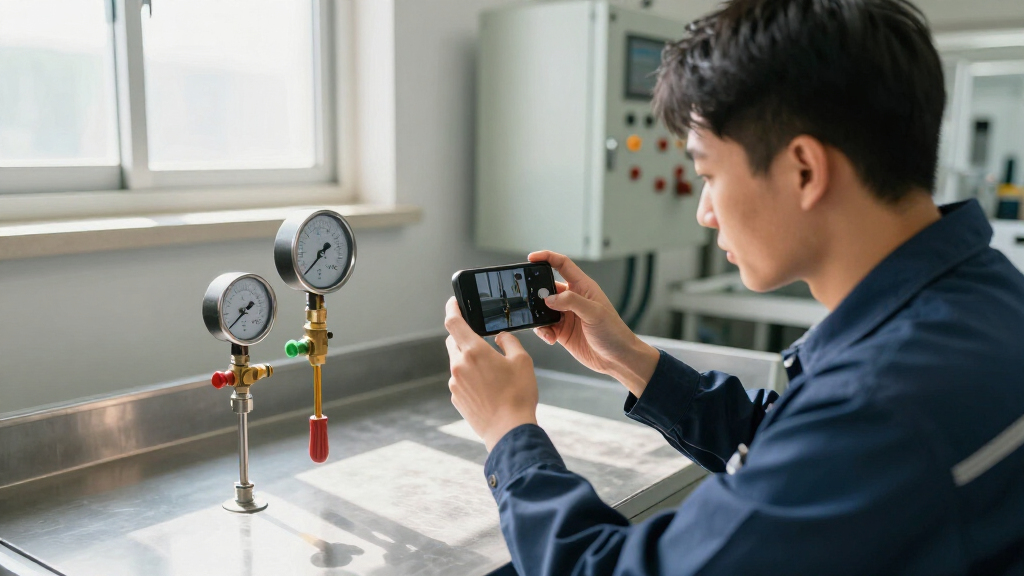
The system involves facility technicians photographing gauges during their routine rounds using a dedicated app. The app employs vision models to automatically read the gauge values from the photos, compare them against expected ranges, log the data with timestamps and location, and flag anomalies immediately. This process replaces traditional manual transcription, which often results in errors and lost data trends.
Initial testing is underway at three facilities, where parallel photo-based readings are being compared to conventional clipboard methods over a month. The goal is to validate the system’s accuracy, reliability, and ability to catch failures early. The pilot is part of a broader effort to digitize legacy equipment monitoring without costly IoT sensor retrofits, which can be prohibitively expensive for older machinery.
Implications for Industrial Maintenance and Data Accuracy
This development could significantly improve the reliability of facility monitoring by reducing transcription errors and enabling real-time anomaly detection. As a low-cost, sensor-free method, it offers a practical upgrade path for facilities with legacy equipment, potentially reducing downtime and maintenance costs. The approach also aligns with trends toward digital transformation in industrial operations, enhancing data-driven decision-making.
As an affiliate, we earn on qualifying purchases.
Legacy Equipment and the Need for Better Monitoring Tools
Many industrial facilities rely on analog gauges and sight glasses for critical process monitoring. Traditionally, technicians perform manual rounds, recording readings on paper that are filed and rarely analyzed for trends. This process is prone to errors, delays, and missed early warnings of failures. While IoT sensors offer a solution, retrofitting older equipment with new sensors is often costly and disruptive.
The advent of advanced vision models capable of reliably reading analog dials from ordinary phone photos opens a new pathway. This technology makes every legacy gauge a potential data source without hardware upgrades, enabling facilities to modernize their monitoring processes incrementally and affordably.
“Vision models now reliably read analog gauges from standard phone photos, making legacy equipment a data source without additional sensors.”
— an anonymous researcher
As an affiliate, we earn on qualifying purchases.
Uncertainties Around Pilot Results and Scalability
It is not yet clear how well the system will perform across diverse facility types and gauge conditions. The pilot results, expected shortly, will determine its accuracy, reliability, and ability to catch failures early. Long-term scalability and integration with existing maintenance workflows remain to be evaluated.
industrial gauge monitoring software
As an affiliate, we earn on qualifying purchases.
As an affiliate, we earn on qualifying purchases.
Next Steps in Validation and Broader Adoption
Following initial pilot testing, the company plans to analyze error rates and anomaly detection effectiveness. If successful, wider deployment could begin within the next few months, with additional facilities adopting the system. Further development may include refining the app’s interface and expanding compatibility with various gauge types.
As an affiliate, we earn on qualifying purchases.
Key Questions
How does the phone-photo gauge reading system work?
Technicians photograph gauges during their rounds using a dedicated app, which employs vision models to automatically read and log the gauge values, check for anomalies, and build trend data without manual transcription.
What are the main benefits of this system over traditional methods?
The system reduces transcription errors, provides real-time anomaly detection, and offers a low-cost way to modernize legacy equipment monitoring without hardware upgrades.
Is this system ready for widespread use?
The technology is currently in pilot testing at three facilities. Its effectiveness and scalability will be clearer after the pilot results are analyzed, which are expected soon.
Will this replace IoT sensors entirely?
No. It offers an alternative for legacy equipment where retrofitting sensors is impractical or too costly, complementing existing monitoring solutions.
What challenges might this system face in deployment?
Potential challenges include variability in gauge conditions, lighting, and gauge types, which could affect reading accuracy. Integration with existing maintenance workflows is also a consideration.
Source: IdeaNavigator AI
Halloween Picks
halloween
As an affiliate, we earn on qualifying purchases.