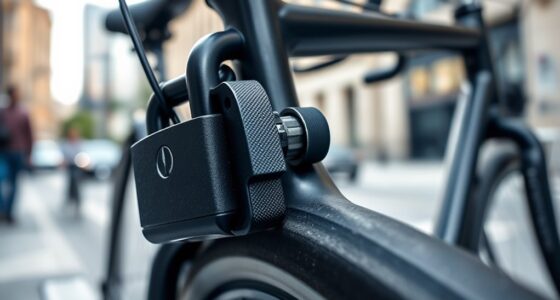
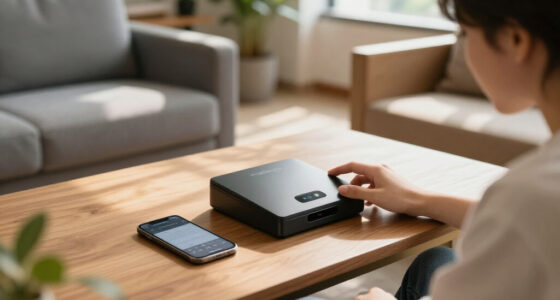
Voice assistants have quietly split into three very different product categories, and picking the wrong one is the most common mistake buyers make. A wearable clip-on speaker like the TOZO PM1 turns spoken AI chat into something you can take on a hike. A desktop unit like the STRATRONIX STA-100 Workie behaves like an always-on private AI office employee. And a badge like the Z02 AI Companion focuses on translation and meeting capture rather than open-ended conversation. In this guide I break down where each device wins, where each one falls short, and which type of buyer each actually suits — because none of these three tries to do the same job.

Get business pricing on tech for your team
- Business-only prices and quantity discounts
- Tax-exempt purchasing
- Multiple users, one account, clear invoices
The main tradeoff running through this comparison is portability versus depth. The two wearable options trade screen-free convenience for app and network dependence, while the desktop unit trades mobility for genuine always-on capability and local data privacy. There is also a subscription question lurking here: two of these devices promise no ongoing fees, while the third requires you to bring your own paid API keys — a cost structure that changes the math entirely depending on how much you actually use AI day to day.
Key Takeaways
- The STRATRONIX STA-100 Workie is the most capable AI assistant here, but it only works with a paid API key from a provider like Claude or ChatGPT, so it is not truly self-contained.
- The TOZO PM1 is the best pick for people who want conversational AI and music in a pocket-sized, waterproof, clip-on form factor with 20-hour battery life.
- The Z02 badge is the strongest choice for meetings and travel thanks to speaker distinction, meeting minutes, and multi-language translation with no subscription.
- Privacy is the Workie’s defining advantage — it processes and stores data locally with no cloud telemetry — while both wearables rely on companion apps and network connections.
- None of these devices is a general-purpose smart home hub; buyers wanting whole-home voice control should look at ecosystem speakers instead.
| STRATRONIX STA-100 Workie – Private AI Office Assistant |  | Best Overall — the always-on AI assistant for serious daily work | Operating System: Linux / Ubuntu (XFCE desktop) | AI Platform: OpenClaw AI agent framework (pre-installed) | Supported AI Models: DeepSeek, Gemini, Claude, ChatGPT (via user API keys) | VIEW LATEST PRICE | See Our Full Breakdown |
| TOZO PM1 Mini Speaker with AI Assistants |  | Best Portable — hands-free AI chat and music you can clip to your jacket | Speaker Size: 71.27 x 48.51 x 33.83 mm | Weight: 69 g | Driver: 28mm dynamic driver | VIEW LATEST PRICE | See Our Full Breakdown |
| Z02 Wearable AI Companion Badge |  | Best for Meetings and Travel — the translator and transcription specialist | Model: Z02 | Connectivity: Bluetooth | Recording Modes: Omnidirectional and directional | VIEW LATEST PRICE | See Our Full Breakdown |
| AI voice assistant device | Connectivity |
|---|---|
| STRATRONIX STA-100 Workie | Wi-Fi, remote access via IMS |
| TOZO PM1 Mini Speaker with AI | — |
| Z02 Wearable AI Companion Badg | Bluetooth |
More Details on Our Top Picks
STRATRONIX STA-100 Workie – Private AI Office Assistant
The STRATRONIX STA-100 Workie earns the top spot in this lineup because it is the only device here built to function as a genuine always-on AI agent rather than a peripheral you occasionally talk to. Running the pre-installed OpenClaw agent framework on Linux, it sits on your desk around the clock, silently processing tasks, and you can reach it remotely from a phone or laptop. Compared with the TOZO PM1, which depends on a smartphone app for its AI chat features, the Workie is self-directing: it runs workflows, not just conversations.
The privacy story is what separates it most sharply from both wearables in this guide. The Workie processes and stores data locally with no cloud telemetry or third-party sharing, which matters if your assistant will ever touch client files, contracts, or internal documents. The Z02 badge also records meetings, but its intelligent features route through a companion app and network connection — a meaningful difference for anyone with confidentiality obligations.
Now for the honest tradeoffs. The Workie is not a standalone AI computer; it needs a paid API key from a provider such as Claude, ChatGPT, Gemini, or DeepSeek before it does anything intelligent. That means ongoing usage costs that the Z02 and PM1 avoid, and your total spend scales with how heavily you use it. The 32GB of internal storage is also lean, so plan on an SD card for expansion. Finally, each unit is designed around a single specialized role — building a full multi-agent workflow means stacking multiple devices, which multiplies the cost. For a professional who already lives in AI tools and wants a private, subscription-free hardware layer orchestrating them, this pick makes the most sense despite those caveats.
Pros:- Privacy-first architecture with all data processed and stored locally, no cloud telemetry
- One-time hardware purchase with no monthly subscription; users control spend via their own API keys
- Always-on silent 24/7 operation with remote access from phone or laptop
- Stackable design lets multiple units form a coordinated multi-agent AI workgroup
Cons:- Not fully standalone — requires a paid third-party API key to function
- Only 32GB internal storage, so an SD card is needed for serious use
- Each device handles a single specialized role, so full workflows require buying multiple units
Best for: Professionals, freelancers, and small businesses that want an always-on, privacy-first AI assistant and already use (or are willing to pay for) cloud AI model API keys.
Not ideal for: Casual users who want a simple talk-to-me gadget with zero ongoing costs, or anyone unwilling to manage API keys and usage-based billing.
- Operating System:Linux / Ubuntu (XFCE desktop)
- AI Platform:OpenClaw AI agent framework (pre-installed)
- Supported AI Models:DeepSeek, Gemini, Claude, ChatGPT (via user API keys)
- Internal Storage:32GB
- Expandable Storage:Up to 512GB SD card
- Connectivity:Wi-Fi, remote access via IMS
- Setup Time:8-10 minutes
- Design:Compact all-in-one desktop unit, silver
Our verdict“The most powerful and private AI assistant in this roundup, provided you accept the API-key cost model and single-role design.”
TOZO PM1 Mini Speaker with AI Assistants
Where the Workie stays on a desk, the TOZO PM1 is built to move. Weighing just 69 grams — roughly the size of an egg — it clips onto a jacket, backpack strap, or belt and turns spoken AI interaction into something that happens while you walk, cycle, or cook. Through the TOZO app you can talk to it like a real person instead of typing and reading on a screen, and that shift from eyes-down phone use to hands-free conversation is the entire point of the device.
Its second trick is one neither competitor offers in quite the same way: an intelligent meeting assistant. One-click recording pairs with real-time transcription, automatic extraction of key points and action items, and one-tap translation into multiple languages. The Z02 badge covers similar meeting ground and does it with speaker distinction, but the PM1 doubles as a genuinely capable speaker — a 28mm dynamic driver with tuned bass that the badge simply cannot match for music or calls. Think of the Z02 as a specialist and the PM1 as the all-rounder.
The tradeoffs are real, though. A single microphonette and a 28mm driver mean this will never fill a conference room, and the AI features only work through the companion app, so it is tethered to your phone in practice. Battery life of up to 20 hours is strong for the size, and the IP67 waterproof rating plus rugged shell make it the only option here I would trust on a rainy trail. Compared with the Workie, you give up autonomy and local privacy entirely; compared with the Z02, you gain music and lose meeting-specific polish. For buyers whose AI assistant needs to keep up with their body rather than their desk, this model is better suited than either alternative.
Pros:- True hands-free conversational AI through the TOZO app, no typing or screen-reading required
- Featherlight 69g clip-on design with IP67 waterproofing for outdoor use
- Up to 20 hours of battery life for all-day playback and calls
- Built-in meeting assistant with real-time transcription, summaries, and multi-language translation
Cons:- AI chat features require the companion app and a paired phone
- A single microphone and small driver limit audio performance in noisy or large spaces
- Not a standalone assistant — no independent processing or smart home control
Best for: Active users, commuters, and outdoor enthusiasts who want conversational AI, music, and call handling in a pocketable clip-on device.
Not ideal for: Anyone needing room-filling audio, whole-home smart control, or a fully standalone assistant that works without a phone app.
- Speaker Size:71.27 x 48.51 x 33.83 mm
- Weight:69 g
- Driver:28mm dynamic driver
- Battery Life:Up to 20 hours
- Water Resistance:IP67 waterproof
- Bluetooth:Bluetooth 5.4, ~15m range
- Control Method:App-based via TOZO app
- Microphones:1
- Mounting:Rugged built-in clip-on
Our verdict“The best pick if your AI assistant needs to travel with you, blending spoken AI chat, decent sound, and rugged portability in one tiny package.”
Z02 Wearable AI Companion Badge
The Z02 AI Companion Badge takes the opposite approach from the two picks above: instead of trying to be a speaker or a desktop agent, it goes narrow and deep on communication tasks. Worn as a badge, it combines a voice recorder, multi-language translator, meeting assistant, and AI chatbot in one lightweight body, with eight AI tools on board including meeting minutes, mind maps, and automatic summaries. For anyone whose week is a blur of calls, lectures, and cross-language conversations, that focus is the whole value proposition.
Its standout capability is real-time speaker distinction — the ability to tell who said what during a meeting — paired with dual recording modes (omnirectional and directional) that let you capture a whole room or a single conversation depending on the situation. The TOZO PM1 records and transcribes too, but without speaker separation, and the Workie is not designed to be carried into someone else’s meeting at all. There are no subscription fees, which keeps the long-term cost picture cleaner than the Workie’s usage-based API billing.
The limitations deserve equal airtime. Every intelligent feature runs through the BagiBagi app and a network connection, so offline the badge loses most of its smarts — a sharper restriction than it sounds when traveling through areas with poor connectivity. It also has no meaningful speaker of its own, so it is not an audio device in the way the PM1 is; you interact through your phone. As a newer product with limited market history, real-world reliability is harder to verify than established alternatives. This option stands out as the right tool for a specific buyer: the frequent meeting-goer, student, or international traveler who values transcription and translation above all else and already carries a phone everywhere.
Pros:- All-in-one recorder, translator, and AI assistant with no subscription fees
- Real-time speaker distinction and dual recording modes for accurate meeting capture
- Eight AI tools including meeting minutes, mind maps, and automatic summaries
- Lightweight wearable design with customizable wallpapers and gesture controls
Cons:- Requires the BagiBagi app and a network connection for intelligent features
- No built-in speaker, so it cannot serve music or calls the way the PM1 can
- Limited market track record, making long-term reliability harder to judge
Best for: Students, frequent travelers, and professionals who need meeting transcription, summaries, and real-time translation in a wearable form.
Not ideal for: Buyers wanting music playback, offline functionality, or a general-purpose voice assistant for home or desk use.
- Model:Z02
- Connectivity:Bluetooth
- Recording Modes:Omnidirectional and directional
- AI Tools:8 (meeting minutes, mind maps, summaries, and more)
- Required App:BagiBagi
- Subscription:None required
- Extras:Multi-language translation, custom wallpapers, voice alarms, memo, AI chatbot
Our verdict“The specialist’s choice — unmatched in this lineup for meetings and multilingual conversation, as long as you accept its app and network dependence.”

How We Picked
Because “AI voice assistant device” now covers several distinct form factors, I judged each product against the job it claims to do rather than forcing them into a single scoring rubric. That said, four criteria shaped the ranking. First, how natural the voice interaction actually is — a device earns its place by letting you speak and listen rather than tap and read. Second, day-to-day practicality: battery life, setup friction, portability, and whether the device works reliably without constant fiddling. Third, cost structure over time, since upfront price and ongoing fees tell very different stories for these products. Fourth, privacy and data handling, which matters enormously for anyone recording meetings or running an AI agent on sensitive work documents.
I also weighed versatility against focus. A device that does one job exceptionally well — like the Z02’s meeting transcription — can beat a jack-of-all-trades for the right buyer. Comparisons throughout this guide are drawn across the three products directly, so the reasoning behind the ordering is visible: the Workie takes the top spot for sheer capability and privacy, the TOZO PM1 follows as the best portable all-rounder, and the Z02 rounds out the lineup as the specialist pick for multilingual communication and meeting capture.
| AI voice assistant device | Connectivity |
|---|---|
| STRATRONIX STA-100 Workie | Wi-Fi, remote access via IMS |
| TOZO PM1 Mini Speaker with AI | — |
| Z02 Wearable AI Companion Badg | Bluetooth |
Factors to Consider When Choosing AI Voice Assistant Devices
Before choosing between these three devices, it helps to understand what actually separates them. All three respond to your voice, but they differ in where the AI processing happens, what they cost over time, and what physical form makes sense for your routine. Here are the questions I would ask before clicking buy.Where does the AI actually live?
This is the single biggest differentiator in the category. The STRATRONIX Workie runs an agent framework locally on Linux and only reaches out to cloud models when you direct it to, keeping your data on the device. The TOZO PM1 and Z02 badge are both accessories in the truest sense — their intelligence lives in companion apps and remote servers, with the hardware acting as microphone, speaker, or recorder. Neither approach is wrong, but if you handle sensitive material, local processing is worth paying for.
What will it cost over time?
Upfront price is only part of the story. The Workie avoids subscriptions but requires paid API keys, so heavy users pay more the more they lean on it — light users pay almost nothing beyond the hardware. The Z02 promises no subscription at all, which is refreshing in a market full of monthly-fee transcription services. The PM1 sits in between, with app-based features that currently carry no ongoing charge. Match the cost model to your expected usage volume before deciding.
Wearable or stationary?
Form factor dictates function here. If your AI needs happen at a desk — documents, research, routine office workflows — a stationary unit like the Workie fits naturally and can stay powered and connected indefinitely. If your needs happen in motion, only the PM1 and Z02 make sense, and the PM1’s IP67 rating and 20-hour battery make it the tougher choice for genuine outdoor use, while the Z02’s badge format is more discreet in professional settings.
Do you need speaker separation and translation?
For meeting capture, the difference between a transcript and a useful transcript often comes down to knowing who said what. The Z02’s real-time speaker distinction is the feature that turns raw recordings into actionable minutes. The PM1 transcribes and translates but cannot attribute statements to individuals. If your work involves multi-person calls, interviews, or lectures, that single capability may decide your pick.
Frequently Asked Questions
Do any of these devices require a monthly subscription?
The Z02 badge and the TOZO PM1 both operate without subscription fees — their smart features run through free companion apps. The STRATRONIX Workie avoids subscriptions too, but it works differently: you supply your own API keys from providers like Claude, ChatGPT, Gemini, or DeepSeek, and those providers bill based on usage. That means your cost scales with how much AI you actually consume rather than a flat monthly fee. For a heavy daily user, API costs can exceed a typical subscription; for a light user, they can be close to negligible. My suggestion is to estimate your expected usage before committing to the Workie’s model.
Which of these is best for recording and summarizing meetings?
The Z02 badge is the strongest meeting-focused option because of its real-time speaker distinction, dual recording modes, and dedicated tools for meeting minutes and action-item extraction. The TOZO PM1 offers one-click recording with transcription, key-point extraction, and translation, which covers the basics well but without knowing who said what — fine for a lecture, weaker for a heated group call. The Workie can process meeting material through its agent platform, but it is a desk device, not something you carry into someone else’s conference room. If meetings are your primary use case, the Z02’s specialization wins.
Can the STRATRONIX Workie work completely offline?
Not for its AI functions. The Workie runs the OpenClaw agent framework locally and stores all your data on the device with no cloud telemetry, which is a genuine privacy advantage — but the actual language intelligence comes from cloud models accessed through your own API keys, so it needs a network connection to think. What you get offline is the Linux environment and your stored files. Buyers wanting fully offline AI should temper expectations; no device in this price class currently offers serious offline language models. The privacy benefit here is about data handling, not disconnection.
Can the TOZO PM1 replace a regular Bluetooth speaker?
For personal and small-group listening, yes — the 28mm dynamic driver produces surprisingly full sound for a 69-gram device, with 20 hours of playback and IP67 waterproofing that many full-size speakers lack. What it cannot do is fill a large room or compete with dedicated home speakers at volume; physics limits a driver that small. Where it beats a conventional speaker is convenience: clip it on, keep your ears open to traffic and surroundings (safer than headphones while cycling or running), and talk to an AI assistant hands-free. Treat it as a very capable personal speaker rather than a party unit.
Which device should I buy if I can only choose one?
It depends entirely on where your AI use happens. If it happens at a desk and involves real work — documents, research, ongoing tasks — the Workie’s always-on agent and local privacy make it the most capable choice, assuming you are comfortable with API costs. If your assistant needs to travel with you and double as a music and call device, the PM1 is the better fit. If your days revolve around meetings, interviews, or conversations in other languages, the Z02’s transcription and translation focus delivers more value than either generalist. I would resist buying on specs alone — pick the form factor that matches your actual routine.
Conclusion
After comparing these three side by side, my recommendations break down cleanly by buyer type. Professionals and small business owners who want a genuine AI workhorse should choose the STRATRONIX STA-100 Workie — its always-on agent platform, local data storage, and stackable multi-unit design make it the most capable assistant here, provided you accept the API-key cost model. Active users and commuters who want spoken AI, music, and calls on the move will be happiest with the TOZO PM1, whose clip-on build, 20-hour battery, and waterproofing make it the only truly go-anywhere option. Students, travelers, and meeting-heavy professionals should pick the Z02 badge, because speaker-distinguished transcription, eight AI meeting tools, and real-time translation solve problems the other two simply do not address.
Whichever direction you take, the deciding factor should be honest self-assessment: where does your AI use actually happen — at a desk, on a trail, or in a meeting room? Answer that question and the right device from this lineup becomes obvious.
Fall Picks
fall essentials
As an affiliate, we earn on qualifying purchases.