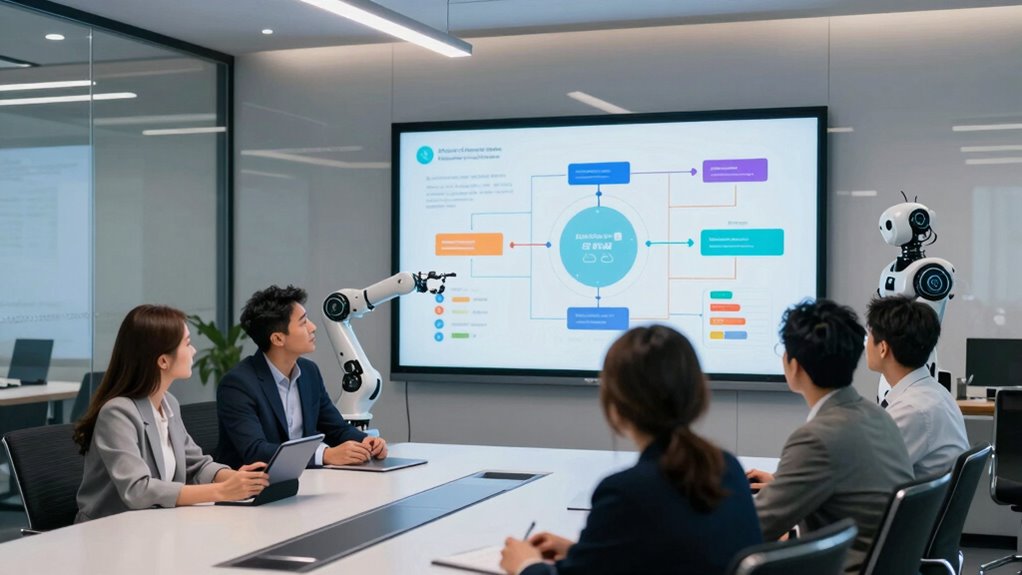

To guarantee AI safety, you need clear policies that guide risk management, ethical practices, and user communication. Manage permissions carefully by restricting access to sensitive data and using role-based controls to prevent errors. Logging all activities enables you to track decisions and spot issues early, while regular reviews help update safety practices as technology advances. Covering these basics sets a strong foundation for responsible AI deployment—continue to explore for more detailed strategies.
Key Takeaways
- Establish clear safety policies emphasizing risk management, ethics, and user education for responsible AI deployment.
- Implement role-based access controls to restrict sensitive data and functions to authorized team members.
- Regularly log all AI interactions and decisions to create an audit trail and facilitate early anomaly detection.
- Conduct routine reviews and updates of safety practices, incorporating lessons learned and evolving risks.
- Promote a safety-aware culture through training, communication, and adherence to standardized protocols.
Why Your AI Team Needs Clear Safety Policies

Having clear safety policies is essential because they provide your team with consistent guidelines to identify and mitigate potential risks. By establishing these policies, you promote ethics considerations that ensure responsible AI development and deployment. Clear safety policies also emphasize the importance of user education, helping your team communicate effectively about AI capabilities and limitations. When everyone understands the safety protocols, it reduces misunderstandings and misuse. These policies serve as a foundation for accountability, guiding your team to make ethically sound decisions during AI design and implementation. Additionally, understanding the role of projector contrast ratio can help your team recognize the importance of quality standards in system performance. Moreover, implementing compliance requirements ensures that your AI systems adhere to relevant regulations and standards, further safeguarding your organization. Incorporating vetted wave and wind considerations into safety policies can help your team account for environmental factors that might impact AI system robustness and reliability. Recognizing the significance of thermal behavior in system performance can also lead to more resilient AI solutions. Considering environmental factors can further enhance your team’s ability to develop safe and reliable AI systems. Ultimately, well-defined safety policies foster a safety-first mindset, ensuring your team remains vigilant and proactive in safeguarding users and maintaining trust in your AI systems.
How to Manage Permissions to Keep AI Systems Safe

Effective permission management is essential for keeping AI systems safe because it controls who can access and modify sensitive data and functionalities. It is important to assign user permissions carefully, ensuring only authorized team members can perform critical actions. Implement access controls that restrict unnecessary or risky operations, reducing the chance of accidental or malicious errors. Regularly review and update permissions to reflect changes in team roles or project needs. Use role-based access control (RBAC) to simplify permissions management and minimize human error. By limiting access to only what’s necessary, you prevent unauthorized use and potential security breaches. Clear policies around user permissions and access controls create a safer environment for your AI systems and help maintain data integrity. Incorporating permission audits can further identify and address vulnerabilities in your access controls. Establishing security protocols for managing permissions enhances overall system safety. Additionally, implementing natural language understanding can help automate permission reviews and improve accuracy. Applying access control policies aligned with industry standards also ensures consistent and effective permission management across your AI infrastructure, supported by compliance standards that guide secure practices.
How to Log AI Activity for Better Safety Monitoring

To guarantee AI systems operate safely, you need to track their activity continuously. Activity tracking involves recording every interaction and decision the AI makes, creating a detailed audit trail. These logs help you identify unusual behavior or errors early, allowing for quick intervention. Implement automated logging tools that capture relevant data points, such as inputs, outputs, and system responses. Consistently review audit trails to ensure compliance with safety policies and to detect potential risks. Clear, thorough logs also support accountability, making it easier to understand how the AI reached specific conclusions. By maintaining detailed activity records, you build a robust safety net that improves oversight and helps prevent harmful or unintended outcomes. Additionally, integrating connected technology can enhance real-time monitoring and facilitate faster response to emerging issues. Regularly updating your logging protocols ensures your safety measures stay effective as AI systems evolve. Establishing standardized data formats for logs can also improve analysis efficiency and interoperability across systems. Incorporating automated alert systems can further help in promptly flagging any anomalies detected in activity logs. Moreover, adopting audit trail analysis techniques allows for deeper insights into system behavior over time, helping to refine safety measures continuously.
Creating Practical Guidelines for Safe AI Deployment

Building on your activity logs, establishing clear, practical guidelines is essential for deploying AI safely. Start by aligning your policies with AI ethics, ensuring your team considers fairness, transparency, and accountability. Incorporate risk assessment into your guidelines to identify potential harms early and develop mitigation strategies. These guidelines should specify who can access and modify AI systems, how data is handled, and what safety checks are required before deployment. Keep your policies adaptable to evolving AI technologies and emerging risks. Clear, actionable rules help prevent misuse and reduce unintended consequences. Regularly communicating these guidelines fosters a safety-aware culture, ensuring your team remains committed to responsible AI deployment while maintaining compliance with ethical standards. Integrating power tools and heavy-duty equipment safety principles can further enhance your team’s preparedness for managing complex AI systems securely. Additionally, understanding Youngster Choice can provide insights into diverse perspectives and decision-making processes relevant to AI safety policies. Incorporating risk mitigation strategies into your procedures can help anticipate and address potential issues proactively.
How to Review and Update Your AI Safety Practices Regularly

Since AI technologies and associated risks are constantly evolving, regularly reviewing and updating your safety practices is essential to stay ahead of emerging challenges. Schedule routine evaluations of your policies to identify gaps and integrate lessons learned from recent incidents. Incorporate training drills that simulate potential AI safety breaches, helping your team respond swiftly and effectively. Review your incident response procedures to ensure they remain effective against new threats or vulnerabilities. Keep documentation current, and solicit feedback from team members to spot overlooked risks. Regular updates foster a proactive safety culture, ensuring your team stays prepared for unforeseen issues. Additionally, understanding fundamental principles of AI safety can help guide your updates and decision-making processes. By continuously refining your practices, you minimize risks and maintain a secure AI environment that adapts to the evolving landscape.
Frequently Asked Questions
How Do I Train Team Members on AI Safety Protocols Effectively?
You can train your team effectively by organizing interactive sessions focused on safety awareness, using real-world examples to illustrate potential risks. Encourage open discussions, provide clear policies, and use hands-on exercises to reinforce learning. Regularly update training materials and assess understanding through quizzes or simulations. This approach keeps team members engaged, guarantees they understand safety protocols, and fosters a culture of responsibility around AI use.
What Tools Are Best for Automating AI Activity Logging?
You should use robust audit tools like Splunk or Datadog for automating AI activity logging. These tools excel in activity tracking, capturing detailed logs of AI operations, permissions, and access. They allow you to set alerts for suspicious activity and generate thorough reports. By integrating such audit tools into your workflow, you guarantee continuous monitoring and quick identification of any safety or compliance issues, keeping your AI environment secure and accountable.
How Can We Handle AI Safety When Collaborating With External Partners?
Imagine managing a massive fortress with countless gates—each representing an external partner. To guarantee safety, you vet every partner thoroughly and establish strict cross-organization safety protocols. You set clear policies, enforce permissions, and maintain detailed logs of all interactions. By doing so, you prevent unauthorized access, monitor activities, and ensure that collaboration remains secure and aligned with your AI safety standards. This proactive approach keeps your AI environment safe from external risks.
What Are Common Pitfalls in Implementing AI Permissions Management?
You might face permission pitfalls like overly broad access or unclear boundaries, which can lead to security risks. Access challenges often stem from inconsistent permission setups or lack of regular reviews, causing users to have more access than needed. To avoid these issues, establish clear policies, regularly audit permissions, and implement role-based controls. This proactive approach helps prevent permission pitfalls and guarantees safe, efficient AI collaboration across your team.
How Do We Measure the Success of Our AI Safety Policies?
Think of your AI safety policies as a lighthouse guiding ships through stormy waters. You measure success with clear performance metrics that show how well your policies prevent issues, and compliance audits act like inspections ensuring adherence. When these indicators stay steady or improve, you know your policies are effective. Regularly reviewing these metrics helps you navigate challenges, ensuring your AI remains safe, reliable, and trustworthy.
Conclusion
By establishing clear safety policies, managing permissions, and logging activities, you create a safer environment for your AI projects. Regularly reviewing these practices keeps you ahead of potential issues, much like a vigilant knight guarding a castle. Remember, AI safety isn’t a one-and-done task—it’s an ongoing quest. Stay proactive, adapt quickly, and you’ll navigate the future of AI with confidence—just like a seasoned tech pioneer in a world of endless possibilities.