
🔍 Read the full analysis: 2026 Gaming Motherboards With Intelligent AI Features on ThorstenMeyerAI.com

Get business pricing on tech for your team
- Business-only prices and quantity discounts
- Tax-exempt purchasing
- Multiple users, one account, clear invoices
TL;DR
Manufacturers have unveiled 2026 gaming motherboards featuring integrated AI capabilities. These boards aim to enhance gaming performance, optimize system tuning, and extend upgrade paths. The development signals a new era of intelligent hardware for gamers.
Several leading motherboard manufacturers have officially announced their 2026 lineup of gaming motherboards, highlighting the integration of advanced AI features designed to optimize gaming performance, system stability, and user customization. For a detailed overview, see the original analysis. These boards are set to redefine the capabilities and user experience of gaming PCs, with AI-driven functionalities embedded directly into the hardware.
The new 2026 gaming motherboards from brands like MSI, ASUS, and Gigabyte feature built-in AI modules capable of real-time system tuning, thermal management, and predictive performance adjustments. Check out the top options for gaming in 2026. These AI features are integrated into the motherboard firmware, allowing for automatic overclocking, fan control, and power management based on workload and user preferences. Notably, MSI’s MPG X870E Carbon WiFi and ASUS’s ROG Strix B650-F Gaming WiFi are among the first to showcase these capabilities, promising a more intelligent and adaptive gaming environment.
Manufacturers emphasize that these AI features are designed to work seamlessly with existing components, providing a layer of automated optimization without requiring extensive manual tuning. For instance, AI-based thermal management can predict system heat levels and adjust fan speeds proactively, while AI-driven overclocking can boost CPU and GPU performance dynamically to maximize frame rates and responsiveness. These innovations aim to cater to both casual gamers and enthusiasts seeking high performance with minimal manual intervention.
While details about the specific algorithms and hardware integration are still emerging, industry insiders suggest that these AI features will leverage machine learning techniques to adapt to user habits and system conditions over time. This development is covered in the original analysis. The boards also support the latest connectivity standards, including USB4, WiFi 7, and PCIe Gen 5, ensuring compatibility with future peripherals and storage devices.
The 10 picks
- 1
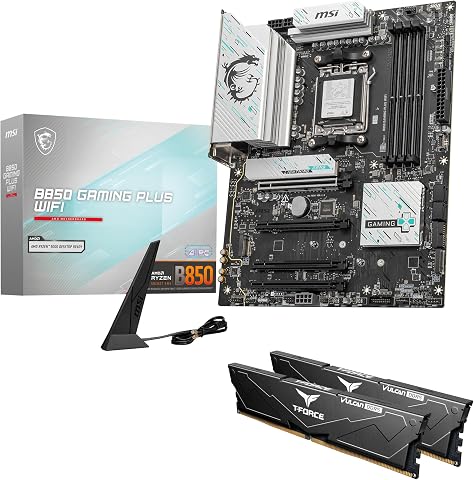 MSI B850 Gaming Plus WiFi ATX Motherboard with 32GB (2x16GB) DDR5 6000MHz RAM…View on Amazon →
 - 2
 ASUS ROG Strix X870E-A Gaming WiFi 7 Neo AM5 ATX MotherboardView on Amazon →
 - 3
 MSI MPG X870E Carbon WiFi Gaming MotherboardView on Amazon →
 - 4
 ASUS ROG Strix X870-A Gaming WiFi AM5 ATX MotherboardView on Amazon →
 - 5
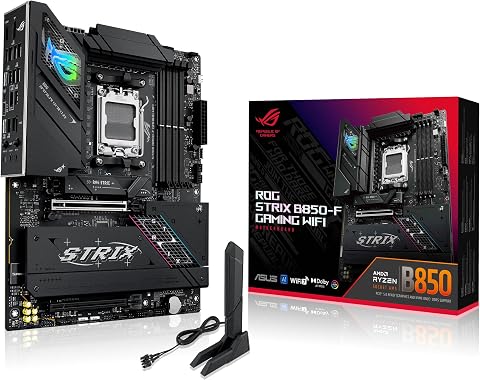 ASUS ROG Strix B850-F Gaming WiFi AMD AM5 ATX MotherboardView on Amazon →
 - 6
 ASUS TUF Gaming B850-PLUS WiFi AM5 ATX MotherboardView on Amazon →
 - 7
 ASUS ROG Strix B550-F Gaming WiFi II AMD AM4 ATX Gaming MotherboardView on Amazon →
 - 8
 GIGABYTE B650 AORUS Elite AX AMD AM5 ATX MotherboardView on Amazon →
 - 9
 ASUS ROG Strix B650-A Gaming WiFi AM5 ATX MotherboardView on Amazon →
 - 10
 GIGABYTE B550 Gaming X V2 AMD AM4 ATX MotherboardView on Amazon →
Implications of AI-Integrated Gaming Motherboards
The introduction of AI features into gaming motherboards signifies a major shift in PC hardware, moving toward more autonomous and intelligent systems. For gamers, this means potentially higher performance, better thermal management, and simplified system tuning, reducing the need for manual overclocking and troubleshooting. It also opens the door for more personalized gaming experiences, as AI can tailor system behavior based on individual usage patterns.
From a broader perspective, these developments could accelerate the adoption of AI in consumer hardware, encouraging other components such as GPUs and CPUs to incorporate similar capabilities. This trend may lead to more efficient power consumption, longer hardware lifespan, and enhanced stability, especially as games and applications become more demanding. For PC builders and enthusiasts, the AI integration offers a new layer of control and customization, potentially extending the longevity of their systems.
However, questions remain about the transparency of AI decision-making processes, potential privacy concerns related to system data collection, and whether these features will be accessible and user-friendly for all levels of users. The industry’s approach to these issues will influence how broadly these innovations are adopted and trusted.
Evolution of Gaming Motherboards Toward AI Capabilities
The integration of AI into gaming motherboards builds on the ongoing trend of increasing automation and smart features in PC hardware. Over the past few years, motherboard manufacturers have steadily added features like improved BIOS interfaces, better VRM designs, and more comprehensive connectivity options. The move toward AI-driven functionalities reflects a desire to simplify complex tuning processes and enhance user experience.
Historically, motherboard features such as multi-GPU support, high-speed RAM compatibility, and robust power delivery have defined high-end boards. The 2026 announcements mark a new phase where embedded AI modules aim to proactively optimize these features in real-time. Industry insiders note that this shift is partly driven by advances in machine learning hardware and software, making real-time system adaptation feasible within consumer-grade motherboards.
While AI features are still in their infancy in the PC hardware space, major brands have indicated that these capabilities will become standard in flagship models and gradually trickle down to mid-range options. The focus remains on providing a seamless experience that balances raw performance with ease of use, especially for gamers who want top-tier performance without extensive manual tuning.
Limitations and Challenges of AI-Enabled Motherboards
While the announced AI features promise significant benefits, details about their actual performance, reliability, and user control remain limited. It is not yet clear how transparent or customizable these AI systems will be, or how they will handle privacy concerns related to data collection. There is also uncertainty about compatibility with existing hardware and the extent to which AI will replace manual tuning for advanced users.
Industry experts caution that early implementations may face bugs or inefficiencies, and some users may prefer manual control over system settings. Moreover, the long-term durability and security implications of embedded AI modules are still unknown, as the technology is relatively new in consumer hardware.
Upcoming Testing, Availability, and Industry Adoption
Manufacturers are expected to release detailed specifications and beta firmware updates over the coming months, allowing early adopters and reviewers to evaluate AI performance in real-world gaming scenarios. Consumer availability is projected for late 2026, coinciding with the launch of new CPUs and GPUs optimized for AI-enhanced motherboards.
Industry analysts predict that widespread adoption will depend on user feedback, software support, and the development of standardized AI protocols across hardware vendors. As AI features mature, expect more firmware updates, software tools, and user guides aimed at maximizing their benefits and ensuring transparency.
Key Questions
Will AI features improve gaming performance significantly?
Preliminary information suggests that AI can optimize system settings dynamically, potentially boosting frame rates and reducing latency, but actual performance gains will vary depending on implementation and workload.
Are these AI features customizable or only automatic?
Manufacturers have indicated that AI functionalities will offer both automatic adjustments and user controls, allowing for tailored system tuning if desired.
Will AI integration increase motherboard costs?
It is likely that AI-enabled motherboards will be priced higher than traditional models, especially at the high end, but the exact cost premium remains to be seen as the technology matures.
Are there privacy concerns with AI features on motherboards?
Some industry experts have raised questions about data collection and privacy, but manufacturers have stated they will prioritize user control and transparency in their implementations.
Source: ThorstenMeyerAI.com
Halloween Picks
halloween
As an affiliate, we earn on qualifying purchases.