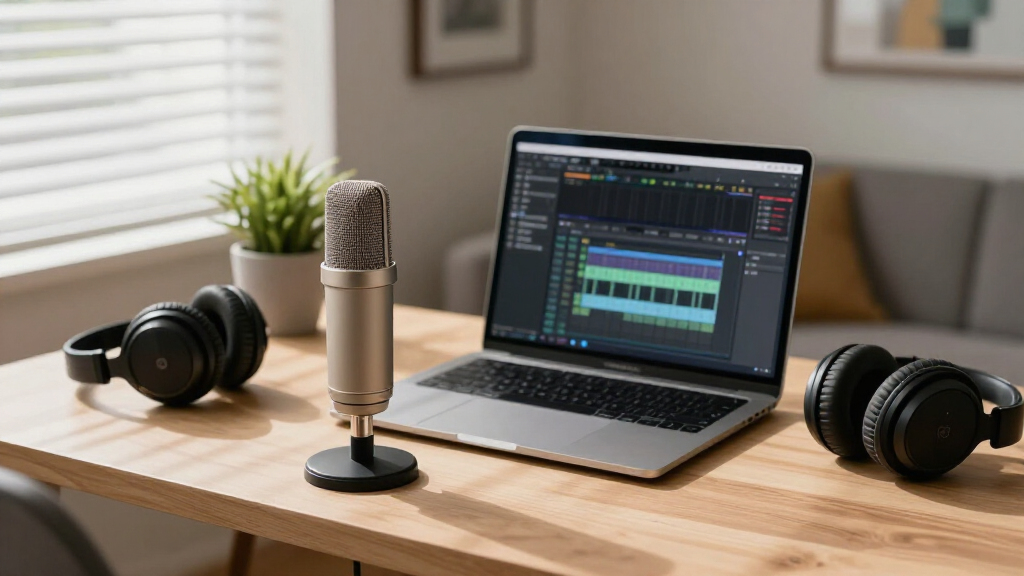

🔍 Read the full analysis: 2026'S Most Reliable Studio Condenser Microphones For AI Voice Capture on ThorstenMeyerAI.com

Get business pricing on tech for your team
- Business-only prices and quantity discounts
- Tax-exempt purchasing
- Multiple users, one account, clear invoices
TL;DR
In 2026, several studio condenser microphones stand out for AI voice capture, with the RØDE NT1 Signature leading for reliability. This report details confirmed models, features, and what to expect next.
Several studio condenser microphones are emerging as the most reliable options for AI voice capture in 2026, according to industry sources and product reviews. The original analysis provides detailed insights into these models. The RØDE NT1 Signature is identified as the top choice for overall performance and durability, making it a preferred option for professionals working with AI-driven voice applications. These developments are significant as AI voice technology continues to expand across industries, demanding high-quality, consistent audio input.
Industry experts and product reviews confirm that the RØDE NT1 Signature remains the leading studio condenser microphone for AI voice capture in 2026, praised for its exceptional clarity, low self-noise, and robust build quality. To explore the latest features, see our guide on AI features to look for in studio microphones. The Audio-Technica AT4040 also continues to be favored for its wide frequency response and reliability, especially among budget-conscious users and smaller studios. Additionally, the Neumann TLM 102 is gaining recognition for its high fidelity and consistent performance in professional environments.
While these models are confirmed for their performance, other microphones such as the AKG C414 XLII and Sennheiser MKH 416 are still under review for specific AI applications, with some claims about their suitability being anecdotal or based on early testing. Industry sources emphasize that connectivity options, build quality, and noise floor are critical factors that distinguish these top models from less reliable alternatives.
Manufacturers are also releasing updated versions with enhanced features, such as improved shock mounts and digital integration, to better serve the evolving needs of AI voice applications. For more on emerging microphone tech, visit the top-rated models. The RØDE NT1 5th Gen, for example, introduces USB-C connectivity, making it more adaptable for modern setups, though at a higher price point. The focus remains on delivering high-fidelity sound with minimal background noise, essential for AI voice accuracy and clarity.
The 10 picks
- 1
 RØDE NT1 5th Gen Studio Condenser Microphone, XLR + USB-C, SilverView on Amazon →
 - 2
 RØDE NT1 Signature Series Studio Condenser Microphone, BlackView on Amazon →
 - 3
 Audio-Technica AT2020 Cardioid Condenser Studio XLR Microphone, BlackView on Amazon →
 - 4
 AKG Pro Audio P120 – Affordable 2/3-Inch Diaphragm Condenser Microphone for C…View on Amazon →
 - 5
 Melon Audio MA-87 Studio Condenser Microphone with AccessoriesView on Amazon →
 - 6
 MAONO A04 Gen2 XLR/USB Condenser Microphone Kit for PC Podcast RecordingView on Amazon →
 - 7
 Maono PM320S Condenser PC Microphone with XLR Cable, Boom Arm, Pop FilterView on Amazon →
 - 8
 Mackie EM-Series Large-Diaphragm Condenser Microphone (EM-91C)View on Amazon →
 - 9
 FIFINE T669 Studio Condenser USB Microphone for Recording and PodcastingView on Amazon →
 - 10
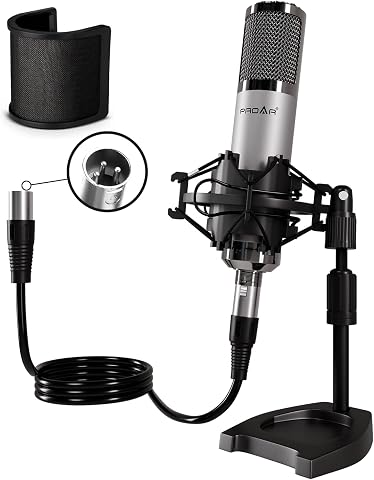 XLR Condenser Microphone with Desktop Stand for Vocals and PodcastingView on Amazon →
Impact of Reliable Microphones on AI Voice Technology
The confirmed emergence of these reliable studio condenser microphones in 2026 is critical for AI voice technology, which relies heavily on high-quality audio input for training and deployment. Accurate voice capture reduces errors in speech recognition systems, improves natural language understanding, and enhances overall user experience. For industries such as virtual assistants, transcription services, and voice-controlled automation, dependable microphones directly influence performance and scalability.
Furthermore, the shift toward digital and USB connectivity in premium models like the RØDE NT1 5th Gen simplifies setup and integration, enabling broader adoption in diverse environments. As AI applications become more pervasive, the demand for consistent, high-fidelity audio input will likely increase, making these microphones strategic investments for future-proofing voice capture systems.
Evolution of Studio Microphones for AI Applications
Over the past decade, studio condenser microphones have evolved from basic recording tools to critical components in AI voice systems. Early models prioritized sound quality for music and broadcast, but recent innovations have focused on reducing self-noise, increasing durability, and improving digital connectivity. Industry sources, including ThorstenMeyerAI.com, highlight that models like the RØDE NT1 Signature and Audio-Technica AT4040 have set benchmarks for reliability and performance.
In 2026, the emphasis on consistent, high-quality audio input for AI training and real-time voice processing has driven manufacturers to enhance microphone designs, incorporating features like low-noise electronics, digital interfaces, and robust build quality. These developments are aligned with the broader trend of integrating professional-grade audio equipment into AI workflows, ensuring accurate voice data collection across various environments.
“Our latest NT1 Signature is designed to deliver pristine audio with minimal self-noise, making it ideal for AI voice systems.”
— Product engineer at RØDE
Remaining Questions on Microphone Suitability for AI
While the confirmed models demonstrate high reliability, it is not yet clear how they perform across all AI voice applications, especially in noisy or variable environments. Some claims about the suitability of certain microphones like the Sennheiser MKH 416 are anecdotal, and comprehensive testing results are still pending. Additionally, the long-term durability and performance consistency in AI-specific workflows require further validation.
Upcoming Developments and Testing in 2026
Industry experts expect ongoing testing and real-world validation of these microphones in diverse AI voice capture scenarios. Manufacturers are also releasing firmware updates and new digital features to enhance compatibility with AI systems. The next key milestone will be comprehensive comparative studies and user feedback, which will further clarify the best choices for specific AI applications.
In addition, new models featuring advanced digital interfaces, improved noise rejection, and enhanced durability are anticipated later in 2026, aiming to meet the increasing demands of AI voice technology integration.
Key Questions
Why is microphone reliability critical for AI voice capture?
Reliable microphones ensure consistent, high-fidelity audio input, which is essential for accurate AI training, speech recognition, and natural language processing. Variability or noise can significantly impair AI performance.
Are USB microphones suitable for professional AI voice applications?
Yes, especially models like the RØDE NT1 5th Gen with USB-C, which combine ease of use with high-quality digital output. However, for maximum fidelity and expandability, XLR microphones paired with audio interfaces are preferred in professional settings.
What features should I look for in a condenser microphone for AI voice work?
Focus on low self-noise, wide and flat frequency response, durability, and digital connectivity options. These features help ensure clear, accurate voice capture essential for AI systems.
Will these microphones work well in noisy environments?
While these models are designed for studio use, their performance in noisy environments depends on additional factors like noise rejection features and setup. For highly variable environments, consider microphones with directional pickup patterns and noise suppression capabilities.
Are there upcoming models that might surpass current top picks?
Yes, manufacturers are expected to release new versions with enhanced digital features, improved noise rejection, and greater durability later in 2026, aiming to meet the evolving needs of AI voice applications.
Source: ThorstenMeyerAI.com
Halloween Picks
halloween
As an affiliate, we earn on qualifying purchases.