
TL;DR
Open a free Amazon Business account
Business pricing, bulk buying and tax-exempt orders.
Create a free accountAs an affiliate, we earn on qualifying purchases.
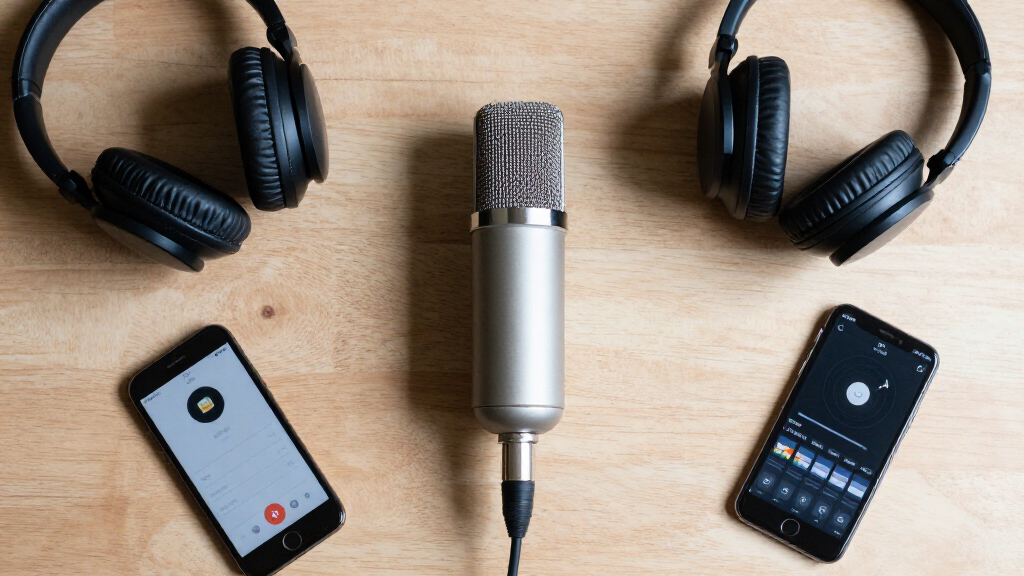
By 2026, studio condenser microphones will increasingly incorporate AI features that enhance sound quality, reduce noise, and improve usability. This article highlights the eight key AI-driven features to consider when selecting microphones for professional and hobbyist use.
In 2026, several leading microphone manufacturers are launching studio condenser microphones equipped with advanced artificial intelligence features, marking a significant shift in audio recording technology. These AI enhancements aim to improve sound clarity, reduce background noise, and streamline user workflows, making high-quality recording more accessible and efficient. For more on microphone technology, see the original analysis of top studio microphones. The integration of AI into microphones is now a key trend shaping the future of studio recording equipment.
Major brands such as RØDE, Audio-Technica, and Shure are developing microphones with embedded AI capabilities that automatically adjust gain, optimize polar patterns, and perform real-time noise suppression. Discover the best studio condenser microphones for 2026. These features are designed to deliver superior sound quality with minimal manual intervention, especially in complex recording environments. The AI features are also expected to include adaptive feedback reduction, intelligent calibration, and voice recognition for seamless operation.
Industry experts confirm that these AI-driven microphones will incorporate machine learning algorithms capable of analyzing sound environments and adapting in real-time. This means microphones will be able to learn from the recording environment and user preferences, providing personalized sound profiles and automatic adjustments for different recording scenarios. The goal is to reduce setup time and improve consistency across recordings.
Manufacturers emphasize that these features will be accessible via user-friendly interfaces, often integrated into companion apps or control software, making advanced AI functionalities available to both professionals and amateurs. Learn more about the latest trends in microphone AI features. The development is driven by the increasing demand for high-fidelity recordings combined with ease of use, especially as remote and home studios become more prevalent.
The 8 picks
- 1
 Shure SM4 XLR Studio Condenser Microphone Kit for RecordingView on Amazon →
 - 2
 Audio-Technica AT2035 Cardioid Condenser Microphone with Shock Mount and Acce…View on Amazon →
 - 3
 RØDE NT1 Signature Series Large-Diaphragm Condenser Microphone with Shock Mou…View on Amazon →
 - 4
 Audio-Technica AT2020 Cardioid Condenser Studio XLR MicrophoneView on Amazon →
 - 5
 AKG Pro Audio P120 Condenser MicrophoneView on Amazon →
 - 6
 MAONO A04 Gen2 XLR/USB Condenser Microphone Kit for PC and Content CreationView on Amazon →
 - 7
 Mackie EM-Series Large-Diaphragm Condenser Microphone (EM-91C)View on Amazon →
 - 8
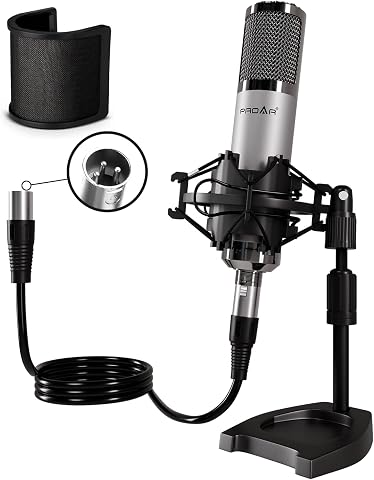 XLR Condenser Microphone with Desktop Stand for Vocals and PodcastingView on Amazon →
Why AI-Enhanced Microphones Will Reshape Studio Recording
The integration of AI features into studio condenser microphones in 2026 is set to significantly improve recording quality and workflow efficiency. For professionals, these microphones offer more consistent results with less manual tuning, saving time and reducing the need for extensive post-processing. Hobbyists and content creators will benefit from advanced noise reduction and automatic adjustments, enabling higher-quality recordings without specialized technical knowledge.
This technological shift could lower barriers to entry for high-quality audio production, democratizing professional-grade recording tools. It also opens new possibilities for live streaming, podcasting, and remote collaborations, where quick setup and reliable sound are crucial. Overall, AI features will make studio microphones smarter, more adaptable, and easier to use, impacting the entire recording ecosystem.
Evolution of Microphone Technology and AI Integration
Over recent years, microphone technology has steadily advanced from basic analog devices to digital tools with sophisticated features. In 2024, manufacturers began experimenting with AI-driven enhancements, primarily in software and post-processing. The current trend in 2026 marks a shift toward embedded AI hardware within microphones themselves, enabling real-time sound optimization. This development follows the broader adoption of AI in audio production, including automatic mixing, mastering, and noise suppression in digital audio workstations.
Early models with limited AI capabilities appeared in high-end broadcast and studio microphones, but recent launches indicate that AI integration is now becoming standard even in mid-range and consumer-grade models. The focus has shifted from post-processing to real-time, intelligent adjustments directly at the point of capture, promising more natural and professional results.
While specific details about upcoming models remain under wraps, industry insiders suggest that AI will become a core feature, much like built-in DSPs or digital interfaces, fundamentally changing how microphones are designed and used in 2026 and beyond.
Uncertainties Surrounding AI Microphone Adoption in 2026
While several manufacturers have announced plans to incorporate AI features into studio microphones, detailed specifications and performance benchmarks are still emerging. It is not yet clear how universally these features will be implemented across different brands and models, nor how they will perform in diverse recording environments. Additionally, the long-term reliability and user acceptance of AI-driven adjustments remain to be tested in real-world scenarios.
There are also questions about compatibility with existing audio interfaces and software ecosystems, as well as the potential for increased costs or complexity for users unfamiliar with AI technology. Industry analysts caution that some AI features may still be in early development stages, and their actual effectiveness will become clearer with upcoming product releases and user feedback.
Next Steps for AI-Integrated Microphone Technology
Manufacturers are expected to unveil new AI-enabled microphones throughout 2026, with detailed specifications and performance reviews to follow. Industry events, such as the NAMM Show and AES Convention, will likely showcase these innovations, providing insights into their capabilities and limitations. Consumer and professional feedback from early adopters will influence further development and refinement of AI features.
In the coming months, expect updates on software compatibility, user interface design, and integration with digital audio workstations. As AI features mature, they will become more standardized, potentially leading to new industry benchmarks for sound quality and usability in studio recording equipment.
Key Questions
Will AI features make microphones easier for beginners to use?
Yes, AI enhancements are designed to automate complex adjustments, making high-quality recording more accessible for beginners without extensive technical knowledge.
Are AI-powered microphones more expensive than traditional models?
Initially, they may carry a premium due to embedded technology, but as the features become mainstream, prices are expected to decrease, offering good value for advanced capabilities.
Can AI features be turned off or customized?
Most likely, manufacturers will include options to disable or fine-tune AI functionalities, allowing users to maintain control over their recording settings.
What brands are leading the development of AI microphones in 2026?
Major brands like RØDE, Audio-Technica, and Shure are actively developing and launching AI-enabled studio condenser microphones this year.
Will AI improve noise reduction in all recording environments?
AI-driven noise suppression is expected to perform well in controlled environments, but effectiveness may vary depending on ambient noise levels and acoustic conditions.
Source: ThorstenMeyerAI.com
NFL season / tailgating Picks
team gear
As an affiliate, we earn on qualifying purchases.