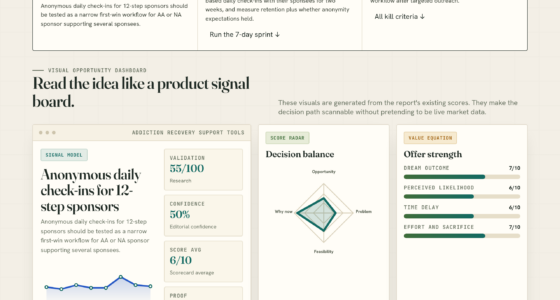

📊 Full opportunity report: AI Transparency Challenges: The Story Behind Claude’s Hidden Watermark on ThorstenMeyerAI.com — validation score, market gap, and execution plan.

Get tech for your team delivered free — and shop member deals
- Fast, free delivery on millions of items
- Access to Prime Big Deal Days deals on October 6–7
- Prime Video, Amazon Music and more included
TL;DR
Anthropic has acknowledged concerns about a possible hidden watermark in Claude but has not disclosed technical details. The nature, scope, and impact of the watermark remain unclear, fueling ongoing debates over AI transparency.
Anthropic has officially responded to concerns raised by technologists regarding a reported hidden watermark in its AI model, Claude. The company’s statement clarifies that questions were raised about the existence and nature of the watermark, but it does not specify how the marker functions, which outputs it affects, or whether it can identify individual users. This development highlights ongoing issues around AI transparency and content identification.
The controversy began after reports suggested that Claude outputs might contain a hidden watermark, potentially allowing the company to trace or verify AI-generated content. Anthropic confirmed that it has addressed these concerns, but it has not provided detailed technical documentation, nor has it clarified whether the watermark is active across all versions of Claude or limited to specific products. No evidence currently confirms that the marker can track individual users, connect content to specific conversations, or transmit data back to Anthropic. The company’s responses lack reproducible tests or technical specifics, leaving many questions unanswered.
Experts and developers are particularly interested in whether the watermark involves invisible text patterns, metadata, or other methods, and whether it can be disabled or removed without affecting output quality. The absence of detailed disclosures raises concerns about transparency, privacy, and the reliability of detection systems, especially as AI-generated content becomes more prevalent across platforms and industries.
This situation underscores the broader debate about transparency and accountability in AI. If AI models embed hidden markers, it could impact how content is verified, how user privacy is protected, and how developers and platforms manage AI-generated outputs. The lack of technical detail from Anthropic fuels uncertainty, potentially affecting trust among users, researchers, and regulators. The controversy also highlights the need for clear standards and disclosures around content marking technologies, especially as AI’s role in communication, publishing, and code generation expands.
AI content watermark detection tools
As an affiliate, we earn on qualifying purchases.
As an affiliate, we earn on qualifying purchases.
Background on AI Watermarking and Content Identification Challenges
As AI-generated content becomes more widespread, there has been increased interest in methods for identifying synthetic material. Watermarking is one approach, aiming to embed detectable markers within outputs. However, different techniques—such as visible labels, metadata, or statistical patterns—vary in effectiveness and susceptibility to removal. Prior to this incident, few companies publicly disclosed whether their models include such markers, and the debate over transparency and privacy continues to evolve. The controversy around Claude’s watermark adds to this ongoing discussion, with many experts calling for more open technical disclosures to ensure trust and accountability.
“The lack of technical transparency around Claude’s watermark raises serious questions about how AI content can be reliably identified and verified.”
— Thorsten Meyer, AI researcher
AI transparency and content verification software
As an affiliate, we earn on qualifying purchases.
As an affiliate, we earn on qualifying purchases.
Unverified Aspects of the Claimed Watermarking System
Many key details remain unconfirmed, including the exact technical mechanism of the alleged watermark, whether it is active across all Claude versions, and if it can be disabled or removed. It is also unclear whether the marker can reliably identify individual users or conversations, or if it only serves as a general content indicator. The lack of independent testing or peer-reviewed research means the efficacy and reliability of any detection system remain unverified, and the scope of the watermark’s impact is still uncertain.
AI-generated content watermark detection device
As an affiliate, we earn on qualifying purchases.
As an affiliate, we earn on qualifying purchases.
Next Steps for Transparency and Technical Disclosure
Attention will now focus on whether Anthropic releases detailed technical documentation or conducts independent audits of its watermarking system. Researchers and developers will likely seek tests to verify claims, assess false-positive rates, and determine whether the marker can be reliably detected after content editing. Regulatory bodies and industry groups may also call for clearer standards to ensure transparency and protect user privacy in AI-generated content. The company’s future disclosures will be critical in shaping trust and understanding around AI content marking.
AI content authenticity verification tools
As an affiliate, we earn on qualifying purchases.
As an affiliate, we earn on qualifying purchases.
Key Questions
Does Claude’s watermarking system track individual users?
There is no confirmed evidence that the reported watermark can identify or track individual users. Anthropic has not provided technical details confirming such capabilities.
Can users disable the watermark in Claude outputs?
It is currently unknown whether the watermark can be disabled or removed by users, as Anthropic has not shared information on this aspect.
Will the watermark affect the quality or usability of Claude’s outputs?
There is no evidence to suggest that the watermark impacts output quality, but the technical details have not been disclosed, so the full impact remains uncertain.
Is the watermark present in all Claude products and formats?
This has not been confirmed. It is unclear whether the marker appears across all versions, including API, consumer interfaces, or code generation tools.
What does this mean for AI transparency standards?
This controversy highlights the need for clear, standardized disclosures about content marking methods to build trust and accountability in AI systems.
Source: ThorstenMeyerAI.com
Halloween Picks
halloween
As an affiliate, we earn on qualifying purchases.