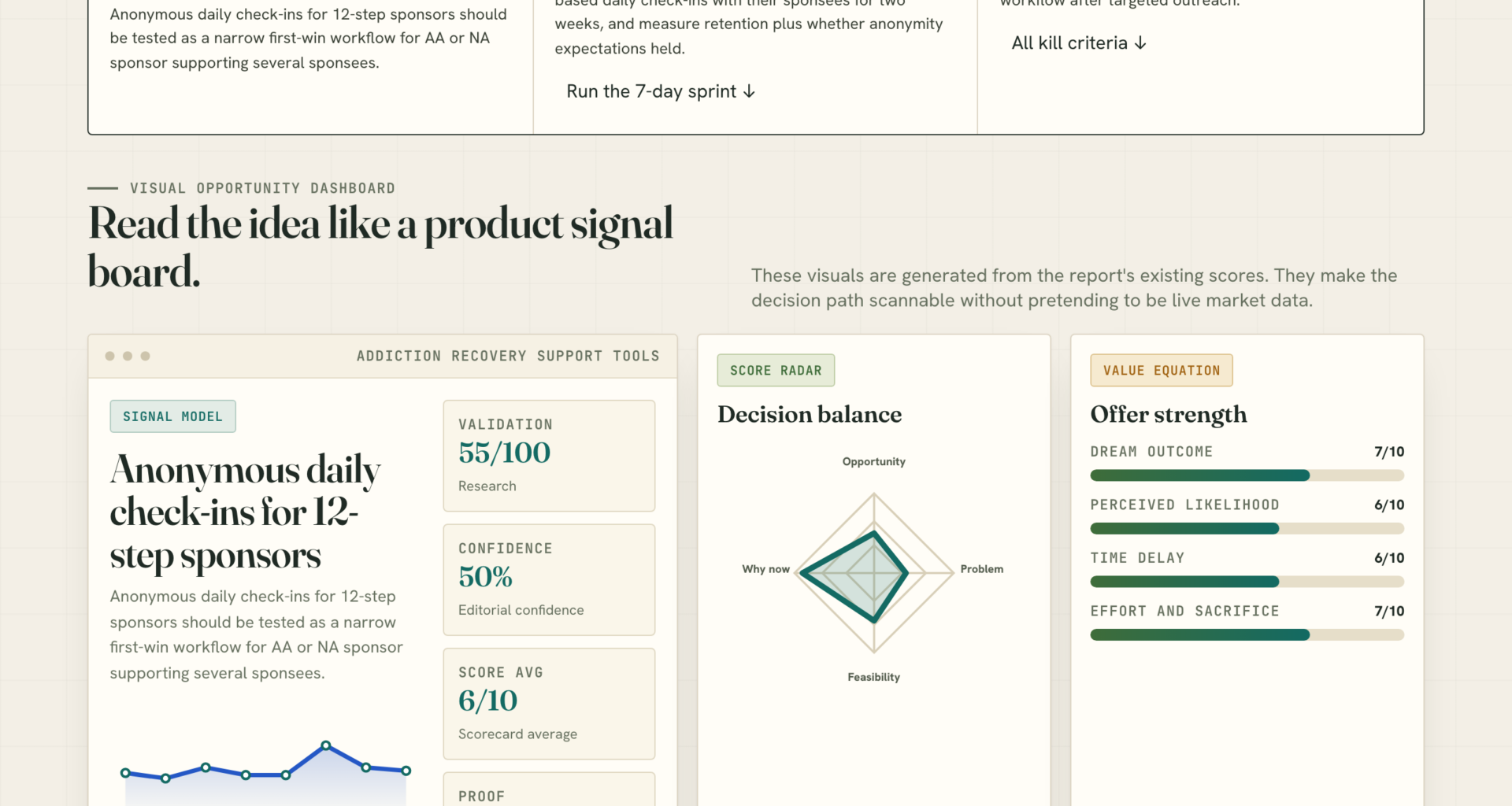

📊 Full opportunity report: Anonymous daily check-ins for 12-step sponsors on IdeaNavigator AI — validation score, market gap, and execution plan.

Get business pricing on tech for your team
- Business-only prices and quantity discounts
- Tax-exempt purchasing
- Multiple users, one account, clear invoices
TL;DR
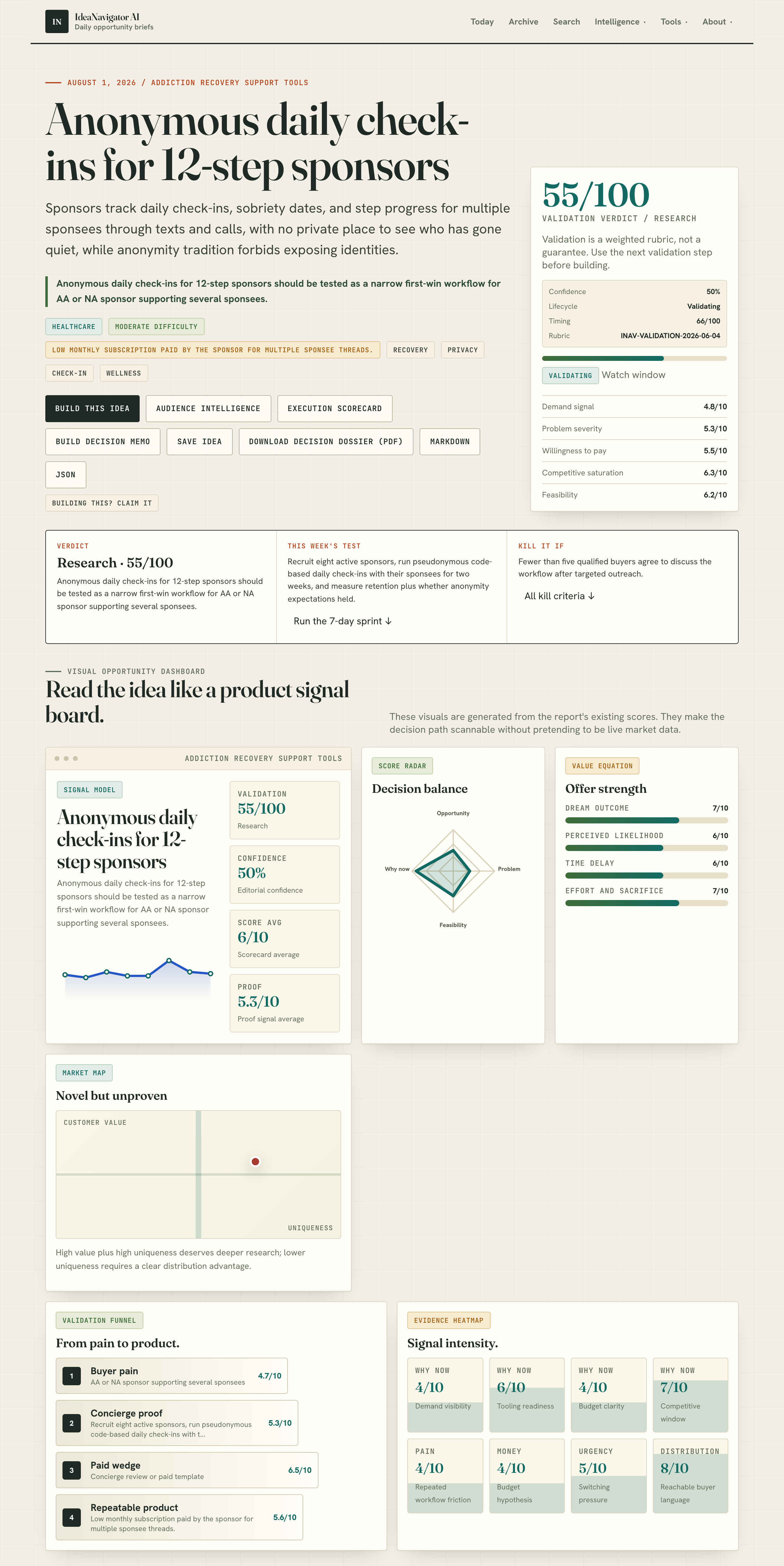
A pilot project is testing a pseudonymous check-in system for 12-step sponsors supporting multiple sponsees. The goal is to enhance privacy while tracking sobriety progress. Validation involves recruiting sponsors and measuring retention over two weeks.
Researchers and developers are testing a prototype that enables AA and NA sponsors to conduct anonymous daily check-ins with multiple sponsees through pseudonymous threads, aiming to address privacy concerns while maintaining effective support. This initiative responds to the shift of recovery support onto mobile devices and the limitations of current messaging apps, which often compromise anonymity. The project is in the early testing phase, with initial recruitment and pilot runs underway.
The proposed system allows sponsors to invite sponsees via one-time codes, creating a private, pseudonymous thread where daily check-ins are recorded as simple green (check-in) or red (missed check-in) indicators, along with optional notes. No real names or phone numbers are stored, preserving anonymity in line with Twelve-Step traditions.
According to an anonymous researcher involved in the project, the goal is to validate whether this method can reliably support multiple sponsees, improve oversight for sponsors, and uphold anonymity standards. The pilot involves recruiting eight active sponsors, each supporting several sponsees, and running the system for two weeks to measure retention and compliance with anonymity expectations.
The system would be monetized through a low monthly subscription fee paid by sponsors, offering access to multiple pseudonymous threads. This approach aims to create a sustainable market within the addiction recovery support tools industry.
Potential Impact on Privacy and Support in Recovery
This development could significantly enhance privacy protections for individuals in recovery, addressing longstanding concerns about confidentiality breaches in digital communication. By enabling sponsors to monitor multiple sponsees without exposing identities, the system supports the core principles of anonymity while facilitating accountability and engagement. If successful, this model may influence how digital support tools are designed for addiction recovery, emphasizing privacy and simplicity.
As an affiliate, we earn on qualifying purchases.
Shift Toward Mobile Support in Addiction Recovery
Recovery programs like AA and NA have traditionally relied on in-person meetings and phone calls, but recent trends show a move toward digital communication. Existing messaging apps, however, often leak personal information, conflicting with the programs’ emphasis on anonymity. Several tech solutions have attempted to bridge this gap, but none have fully addressed the need for private, scalable, and easy-to-use check-in systems for sponsors supporting multiple sponsees. This pilot represents an effort to fill that gap with a dedicated, privacy-preserving platform.
“This prototype aims to provide a simple, private way for sponsors to support multiple sponsees without risking their identities or confidentiality.”
— an anonymous researcher
As an affiliate, we earn on qualifying purchases.
Uncertainties About System Effectiveness and Adoption
It is not yet clear how well the prototype will perform in real-world settings, including its ability to maintain participant engagement over time and ensure strict adherence to anonymity. The pilot is limited to a small sample, and broader adoption may face challenges related to user trust, technical reliability, and integration with existing support practices.
pseudonymous recovery support platform
As an affiliate, we earn on qualifying purchases.
As an affiliate, we earn on qualifying purchases.
Next Steps in Pilot Testing and Evaluation
The initial phase involves recruiting eight sponsors and running the pseudonymous check-in system for two weeks. Researchers will evaluate retention rates, user feedback, and whether anonymity standards are upheld. Pending successful results, the project may expand testing, refine features, and consider broader deployment within the recovery community.
confidential addiction recovery tools
As an affiliate, we earn on qualifying purchases.
As an affiliate, we earn on qualifying purchases.
Key Questions
How does the system protect user identities?
The system uses one-time codes to invite sponsees, creating pseudonymous threads that do not store real names or phone numbers, thus maintaining anonymity.
Can sponsors see detailed progress of sponsees?
The system provides a simple daily check-in indicator and optional notes, but does not include detailed personal information, supporting privacy while allowing oversight.
Will this replace in-person meetings?
No, the system is designed as a supplementary tool to support remote check-ins, not replace traditional face-to-face interactions.
Is this system available for general use now?
No, it is currently in pilot testing with a small group of sponsors and sponsees. Broader availability will depend on pilot outcomes.
How will the system be monetized?
It will be offered through a low monthly subscription paid by sponsors for access to multiple pseudonymous threads.
Source: IdeaNavigator AI
Evergreen bestsellers Picks
bestsellers
As an affiliate, we earn on qualifying purchases.