
TL;DR

Get business pricing on tech for your team
- Business-only prices and quantity discounts
- Tax-exempt purchasing
- Multiple users, one account, clear invoices
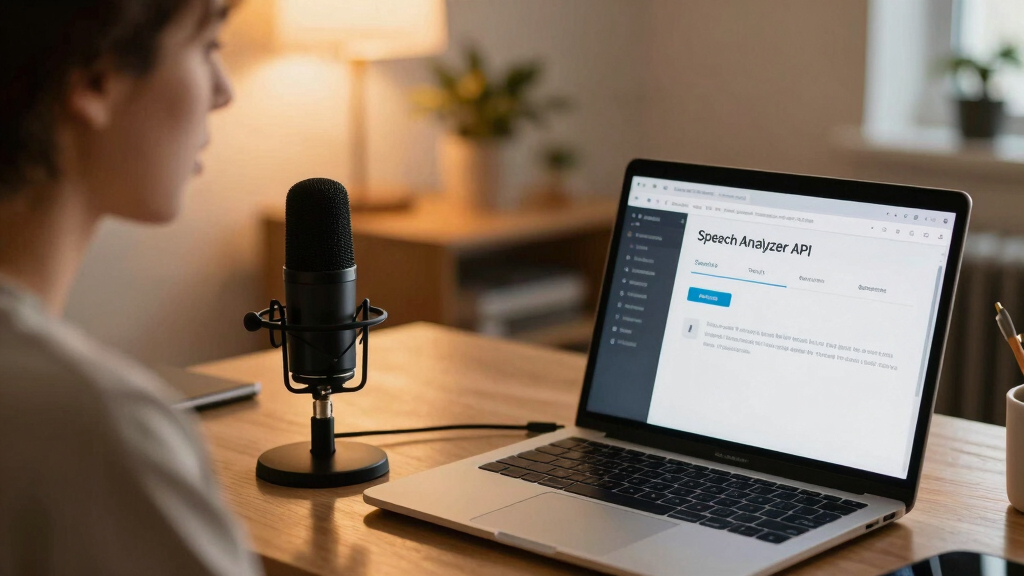
Apple has introduced its SpeechAnalyzer API, which has been benchmarked against Meta’s Whisper and an earlier Apple model. Early results suggest competitive performance, raising interest among developers and industry analysts.
Apple has officially launched its new SpeechAnalyzer API, which has been benchmarked against Meta’s Whisper and an earlier version of Apple’s speech recognition model. The results, released by Apple, indicate competitive performance in transcription accuracy and processing speed, marking a significant step in Apple’s AI and speech technology development.
The SpeechAnalyzer API, announced in October 2023, is designed to provide developers with advanced speech recognition capabilities integrated into Apple’s ecosystem. Apple conducted internal benchmarking, comparing SpeechAnalyzer to Meta’s Whisper, an open-source speech recognition system widely adopted by the industry, and to its previous model, which has been used in earlier Apple products.
According to Apple’s technical report, SpeechAnalyzer demonstrated comparable transcription accuracy to Whisper across multiple languages and audio conditions, with some metrics indicating slight improvements in noisy environments. Processing speed was also highlighted as a key feature, with Apple claiming faster response times due to optimized algorithms and hardware integration. These benchmarks were conducted using standardized datasets and testing protocols, though Apple has not released detailed methodology publicly.
Industry analysts have noted that Apple’s move aligns with broader industry trends toward more integrated AI services, and the company’s focus on privacy-preserving speech processing. While Apple did not specify the exact performance metrics in detail, the company emphasized that SpeechAnalyzer is designed to be scalable and suitable for a range of applications, from personal assistants to enterprise solutions.
Implications for Speech Recognition Industry
The introduction and benchmarking of Apple’s SpeechAnalyzer API are significant because they signal Apple’s entry into a competitive space dominated by models like Whisper. The API’s performance, especially in noisy environments and multilingual support, could influence industry standards and encourage wider adoption of Apple’s speech technology. For developers, this means more integrated options within the Apple ecosystem, potentially improving user experience across devices and services. Additionally, Apple’s emphasis on privacy and hardware optimization may set new benchmarks for speech recognition performance in consumer electronics.
Apple SpeechAnalyzer API developer tools
As an affiliate, we earn on qualifying purchases.
As an affiliate, we earn on qualifying purchases.
Background on Speech Recognition Technologies
Apple has historically relied on proprietary speech recognition models embedded within its devices, with limited external access. The launch of SpeechAnalyzer marks a shift toward offering more accessible APIs for developers. Meta’s Whisper, released as an open-source project in 2022, quickly gained popularity due to its high accuracy and multilingual capabilities, challenging traditional proprietary systems. Apple’s previous speech models, used in Siri and dictation, have been less transparent and less performant in noisy or multilingual scenarios. The new API aims to address these limitations while maintaining privacy and efficiency.
Prior to this release, industry benchmarks largely depended on open-source models like Whisper, which set performance standards for accuracy and robustness. Apple’s move to benchmark SpeechAnalyzer against Whisper indicates a desire to demonstrate parity or superiority in key metrics, potentially influencing developer adoption and industry competition.
“SpeechAnalyzer is designed to deliver high accuracy and speed across diverse environments, with a focus on privacy and seamless integration.”
— Apple spokesperson
noise-canceling microphones for speech recognition
As an affiliate, we earn on qualifying purchases.
As an affiliate, we earn on qualifying purchases.
Details on Benchmark Methodology and Metrics
Apple has not publicly disclosed detailed benchmarking protocols, datasets, or specific performance metrics such as word error rate (WER) or latency figures. It remains unclear how SpeechAnalyzer compares quantitatively to Whisper across different languages and audio conditions beyond the general claims. Industry experts are awaiting more transparent data to verify performance claims and assess real-world applicability.
multilingual speech recognition software
As an affiliate, we earn on qualifying purchases.
As an affiliate, we earn on qualifying purchases.
Future Developments and Industry Impact Expectations
Apple is expected to release more detailed technical documentation and developer tools for SpeechAnalyzer in upcoming updates, possibly at its annual developer conference. Industry observers will monitor how developers adopt the API and whether it leads to broader industry shifts toward integrated speech recognition solutions. Competitors like Meta and Google are likely to respond with further enhancements to their models, intensifying the competitive landscape.
privacy-focused speech recognition devices
As an affiliate, we earn on qualifying purchases.
As an affiliate, we earn on qualifying purchases.
Key Questions
How does SpeechAnalyzer compare to Whisper in accuracy?
Apple claims SpeechAnalyzer offers comparable or slightly improved accuracy in noisy environments, but detailed quantitative metrics have not been publicly released.
Will SpeechAnalyzer be available to third-party developers?
Yes, Apple announced that SpeechAnalyzer will be accessible via an API to developers within its ecosystem, with broader availability expected in the coming months.
What are the privacy implications of SpeechAnalyzer?
Apple emphasizes that SpeechAnalyzer is designed with privacy in mind, processing speech locally on devices where possible and minimizing data sharing.
When will more detailed performance data be available?
Apple has not specified a timeline, but more technical details are anticipated in upcoming developer releases or at the next Apple developer conference.
Could SpeechAnalyzer replace existing speech recognition systems?
It depends on performance in real-world applications; initial benchmarks are promising, but broader adoption will depend on developer feedback and further testing.
Source: hn
Halloween Picks
halloween
As an affiliate, we earn on qualifying purchases.