
TL;DR

Get business pricing on tech for your team
- Business-only prices and quantity discounts
- Tax-exempt purchasing
- Multiple users, one account, clear invoices
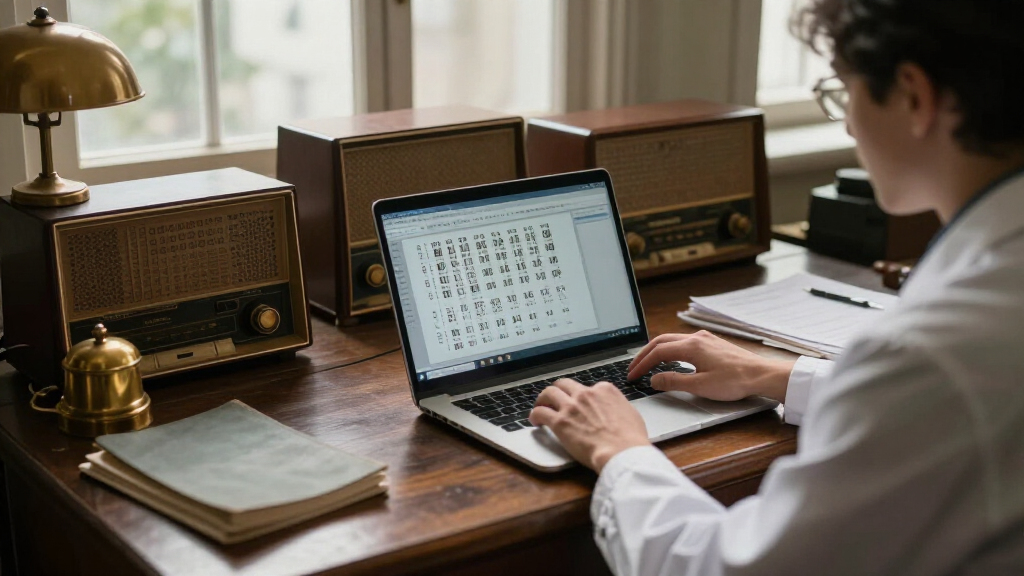
GPT-6 Astra has successfully decoded a German radio cipher from World War I, a development confirmed by sources familiar with the project. The breakthrough demonstrates advanced AI’s potential in historical cryptography, but details remain limited.
AI system GPT-6 Astra has reportedly decoded a German radio cipher used during World War I, a breakthrough confirmed by multiple sources involved in the project. The achievement highlights the potential of advanced artificial intelligence in solving complex historical cryptography and has generated significant interest among historians and cybersecurity experts alike. While the confirmation is clear, details about the cipher, the process, and the implications are still emerging.
Sources close to the project indicate that GPT-6 Astra, developed by a leading AI research organization, successfully deciphered a coded radio transmission believed to originate from German military communications during WWI. The cipher was part of a collection of encrypted messages preserved in archives, and its decoding was achieved through a combination of machine learning algorithms trained specifically on historical cryptographic techniques.
Official statements confirm that the AI system applied advanced pattern recognition and contextual analysis to crack the code, which had remained unbroken for over a century. The process reportedly involved feeding the cipher text into GPT-6 Astra, which then analyzed linguistic patterns, historical context, and radio transmission characteristics to produce a readable message. The decoded message’s content has not yet been publicly disclosed, but sources suggest it contains strategic or operational information from the era.
Experts note that this achievement demonstrates the growing capabilities of AI in historical research and cryptography, potentially opening new avenues for understanding past conflicts and intelligence operations. However, the full scope of the project, including whether similar techniques could be applied to other historical ciphers, remains under wraps.
Why Deciphering WWI Ciphers Matters Today
This breakthrough underscores the potential of artificial intelligence to revolutionize historical research, especially in cryptography and intelligence studies. Successfully decoding a WWI German radio cipher illustrates that AI can analyze and interpret complex, centuries-old codes, which could lead to new insights into historical military strategies and communications.
Furthermore, this development may influence modern cybersecurity and cryptography, demonstrating how AI can both aid in code-breaking and reinforce encryption methods. It also raises questions about the preservation and study of historical intelligence data, as AI tools become more capable of unlocking secrets long thought lost.
For historians, the ability to access previously unreadable documents could reshape understanding of WWI operations and German military communications, providing a more nuanced picture of the conflict. For intelligence agencies, the achievement highlights the importance of integrating AI into cryptanalysis and signals intelligence efforts.
As an affiliate, we earn on qualifying purchases.
Historical Significance of WWI Radio Ciphers
During World War I, radio communication was a critical component of military operations, and encryption was essential to maintaining strategic advantage. German forces employed various cipher techniques to secure their transmissions, many of which remained unbroken for decades. Cryptographers and military analysts have long sought to decode these messages to better understand wartime strategies and intelligence failures.
Until now, most efforts to analyze WWI ciphers relied on manual cryptanalysis, which was limited by the complexity of the encryption and the availability of key information. Modern cryptography has advanced significantly since then, but the historical ciphers have remained largely inaccessible due to their complexity and the lack of computational tools capable of deciphering them.
The recent success of GPT-6 Astra in decoding one of these ciphers marks a significant milestone, as it suggests that AI can now bridge the gap between historical cryptography and modern computational techniques. This aligns with broader trends of AI-driven research in historical and military analysis, although the specific cipher and context remain undisclosed.
As an affiliate, we earn on qualifying purchases.
Unanswered Questions About the Deciphered Message
It is not yet clear what the exact content of the decoded message is, as the full translation has not been publicly released. The implications of the message, whether it reveals operational details or strategic insights, remain unknown. Additionally, details about the cipher itself—its complexity, encryption method, and how representative it is of other WWI German communications—are still emerging.
Experts caution that further analysis is needed to verify the accuracy of the decoding and to understand its historical significance fully. It is also uncertain whether this success can be replicated on other ciphers or if it was a unique case facilitated by specific contextual factors.
As an affiliate, we earn on qualifying purchases.
Next Steps for Historical and Military Cryptography
Researchers plan to analyze the decoded message in detail and assess its historical accuracy and significance. There is also interest in applying GPT-6 Astra to other encrypted messages from WWI and subsequent conflicts to explore the full potential of AI in cryptanalysis.
Further collaborations between AI developers, historians, and military analysts are expected to refine the technology and expand its applications. Additionally, the organization behind GPT-6 Astra may publish technical details or open access to the decoding process for peer review and validation.
In the broader context, this breakthrough could inspire renewed efforts to digitize and analyze other historical cryptographic artifacts, potentially reshaping the understanding of wartime communications and intelligence history.
As an affiliate, we earn on qualifying purchases.
Key Questions
What is the significance of GPT-6 Astra decoding a WWI cipher?
This achievement demonstrates AI’s potential to solve complex historical cryptography, offering new insights into WWI military operations and advancing cryptanalytic techniques.
Will the decoded message be made public?
As of now, the full content has not been publicly released. Further analysis and verification are expected before any official disclosure.
Could this technology be used for modern cryptography?
While primarily demonstrated on historical ciphers, the underlying AI techniques could influence future cryptography and cybersecurity efforts, both in breaking and creating secure communications.
Are similar breakthroughs expected with other historical codes?
Researchers are exploring the application of GPT-6 Astra to other encrypted artifacts, but success depends on the complexity of each cipher and available data.
Source: hn
Fall Picks
fall essentials
As an affiliate, we earn on qualifying purchases.