
🔍 Read the full analysis: How “Luciole” Blends AI With A Firefly-Inspired Story on ThorstenMeyerAI.com

Get business pricing on tech for your team
- Business-only prices and quantity discounts
- Tax-exempt purchasing
- Multiple users, one account, clear invoices
TL;DR
Luciole is Room 155 in the FABLE/175 exhibition series: an AI-built interactive website about fictional fireflies whose flashes gradually synchronize. Its live simulation lets visitors alter the coupling between insects or disturb their rhythms, while a coherence measure and trace display the model’s behavior. The exhibit’s fictional setting is paired with a real synchronization model; details about the AI tools and production process are limited in the supplied account.
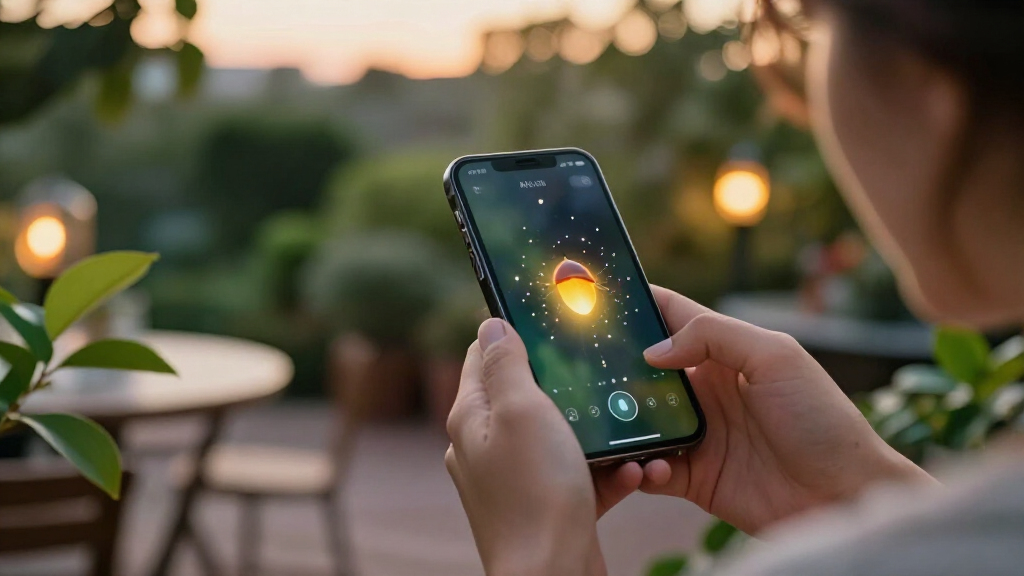
Luciole, an AI-built interactive web exhibit about fireflies falling into sync, is presented as Room 155 of the FABLE/175 series, as described in the original analysis. Visitors can watch 96 simulated insects flash at different rhythms, adjust how strongly they influence nearby neighbors, and disrupt the pattern to see whether the group returns to coherence. The exhibit combines a fictional naturalist’s field notebook with a live simulation, making the model’s behavior—not just its imagery—the central experience.
The exhibit’s setting, Vallon Creux, and the fireflies described as Luciole are fictional. The source explicitly distinguishes the invented place and creatures from the real synchronization model used to animate them. The simulation represents each firefly as an oscillator with its own phase and tempo; local coupling nudges those rhythms toward or away from alignment. A control changes the strength of that influence, while a live coherence measure summarizes how closely the simulated flashes agree.
Visitors can also use pointer interaction to scatter the phases, temporarily disrupting the group. A trace records the measured fall and return in coherence, and a phase diagram is drawn from the simulation. According to the exhibit description, these displays reflect the behavior generated by the model rather than serving as decorative graphics. The supplied material describes 96 fireflies in the live exhibit, while its production brief calls for “hundreds”; it does not explain that difference.
The visual presentation is generated with HTML, CSS, SVG and canvas, rather than downloaded images or a prerecorded firefly sequence. Its forest-dark palette reserves bright chartreuse for the flashes and muted mauve for notebook annotations. The page also describes measures for reduced-motion preferences, keyboard focus, mobile viewing and pausing the animation when the page is hidden or relevant views are offscreen.
How “Luciole” Blends AI With a Firefly-Inspired Story
Luciole turns a fictional field notebook into a live experiment in synchronization: visitors can adjust how neighboring fireflies influence one another, disturb their rhythms, and watch the group’s coherence change.
A fictional field, a real synchronization model
Set in invented Vallon Creux, Luciole presents fictional fireflies whose flashes gradually align. The live simulation makes the mechanism visible: change the coupling between neighbors or scatter their phases, then follow the resulting coherence measure and trace.
Field notebook
Serif prose and handwritten-style marginal notes invite a slower visit through a fictional landscape and invented species.
Interrupt the sync
A control changes local influence. Pointer interaction can scatter phases and temporarily disrupt the emerging pattern.
Watch the measure
A coherence readout, trace, and phase diagram are described as outputs of the simulation, not decorative overlays.
From individual rhythms to group coherence
Each simulated firefly is an oscillator with its own phase and tempo. Local coupling nudges nearby rhythms toward or away from alignment; the display follows what the model produces as visitors intervene.
Local influence, collective pattern
Stronger coupling means each oscillator is more influenced by its neighbors. Scattering phases disrupts alignment; the simulation then shows whether coherence returns.
These bars illustrate the chain of interaction; the supplied account gives no numeric coupling parameters or validation data.
Observe
96 simulated insects flash at different rhythms.
Adjust
Change how strongly neighbors influence each other.
Disturb
Scatter phases to interrupt the collective pattern.
Follow
Read the coherence measure and its changing trace.
AI-built presentation, human-readable limits
The account identifies Luciole as Room 155 in the FABLE/175 pipeline. It says an original art-direction brief was written by “Claude Fable 5” and executed by the pipeline. The brief called for a responsive, self-contained page, a synchronization model, and code-generated visuals.
Generated in code
The page is described as using HTML, CSS, SVG, and canvas rather than downloaded imagery or a prerecorded firefly sequence.
Atmosphere meets control
A forest-dark palette, bright flashes, and muted annotations frame controls and diagrams that explain the changing pattern.
Brief is not proof
The brief sketches species, flash dialects, a season calendar, and signaling explanations. The supplied account does not confirm these all appear live.
Keep the claims in proportion
Luciole is presented as an interactive science communication experience, not a field study. The available description and reproduced prompt leave several production and model details open.
“Breaking the sync and watching it heal.”
Production brief reproduced by the exhibitWhat to know before you visit
What is Luciole?
An interactive website presented as Room 155 of FABLE/175, using a fictional firefly notebook to frame a live synchronization simulation.
Are Vallon Creux and its fireflies real?
No. The account identifies the place and creatures as fictional. The synchronization model is described as real; the setting is invented.
How can visitors affect the simulation?
They can change the coupling control or scatter phases with pointer interaction, then observe coherence and its trace.
Was the website built with AI?
The source describes Luciole as AI-built and says its construction is part of the story. It does not detail which tools or how much human revision was involved.
A Simulation Visitors Can Interrupt
Luciole’s main point is that synchronization is something visitors can observe emerging, rather than a finished animation presented as if the result were inevitable. The ability to change coupling or scatter the phases gives the audience a way to test how local interactions affect the group pattern. The coherence readout and trace make that change visible in measurable terms, connecting the atmospheric presentation to the underlying simulation.
The project also places AI-built web design within the exhibit’s subject. The site’s construction is described as part of the story, and the production prompt is available through a link in the footer. That offers visitors a view of the creative brief behind the page, though it does not by itself establish which parts were generated by AI, how much human revision took place, or how the work was evaluated.
For readers interested in interactive science communication, the exhibit is a compact example of a website using controls, visual feedback and invented narrative together. Its claims should remain in proportion: it is a designed, fictional field experience, not a report of observed fireflies or a field study.
Products Worth Considering

Amazon Kindle Paperwhite (2024), 16 GB, 7-inch Display, Black

Amazon Kindle Paperwhite Signature Edition, 32GB (2024), Metallic Black

Amazon Kindle Scribe (64GB) with Premium Pen, Metallic Jade
As an affiliate, we earn on qualifying purchases.
From Creative Brief to Field Notebook
The source identifies Luciole as Room 155 of 175 in the FABLE/175 pipeline and links to a live site hosted at Netlify. It says the room’s original art-direction brief was written by “Claude Fable 5,” described as an art director, and executed by the FABLE/175 pipeline. The brief calls for a self-contained, responsive page, a Kuramoto synchronization model, and code-generated visuals; the published room description says the site was built by AI.
The brief also sketches additional narrative material, including invented species, flash-pattern dialects, a two-week season calendar, and explanations of male and female signaling. The supplied description does not confirm which of these planned elements appear in the live exhibit. It describes the site’s core interaction and design, but provides no independent technical review, source repository, or account of the development team.
The exhibit’s literary presentation uses a serif typeface for its main text and a handwritten style for marginal notes. Long passages and off-center annotations are intended to encourage a slower visit. These design choices support the field-notebook framing, while the simulation controls and diagrams provide the more direct account of how the displayed pattern is produced.
““Breaking the sync and watching it heal.””
— The production brief reproduced by the exhibit
What the Exhibit Does Not Establish
The supplied source does not give a publication or launch date, identify the specific AI systems used, or document how the generated site was checked or revised by people. It also does not provide code, independent testing results, or performance measurements to verify the claims about responsiveness, accessibility, or animation speed.
There is a difference between the exhibit description’s 96 simulated fireflies and the production brief’s reference to “hundreds.” The material does not say whether the number changed during development, whether the brief describes an earlier target, or whether different views use different particle counts. Nor does the source confirm that every planned narrative feature in the brief is present in the live version.
The model is described as an oscillator system with local coupling, but no parameters, validation results, or detailed explanation of how its behavior compares with biological fireflies are supplied. The fictional setting should not be read as evidence about any real species or field observation.
The Live Room and Its Open Questions
The source directs readers to the live Luciole room and says its production brief can be opened from a “Prompt” link in the footer. A direct visit is the next way to inspect the controls, simulated field and notebook presentation. The available material does not announce a future release, update schedule, or additional reporting about the project.
Further details from the creators could clarify how the AI pipeline was used, whether the live simulation consistently uses 96 fireflies, and which features in the original brief made it into the published page. Until those details are available, the confirmed account is limited to the exhibit description and the reproduced prompt.
Key Questions
What is Luciole?
Luciole is an interactive website presented as Room 155 of the FABLE/175 series. It uses a fictional firefly field notebook to frame a live simulation of flashing rhythms moving into synchronization.
Are Vallon Creux and the fireflies real?
No. The exhibit description says Vallon Creux and Luciole’s fireflies are fictional and that the project is not a real field study. The synchronization model is described as real, but the setting and its creatures are invented.
How can visitors affect the simulation?
Visitors can change a coupling control that affects how strongly neighboring oscillators influence one another. Pointer interaction can also scatter the phases and disrupt the pattern; the exhibit then displays a coherence measure and trace as the simulation evolves.
Was the website built with AI?
The source describes Luciole as an AI-built exhibit and says its construction is part of the story. It does not specify the exact AI tools used or explain how much human editing and review were involved.
How many fireflies appear in the simulation?
The live-exhibit description says 96 simulated fireflies. The production brief refers to “hundreds,” and the source does not explain the discrepancy.
Source: ThorstenMeyerAI.com