
🔍 Read the full analysis: How SimReady Central Supports Robotics And AI Factories With Ready-to-Use 3D Assets on ThorstenMeyerAI.com

Get business pricing on tech for your team
- Business-only prices and quantity discounts
- Tax-exempt purchasing
- Multiple users, one account, clear invoices
TL;DR
Hugging Face has announced SimReady Central, a free, ungated library of more than 2,000 OpenUSD assets intended for robotics simulations and industrial digital twins. Asset capabilities vary, and the announcement does not provide licensing details, independent performance results or evidence of time savings.
As detailed in the original announcement, Hugging Face has announced SimReady Central, a free, ungated library of more than 2,000 OpenUSD assets for robotics simulations and industrial digital twins. The collection is intended to provide developers and AI teams with reusable 3D models that include simulation-related information. Capabilities vary by asset, and the announcement includes no independent performance results.
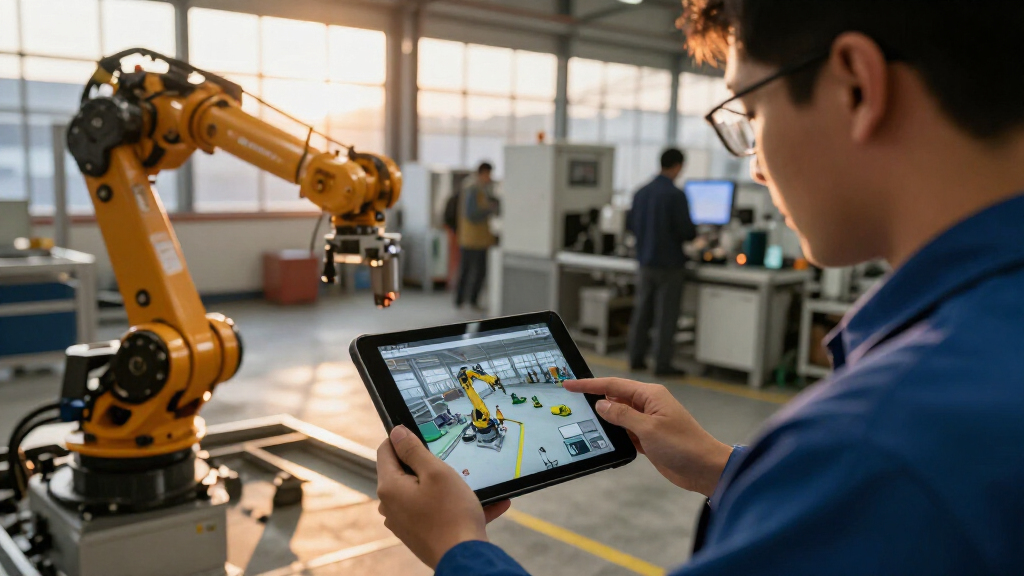
The collection includes robot arms and grippers, warehouse equipment, racks, cooling systems and other industrial infrastructure. Hugging Face says developers can inspect each asset’s supported capabilities, select models that suit a use case and combine assets from different suppliers in an OpenUSD scene. SimReady models can include information such as collision geometry, mass, friction, joints, semantic labels, materials and sensor attributes; not every asset necessarily includes every feature.
According to the announcement, manufacturers and other providers can prepare assets against SimReady requirements, validate and package them, then submit them to the library. Named contributors and examples include Vertiv, Comau, FANUC, Franka Robotics, Robotiq, Standard Bots, Universal Robots and LG Electronics, alongside Palatial and ForgeCAD. The supplied information does not give a category-by-category count or say how many assets each contributor supplied.
Developers are directed to browse asset profiles and choose items that match their simulation needs. Contributors can use a described SimReady Central submission skill to check assets against relevant profiles before packaging and submitting them. The announcement cites possible uses such as a robotic pick-and-place scenario and comparisons of AI factory layouts, but does not report results from those examples.
Reusable Models for Factory Simulations
Creating a simulation-ready scene can require more than a model’s visible shape. Teams may need to add physical properties, collision data, articulated movement or sensor attributes before a model can serve a particular test. A shared catalog of assets with documented capabilities could reduce some repeated preparation work for groups building robot training and evaluation environments or digital twins of industrial sites.
The library may also give manufacturers a way to make digital versions of their equipment available to developers. Teams could place a supplier’s robot, rack or cooling system into a proposed virtual scene and explore a layout before committing to a physical installation. Hugging Face presents faster testing and decision-making as potential benefits; these are stated aims, not measured outcomes in the supplied announcement.
The library’s usefulness will depend on the accuracy and documentation of each model, as well as its compatibility with users’ tools and workflows. Shared profiles may help developers identify an asset’s stated capabilities before assembling a scene, but do not establish that assets will behave consistently together or produce reliable simulation results.
Products Worth Considering
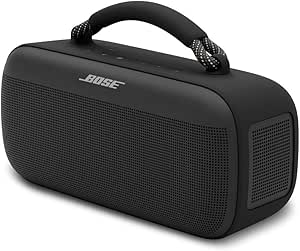
Bose SoundLink Max Portable Bluetooth Speaker, IP67 Waterproof, Black

Jackery Solar Generator 1000 v2 with Two 100W Solar Panels, 1024Wh LiFePO4 Battery

EcoFlow DELTA 3 Max Portable Power Station, 2048Wh LFP Battery
As an affiliate, we earn on qualifying purchases.
OpenUSD and SimReady Profiles
OpenUSD is an open, extensible framework for describing and composing 3D scenes. It supports combining models into a scene, but scene composition alone does not provide every physical or structural detail a simulation may require. A robot training task, for example, can depend on joint information, collision geometry and material properties as well as the model’s appearance.
The source says the SimReady Foundation defines specifications, profiles and validation tools for these requirements. Profiles group capabilities relevant to particular uses, and developers are advised to select assets with profiles suited to their workflows. SimReady Central is presented as a place to discover and distribute assets prepared under those requirements, rather than as a report of benchmarked simulation performance.
Ordinary detailed models, including CAD files, can still require additional data before they are useful in simulation. The library’s premise is that reusable models with some of that information already supplied may help teams begin scene-building with less manual preparation. How much work is avoided will depend on the asset, the target application and the project’s requirements.
“The library contains more than 2,000 OpenUSD assets for robotics simulations and AI factory digital twins.”
— Hugging Face, in the announcement as summarized by the supplied source
Licensing, Compatibility and Validation
The supplied announcement does not specify individual asset licensing terms, compatibility across simulation runtimes or whether the entire collection is available immediately. It also gives no breakdown of the 2,000-plus assets by supplier, category, profile or validation status.
There are no reported adoption figures, independent accuracy checks, benchmarks or measured time savings. The announcement also does not describe how models from different suppliers perform together in a shared scene or how asset data will be updated when products change. Asset profiles may help users identify stated capabilities, but the supplied material does not establish that every asset meets every project’s accuracy or integration requirements.
Asset Details Will Shape Adoption
Contributors can prepare assets against relevant SimReady profiles, validate and package them, and submit them for inclusion. Developers can browse the collection, check each asset’s stated capabilities and assemble models suited to a simulation. The supplied announcement does not give a release calendar or confirm when every asset will be accessible.
Useful next indicators will include asset-level documentation, clear licensing, compatibility information and examples showing how the models perform in working simulations. Evidence of continued maintenance and independent evaluation would also help users assess whether the library reduces preparation time and supports reliable results across tools.
Key Questions
What is SimReady Central?
SimReady Central is a Hugging Face-announced library of more than 2,000 OpenUSD assets intended for robotics simulations and industrial digital twins. Hugging Face describes it as free and ungated.
What kinds of assets does the library include?
The announcement lists robot arms, grippers, warehouse equipment, racks, cooling systems and other infrastructure. The supplied material does not provide a full category breakdown.
Does every asset include the same simulation properties?
No. Capabilities depend on the individual asset and its profile. Possible data includes collision geometry, mass, friction, joints, semantic labels, materials and sensor attributes.
Are the assets licensed for any use, and do they work across simulation tools?
The supplied announcement does not specify individual asset licenses or compatibility across simulation runtimes. Users will need asset-level information before relying on a model in a particular project.
Has Hugging Face shown that the library saves time or improves simulation results?
The announcement presents faster testing and decision-making as potential benefits, but supplies no measured time savings, benchmarks or independent performance results.
Primary source: Hugging Face · via ThorstenMeyerAI.com