
TL;DR

Get business pricing on tech for your team
- Business-only prices and quantity discounts
- Tax-exempt purchasing
- Multiple users, one account, clear invoices
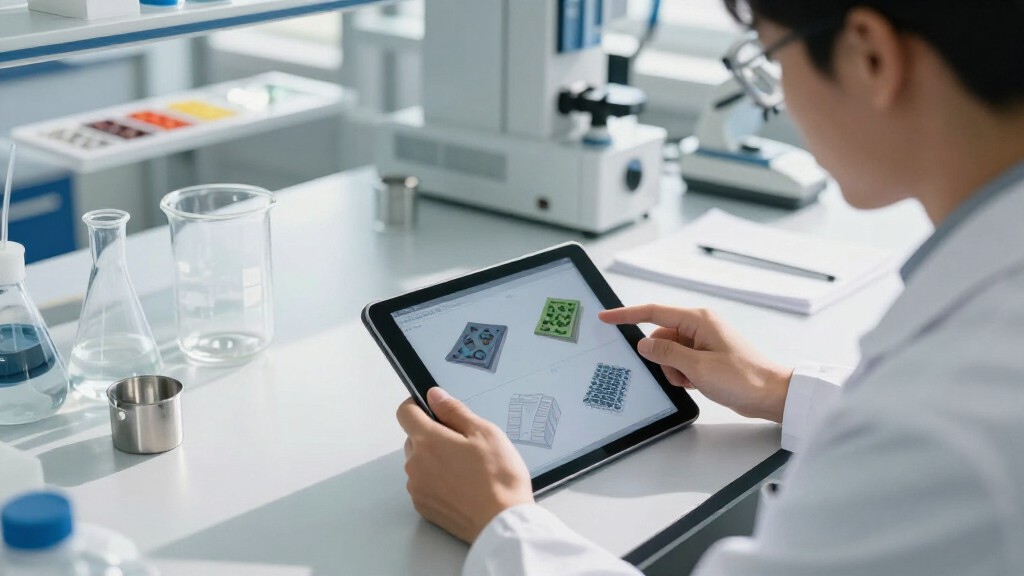
Discovered Materials, a YC S26 startup, has launched AI-powered agents to automate and accelerate the discovery of new materials. This development could significantly impact materials science and related industries.
Discovered Materials, a startup backed by Y Combinator’s S26 batch, has introduced AI agents aimed at automating the discovery of new materials. This initiative seeks to significantly speed up the traditionally lengthy process of materials research, potentially transforming industries such as electronics, aerospace, and energy.
The company, founded by Advaith and Akash, has developed AI systems capable of predicting and identifying novel materials based on specified properties. According to their team, these AI agents utilize machine learning models trained on extensive materials databases to propose promising candidates for experimental validation.
Discovered Materials states that their AI-driven approach can reduce the timeline for discovering new materials from years to months, potentially accelerating innovation cycles across multiple sectors. The startup has shared that their technology is already being tested in collaboration with research institutions, with initial results showing promising leads for advanced materials.
Potential Impact on Materials Science and Industry
This development could dramatically shorten the timeline for discovering materials with specific properties, such as higher conductivity, better durability, or lighter weight. Faster discovery cycles could lead to breakthroughs in electronics, renewable energy, aerospace, and other fields, fostering innovation and reducing costs. If widely adopted, AI-driven material discovery might reshape research workflows and industry standards.
As an affiliate, we earn on qualifying purchases.
Advances in AI and Materials Research Leading Up to This Launch
Over recent years, AI has increasingly been applied to scientific research, including drug discovery and chemical synthesis. In materials science, efforts have focused on leveraging machine learning to predict properties and identify promising candidates before experimental testing. Discovered Materials builds on this trend, aiming to automate and scale the discovery process using AI agents trained on large datasets of known materials and their properties.
Y Combinator’s S26 batch has seen several startups applying AI to scientific problems, and Discovered Materials is among the latest to focus on automating materials discovery. The company’s approach aligns with broader industry goals of integrating AI into research pipelines to accelerate innovation.
“Our AI agents can analyze vast datasets to propose new materials in a fraction of the time traditional methods require.”
— Advaith, co-founder of Discovered Materials
As an affiliate, we earn on qualifying purchases.
Unconfirmed Details About AI Capabilities and Validation
While Discovered Materials reports promising early results, it is not yet clear how their AI agents perform at scale or in diverse real-world scenarios. Details about the accuracy, validation processes, and long-term reliability of these AI predictions remain undisclosed. Additionally, the extent of industry adoption and regulatory considerations are still unknown.
machine learning for materials prediction
As an affiliate, we earn on qualifying purchases.
As an affiliate, we earn on qualifying purchases.
Next Steps for Validation and Industry Adoption
The company plans to continue testing their AI agents in collaboration with research institutions and industry partners. Upcoming milestones include publishing detailed validation results, expanding their dataset, and demonstrating practical applications in commercial settings. Widespread industry adoption will depend on further validation, regulatory approval, and integration into existing research workflows.
advanced materials testing equipment
As an affiliate, we earn on qualifying purchases.
As an affiliate, we earn on qualifying purchases.
Key Questions
How does Discovered Materials’ AI differ from traditional material discovery methods?
The AI automates the prediction and identification of promising materials based on large datasets, reducing discovery time from years to months compared to traditional trial-and-error or manual research.
What industries could benefit most from this AI-powered discovery?
Electronics, aerospace, renewable energy, and chemicals are among the sectors that could see significant benefits through faster development of new materials with enhanced properties.
Is this technology ready for commercial use?
Discovered Materials is currently in the testing and validation phase. Broader commercial adoption will depend on further validation results and industry integration efforts.
What are the main challenges facing AI-driven materials discovery?
Challenges include ensuring the accuracy and reliability of AI predictions, validating new materials experimentally, and navigating regulatory and industry standards for new material approval.
Source: hn
Fall Picks
fall essentials
As an affiliate, we earn on qualifying purchases.