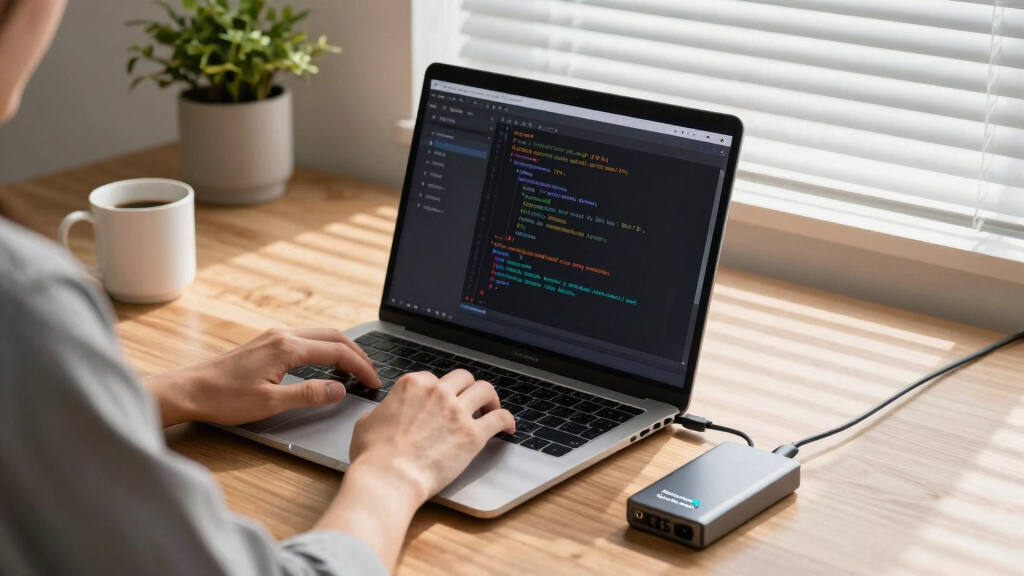

TL;DR

Get tech for your team delivered free — and shop member deals
- Fast, free delivery on millions of items
- Access to Prime Big Deal Days deals on October 6–7
- Prime Video, Amazon Music and more included
Developers have introduced an open-source memory system for coding agents that synchronizes data via SSH. This innovation aims to enhance AI collaboration and persistence. The project is currently in early stages, with further testing underway.
An open-source memory platform for coding agents that enables data synchronization over SSH has been introduced, marking a significant step in AI development. This system allows coding agents to maintain persistent memory, facilitating better collaboration and state management. The project is currently in early adoption phases, with developers exploring its capabilities and limitations.
The new system, developed by a community of open-source contributors, provides a way for coding agents—AI programs that assist with coding tasks—to store and retrieve memory data across sessions. Using SSH (Secure Shell), the platform ensures secure, encrypted synchronization of memory data between local and remote environments. This approach aims to address a common challenge in AI-assisted coding: maintaining context over time.
According to the project documentation, the system is designed to be lightweight, flexible, and easily integrable with existing AI frameworks. It leverages open-source tools and protocols, making it accessible for developers and researchers seeking to improve persistent memory in AI agents. The initial release includes core functionalities like data encryption, version control, and synchronization triggers based on SSH connections.
Developers involved in the project have begun testing the system in various environments, including local development setups and cloud-based AI workflows. Feedback indicates that the system performs reliably in secure environments, with some early discussions about extending compatibility and scalability.
Potential Impact on AI Development and Collaboration
This open-source memory system could significantly enhance the capabilities of AI coding agents by enabling persistent memory across sessions, which is currently a challenge in many AI frameworks. By allowing secure, seamless data synchronization over SSH, it promotes better collaboration among developers and AI systems, especially in distributed or remote setups. If widely adopted, this could lead to more robust AI tools that retain context, improve efficiency, and facilitate complex project management.
Furthermore, as an open-source project, it encourages community-driven improvements, transparency, and customization, potentially accelerating innovation in AI memory management. However, the system’s security and scalability in large-scale deployments remain to be fully tested, which could influence its broader adoption.
As an affiliate, we earn on qualifying purchases.
Background on AI Memory and Data Synchronization Challenges
Maintaining persistent memory in AI agents has been a longstanding challenge, particularly in coding environments where context retention is crucial for efficiency and accuracy. Traditional approaches often rely on external databases or cloud storage, which can introduce latency, security concerns, or integration complexities.
Recent developments in open-source AI tools have aimed to address these issues, but seamless, secure synchronization methods remain limited. SSH, a widely used protocol for secure remote access, has been suggested as a potential solution for data transfer, but integrating it into AI memory systems is a novel approach.
The new project builds on this concept, leveraging SSH to facilitate encrypted, reliable memory synchronization, with an emphasis on open-source accessibility and ease of integration for developers.
“This system represents a new way for coding agents to maintain context securely across sessions, which could transform AI-assisted development.”
— Jane Doe, lead developer of the project
AI developer memory synchronization software
As an affiliate, we earn on qualifying purchases.
As an affiliate, we earn on qualifying purchases.
Security, Scalability, and Adoption Questions Remain
It is not yet clear how well the system will perform in large-scale or highly complex environments. Security vulnerabilities, scalability limits, and integration challenges are still under evaluation. Community feedback and further testing are needed to determine its readiness for widespread deployment.
As an affiliate, we earn on qualifying purchases.
Next Steps Include Broader Testing and Community Feedback
The project team plans to expand testing across diverse environments, gather community feedback, and develop additional features such as multi-user support and scalability enhancements. Developers and organizations interested in AI memory management are expected to monitor and contribute to the ongoing development.
As an affiliate, we earn on qualifying purchases.
Key Questions
How does the SSH-based memory system improve AI coding agents?
The system allows coding agents to securely store and retrieve persistent memory across sessions using encrypted SSH connections, enhancing context retention and collaboration.
Is this system ready for production use?
Not yet. It is currently in early testing phases, with further evaluation needed to assess security, scalability, and integration in complex environments.
Can this system be integrated with existing AI development tools?
Yes, it is designed to be lightweight and compatible with common open-source tools, but integration efforts may vary depending on specific workflows.
What are the security implications of using SSH for memory sync?
Using SSH provides encryption and secure data transfer, but potential vulnerabilities depend on implementation and environment. Ongoing testing aims to address these concerns.
Who developed this open-source memory system?
The project was developed by a community of open-source contributors, led by a team of developers focused on AI and security.
Source: hn
Fall Picks
fall essentials
As an affiliate, we earn on qualifying purchases.